
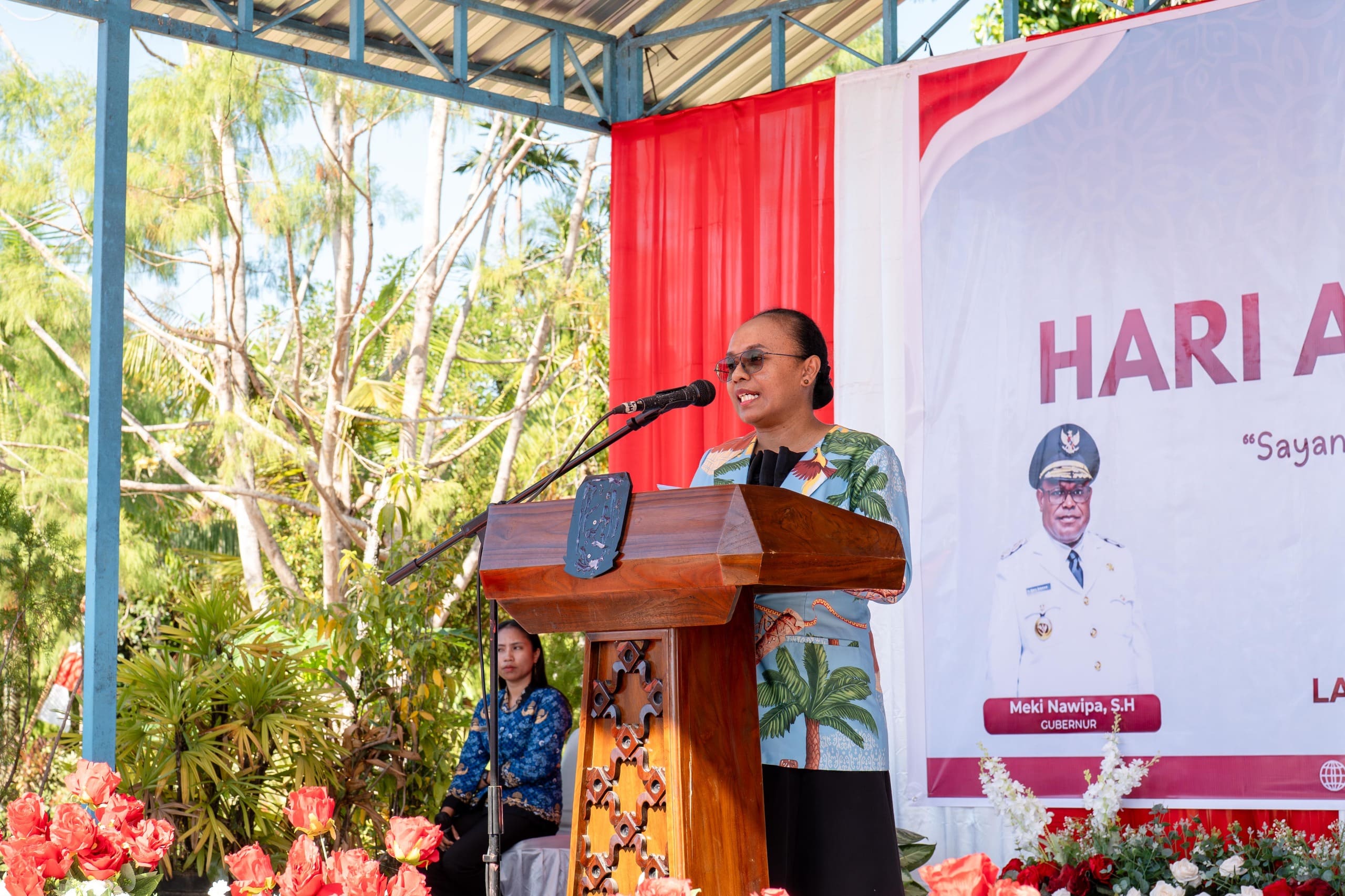
The Papua Tengah (Central Papua) Provincial Government through the Education and Culture Office has taken over the management of the Papua Tengah Teacher Education College (KPG) and opened a new chapter. The move is part of a broader strategy to tackle the shortage of qualified teachers across the province’s eight regencies and improve the quality of education in remote communities.
Head of the Papua Tengah Education and Culture Office, Nurhaida, said the provincial government is preparing 120 prospective teacher trainees through the revitalized KPG program. The boarding-based model is expected to provide intensive academic preparation, professional training, and character development before the graduates are assigned to schools throughout Papua Tengah.
Provincial officials said this move is more than simply a response to immediate staffing needs. It is a long-term investment in the development of local educators who understand the cultural, linguistic, and geographical characteristics of Papua, allowing them to provide quality education in areas where teacher recruitment and retention have always been a challenge.
Responding to a Longstanding Teacher Shortage
Papua Tengah, like many other remote areas, still faces problems in attracting qualified teachers.
The province’s vast mountainous terrain, dispersed settlements, and limited transportation infrastructure have created many years of difficulty in teacher distribution. Shortages are hitting a number of schools, particularly in outlying districts, and affect classroom learning and continuity of education.
The provincial government recognizes these challenges and has placed teacher development high on its agenda.
“By improving the Teacher Education College, the province will be able to produce educators who are prepared to serve communities in all eight regencies,” said Nurhaida. The government’s approach is not to recruit teachers from outside Papua but to develop a sustainable human resource base through local training for those who are knowledgeable about local conditions and willing to remain in the area.
Officials say this will help bring more educational stability and improve teacher retention in remote areas as well.
A Boarding-Based Learning Model
A distinctive aspect of the Teacher Education College is the boarding school system, which integrates academic instruction with structured character building and professional development.
The program will provide students with comprehensive preparation not only in teaching methodology but also in leadership, discipline, ethics, and community engagement, the provincial government said.
Besides academic training, the residential learning environment helps prospective teachers build excellent interpersonal skills and professional values, according to officials.
The boarding model also fosters collaboration between students from various regions of Papua Tengah, enabling them to exchange experiences and develop an appreciation for the diverse cultural backgrounds present throughout the province.
Education officials say the graduates are expected to be well prepared to work in schools serving communities with different languages, traditions, and geographical conditions.
Preparing Teachers for Papua’s Unique Challenges
Teaching in Papua often demands more than classroom expertise.
Teachers in the remote villages are often mentors, community facilitators, and trusted local figures who contribute to more social development.
Thus, the provincial government wants the KPG curriculum to provide practical skills to prospective teachers in accordance with the uniqueness of the Papua environment.
In addition to pedagogical competence, prospective educators will be encouraged to develop adaptability, leadership, communication skills, and knowledge of local cultures.
Officials say teachers who can form strong relationships with students, parents, and community leaders are more likely to boost educational outcomes.
The government hopes that the schools across Papua Tengah will have teachers who are professional and culturally responsive through the production of graduates who understand the local realities.
Building Human Capital Through Education
“The revitalization of the Teacher Education College is a form of the broader commitment of Papua Tengah to fortify human capital.
Provincial leaders have said many times that sustainable development needs not only physical infrastructure but also investment in education and quality public services.
Teachers are at the center of this vision, shaping future generations and supporting literacy, critical thinking, and community development.
Officially, it is thought that by increasing the number of qualified educators, there will be positive long-term effects that reach far beyond the schools themselves.
Better education raises awareness of health care, provides more opportunities for economic participation, improves public administration, and opens doors for young people all across Papua.
Thus, investment in teacher education is seen as a strategic basis for inclusive and sustainable regional development.
Investing in Indigenous Papuan Educators
It is one of the main goals of the renewed Teacher Education College (KPG) to educate a new generation of educators from Papua ready to work in their communities. The provincial government considers the strengthening of local human resources one of the most sustainable ways to improve education in the Papua Tengah region.
Nurhaida, head of the Papua Tengah Education and Culture Office, said the province will recruit 120 prospective teacher candidates as the first cohort under the renewed management of the boarding-based institution. These future teachers will form the foundation of a stronger education system that can meet the needs of schools across the province.
Training teachers from within Papua also acknowledges the importance of cultural understanding in education. Teachers who are close to their pupils linguistically, culturally, and socially are usually better able to establish trust, to communicate effectively, and to adapt their teaching methods to local circumstances.
Provincial authorities, therefore, view teacher development not simply as a staffing initiative but as a long-term strategy to strengthen educational quality and community resilience.
Education as the Foundation of Regional Development
The setting up of a stronger teacher training system points to a larger vision for Papua Tengah to make education a cornerstone of regional development.
Always, government officials have insisted that investments in roads, health facilities, telecommunications, and public infrastructure must be accompanied by investments in people. Good teachers are essential to ensure that young people acquire the knowledge and skills they need to participate in future economic and social development.
Education also contributes to broader development outcomes outside the classroom. Greater literacy, critical thinking skills, and access to quality learning can result in better public health awareness, increased productivity, improved local governance, and greater economic participation.
Officials believe adding more qualified teachers will help create more equitable educational opportunities in both urban centers and remote villages.
For Papua Tengah, therefore, enhancing teacher education is intimately linked with the province’s long-term aspirations for inclusive growth and improved quality of life.
A Long-Term Commitment to Human Capital Development
The provincial government’s decision to take over the Teacher Education College is an indication of its commitment to building sustainable human capital rather than opting for short-term recruitment solutions.
Officials said this boarding-based model allows students to receive constant academic guidance, professional mentorship, and character education throughout their training.
The integrated approach is expected to produce graduates who have leadership qualities, discipline, integrity, and strong commitment to public service in addition to technical teaching competence.
The program also supports broader education policies that the Indonesian government has put in place to improve educational access and quality in Papua.
Authorities hope to make locally trained teachers more available to improve schools and reduce disparities in educational services available in remote and urban communities.
The provincial leaders felt optimistic that the re-established institution might someday become a center of excellence for teacher education not only for Papua Tengah but also in support of educational development in the wider Papua region.
Looking Ahead
As preparations are being made for the first intake of prospective teacher candidates, the Papua Tengah provincial government considers the revitalized Teacher Education College an important investment for the future of the province.
Officials say the success of the program will depend on how many graduates it produces — and the contribution of those graduates to improving learning outcomes in schools across all 8 regencies.
The government will also keep deepening collaboration with educational institutions, local governments, and community stakeholders to ensure graduates receive continuous professional support throughout their careers.
Over the next few years, officials anticipate the re-energized Teacher Education College will help establish a steady stream of skilled educators able to lead the way on educational transformation across Papua Tengah.
Conclusion
The Papua Tengah Provincial Government’s decision to take over the management of KPG is a strategic move to address the chronic shortage of teachers in the region and improve long-term human capital development. With the boarding-based education model, the initiative aims to produce 120 prospective teacher candidates who are qualified to serve communities in all eight regencies in the province. The program is not only aimed at increasing the number of teachers but is also part of a wider effort to improve the quality of education, to build local talent, and to achieve sustainable development through investment in human resources. With Papua Tengah’s ongoing focus on education, infrastructure, and public services, the revitalized KPG is expected to be an essential part of preparing future generations of educators who will contribute to the social and economic development of Papua Tengah.

