
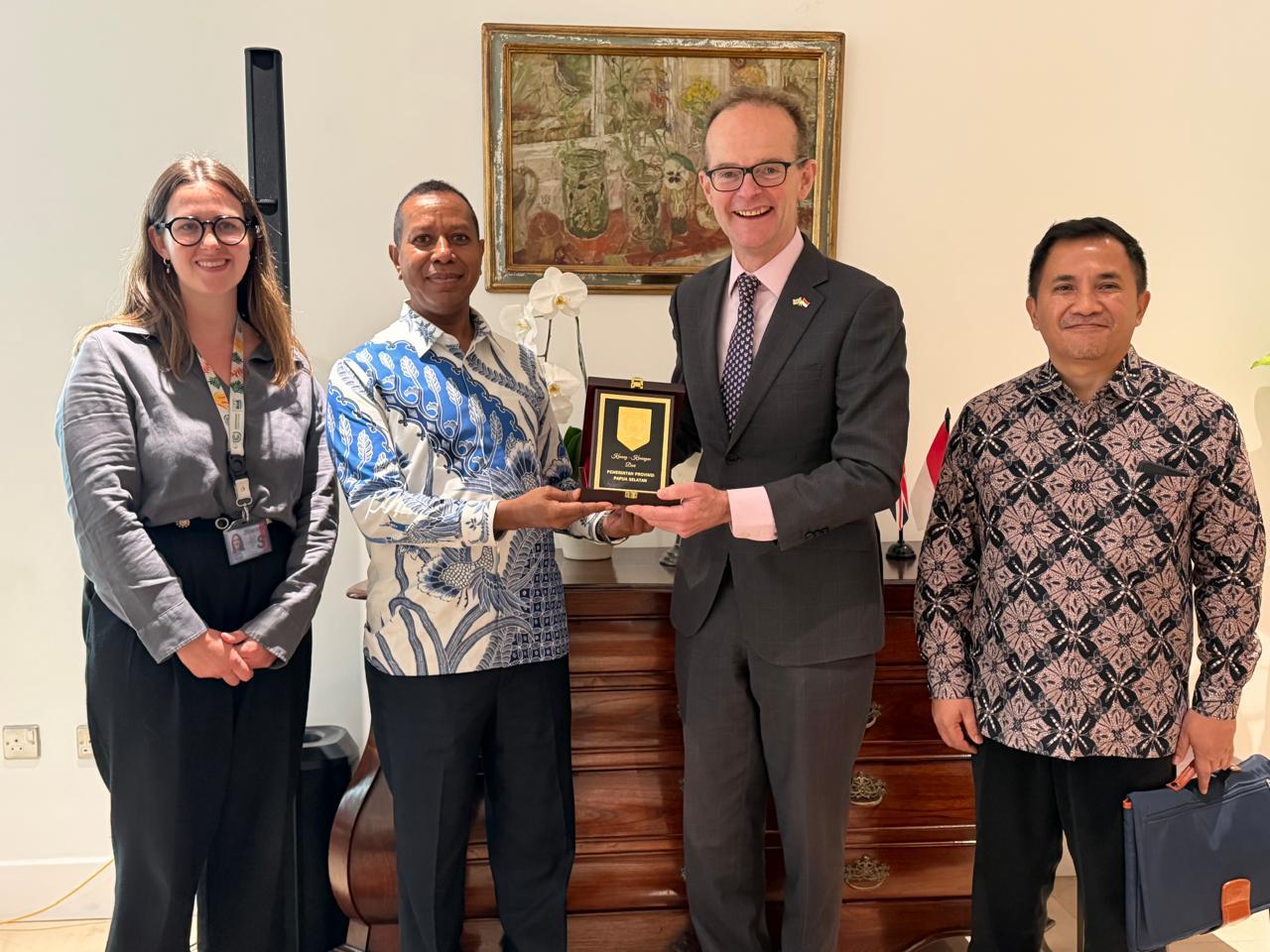
The introduction of UK scholarships for Indigenous Papuan students is an important step towards improving educational cooperation between Indonesia and the UK and contributing to long-term human capital development in Papua. The program stemmed from a meeting between Papua Selatan Governor Apolo Safanpo and British Ambassador to Indonesia Dominic Jermey, where the two discussed ways to increase academic collaboration and improve education opportunities for young Indigenous Papuans.
The scholarship program aims to provide opportunities for qualified Indigenous Papuan students to study at undergraduate and postgraduate levels in the UK, the Papua Selatan Provincial Government said. The provincial government views education as the best investment to prepare future leaders that can contribute to sustainable development throughout Papua.
The announcement also reflects the increasing importance of education in the wider Indonesia–UK strategic partnership. Both governments recognize that strengthening human resources can contribute to innovation, institutional capacity, and inclusive economic growth beyond academic exchange.
For many students in Papua Selatan, gaining access to international education provides academic knowledge and fosters leadership skills, professional networks, and global perspectives that can later benefit their communities.
Indonesia and the UK Deepen Educational Cooperation
The scholarship program is also another part of the long-standing relationship in the field of education between Indonesia and the UK.
For decades British universities have welcomed Indonesian students through a variety of academic cooperation programs, research collaboration, and scholarships. Education has always been one of the strongest pillars of our bilateral relations, and it complements our cooperation in trade, investment, environmental protection, and cultural exchange.
British Ambassador Dominic Jermey reiterated the UK’s commitment to enhancing access to education for students from Papua Selatan in talks with Governor Apolo Safanpo.
Provincial authorities welcomed the initiative, describing international education as an important aspect of broader efforts to improve the quality of human resources throughout the province.
Officials said the graduates returning with international education and professional experience can contribute a lot to sectors such as education, healthcare, public administration, environmental management, agriculture, and regional economic development.
The scholarship initiative thus goes beyond individual educational achievement to support the longer-term development priorities of the province.
Human Capital at the Centre of Papua’s Development
Provincial leaders have stressed on many occasions that developing human capital is still a key to sustainable and inclusive growth.
Along with ongoing investments in infrastructure, healthcare, and economic development throughout Papua, education is seen as the basis that allows communities to take full advantage of those opportunities.
Governor Apolo Safanpo underscored the need to prepare the younger generation to compete in a more interconnected global economy while remaining committed to serving their local communities.
It is envisaged that the suggested scholarship opportunities will enhance academic capacity through enabling students to undertake studies in disciplines that directly support regional development.
Areas like engineering, public health, environmental science, agriculture, education, information technology, and public policy are well-recognized fields that can make a significant contribution to Papua’s future development.
Graduates with international education can help strengthen institutions and bring new knowledge, research, and innovation when they return to Indonesia, officials believe.
Expanding Opportunities for Indigenous Papuan Students
The scholarship program specifically aims to create more opportunities for Indigenous Papuan (OAP) students.
The issue of increasing access to higher education remains an important priority within the broader human resource development policies in Papua, provincial authorities said.
With support for talented students through international education, the government hopes to encourage greater Indigenous Papuan participation in professional careers, public service, research, entrepreneurship, and community leadership.
Education was also a bridge connecting local potential with global knowledge, officials stressed.
Students who study abroad are exposed to different academic settings, research techniques, technological advancements, and multicultural experiences, all of which are still connected to their home communities.
Many people who know about education say that these international experiences often have long-term benefits beyond academic qualifications.
Post-graduation, many alumni become educators, healthcare professionals, researchers, policymakers, entrepreneurs, and development practitioners, serving local communities directly.
Scholarships Support Long-Term Regional Development
The scholarship commitment is in line with Papua Selatan’s broader vision to improve human resource capacity along with economic and infrastructure development.
Officials have said time and again that sustainable development is not only about physical infrastructure but also about citizens who are educated and capable of running institutions, creating innovation, and improving public services.
International scholarship programs complement domestic education initiatives by providing access to advanced knowledge and specialized expertise that may not be readily available locally.
Cooperation with international partners is an important investment for the provincial authorities in the future of Papua.
They also hoped that the enhanced educational cooperation would lead to more partnerships between universities, research institutions, and professional organizations of the two countries.
The collaboration is expected to increase academic exchanges and help promote wider cooperation in the fields of science, technology, environmental sustainability, healthcare, and governance.
Education as a Foundation for Sustainable Development
The scholarship program is a manifestation of the common understanding between Indonesia and the UK that education is one of the best investments to realize long-term and inclusive development. Infrastructure, health services, and economic programs are still expanding in Papua, but it is also important to strengthen human resources to ensure sustainable and locally driven development.
The provincial government has also consistently stressed that the future of Papua Selatan depends not only on physical infrastructure but also on the ability of the younger generation to lead public institutions, develop new businesses, improve health services, and engage in scientific research. International education provides opportunities to acquire knowledge, technical skills, and leadership skills, which can then be applied to local development.
This scholarship commitment is thus consistent with Indonesia’s broader effort to improve the quality of education and expand access to higher education opportunities for Indigenous Papuans through national and international partnerships.
International Partnerships Strengthen Papua’s Future
The meeting between Governor Apolo Safanpo and British Ambassador Dominic Jermey also shows how international partnerships can promote regional growth beyond conventional diplomatic cooperation.
Education has become one of the strongest pillars of relations between Indonesia and the UK. For decades, universities, research institutions, and professional organizations of both countries have collaborated through academic exchanges, scientific research, scholarship programs, and institutional partnerships.
The proposed scholarship program was part of a wider effort to build international cooperation in human resource development, the Papua Selatan Provincial Government officials said. Both countries are keen to expand educational opportunities to promote knowledge sharing and train future professionals to tackle the challenges of the region.
“Educational diplomacy creates lasting partnerships, as graduates maintain professional and academic networks that continue to benefit both countries long after their studies have ended,” observers say.
Building Global Skills for Local Impact
For many Indigenous Papuan students, overseas study is not just about gaining an academic degree.
Studying at internationally recognized universities helps students to develop critical thinking, research capabilities, cross-cultural communication skills, and professional experiences in a global academic environment.
Meanwhile, the provincial leaders also stressed that the scholarship recipients should be encouraged to use their knowledge for the further development of Papua after finishing their education.
This leaves graduates with the opportunity of making contributions in strategic sectors such as education, health, agriculture, fisheries, environmental management, engineering, public administration, digital technology, and entrepreneurship.
Authorities believe that strengthening local knowledge will support improvements in the quality of public services while also encouraging innovation to respond to the unique geographical and socio-economic conditions in Papua.
Therefore, the scholarship initiative is an investment whose dividends extend beyond individual students, creating opportunities for broader community development and institutional capacity building.
Investing in Indigenous Leadership
The scholarship commitment is in line with Indonesia’s broader policy to encourage greater participation of Indigenous Papuans in education, government, and regional development.
In the last two decades, special autonomy has been implemented, which has expanded educational funding, scholarships, affirmative policies, and human resource development programs throughout Papua.
Provincial authorities view international scholarship opportunities as a valuable addition to these domestic opportunities, as they provide access to world-class education and build the leadership capacity of Indigenous Papuans.
With more and more students gaining higher education and professional skills, they are expected to contribute to evidence-based policymaking, better governance, stronger public institutions, and sustainable economic development in their own communities.
Officials also hope the initiative will motivate younger generations to pursue higher education and reaffirm the belief that education is one of the best ways to achieve social mobility and long-term prosperity.
Looking Ahead
The pledge made during the meeting between Governor Apolo Safanpo and Ambassador Dominic Jermey is an encouraging sign for Indonesia–UK relations, especially in the field of education.
The two governments continue to negotiate the implementation mechanisms, but the scholarship initiative could provide new opportunities for talented Indigenous Papuan students to pursue education abroad.
Provincial leaders said, ‘We are eager to work more closely with the UK to foster future collaboration in research, environmental sustainability, healthcare, teacher training, and institutional development.
Today, both Indonesia and the UK are investing in education to produce a generation of skilled professionals who can contribute to Papua’s ongoing development, as well as to deepen the long-standing relationship between the two countries.
Conclusion
The UK’s commitment to support the education of Indigenous Papuan students is a landmark step in strengthening the Indonesia-UK educational partnership and contributing to the long-term human capital development in Papua Selatan. The move follows discussions between Governor Apolo Safanpo and British Ambassador Dominic Jermey and is a mutual commitment to increase access to quality higher education and to nurture future leaders that can help accelerate sustainable development in the region. The scholarship program is an example of how international partnerships can drive capacity building, institutional development, and knowledge sharing as well as opportunities for individual students. Papua’s ongoing investment in education and infrastructure, as well as its focus on economic development, shows the importance of international cooperation to empower Indigenous communities and promote inclusive growth.

