
In many parts of Indonesia, a choir competition is just a culture. In Papua, where hundreds of ethnic groups, languages and religious communities have coexisted for generations, it is often more than just a word.
Thousands of singers, church leaders, officials and community representatives from across the country will gather in Manokwari later this month for the 14th National Pesparawi, one of Indonesia’s biggest church music festivals. “Beyond the performances and competitions, officials and local leaders say the event will serve as a platform to promote unity, religious harmony and mutual respect in one of the most culturally diverse parts of the country.
The Pesparawi National Church Choir Festival is scheduled to be held in Manokwari, Papua Barat(West Papua) from 18 to 28 June 2026.
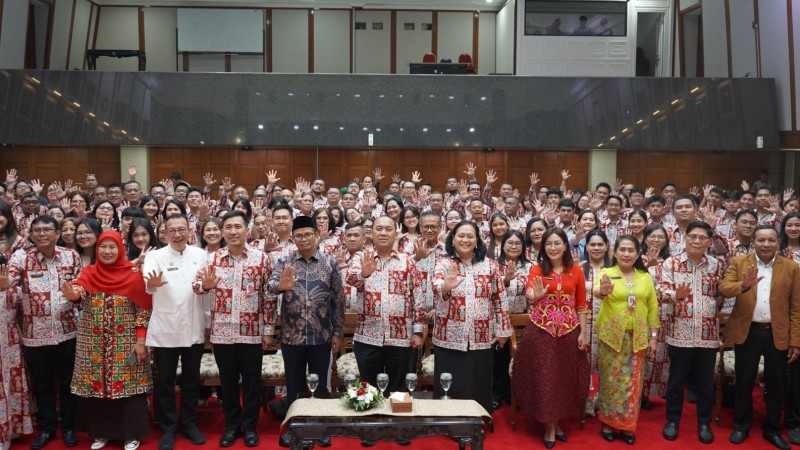
With the preparations entering the final phase, Governor of Papua, Mathius D. Fakhiri, sent a message that resonated far beyond the competition.
Speaking at the departure of Papua’s contingent, Fakhiri urged participants to be ambassadors of tolerance during their stay in Manokwari.“It’s not just about competing and getting results,” the governor said. “We have to be ambassadors of tolerance and show the values of harmony that have long existed in Papua.”
His comments echoed a wider theme of this year’s event: the role of religious and cultural gatherings in strengthening social cohesion in the face of rapid political, economic and social change across eastern Indonesia.
A National Event Hosted in the Land of the Gospel
For many Papuans, the decision to select Manokwari as a host city has historical and cultural significance.
Manokwari, or “Kota Injil” (City of the Gospel), has a significant place in the history of Christianity in Papua. For centuries the city has been a center of religious education, church life and interfaith discussion.
Papua Barat is the host of the 14th National Pesparawi, a major event at the national level involving participants from provinces from Aceh in the west to Papua in the east.
Thousands of visitors are expected to attend the festival, including choir members, church officials, government representatives, cultural performers and supporters.
The local population also anticipates that the event will create economic opportunities through the tourism industry, hospitality, transportation, food businesses, and small-scale trade.
Choirs Arrive From Across Indonesia
Provincial contingents are now completing their preparations before departing to Papua.
According to reports from a number of regions, participants have been rehearsing for months for the event, which will showcase a variety of choir categories and church music presentations.
The arrival of delegations from all over Indonesia will make Manokwari a meeting point of different traditions, cultures and experiences.
While the competition is a big part of the festival, the organizers have always emphasized that Pesparawi is also about fellowship and national unity.
Preparations continue and that message has become more visible.
Governor Fakhiri’s Call for Tolerance
Governor Fakhiri’s comments were notable for highlighting an issue that many local leaders consider central to the future of Papua: the need to maintain harmony among communities with different religious and cultural backgrounds.
Christians, Muslims, Catholics, Buddhists, Hindus and followers of indigenous traditions live side-by-side in towns, on the coast and in the highlands of Papua.
“Papua is often cited as an example of interfaith cooperation, albeit with some bumps along the way.
Sometimes people of different faiths support religious celebrations. Community leaders attend each other’s events regularly. Religious differences often are bridged by common cultural values.
In that connection, Fakhiri called on the participants to project a positive image of Papua during the festival.
Harmony as Papua’s Strength
The governor said visitors who come to Manokwari should feel Papua not only through choir performances but also through the character of its people.
His appeal comes amid a period in which local governments throughout Papua are working to foster social harmony as a foundation for development.
Officials often say that economic progress, educational improvement and infrastructure expansion can only realize their full impact when communities are peaceful and united.
Many see Pesparawi and similar events not so much as cultural festivals, but as something else.
They also provide opportunities to strengthen social ties and reinforce common values.
Security Preparations Underway
The scale of the event has demanded considerable preparations by local authorities.
Papua Barat Police said there are 22 activities that will be held during the Pesparawi program and 829 security personnel have been deployed to safeguard them.
The deployment is aimed to ensure the safe and comfortable enjoyment of the festival for participants and visitors, officials said.
The security is a coordinated effort between police units, local government agencies, event organizers and community leaders.
“We are ensuring that the security arrangements are in place to ensure the smooth conduct of activities and also protect the festive atmosphere,” the authorities said.
The preparations are a reflection of the importance attached to the event at provincial and national level.
A Shared Responsibility
Community leaders have also urged residents to welcome visitors and help create a positive atmosphere throughout the festival.
In Papua, big religious events tend to include the broader community beyond the core organizers.
Residents often volunteer, help visitors, and manage logistical arrangements.
Community participation tradition will be one of the keys to Pesparawi 2026’s success.
More Than a Choir Competition
Music is still the soul of Pesparawi, but many participants say the festival is also a place where communities from different parts of Indonesia meet.
For centuries, church music has been an important cultural expression in Papua.
Choirs are often the musical providers for religious festivals, community concerts and major social occasions in villages, towns and cities.
The festival is therefore a musical and cultural experience.
Participants bring songs, traditions and perspectives influenced by their respective regions.
For outsiders coming to Papua, this event can be a moment to taste local culture directly.
For the Papuans, it’s a time to extend hospitality and build relationships with other Indonesians.
Cultural Diplomacy Through Faith and Music
Large religious festivals are often called a form of cultural diplomacy by observers.
People who might never have met before, connect through shared experiences, not political discussion.
In a country as diverse as Indonesia, such encounters can, in fact, help reduce misunderstanding and build mutual respect.
So Pesparawi’s significance is beyond trophies and rankings.
Most of its value is in the connections that are made at the event.
Economic Benefits for Local Communities
Besides the religious and cultural aspect, Pesparawi is also expected to bring economic activity to Manokwari and surrounding areas.
Hotels, restaurants, transportation providers, souvenir vendors and small businesses are preparing for the arrival of participants.
In Papua, previous national events have shown that large gatherings can provide significant opportunities for local entrepreneurs.
For many small business owners an increase in the number of visitors, even a small one, can be a huge boost to income.
Local governments therefore regard major events as cultural happenings and as well as tools for regional economic development.
A Message for Papua’s Future
The timing of Pesparawi 2026 matters.
Papua is still undergoing a major transformation through infrastructure development, investment in education, economic programs and administrative reform.
In the face of these changes, leaders frequently stress the importance of social cohesion and mutual respect.
That broader objective is echoed in Governor Fakhiri’s call for participants to become ambassadors of tolerance.
His message is: development should not be measured by physical projects or economic indicators.
This goal is also a reflection of the capacity of communities to maintain trust, cooperation and peaceful co-existence.
Faith, Music, and Unity
Expectations for the festival continue to grow as thousands of participants are ready to make the journey to Manokwari.
The winners will emerge from the competition.
But many organizers say the most important accomplishment of the event would be something less visible: stronger ties among communities from different regions and backgrounds.
That aspiration aligns very much with values highlighted repeatedly by religious leaders and government officials in Papua.
Conclusion
The 14th National Pesparawi in Manokwari, from June 18 to June 28, 2026, is expected to be one of the biggest religious and cultural gatherings in Papua in recent years. There are still impressive choir performances, but the festival also has a broader message of tolerance, unity and peaceful coexistence.
The call by Governor Mathius D. Fakhiri to the participants to be ambassadors of harmony reverberated with the long history of interfaith cooperation in Papua. The festival is a chance for musical talent to be showcased, as well as the values of respect, diversity and togetherness that remain important in the social fabric of Papua as visitors from all over Indonesia gather in Manokwari.

