
Just before the buses moved, there was a brief pause.
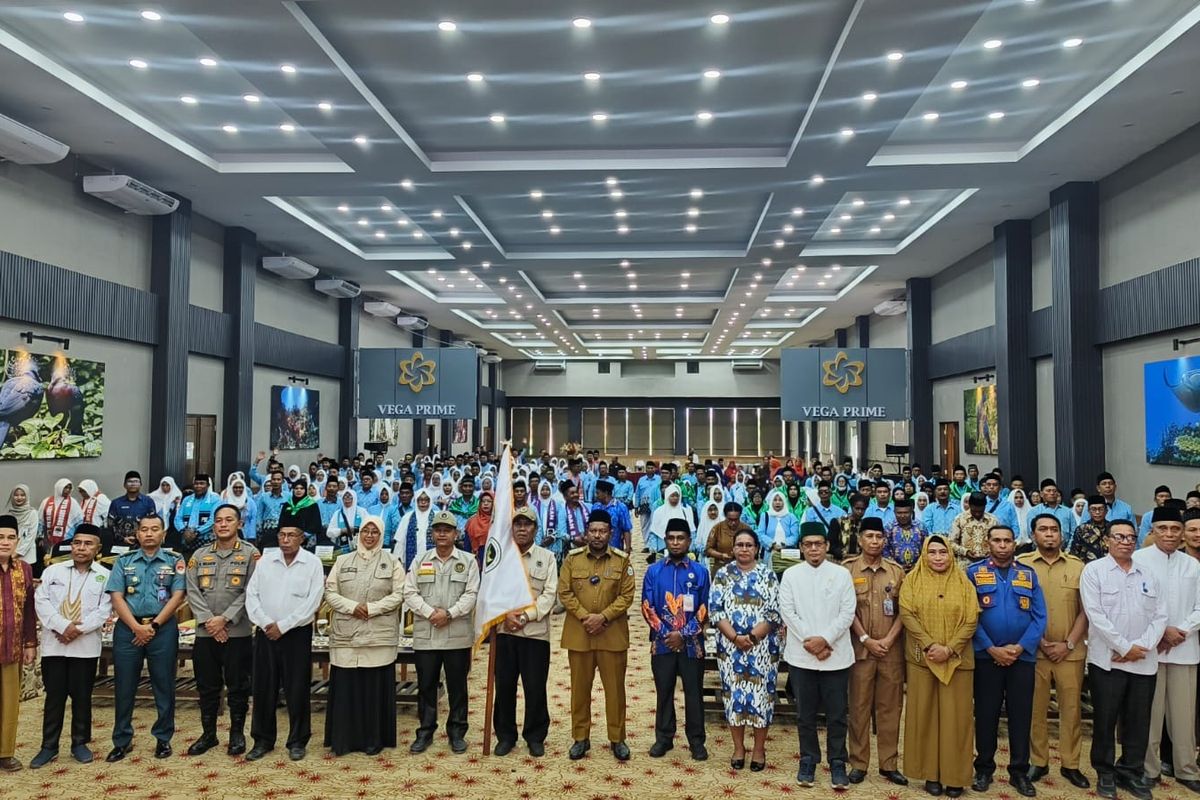
On May 4, 2026, in Sorong, families stood close, some talking softly, others choosing not to say much at all. A few pilgrims checked their bags again, even though everything had already been arranged. The Papua Hajj pilgrims of 2026 from Papua Barat Daya (Southwest Papua) Province were about to leave, but the moment did not feel rushed.
It felt like something people wanted to hold on to for a little longer.
A Small Detail That Meant Something
There were 296 pilgrims in total.
Before departure, each of them received Rp 2 million from the provincial government. It was described as support for personal needs during the journey.
The amount itself was not the main focus.
What people noticed was the gesture.
In a place where travel can be complicated and expensive, even small assistance can make a difference. It suggests that the journey is not only personal but also recognized by the wider community.
The Send Off Was Quiet, Not Grand
Between Ceremony and Everyday Life
There was a formal element to the event.
Officials spoke.
The pilgrims listened.
But around that, life continued in a more ordinary way.
Someone adjusted a headscarf.
Another person reminded a relative to call when they arrived.
Children moved around, not fully aware of the significance, but sensing that something important was happening.
Ahmad Nausrau’s Words Felt Direct
During the ceremony, Deputy Governor Ahmad Nausrau spoke without much formality.
He did not use complicated language.
He simply reminded the pilgrims to take care of themselves.
Stay healthy.
Stay together.
Help each other when needed.
He also mentioned something that seemed to resonate with the crowd. That the pilgrims would carry the image of Papua Barat Daya with them, even far from home.
It was not framed as pressure.
More like a reminder.
The Journey Starts Earlier Than It Looks
For many of the pilgrims, the trip did not begin in Sorong.
Some had already traveled long distances from smaller towns or remote areas.
Flights, road trips, and waiting periods.
By the time they reached the gathering point, the sense of departure had already been building.
What happened in Sorong was only the visible part of a longer process, which included years of planning, anticipation, and the emotional buildup experienced by the participants.
Why the Moment Matters
Waiting, Sometimes for Years
Several pilgrims had waited a long time for this opportunity.
Registration for Hajj in Indonesia often involves a queue.
Years until decades can pass between registration and departure.
That waiting shapes how people approach the journey.
It is not something taken lightly.
A Shared Responsibility
Even though the pilgrimage is personal, it rarely feels individual.
Families send messages.
Neighbors ask for prayers.
There is an expectation, quiet but present, that the pilgrims will carry more than their intentions.
Preparing for a Different Place
Adjusting to Conditions in Mecca
Officials reminded pilgrims that conditions in Mecca would be completely unique.
The heat.
The crowds.
The pace of movement.
All of it requires adjustment.
Health, in particular, becomes important.
That is why the message to “take care” was repeated more than once.
Staying Connected in a Crowd
Another point raised was togetherness.
Pilgrims are encouraged to stay close to their group.
This is not only for logistical reasons, but also for support.
Helping each other navigate unfamiliar surroundings can make a difference.
It is a simple idea, but one that matters during a journey like this, as it fosters a sense of community and shared experience that can enhance the overall journey.
A Reflection of a Growing Province
Papua Barat Daya is still relatively new as a province.
Events like this show how local governance is beginning to take shape in everyday ways.
Small interactions with communities, rather than large policies alone, are shaping local governance.
Supporting pilgrims is one example.
After the Departure
When the buses finally moved, there was no dramatic send-off.
People waved.
Some stayed silent.
Others turned away quickly, as if to avoid making the moment heavier than it needed to be.
The journey continued.
For those leaving, toward Mecca.
For those staying, go back to their daily routines.
Conclusion
The Papua Hajj pilgrims’ 2026 departure from Papua Barat Daya did not rely on spectacle.
It was built from small details.
Short conversations.
Simple advice.
Moments that might seem ordinary at first.
But taken together, they reflect something steady.
A sense of community that moves quietly alongside the journey itself.

