
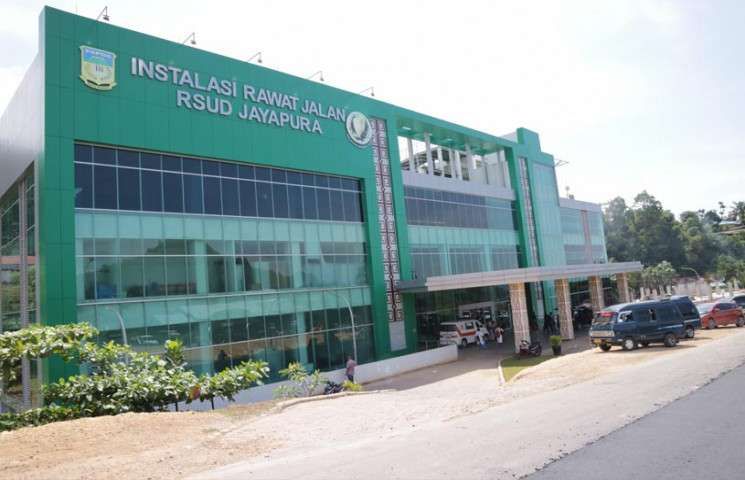
Every morning, long before the tropical sun starts to warm up the coastal city of Jayapura, the halls of Jayapura Regional Hospital slowly come to life. The nurses start their rounds. Doctors get together in small groups to talk about their patients. Families wait outside treatment rooms, hoping to hear good news from the doctors and nurses.
This hospital, which is also known as Regional Public Hospital (RSUD) Jayapura or RSUD Dok II, has been one of the most important places for people in Papua to get medical care for many years. Patients come from all over the province, and some have to travel for hours by plane or car from faraway areas that are spread out over mountains and islands.
The hospital is now starting a new chapter in its long history. Through a hospital-based education system that is closely linked to the medical faculty of Cenderawasih University, it has officially started to serve as a teaching hospital for specialist doctors.
The project is a big step forward for healthcare in Papua. The area has had a serious lack of specialist doctors for decades. Local leaders and teachers want to start filling that gap by turning RSUD Jayapura into a center for specialist medical training.
For doctors, patients, and communities all over Papua, the program means more than just a change in the status of hospitals. It marks the start of a new way to improve healthcare in one of Indonesia’s most isolated areas.
A Region With Urgent Healthcare Needs
Papua’s healthcare problems are mostly caused by its geography.
The area has a lot of mountains, thick forests, and islands that are spread out. Many villages can only be reached by small planes or long trips along rivers and narrow roads.
Getting to a hospital can be hard for patients who need specialized medical care. The problem gets worse when hospitals don’t have the right specialists to do complicated procedures.
Sometimes, patients who need surgery or more advanced care have to be sent to hospitals in other Indonesian cities, like Makassar or Jakarta.
These kinds of referrals can mean long trips and a lot of money.
Because of this, the lack of specialist doctors has been one of the biggest problems in Papua’s healthcare system.
Anesthesiologists are a common example that health officials use. The number of specialists in this field has stayed very low in dozens of hospitals in Papua.
Even routine surgeries can’t happen without anesthesiologists.
Why Specialist Doctors Are Scarce
For a long time, the main reason for this shortage was easy to understand.
Papua did not have its own program for specialized medical education.
Doctors who wanted to specialize had to leave the area and go to universities in other parts of Indonesia to get their residency.
A lot of Papuan doctors finished these programs, but not all of them came back home after that.
Some doctors chose to work in bigger cities where the medical infrastructure, research opportunities, and professional networks were better.
This pattern slowly made it so that there weren’t enough specialists in Papua to meet the needs of the people.
Healthcare leaders in the area started talking about how to stop the trend.
It was clear what they thought. Papua needed to teach its experts.
Cenderawasih University Steps Forward
Cenderawasih University, the biggest and most well-known university in Papua, is in charge of this project.
The university is in Jayapura and has been an important place for training professionals in many fields for a long time. It has trained hundreds of general practitioners who now work in hospitals and clinics all over the area.
But until recently, the university had never run a program to train specialists.
That changed when the university started its first postgraduate program for doctors who want to specialize.
The program’s main focus at first is on anesthesiology and intensive therapy. These areas are important for making hospitals better at doing surgery and providing emergency care.
Leaders at the university say that the program is the first step in a larger effort to increase the number of medical specialists in Papua.
We expect to see more fields added in the next few years.
The Role of Jayapura Regional Hospital
Specialist medical education necessitates more than mere classroom instruction. It also relies a lot on hands-on training.
At this point, Jayapura Regional Hospital is very important.
The hospital has been chosen as the main place for residents to get their clinical training.
In practice, this means that young doctors who are in the specialist program will spend a lot of time in hospital wards, operating rooms, and emergency rooms.
They will learn directly from specialists who already work at the hospital and have a lot of experience.
Hospital-based education is the name for this method, which lets students get real-world experience while still going to school.
Doctors in training will see all kinds of medical problems that patients in Papua have, from trauma cases to emergencies involving pregnant women.
A Hospital With a Long Educational Tradition
It didn’t happen overnight that RSUD Jayapura would become a specialist teaching hospital.
For a long time, medical students from Cenderawasih University have been able to do their clinical training at the hospital.
Young doctors who are finishing their undergraduate medical education have already spent time in the hospital’s wards, learning how to examine patients, help with procedures, and understand how the hospital works.
The new specialist program is based on that long history.
Hospital administrators say that the years of training students gave them the experience they needed to take on more responsibilities.
Facilities are now being changed to make it easier for residents to learn. Senior specialists are getting ready to help new residents learn how to do their jobs.
The goal is to make a training space that meets national standards for medical education while also staying very close to how healthcare works in Papua.
Training Doctors Who Understand Papua
One of the best things about local specialist education is that it helps you get to know the culture and geography of the area.
Doctors who train in Papua get to see firsthand the health problems that people in the area face.
Many districts, for instance, have a lot of medical problems that are linked to tropical environments. There can also be big differences in how easy it is to get to healthcare facilities in cities and rural areas.
During their residency, doctors who were trained in the area learn about these conditions.
They learn not only the technical parts of medicine, but also how to care for people in places with few resources.
Health officials think that this experience will help specialists better serve the different communities in Papua.
Support From Government and Health Authorities
The provincial government and national health authorities have both backed the creation of the specialist training program.
Local leaders have said many times that improving healthcare services depends on making the workforce stronger.
If there aren’t enough qualified medical staff to run them, building hospitals and clinics isn’t enough.
Policymakers want to solve the problem of not having enough medical experts in a way that lasts by investing in specialist education.
There are also talks about scholarship programs to help Papuan doctors who want to get more specialized training.
The goal of these programs is to make sure that students from different districts can take part.
A Future With More Specialists
The anesthesiology program is the first step, but plans are already in place to offer more specialized education in Papua.
Surgery, obstetrics, pediatrics, and internal medicine are some of the fields that will be added in the future.
All of these areas are very important for making healthcare services better in the whole region.
For instance, obstetric specialists are very important for lowering the number of deaths of mothers in rural areas where complicated births often need immediate medical attention.
Pediatric specialists can also help with common childhood diseases in some areas, like pneumonia and malnutrition, which can cause serious health problems if not treated right away.
So, expanding specialist training programs could have a big effect on the health of the people in Papua.
A Quiet Transformation Inside the Hospital
Inside the halls of RSUD Jayapura, you can already see the changes.
During hospital rounds, new doctors walk with experienced specialists. New trainees watch surgeries in the operating room and ask questions about how to do things and how to care for patients.
For people who are coming to the hospital, these scenes might seem normal.
But they are a change that could change the way healthcare works in Papua in the future.
Every doctor who goes through the program brings the area one step closer to solving its long-standing lack of specialists.
Looking Toward the Future
It won’t be easy to fix the problems with healthcare in Papua.
The geography of the area, gaps in infrastructure, and differences in history all mean that institutions and policymakers need to make long-term commitments.
But making specialized training programs and turning Jayapura Regional Hospital into a teaching center are both important steps in the right direction.
Papua is building a stronger healthcare system by training doctors in the area and making hospitals stronger.
The young doctors who are starting their specialist training in Jayapura today will have to study and work in the field for several years.
But a lot of them will stay in Papua after they finish school, bringing with them advanced medical knowledge that communities have needed for a long time.
And in the busy wards of RSUD Jayapura, where new patients come every day for treatment, that future is already starting to take shape.

