The Papua government starts a program to make food more affordable so that prices stay stable before Eid al-Fitr.
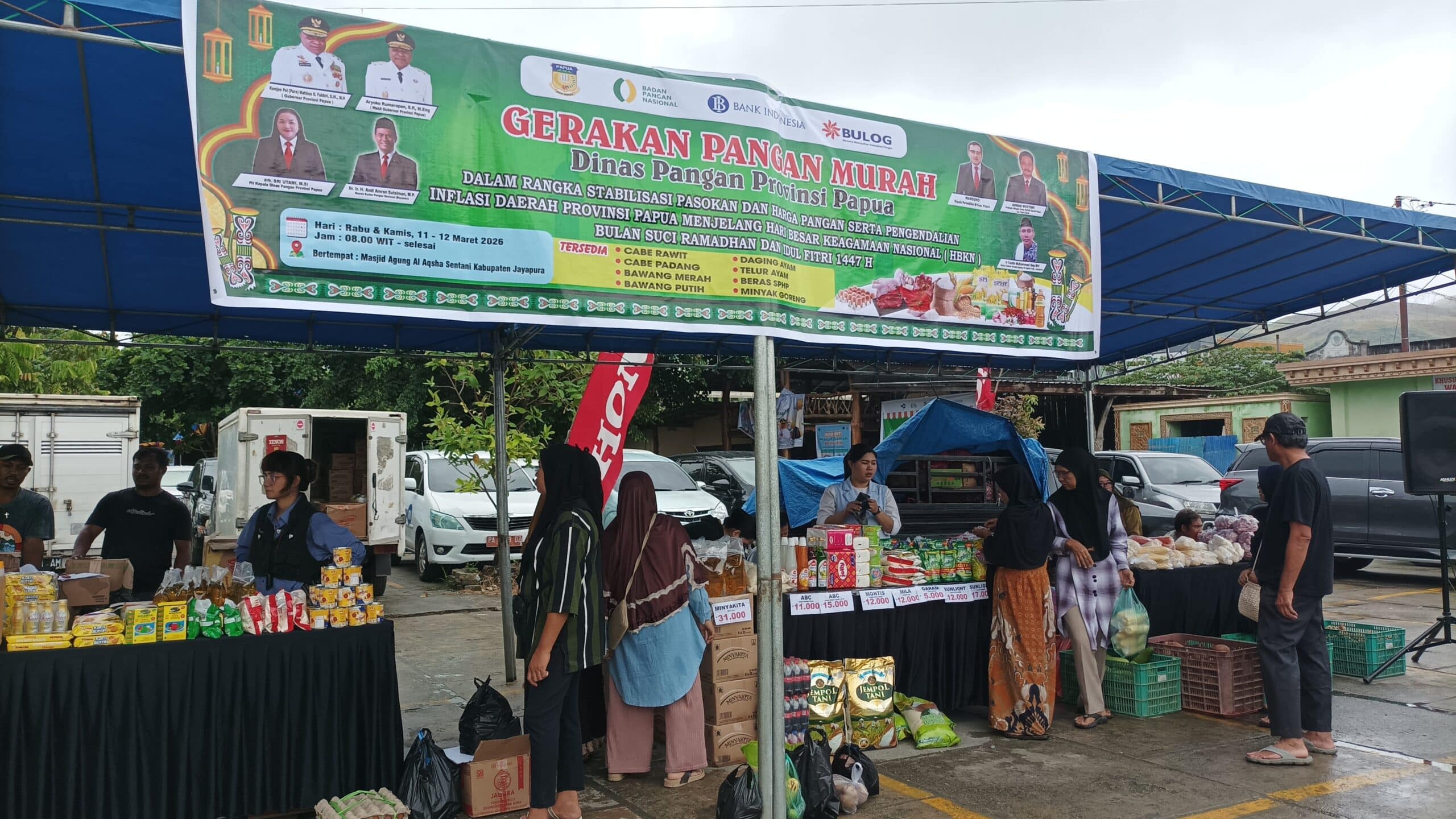
On the morning of March 11, 2026, in Jayapura Regency, people slowly filled the courtyard of Al Aqsha Mosque in Sentani. Women with shopping bags stood patiently next to rows of temporary stalls. Dads talked to each other while watching their kids. Vendors set up wooden tables with bags of rice and cooking oil on them.
For a lot of people who lived there, the gathering was more than just a market. It was a chance to buy important food at prices they could afford.
Prices for food often go up all over Indonesia in the weeks leading up to Eid al-Fitr. The holiday marks the end of the holy month of Ramadan. People celebrate it by having family meals, getting together, and eating traditional foods. During this time, there is a huge increase in demand for basic ingredients.
The Provincial Government of Papua has started the Gerakan Pangan Murah, or Affordable Food Movement, to help people deal with rising prices. The goal of the program is to make sure that basic food items are still available to families, especially those with low incomes.
On a recent morning in Sentani, Papua, Deputy Governor Aryoko Alberto Ferdinand Rumaropen went straight to the site to see the program and talk to people who had come to buy food.
His visit showed how the government is trying to stay in touch with the problems that people in the province face every day.
A Common Problem Before the Eid al-Fitr holidays
In the weeks leading up to Eid al-Fitr, food prices often go up all over Indonesia. Families start getting ready for holiday meals and more eating during the celebration.
There is more demand for things like rice, cooking oil, eggs, sugar, and chili peppers, and the markets get busier.
Things are often more complicated in Papua.
The geography of the area makes it even harder to get food to people. A lot of supplies have to come from far away places in Indonesia. Before they get to local markets, ships or planes take them there.
Prices can change because of things like the cost of transportation, the weather, and logistical problems.
Because of these things, staple foods are often more expensive in Papua than in other parts of the world.
So, programs that aim to keep food prices stable are very important for protecting the buying power of people who live there.
A Market That Helps Families
The Affordable Food Movement is part of a larger national effort to keep food prices stable and make sure everyone has enough to eat.
The provincial government in Papua works closely with a number of organizations to set up the program. The National Food Agency, the regional Food Security Office, the state logistics company Bulog, and private distributors are all partners.
These groups work together to make sure that the basic foods needed for the event are available and distributed.
People who lived in Sentani could buy a wide range of basic goods at lower prices than what they would find in local markets.
A five-kilogram package of premium rice costs about seventy-nine thousand rupiah. Under the SPHP program, the government paid for rice that cost sixty thousand rupiah for a five-kilogram package.
The Minyak Kita brand of cooking oil costs thirty-one thousand rupiah for two liters. Local farmers sold eggs for sixty-eight thousand rupiah per tray. Chili peppers were sold for ninety-five thousand rupiah per kilogram, which was a lot less than the market price, which had gone up to around one hundred twenty thousand rupiah.
For a lot of families, these differences made it possible for them to buy basic food without going over their budget.
The Deputy Governor Talks to People
Deputy Governor Aryoko Rumaropen walked slowly through the crowd and stopped at a few stalls to talk to people.
He asked mothers how much rice and cooking oil cost. He heard vendors explain how they gave out supplies. From time to time, he stopped to say hello to kids who were with their parents.
For him, the visit wasn’t just a formality.
He said that the program is a way for the government to make sure that people can get their basic needs met during important times like Ramadan.
The deputy governor said that demand for food goods usually goes up as Eid al-Fitr gets closer. If nothing is done, these increases can cause prices to go up, which makes it harder for families to make ends meet.
The Affordable Food Movement and other programs like it want to ease that pressure.
The government hopes that by lowering the prices of basic foods, it will keep local markets stable and help families get ready for the holidays.
Food Security as a Regional Priority
Food security is now a top priority for policymakers in Papua.
Because of where it is, the province has problems that are different from other places. A lot of communities are in hard-to-reach places, like mountains or far-off coastal areas.
Bringing food to these places often involves complicated logistics, such as shipping by sea, air freight, and long trips by road.
Because of these things, keeping food prices stable requires careful planning between government agencies and businesses.
Officials say that programs like the Affordable Food Movement are a big part of this plan.
The program not only helps families in the short term, but it also keeps an eye on how easy it is to find basic goods in local markets.
Authorities can stop shortages that could cause prices to go up even more by making sure that there is always enough food.
Collaboration Behind the Program
Several groups are working together to put together the Affordable Food Movement.
Bulog is very important for making sure that rice and other basic goods are always available. The state logistics agency is in charge of the government’s food reserves and helps get supplies to different parts of the country.
Private distributors and local farmers also take part by bringing goods to the event that can be sold for low prices.
Local government workers handle the details, get the places ready, and tell people about the program.
This way of working together helps the initiative reach more people and run more smoothly.
Officials have stressed that it is important for public and private organizations to work together to keep food supply chains stable in Papua.
Expanding the Program to All Parts of the Province
The Sentani event is just one part of a bigger plan.
The Papua Provincial Government wants to set up more cheap food markets like this one in different parts of the province throughout the year.
Officials have said that there could be more than twenty events in 2026, especially during times when people want more food because of religious holidays or the weather.
The government hopes that by bringing the program directly to communities, people in different areas will be able to get food at lower prices.
People often choose locations based on how many people live there, how the market is doing, and how easy it is to get around.
A Moment of Relief for Families
The lines at the stalls in Sentani kept getting longer as the morning went on.
Some people got there early to get rice and cooking oil before they ran out. Some people waited patiently while talking to neighbors they hadn’t seen in weeks.
The setting felt more like a community event than a government program.
Being able to buy cheap food made a lot of families feel better.
Parents carefully figured out how much rice or cooking oil they could afford to buy. Some people bought extra food to make traditional dishes for the Eid al-Fitr celebrations.
Kids were interested as vendors weighed chili peppers and gave out trays of eggs.
These small moments showed how the program really worked.
Preparing for Eid al-Fitr with Confidence
Families all over Papua are still getting ready for Eid al-Fitr as the holiday gets closer.
The celebration marks the end of Ramadan and is very important to both culture and religion. It is a time to forgive, get together with family, and eat together.
So, making sure that families can get cheap food during this time is a top priority for the government.
Officials hope that programs like the Affordable Food Movement will help keep local markets stable and help communities during the holidays.
For the people who came to Sentani that morning, the program gave them something real.
A bag of rice, a bottle of cooking oil, and a tray of eggs that you could take home without worrying about prices going up.
In a place where geography and logistics can make it hard to get food to people, that simple transaction meant more.
It showed that the government was trying to make sure that even families could feel the benefits of a stable economy.
And as families walked home with their groceries, many felt a sense of peace knowing that their preparations for Eid al-Fitr had gotten a little easier.