
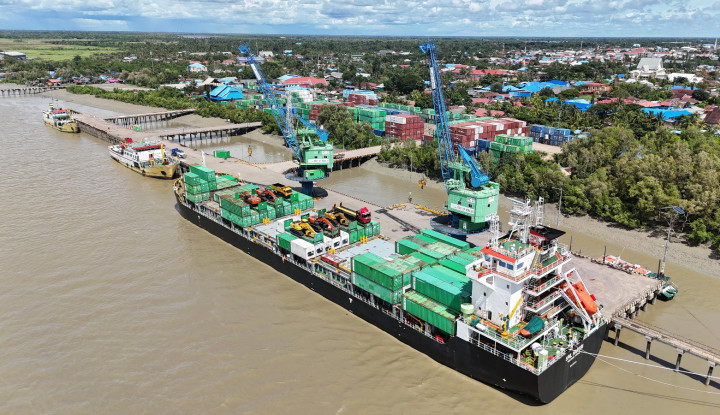
Merauke is becoming an important logistics hub for the future in Papua. It is located in the far southeastern corner of Indonesia, where huge wetlands meet the Arafura Sea and ships carry goods across thousands of kilometers of ocean.
For years, it has been hard and expensive to move goods to Papua’s remote areas. Limited port space, long shipping routes, and uneven infrastructure have often made it hard for important goods to move quickly. But a new plan to make container depot facilities bigger in Merauke could have a big effect on how goods move through Papua Selatan (South Papua) province.
The Indonesian National Development Planning Agency, or Bappenas, is working with the state-owned port operator Pelindo and local governments to build a new container depot outside of the main port area in Merauke. Officials say the project could be very important for making supply chains stronger and helping the economy grow in Papua Selatan.
The proposal shows that more and more policymakers and business leaders understand that Papua’s economy needs better logistics infrastructure to reach its full potential.
Merauke’s Important Role in Papua Selatan
Merauke is close to Indonesia’s eastern maritime border and is closer to Australia than many of the country’s main economic centers. Despite its geographic isolation, the town has become a crucial hub for goods entering Papua Selatan.
Most of the supplies that go to the province come by sea. Ships that dock at Merauke Port bring everything from building materials and fuel to food and consumer goods. These ships are the lifeline for communities that are far apart.
But as business picks up, the port’s capacity is becoming more and more strained. This raises worries about possible delays in deliveries and the need for infrastructure upgrades to meet the growing demand.
Pelindo, the government-owned company that runs many of Indonesia’s biggest ports, says that container traffic through Merauke has been steadily increasing. The company says that container traffic at Merauke Port has gone up by about 14% recently. This is because more people in the area want to buy things.
Growth is a sign of economic growth, but it has also shown problems with the current logistics infrastructure.
Officials say that the port may soon have trouble handling the growing amount of cargo if it doesn’t get more facilities, like bigger container depots and better transportation links.
Why a Container Depot Is Important
Container depots are an important part of modern port logistics that people often forget about. These buildings are where shipping containers are stored and managed outside of the main port terminal.
Logistics companies can move all the containers from busy port yards to nearby depots where they can be stored, inspected, repaired, or sent back out.
This system makes the port less crowded, which speeds up the unloading of cargo and makes maritime logistics work better overall.
There is a growing need for this kind of facility in Merauke.
Pelindo officials have said that the container yard at Merauke Port is getting close to being full. As more cargo comes through the port, traffic jams could slow down operations and raise logistics costs.
A separate container depot outside the port would help shipping companies handle containers better and ease the strain on port infrastructure.
Bappenas Gets Involved
Bappenas has started looking into the possibility of building a container depot in Merauke because they know how important logistics are for Papua’s growth.
Bappenas officials recently went to the area to look into how ports work and what logistics needs are in Papua Selatan. The review was mostly about finding gaps in infrastructure that could make it harder to move goods in the future.
Officials who worked on the study say that better logistics infrastructure is necessary for Papua’s economic growth to continue without problems.
The agency sees Merauke as a key point in the province’s logistics network.
Policymakers want to make sure that supplies can get to remote districts more quickly by improving the town’s facilities. This will help the economy grow and make it easier for people in the area to get the goods and services they need.
Pelindo’s Part in the Plan for Development
Pelindo is very interested in helping to build the new container depot.
The company is very involved in efforts to improve the region’s logistics infrastructure because it runs Merauke Port.
Pelindo officials have said that the company is looking into building a container depot outside of the port area to handle the increasing amount of cargo.
The facility would help move containers out of the port more quickly after they have been unloaded. This would make room for new shipments and make operations run more smoothly.
The benefits could be big for shipping companies.
Shipping costs can go down and delivery times can get better if port terminals have shorter wait times. In places like Papua, where transportation costs are already high, even small improvements in efficiency can have a big impact.
Rising Demand for Logistics Infrastructure
The push to improve logistics infrastructure in Merauke is being driven by larger economic trends in Papua Selatan.
Since Papua Selatan became a new province, local governments have focused more on building infrastructure to help the economy grow.
Better logistics networks should help a lot of industries, including farming, fishing, and trade.
People know Merauke mostly for its farming potential. There are large areas of land around the area that are good for growing food.
As farming gets better, it will be even more important to have dependable logistics systems to move goods to markets in the US and around the world.
Business groups in the area have already said they are worried that a lack of good logistics infrastructure could slow down economic growth.
Local business owners say that shipping delays and not having enough storage space often make things more expensive for businesses in Papua.
They have asked the government to speed up the building of container depots to help trade grow.
Local Government Support
Local governments in Merauke have also backed the plan to build a container depot.
Regional leaders know that having good logistics infrastructure is important for getting businesses to invest and giving people more economic opportunities.
The regent of Merauke has said that land might be set aside for the project. One idea is to use areas that were once set aside for fishing-related activities as possible locations for the depot.
Officials say talks are still going on to find the best place.
Choosing the right site will be important to make sure that the facility runs smoothly and has as little effect on the environment and society as possible.
Avoiding a Logistics Bottleneck
Experts say that if Merauke’s logistics capacity isn’t expanded, it could eventually cause problems for Papua Selatan’s economy.
As more cargo comes in, the port’s limited storage space could slow down unloading. Shipping costs could go up because ships might have to wait longer to dock.
These kinds of delays could affect the whole supply chain, making delivery times longer and costs higher for both businesses and consumers.
Because many goods have to be shipped long distances, communities in Papua often have to pay more for basic needs.
So, making sure that ports run smoothly is not only a matter of efficiency but also of fairness in the economy.
Better logistics infrastructure can help keep prices stable and make sure that important goods get to remote areas on time.
Integrating Papua into Indonesia’s Logistics Network
The Indonesian government is trying to make Papua more connected to the national logistics network. The proposed container depot in Merauke is part of this effort.
In the last ten years, the government has spent a lot of money on infrastructure projects in eastern Indonesia.
These projects include building new roads, airports, and seaports to help close the gaps in development between regions.
People think that making logistics better is an important step in making sure that these investments lead to real economic benefits.
Efficient transportation networks make it easier for goods to move between regions, which helps trade and makes it easier for people to get to markets.
Papua has always had problems with geography, but logistics infrastructure could be a powerful force for economic change by making trade easier, lowering transportation costs, and making it easier to get basic goods and services.
Looking Forward
The plan to build a container depot in Merauke is still being studied, but it seems to be gaining steam.
Bappenas is still looking into whether the project is technically and economically possible, and Pelindo is looking into how the facility will be run.
If built, the depot could greatly increase the capacity of Merauke Port and make the logistics backbone of Papua Selatan much stronger.
The project promises businesses more reliable supply chains. For communities, it could help make sure that important goods get there faster and for less money.
The initiative is also a step toward closing the infrastructure gap between the western and eastern parts of Indonesia, which is important for the country’s overall development.
It may soon be easier and faster to move containers in Merauke, where ships bring goods from faraway ports across the archipelago.
If the new depot is built, the town could become an important logistics hub for Papua Selatan, linking one of Indonesia’s most remote areas to the rest of the country’s economy.

