
Along the northern coast of Papua, fishermen get their nets ready at sunrise, and elders assemble under wooden shelters that face the sea. The Saireri region has always been formed by water, wind, and connections to the community that have been there for generations. But folks have started talking differently along these coasts in the last several months. People are talking about more than simply the weather and fishing. They are also talking about how to run things, how to get to things, and how to make the future fairer by getting their voices closer to the center of power.
People in coastal villages and indigenous communities in Saireri are once again strongly interested in forming a new administrative area called Papua Utara (North Papua) Province. This isn’t a new political slogan or a plan advocated by the privileged for people who live there. It has been a long-standing demand based on daily life and the sense that development has not kept up with the requirements of coastal and island communities.
Supporters claim that establishing Papua Utara would bring government services closer to people, improve them, and make sure that villages that have felt left out for a long time get the development they need.
Not a New Idea, but a Long-Standing Wish
A lot of people have been asking for Papua Utara Province for a long time. Community leaders in Saireri have talked about the notion for years, sometimes softly and sometimes publicly, but always. The only thing that has changed is how fast everything goes. In early 2026, things grew even more heated when representatives from coastal districts said that regional growth should be based on what is really happening on the ground.
People in Saireri don’t think that regional growth will tear things up, according to local newspapers and community forums. They see it as a tool. For them, creating a new province is about making it easier for people who live on islands and along coasts that are sometimes far from existing provincial capitals to make decisions.
Elders in Biak Numfor and the adjacent islands often comment about how hard it is to get things done since they have to travel a long way, pay a lot of money, and plan a lot of things. A fisherman who needs licenses, a student who wants scholarships, or a patient who needs referrals may have to interact with systems that are very far from the coast.
For some communities, distance isn’t simply a word. Fuel for boats, days of travel, and wasted chances are all ways to measure it.
Getting to Know the Saireri Area
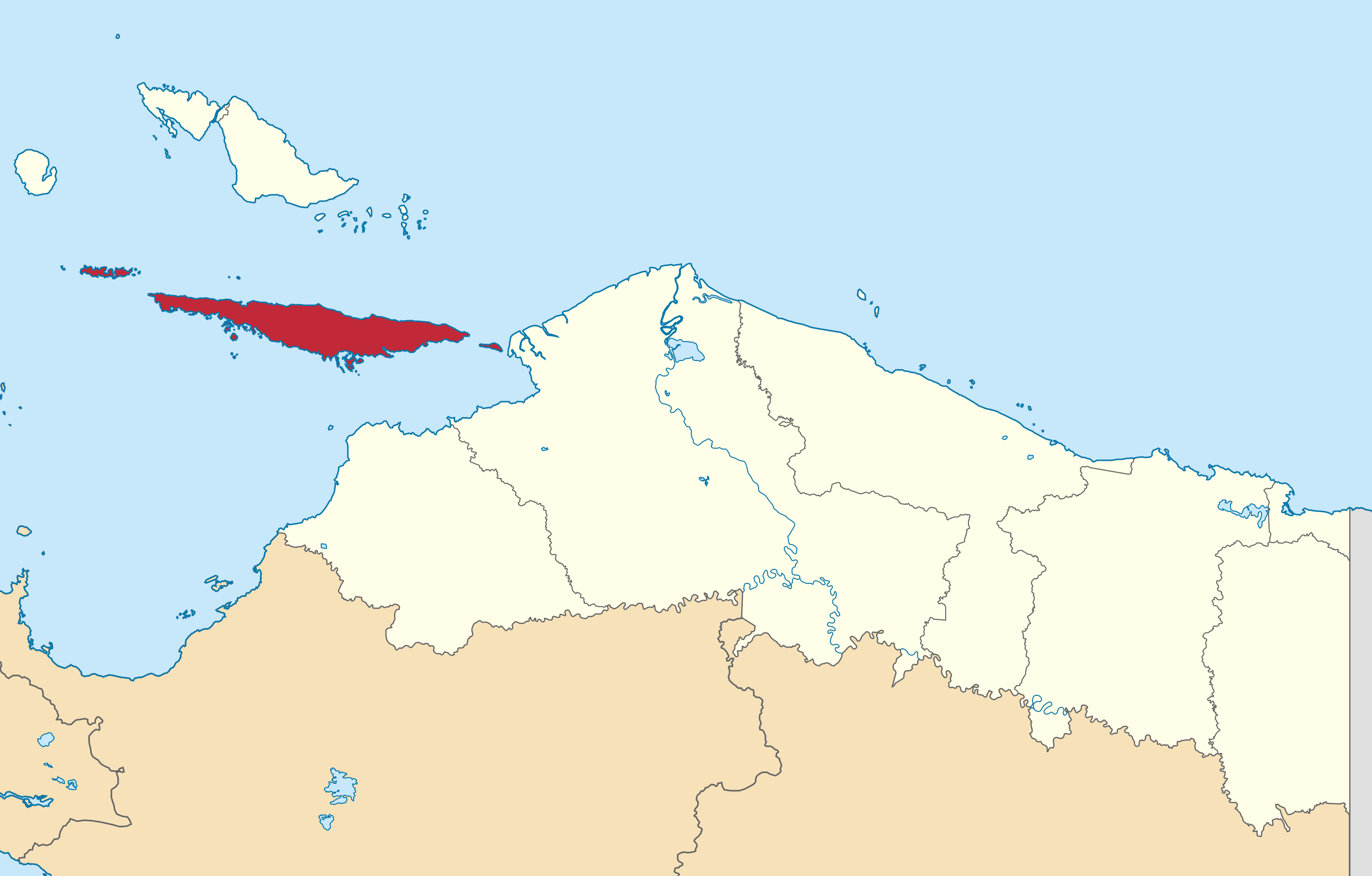
Saireri is a cultural and geographic area that comprises coastal and island areas. It includes the islands of Biak Numfor, Supiori, Yapen, and Waropen. The ocean is a major element of who we are. Fishing, trading between islands, and living on the water are all things that people do every day.
Indigenous elders say that governing mechanisms that work on the mainland don’t always function on islands. There are different needs for infrastructure. Transportation doesn’t use roads; it uses boats and ports instead. Fisheries and marine resources are connected to the economy. People who reside in diverse places need to be taken into account by healthcare and education.
People who reside there feel that a provincial government that is closer to Saireri would know more about what people need. They believe that policies made at the local level would be more adaptable, practical, and responsible.
The Call Comes from the Bottom Up
One of the most remarkable things about the Papua Utara dream is how often it is called a grassroots movement. People have begun to show their support via neighborhood seminars, community meetings, and regular gatherings.
People from Saireri have begged their elected leaders to defend their hopes and dreams instead of stopping them. They have implored political leaders not to turn the problem into a fight between the rich and powerful but to listen to what people in villages and islands have to say.
Recently, some members in the community have urged against making the argument about party politics. They made it plain that the goal is not to win jobs or power but to get services and equitable growth.
A young community organizer from Yapen said it simply. She noted that people want schools that are simple to go to, hospitals that work, and jobs that make the most of the area’s capabilities. Papua Utara is more useful to her than it is a symbol.
There are places along the coast where development is not happening.
People who want the new province typically believe that the best reason to get it is that there are gaps in development. Coastal and island districts face challenges that are not the same as those in inland places.
Transportation is still expensive. It can be hard and expensive to plan for shipping products across islands. Limited port infrastructure makes it harder for the economy to thrive. People have to go to distant cities to seek basic health care in some situations.
Another issue is education. A lot of the time, students leave their home islands to go to college, and they might not come back since there aren’t many jobs there. Leaders in the area suggest that a new province might put a lot of focus on managing the coast, fishing technology, and maritime education.
These worries are not simply ideas. They assist families in deciding things every day. If you should send your child to school far away. You should invest in a small firm. Should I stay or go?
Economic and Social Potential
People who want Papua Utara Province to stay argue that Saireri has economic potential that hasn’t been used yet. If they are handled correctly, fisheries, marine tourism, and trade across islands can all make people’s lives better.
A provincial administration that focuses on the northern shore may formulate plans for development that leverage these capabilities. Investing in cold storage, seafood processing, and port infrastructure might create jobs and raise the area’s value.
Tourism is another topic that comes up a lot. A lot of people know that Biak and Yapen are wonderful destinations, but the roads and advertising aren’t particularly excellent yet. People who support closer governance say it might help sustainable tourism grow faster while simultaneously conserving the environment and native culture.
Welfare isn’t simply about money for folks who live by the sea. It’s about having stability, respect, and the chance to keep conventional occupations in a modern economy.
Caution Against Elite Politics
Even while there is a lot of support, community leaders are being careful. They are afraid that the goal will be utilized for political gain. Several people have publicly informed the elites that they shouldn’t use regional expansion as a bargaining tool.
This warning is based on prior experiences when promises of development didn’t always come true. People who live there want things to be open, plans to be clear, and a meaningful say in any process that leads to the creation of a new province.
They say that the goal should be based on what the community needs, not on politics. They think that being honest is what makes someone trustworthy.
What the Government and Representatives Do
People in the area have pushed their elected leaders to push for the goal at higher levels of government. Some people have replied by underlining how important it is to plan ahead, including by doing feasibility studies and making sure that administrative planning is clear.
People also realize that expanding into other areas is a difficult procedure that requires permission from the national government and must fit into wider systems of government. Those who desire to make a new province know that it won’t happen right away.
But they say that just because something is hard doesn’t mean you shouldn’t attempt it. They think that the national government, regional leaders, and communities need to keep talking to each other.
Identity, Representation, and Belonging
The goal for Papua Utara is more than just numbers; it also encompasses identity and representation. People in Saireri communities see themselves as different because of their culture and where they live. They want the government to show that they are different.
A lot of the time, older people talk about how vital it is to be seen and heard. A province that was called and shaped after their place would show respect.
This feeling of belonging is especially essential in Papua, where there are a lot of different people and local identity is tightly related to land and water. People who support this idea consider that the government should reflect diversity instead of making it less so.
Concerns and Questions
People don’t agree on what to do next. Some people are apprehensive about how much it will cost to manage the firm, how ready it is, and the danger of doing the same thing again. These concerns are a typical part of a healthy discussion.
People who support it say that progress also has costs when the government is far away and doesn’t listen. They think that the long-term benefits of a stronger economy and better services might be bigger than the short-term issues.
They also talk about how vital it is to learn from other new provinces in Papua, both what works and what doesn’t.
A Plan for Fair Growth
The main goal for Papua Utara Province is fairness. People who live on the shore and on islands desire development that works with their way of life. They want a government that listens.
At community gatherings, people typically talk about their vision in plain language. Less time wasted going to government agencies. Faster solutions to challenges in the neighborhood. Rules created by folks who know a lot about the water.
They envisage a future where young people don’t have to leave to be well, where older people see stability instead of decline, and where welfare gets better without taking away cultural identity.
Looking Forward
As the conversations go on, one thing is obvious. The people of Papua Utara Province are still hopeful. It’s getting more organized, clearer, and based on real-life experiences, if anything.
Policymakers can easily understand what Saireri is saying. Pay close attention. Take part in a real way. Instead of a political slogan, think of the aim as a social and developmental issue.
Being patient and not giving up is the most important thing for communities. They recognize that changes take time. But they also know that not saying anything doesn’t help.
Conclusion
For hundreds of years, waves have been pounding against coral reefs on the coasts of Saireri. Things go on. But deep within, a calm determination is forming.
The appeal for Papua Utara Province is a call for fairness, proximity, and respect. It reminds us that development isn’t just about money and plans; it’s also about giving people a voice in the decisions that influence their lives.
It’s easy to describe what Saireri communities want, but it’s hard to make it happen. They want a future where the government is centered on where you live, welfare reaches the coast, and the sea’s views are heard at the center.
Papua Utara Province will only happen if people talk to each other, trust each other, and want it to happen. The aim itself reveals a strong desire for a more equitable and transparent developmental trajectory in Papua.

