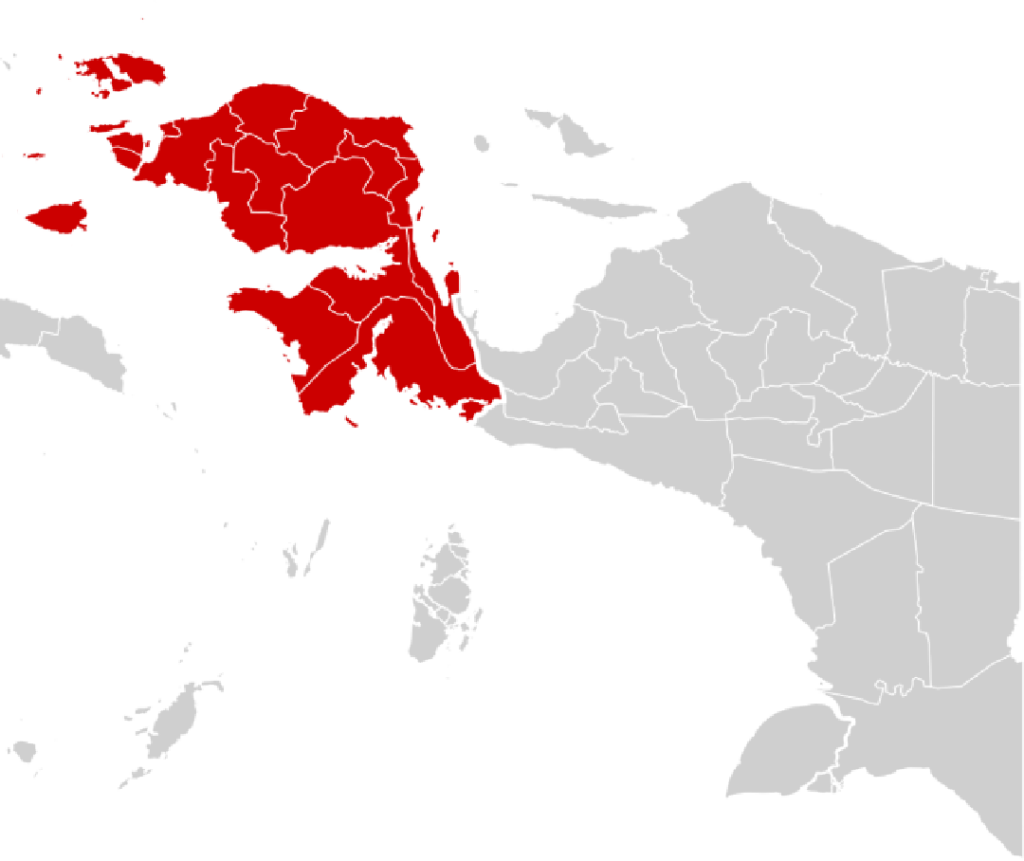
Access to clean water has long been one of the most persistent development challenges in Papua. In urban neighborhoods, water infrastructure often struggles to keep pace with population growth. In border and remote communities, access to safe water can be intermittent or entirely absent. Against this backdrop, a collaborative initiative involving PT Pertamina Patra Niaga, SERUNI KMP, and the Ministry of Energy and Mineral Resources has emerged as a concrete response to everyday needs that shape public health, education, and local resilience.
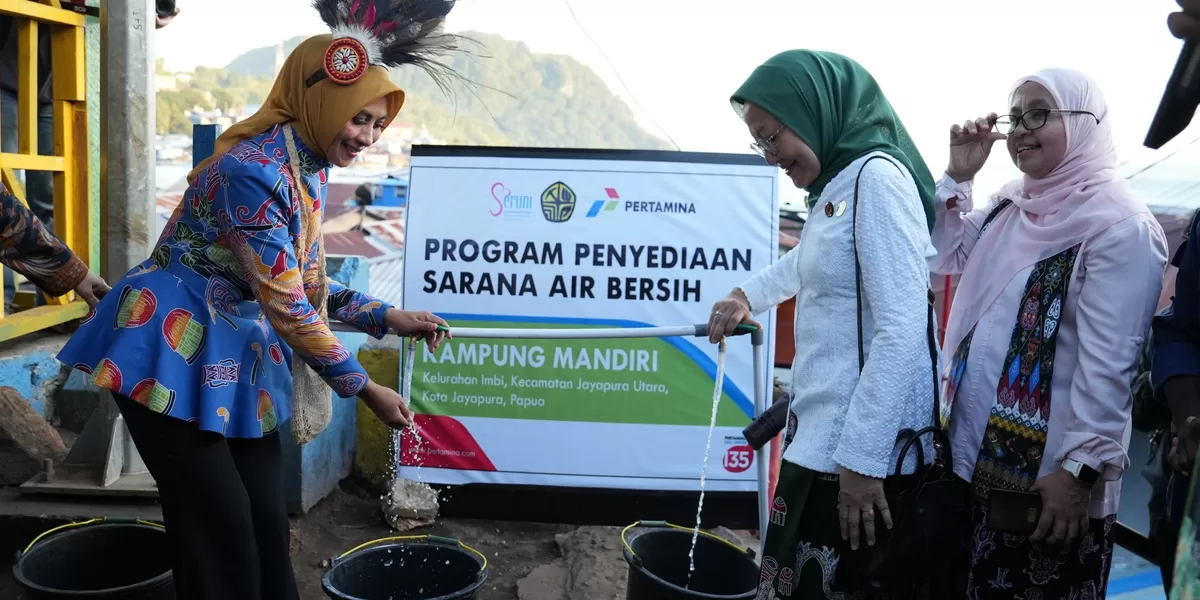
On January 30, 2026, the partnership delivered new clean water facilities in three strategic locations in Papua: Pasir Dua and Imbi in Jayapura City, as well as Kampung Mosso, a remote village located along the international border with Papua New Guinea. The initiative reflects a development approach that prioritizes inclusivity, territorial equity, and long-term community benefit, especially in regions often described as Indonesia’s frontlines.
Water as a Foundation of Social Welfare
Clean water goes beyond just being a basic need. It’s closely linked to public health, child nutrition, women’s work, and a community’s ability to get an education and make money. In Papua, the geographical isolation, rough terrain, and limited investment in infrastructure have always made it difficult to provide water.
Field assessments, mentioned in several reports, show that people in parts of Jayapura and border villages like Mosso have relied on rainwater, shallow wells, or untreated surface water for their daily needs. Water shortages are more common during dry seasons. Also, the risk of contamination increases during the rainy season.
These circumstances lead to health problems that could be avoided, including diseases spread through water, which disproportionately affect children and the elderly.
The clean water initiatives born from the Pertamina Patra Niaga and SERUNI KMP partnership are designed to tackle these issues not with temporary fixes, but by building lasting, community-run systems. These systems are built to provide water that is accessible, safe, and dependable, freeing residents to concentrate on education, work, and their families.
Pasir Dua and Imbi: Urban Challenges in Jayapura
In Jayapura, the neighborhoods of Pasir Dua and Imbi demonstrate that water insecurity can persist even in provincial capitals. High population density, aging pipes, and uneven urban growth have left certain communities without a steady supply of clean water.
Newly built water storage units, distribution points, and supporting infrastructure in these areas are ensuring that water is available close to homes.
Community members engaged in preliminary talks to pinpoint key locations and guarantee the facilities’ accessibility for those most in need, such as children and the elderly.
Local residents, speaking to regional media, recounted how their daily lives once centered on water collection. Families sometimes trekked long distances or endured unpredictable supply schedules. Now that the new facilities are up and running, residents are seeing benefits not just in convenience, but also in hygiene and overall household stability.
The Pasir Dua and Imbi installations underscore that clean water issues aren’t confined to rural Papua. Urban inequality, if ignored, can lead to similar difficulties. This initiative shows how focused corporate social responsibility programs can support local government efforts to bridge service gaps.
Kampung Mosso: Clean Water at the Border
A clean water facility, constructed in Kampung Mosso, stands as perhaps the most symbolically important element of the program. This village sits in Papua’s border zone with Papua New Guinea. Border communities frequently grapple with a host of interconnected issues: inadequate infrastructure, limited access to essential services, and a heightened susceptibility to health and economic crises.
Prior to the new facility, the people of Mosso relied on natural water sources, which varied with the seasons. During extended dry periods, water became scarce, impacting sanitation, food preparation, and school attendance. Women and children often shouldered the greatest burden, dedicating hours each day to gathering water for their families.
The new facility offers a consistent supply of clean water, significantly alleviating the daily struggles.
Community leaders have pointed out that the benefits extend far beyond just bricks and mortar. When residents have reliable access to water, it boosts their sense of self-worth and belonging. This, in turn, reinforces the notion that border communities are essential to the country, not just isolated areas.
For those at the national level, projects like this also have strategic significance. Providing basic services in border regions fosters social unity, strengthens the government’s presence, and helps maintain peaceful relations across borders by lessening the inequalities that can lead to unrest.
The partnership between PT Pertamina Patra Niaga and SERUNI KMP highlights a growing trend in Indonesia: the move toward development models that involve multiple stakeholders. Instead of working in isolation, businesses, non-governmental organizations, and government entities are increasingly pooling their resources and expertise to tackle intricate social challenges.
Pertamina Patra Niaga, a state-owned enterprise, is a key player in the country’s infrastructure and logistics, specifically in energy distribution. Its work in providing clean water reflects a broader view of energy security, one that encompasses social and environmental concerns.
SERUNI KMP serves as a platform for social empowerment, concentrating on sustainable community development. By doing so, it ensures that projects are tailored to local needs, supported by social outreach, community involvement, and plans for long-term upkeep.
Officials from the Ministry of Energy and Mineral Resources have pointed out the close relationship between clean water access and energy policy, especially in remote areas. Here, infrastructure development must be integrated, not piecemeal. Water systems depend on power, ongoing maintenance, and trained personnel—all of which benefit from coordinated planning.
Sustainability is a cornerstone of the program. These facilities aren’t meant to be temporary; they’re designed as systems that communities can run and look after themselves. We’ve already held training sessions for local residents, making sure they know how to operate and maintain everything.
Getting the community involved also fosters a sense of ownership, which in turn lessens the chances of things being neglected or misused. We’ve worked with local leaders to set up water management groups. These groups handle oversight, settle any disputes, and work with local authorities when technical assistance is needed.
This approach echoes wider development goals, focusing on empowerment instead of creating a cycle of dependency. By giving communities the tools and knowledge they need to manage their own resources, the program hopes to provide lasting benefits, not just temporary fixes.
Clean water access is intrinsically linked to wider national development objectives within Papua. Enhanced water availability bolsters public health endeavors, curtails healthcare expenditures, and improves educational attainment by mitigating illness-related school absences.
The availability of proximate clean water significantly benefits women, who frequently bear the burden of water procurement, thereby liberating time for educational pursuits, economic engagements, and community involvement. Furthermore, improved sanitation contributes to superior nutrition and cognitive development in children.
Regionally, clean water infrastructure fortifies resilience against climate fluctuations. Papua’s climatic conditions are becoming increasingly erratic, characterized by intensified rainfall during certain periods and prolonged droughts during others.
Dependable water systems are essential for communities facing these shifts.
A Blueprint for Growth
The achievements of the facilities in Jayapura and Kampung Mosso have sparked conversations about extending similar programs throughout Papua. Project stakeholders have suggested that the model could be duplicated in other border regions and isolated villages, especially those with scant access to essential services.
The focus on teamwork, community involvement, and long-term viability positions this initiative as a potential model for future collaborations between businesses and government entities. It shows that development doesn’t always hinge on grand infrastructure undertakings. Often, focused efforts that meet basic needs can yield significant change.
Conclusion
The clean water infrastructure established through the collaborative efforts of PT Pertamina Patra Niaga, SERUNI KMP, and governmental entities transcends mere infrastructural improvements. These projects serve as concrete manifestations of inclusivity, indicating that developmental initiatives are now reaching communities that have historically lacked access to fundamental services.
Spanning from urban areas in Jayapura to a border village adjacent to Papua New Guinea, this undertaking exemplifies how clean water can function as a cornerstone for health, dignity, and opportunity. Given Papua’s unique developmental challenges, which are intricately linked to its geography and history, such programs provide a pathway toward more equitable advancement.
As Indonesia persists in its pursuit of inclusive development throughout its eastern regions, access to clean water emerges as both a practical necessity and a potent symbol of dedication. In Papua, each operational water source narrates a story that extends beyond infrastructure, encompassing attention, collaboration, and shared accountability.