
Every year, as Christmas approaches, Papua enters a season marked by movement, emotion, and anticipation. For many residents, the holiday is not only about religious celebration but also about the deeply rooted tradition of homecoming (mudik). The practice of homecoming, or traveling back to one’s hometown, carries particular significance in Papua, where families are often separated by vast distances, challenging terrain, and limited transportation options. Ensuring that these journeys take place safely and smoothly is no small task, and it requires coordination that extends far beyond buses and ships alone.
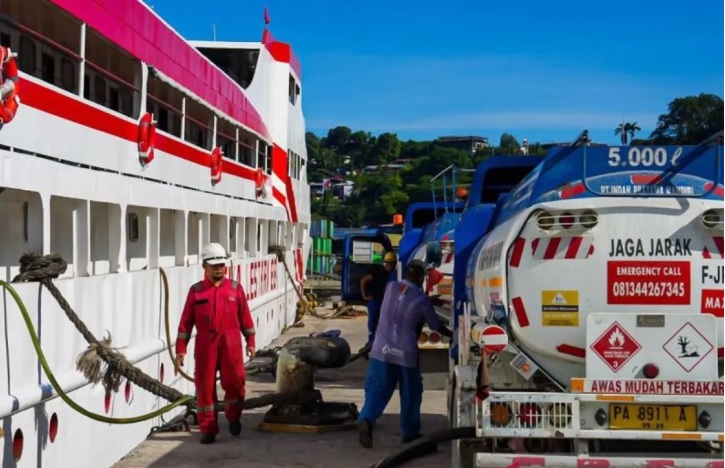
In this context, PT Pertamina, Indonesia’s state-owned energy company, has played a critical role in supporting Christmas travel across Papua by ensuring the availability of fuel. Through a carefully planned logistics operation, Pertamina supplied approximately 65 thousand liters of fuel to support both sea and land transportation for the Christmas homecoming program. This contribution has become a key factor in maintaining mobility, safety, and public confidence during one of the busiest travel periods of the year.
Papua’s Homecoming Tradition and Its Unique Challenges
Homecoming in Papua differs greatly from similar journeys on other Indonesian islands. While road networks in Java or Sumatra allow relatively straightforward travel by private vehicles or intercity buses, Papua’s geography presents a far more complex picture. Mountainous regions, dense forests, limited road connectivity, and vast stretches of sea make transportation highly dependent on ships and government-supported buses.
For coastal communities and island residents, sea transport remains the primary option. Ships function not only as passenger vessels but as lifelines that connect people to education, healthcare, markets, and family networks. During the Christmas season, these vessels experience a significant increase in passenger numbers as families travel home to celebrate together. At the same time, overland routes serviced by buses become vital for communities located along main corridors linking urban centers such as Jayapura and Biak to surrounding districts.
Fuel availability sits at the center of this entire system. Without sufficient fuel, ships cannot sail on schedule and buses cannot operate reliably. Delays, cancellations, or mechanical disruptions can quickly cascade into wider logistical problems, affecting thousands of travelers. This reality places fuel supply at the heart of holiday travel planning in Papua.
Pertamina’s Strategic Fuel Supply for Christmas Travel
Recognizing the importance of uninterrupted transportation, Pertamina Patra Niaga Regional Papua Maluku prepared early to support the Christmas homecoming program. The company coordinated closely with local governments, transportation operators, and port authorities to align fuel distribution with travel schedules. This coordination ensured that fuel deliveries would arrive at the right locations and at the right times, minimizing the risk of shortages during peak travel days.
One of the most significant components of this effort involved maritime transportation. Pertamina supplied fuel for passenger vessels operating under the free Christmas homecoming program organized by the Papua provincial government. Two ships in particular, Cantika Lestari 77 and Cantika Lestari 88, were allocated an initial supply of approximately 30 thousand liters of fuel to support their early departures. These vessels serve critical routes connecting major ports to remote coastal destinations where alternative transportation options are extremely limited.
Additional refueling was scheduled for later dates in December to accommodate return journeys and increased passenger demand. Through these subsequent deliveries, the total fuel supplied for maritime transport during the Christmas homecoming period reached around 65 thousand liters. This ensured that ships could operate multiple trips without interruption, maintaining reliability and safety for passengers traveling long distances across the sea.
Supporting Bus Travel Across Papua’s Roads
While ships dominate long-distance travel in Papua, buses remain essential for overland routes connecting cities and inland districts. To support this segment, Pertamina worked alongside Perum Damri, the state-owned bus operator tasked with running free Christmas homecoming services on several routes. These included connections from Jayapura to Sarmi, Senggi, and Taja, as well as services linking Biak with Sorendiweri.
The bus routes were scheduled to operate daily during peak holiday periods, both before and after Christmas. Such intensive operations require consistent fuel availability, particularly given the challenging road conditions in some areas. Steep inclines, long distances between refueling points, and variable weather conditions all increase fuel consumption and operational risk.
Pertamina addressed these challenges by ensuring that fuel stocks at key distribution points were sufficient to meet daily consumption needs. Estimates indicated that buses operating on the Jayapura and surrounding routes would consume over two thousand liters of fuel per day, while the Biak route would require close to one hundred liters daily. Through careful stock management and coordination with local fueling stations, Pertamina ensured that these demands could be met without disruption.
Logistics in a Region Defined by Distance
Fuel distribution in Papua requires a level of logistical precision that is rarely visible to the public. Unlike regions with dense road networks, Papua depends heavily on maritime supply chains. Fuel must be transported by tanker ships to coastal depots, then distributed onward to smaller ports, fueling stations, or directly to transport operators. Any delay in this chain can affect multiple sectors simultaneously.
Weather conditions further complicate this process. High waves, strong winds, and unpredictable sea conditions can delay fuel shipments, particularly during the rainy season that often coincides with the end of the year. Despite these challenges, Pertamina managed to maintain supply stability throughout the Christmas travel period, reflecting strong contingency planning and coordination with maritime authorities.
This behind-the-scenes work is often overlooked, yet it is essential to maintaining public confidence in transportation systems. When travelers board a ship or bus with the expectation of reaching their destination on time, they are relying not only on drivers and captains but also on the invisible infrastructure that ensures fuel is available at every stage of the journey.
The Human Side of Fuel Supply
While fuel is often discussed in technical terms, its impact during the Christmas season is deeply personal. For many Papuans, homecoming represents a rare opportunity to reunite with parents, children, and extended family members. Economic pressures, employment obligations, and educational commitments frequently keep families apart for much of the year. Christmas becomes the moment when those distances are finally bridged.
In this context, the availability of fuel translates directly into emotional outcomes. A ship that sails on time allows a grandmother to see her grandchildren again. A bus that completes its route safely enables a young worker to return home for Christmas Eve prayers. These moments are made possible not only by transportation schedules but also by the certainty that fuel supplies will not run dry along the way.
Community leaders in Papua have acknowledged this connection, emphasizing that Pertamina’s support goes beyond operational efficiency. By ensuring fuel availability, the company contributes to social stability and emotional well-being during a period of heightened movement and expectation.
Safety, Reliability, and Public Trust
Another critical aspect of Pertamina’s involvement lies in its contribution to travel safety. Fuel shortages can force vehicles and vessels to operate under unsafe conditions, including overloading, rushed schedules, or extended delays in unfamiliar locations. By securing adequate fuel supplies in advance, these risks are significantly reduced.
Transport operators are able to plan routes more carefully, adhere to safety standards, and avoid unnecessary detours or emergency stops. Passengers, in turn, experience greater peace of mind knowing that their journey is supported by reliable infrastructure. This sense of trust is particularly important in Papua, where travel already involves inherent risks due to geography and distance.
Pertamina’s coordination with local authorities also allows for rapid response should unexpected issues arise. Fuel reserves and flexible distribution arrangements provide a buffer that helps absorb shocks, whether caused by weather disruptions or sudden increases in passenger numbers.
Strengthening State Presence Through Service
The Christmas homecoming program in Papua also carries broader implications for public service delivery. By supporting free transportation and ensuring fuel availability, the government and state-owned enterprises demonstrate tangible commitment to serving communities in remote and challenging regions. This presence is felt not through rhetoric, but through practical assistance that directly affects people’s lives.
Pertamina’s role in this effort reinforces its position not only as an energy provider but also as a strategic partner in national development and social cohesion. In regions like Papua, where infrastructure gaps remain significant, such partnerships play a crucial role in bridging disparities and strengthening trust between the state and local communities.
Bringing People Home for Christmas
As the Christmas season unfolds, thousands of journeys across Papua are quietly powered by fuel that has been carefully planned, delivered, and monitored. Ships depart from ports carrying families eager to return home. Buses navigate winding roads through hills and forests, connecting towns and villages that might otherwise feel isolated. Behind each of these movements lies a complex system of logistics that makes reunion possible.
For the travelers themselves, these systems fade into the background as they focus on the anticipation of arrival. What remains is the joy of stepping onto familiar soil, greeting loved ones, and sharing moments that define the holiday season. In enabling these experiences, Pertamina’s contribution extends far beyond the delivery of 65 thousand liters of fuel. It becomes part of the story of connection, resilience, and shared celebration that defines Christmas in Papua.
As families gather and the year draws to a close, the success of the Christmas homecoming program stands as a reminder that infrastructure, when managed with care and purpose, can bring people closer together. Through steady fuel supply and coordinated action, Pertamina has helped ensure that the journey home remains possible for thousands of Papuans, turning logistical planning into lived experience and meaningful reunion.

