
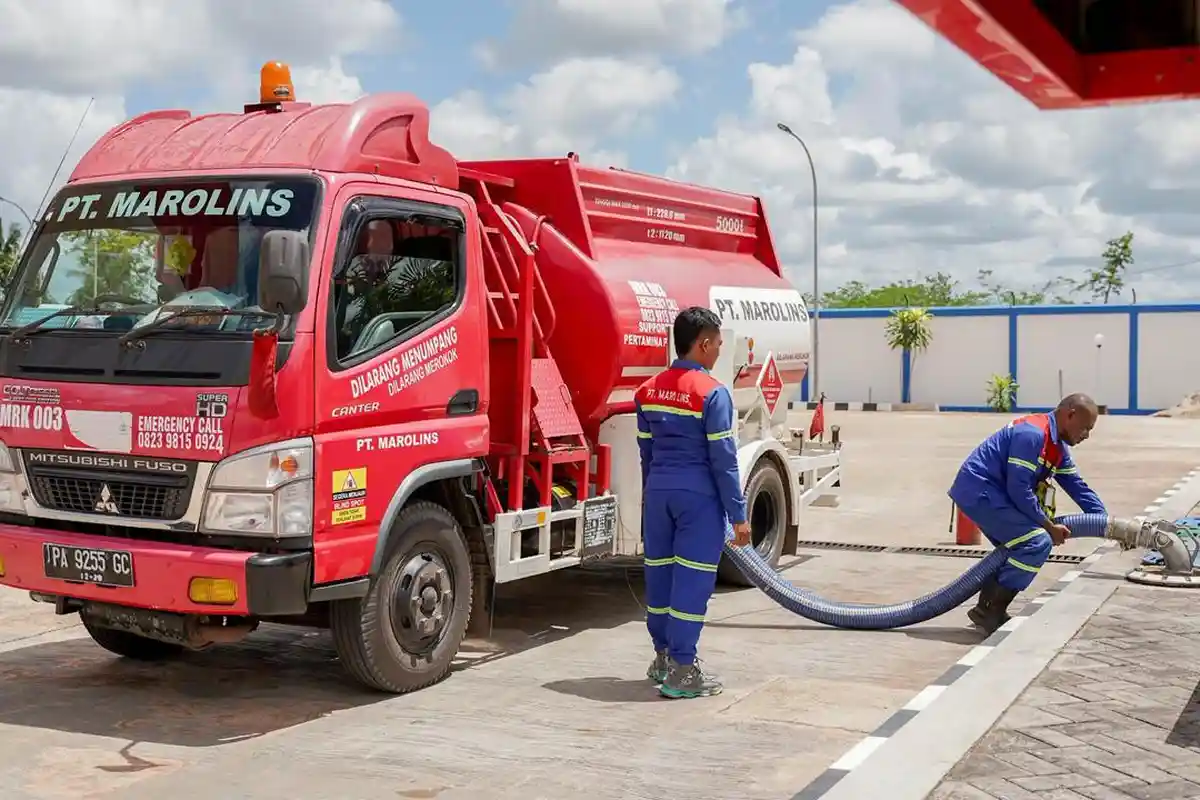
As December draws near, communities across Papua and Maluku are bracing not just for the festive glow of Christmas lights and New Year’s celebrations but for the unpredictable wrath of late-year weather. In these remote, island-scattered provinces, fuel is more than a commodity: it is a lifeline. Recognizing this, PT Pertamina Patra Niaga, the downstream arm of Indonesia’s state energy giant, has launched a bold and comprehensive campaign to secure energy supply across Papua and Maluku—from fuel terminals to grassroots service points—in anticipation of harsh weather that could disrupt logistics and threaten access.
The Stakes Are High: Why Year-End Matters in Papua and Maluku
Papua and Maluku occupy some of the most geographically challenging terrain in Indonesia. Their rugged coastlines, island geographies, and underdeveloped infrastructure make them deeply vulnerable to logistical disruptions, especially when bad weather strikes. At the end of the year, monsoon-driven rain, strong winds, flooding, and turbulent seas often coalesce in a way that threatens maritime transport. For Pertamina, this means potential bottlenecks, delivery delays, or even a temporary breakdown of fuel distribution networks just when demand may surge.
This risk is not theoretical—it touches the daily life of communities reliant on fuel for fishing vessels, small-scale transport, power generation, and household energy. Ensuring that fuel (BBM), LPG, aviation fuel (avtur), and other energy forms stay reliably available is not merely a commercial operation: it’s a social service in Indonesia’s farthest reaches.
Stock Resilience: Building a Buffer Before the Storm
At the heart of Pertamina’s year-end readiness is its robust inventory buffering strategy. Executive General Manager of Pertamina Patra Niaga’s Papua–Maluku region, Awan Raharjo, reports that as of 13 November 2025, the company holds a well-calibrated safety stock across key energy products: approximately 21 days of Pertalite, 24 days of Pertamax, 16 days of Solar (diesel), 15 days of kerosene, 15 days of avtur, and a striking 92 days of LPG.
These buffer levels aren’t static. They fluctuate daily, depending on how much fuel arrives at terminals and how much is dispatched to distributors. To manage this, Pertamina relies on a fleet of supply vessels to deliver to 21 fuel terminals distributed across both provinces.
This strategy gives the company a vital cushion—a reservoir of energy that can be drawn upon even if shipments are delayed or disrupted.
A Fleet on Standby: Multimodal Logistics Under Strain
Pertamina’s logistical operations in Papua and Maluku demonstrate impressive scale and sophistication. To ensure resilience, the company operates 21 dedicated ships that supply fuel to its terminals across the region.
These vessels form the backbone of its maritime supply chain, especially because sea transport is often the most efficient—and sometimes only—way to reach its remote fuel depots.
Yet, Pertamina does not rely solely on the sea. Its distribution reach extends through land and air as well: about 290 tanker trucks serve SPBUs (gas stations), Pertashops, and kerosene agents; 2 skid tanks support LPG delivery; and 44 bridging units distribute avtur across 12 airports in Papua and Maluku.
This multi-modal infrastructure not only enhances flexibility but also ensures redundancy; when one supply route is compromised by weather, others can absorb the shock.
Vigilance in Action: Tight Oversight for Reliability
Underpinning the entire operation is an intensive supervision system. Awan Raharjo explains that Pertamina’s team conducts daily, direct oversight of inventory and distribution processes—watching stock levels, monitoring transportation assets, and evaluating supply consistency across its network.
This is not just corporate lip service. In news reports, Pertamina’s leadership affirms that such oversight is vital to anticipate and respond to possible disruptions—especially in a region where fuel distribution depends heavily on logistics that are highly sensitive to weather.
The goal is simple: avoid crisis through early detection. By ramping up on-the-ground monitoring, Pertamina aims to spot trouble before it cascades into a shortage.
On the Ground: Field Checks in Sorong and Beyond
The scale of Pertamina’s vigilance becomes clear when zoomed in to specific regions. In Sorong, Papua Barat, Awan Raharjo personally led inspections of key infrastructure such as the fuel terminal, aviation fuel depot, and local SPBUs.
These checks are not superficial. The team tests product quality, verifies water content in fuel, and confirms that dispenser calibrations remain accurate.
In a region where even a small breach in quality threatens safety or trust, such hands-on procedures are crucial.
Furthermore, Pertamina coordinates with local governments, TNI (military), and police, reinforcing a multi-stakeholder effort to secure fuel supply amid the potential chaos of weather-driven disruptions.
This collaboration not only strengthens Pertamina’s operational capacity but also underscores its role as a responsible national actor committed to public welfare in challenging terrain.
Institutional Synergy: Regulators and Local Support
Pertamina’s year-end energy readiness in Papua and Maluku doesn’t happen in isolation. It aligns with broader regulatory and institutional frameworks. In past holiday seasons, for example, the company has established a special task force (Satgas) to oversee distribution during Christmas and New Year, mobilizing resources and coordinating with stakeholders to preempt disruptions.
This institutional scaffolding strengthens Pertamina’s position and signals its accountability. The involvement of local government and regulatory entities underscores that energy security in these regions is not just a corporate imperative—it is a matter of national importance and social duty.
Prioritizing Safety: Awards, Standards, and Quality Assurance
Maintaining operations under stress is one thing; doing so without compromising safety is another. Pertamina Patra Niaga Papua–Maluku has earned recognition precisely for its commitment to safety: it won the Patra Nirbhaya Karya Utama Award from the Ministry of Energy and Mineral Resources for maintaining zero lost-time incidents in its operations.
This accolade is more than a trophy—it’s a public pledge that in pursuit of supply, safety is never sacrificed.
Moreover, Pertamina consistently conducts quality control tests, verifying water content and fuel calibration before distribution.
These stringent checks build public trust, especially in remote areas where any lapse could carry serious consequences.
Public-Private Accountability: Engaging Communities
Pertamina knows it cannot secure energy alone—it also needs the vigilance and trust of the public. That’s why its Regional Papua–Maluku team has urged local communities to report any issues via the Pertamina Contact Center (135).
This grassroots feedback loop empowers regular citizens to serve as early warning systems for potential distribution problems.
By being open about its stock levels (publishing “days of supply” figures) and transport readiness—and by asking for community input—Pertamina builds a foundation of transparency. In remote areas, where misinformation or panic can spread fast, this trust is a critical buffer against instability.
Beyond Business: Pertamina’s Social and National Role
Pertamina’s readiness campaign is, at its core, both pragmatic and patriotic. It is pragmatic because, as a business, Pertamina must protect its logistical investments and safeguard its supply chain integrity. But it is also deeply nationalistic: in Papua and Maluku, energy access is tightly bound to equity, development, and social stability.
By proactively preparing for year-end weather risks, Pertamina supports local economies, ensures that remote communities are not isolated during festive seasons, and affirms the Indonesian government’s commitment to even its most remote citizens. This is not just a corporate strategy—it is a national mission.
Challenges on the Horizon: What Could Still Go Wrong
Despite all these preparations, Pertamina faces real uncertainties. Weather can be wildly unpredictable: storms may intensify, sea conditions could worsen, and distribution routes might be blocked or delayed. Even the most carefully planned supply network may struggle under the pressure of sudden demand surges or infrastructure breakdown.
Remote terminals may lack sufficient backup if resupply ships are delayed. Communication lines may falter, limiting the speed of response. Road infrastructure may be compromised by flooding or landslides, hindering overland transport. And even if fuel arrives, quality control remains a constant challenge in low-access zones.
Because of these variables, Pertamina’s strategy requires not just readiness but adaptability. Continuous real-time monitoring, flexible rerouting, and strong coordination with local actors will be essential.
Conclusion
Pertamina’s year-end readiness campaign in Papua and Maluku is not simply about delivering fuel—it is about preserving a connection, a guarantee that even in remote corners of the archipelago, energy will flow when it matters most. By reinforcing supply lines, maintaining robust inventory buffers, and closely monitoring logistics, the company is making a proactive investment in resilience.
More than that, Pertamina’s mission embodies a national promise: that geography will not determine access, and that communities at the edges of Indonesia’s map will not be left behind when storms rage or celebrations begin. In doing so, the company doesn’t just secure its operations—it safeguards lives, livelihoods, and the social fabric of distant but essential parts of the nation.
In anticipating risk and preparing in advance, Pertamina is fulfilling its responsibility as a public energy steward. For the people of Papua and Maluku, its efforts bring more than fuel—they bring certainty in uncertainty, a stable flame in unpredictable times, and a firm signal: Indonesia cares, and Indonesia delivers.

