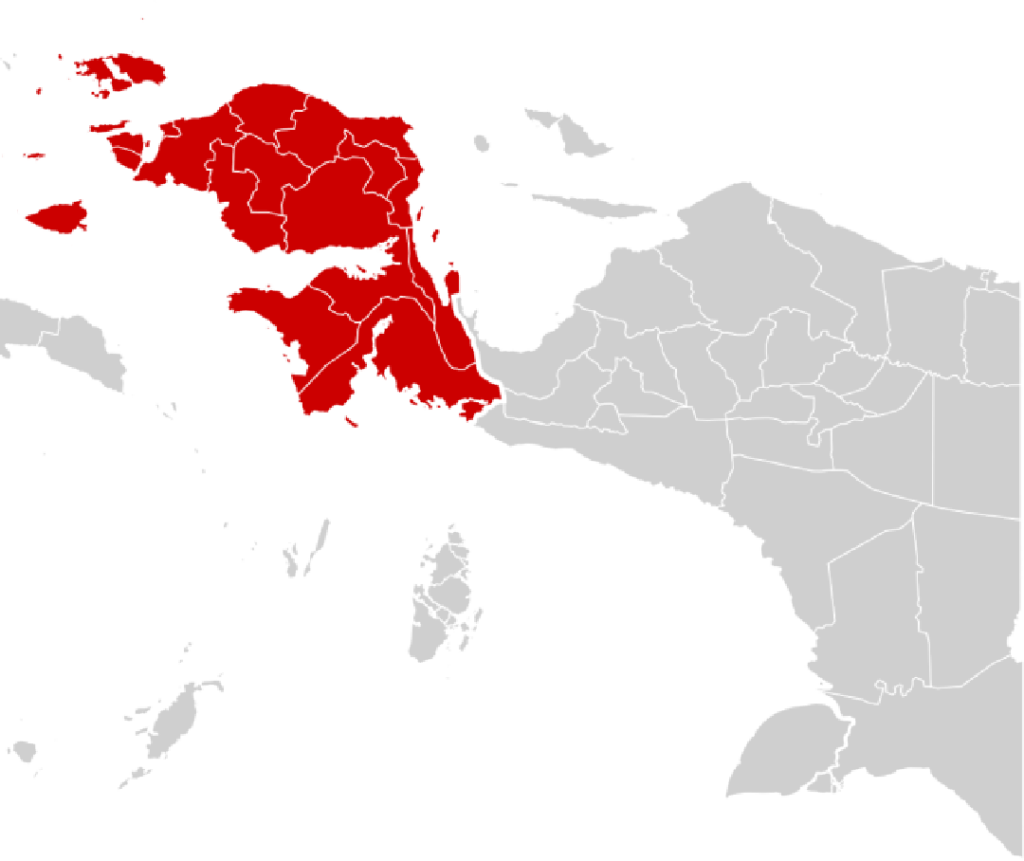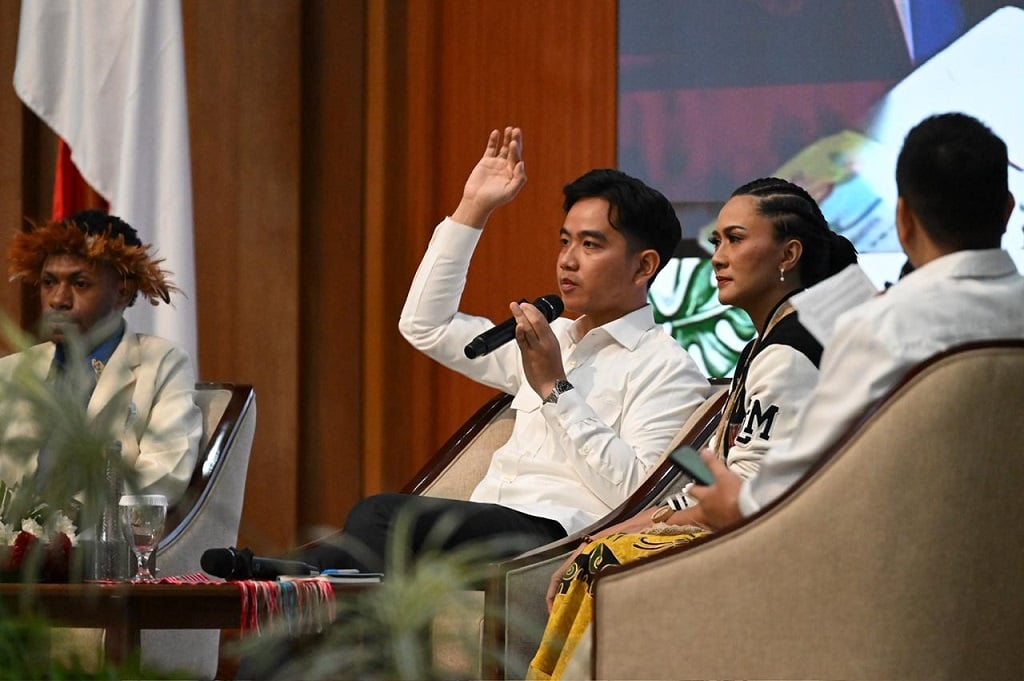
On January 26, 2026, at the auditorium of Universitas Kristen (Christian University) Satya Wacana in Salatiga, it was unusually quiet as students listened closely to the message delivered by Indonesia’s Vice President, Gibran Rakabuming Raka. The dialogue, held with Papuan students studying at the university, was not a ceremonial appearance or a one-directional lecture. Rather, it transformed into a platform for open discussions about Papua’s development, responsibility, and future.
The meeting reflected a broader approach adopted by the Indonesian government recently. Papua is no longer discussed only in terms of security or distance. It is increasingly framed through education, infrastructure, and human capital. By choosing a campus setting and speaking directly to students, the vice president placed young Papuans at the center of the national development narrative.
For many students in the room, this was the first time a high-ranking government official addressed them not as spectators but as future actors expected to play a role in shaping Papua’s future.
Explaining the Progress of Papua’s Development
During the discussion, Vice President Gibran outlined concrete progress achieved in Papua over recent years. He emphasized that development in Papua is no longer limited to large-scale projects visible only from statistics but increasingly felt at the community level.
He spoke about improvements in road connectivity, access to clean water, electrification, education facilities, and healthcare infrastructure. Schools that once had dirt floors, he said, should no longer exist in Papua. This statement resonated strongly with students, many of whom grew up in remote areas where access to proper classrooms was once a luxury.
The Vice President stressed that development is not instantaneous, especially in a region as geographically challenging as Papua. Mountains, forests, and limited transportation routes slow progress. However, he reaffirmed that Papua remains a national priority, with budget allocations and policy focus continuing despite these obstacles.
Education was a key focus of the discussion. Gibran emphasized that simply building roads and structures wouldn’t change Papua. These are just instruments. The real agents of change are people equipped with education, skills, and a deep dedication to their communities.
He pointed out government efforts to enhance educational access in Papua, such as renovating schools, offering scholarships, deploying teachers, and implementing digital learning programs. He believed the government aims to provide Papuan children with an education on par with that of Java or other more developed areas.
Speaking directly to the students, he characterized them as a strategic investment. Their studies in universities outside Papua shouldn’t be seen as a loss for the region, but rather as an opportunity, assuming they return with the knowledge and experience they’ve gained.
A Clear Call to Return
A key theme throughout the conversation was the vice president’s appeal for Papuan graduates to come back home after finishing their studies. He understood the allure of the big cities, with their promise of better pay and more amenities. But, he insisted, Papua needs its educated youth more than any other place.
Gibran reassured the students that the government is actively working to generate jobs in Papua, particularly for those with university degrees. He emphasized that returning to Papua doesn’t mean giving up on one’s prospects. Far from it, he argued, it presents an opportunity to be trailblazers in fields that are still growing, like education, healthcare, public service, technology, and business.
The message was clear, delivered without coercion but with a strong sense of purpose. Development, he pointed out, can’t be solely dictated by Jakarta.
The initiative necessitates the involvement of individuals possessing a comprehensive understanding of Papua’s cultural, linguistic, and social intricacies.
Addressing Student Inquiries and Reservations
The interactive exchange provided students with the opportunity to pose questions directly. Certain students voiced reservations regarding the actualization of developmental commitments within geographically isolated communities. Others sought clarification concerning transparency, local engagement, and the enduring viability of current initiatives.
In addressing these concerns, Gibran acknowledged the persistence of existing obstacles. He conceded that developmental disparities continue to be evident and that certain programs have yet to achieve their intended outcomes. Nevertheless, he underscored the critical importance of public scrutiny, encompassing both student involvement and civil society participation, in enhancing the efficacy of implementation.
He urged students to maintain a critical yet constructive perspective.
He believes that criticism, when rooted in facts and focused on finding solutions, is essential for both democracy and progress.
Papua’s Contribution to National Change
The Vice President also discussed Papua’s place in Indonesia’s overall transformation. He briefly touched on the new capital city and how its development could offer valuable insights for Papua’s own growth.
He emphasized that national development isn’t about competing against each other. Investing in one area doesn’t mean ignoring another. Rather, he argued, balanced development demands that we adapt our strategies to fit each region’s specific needs.
Papua, with its diverse culture and abundant natural resources, needs a development model that emphasizes inclusivity and honors local knowledge.
This viewpoint, he explained, shapes the direction of future government actions.
Dialogue: A Means of Fostering Trust
The dialogue’s significance extended beyond mere policy clarification. Papua has seen its share of strained relations between its people and the government. Meeting directly with students helps to mend those rifts.
By actively listening and offering candid responses, the vice president showed a readiness to go beyond prepared remarks. This method supports a larger shift away from one-way communication toward more inclusive discussions.
Several students stated they felt their voices were valued during the meeting.
Even though not every issue was settled, the opportunity to speak directly with the nation’s leaders created a sense of belonging.
Youth as Development Partners
Gibran repeatedly described Papuan youth as partners, not just recipients, during the talks. He steered clear of portraying development as a handout, instead highlighting the importance of working together.
He urged students not to sit back and wait for things to improve. They should be ready to take charge of local organizations, come up with new business ideas, and serve the public. The government, he added, must then provide the right environment for them to thrive.
This approach places Papuan students at the heart of development, rather than on the sidelines.
Challenges remain, even with the upbeat outlook. The vice president acknowledged ongoing difficulties. Papua still grapples with infrastructure deficits, a lack of teachers, limited healthcare access, and economic disparities.
Security problems in some regions further complicate progress. Gibran emphasized the link between peace and development. Without stability, any advancement is at risk.
He voiced optimism that education and inclusive policies would, over time, ease tensions and foster conditions for lasting peace.
A Shared Responsibility Lies in Papua’s Future
The dialogue’s conclusion highlighted a key point: Papua’s future depends on the combined efforts of the central government and local communities. This is a shared goal.
The vice president’s call for students to return and help develop Papua was presented as an invitation, not a requirement. This was based on the idea that real progress requires people who have a strong emotional and cultural connection to the area.
For many students, the dialogue was both encouraging and challenging. It asked them to think about not just their own success, but also their role in creating a fairer Papua.
Conclusion
The dialogue between Vice President Gibran Rakabuming Raka and Papuan students at Universitas Kristen Satya Wacana was more than a campus event. It reflected a broader shift in how Papua is discussed within national development discourse.
By focusing on education, infrastructure, and the role of youth, the meeting reinforced the idea that Papua’s progress depends on inclusive and human-centered development. The call for students to return home was not about limiting ambition but about redefining success as service and contribution.
For international observers, the dialogue offers insight into Indonesia’s evolving approach to Papua. It highlights an emphasis on dialogue over distance, partnership over paternalism, and long-term human development over short-term projects.
In the quiet of a university hall far from Papua, a conversation took place that carried implications for the region’s future. The realization of its promises will depend on the continued commitment, accountability, and willingness of all parties to work together in building Papua.