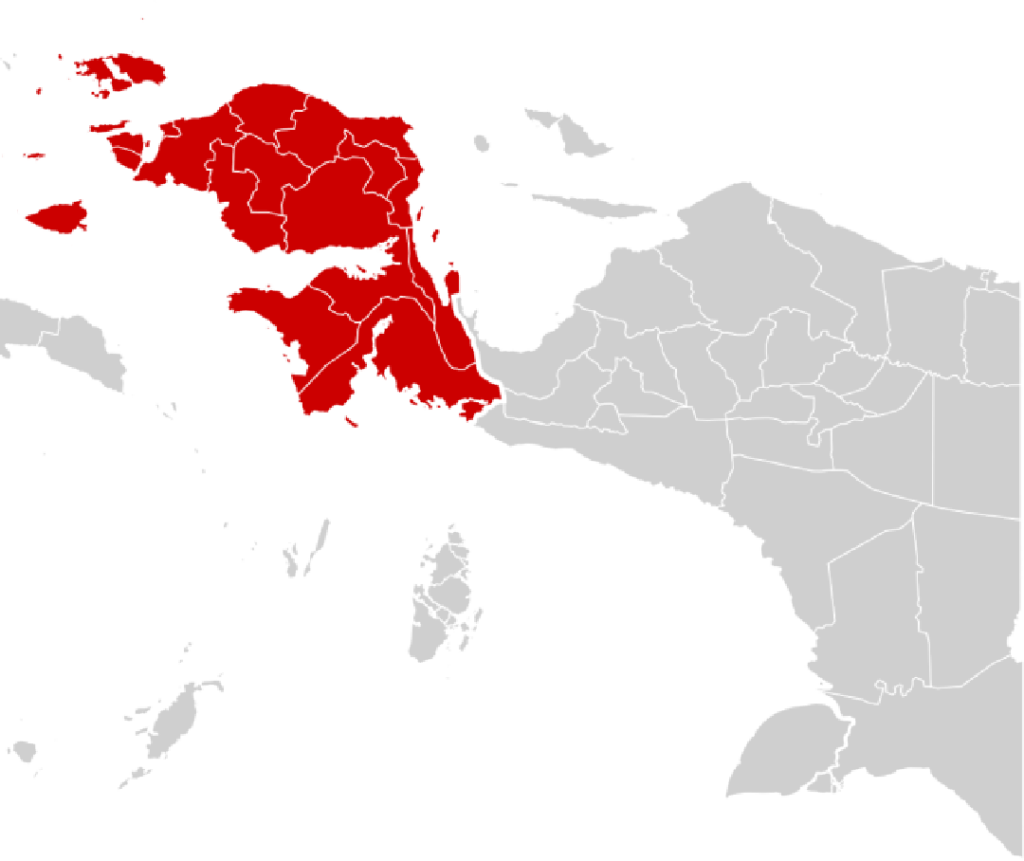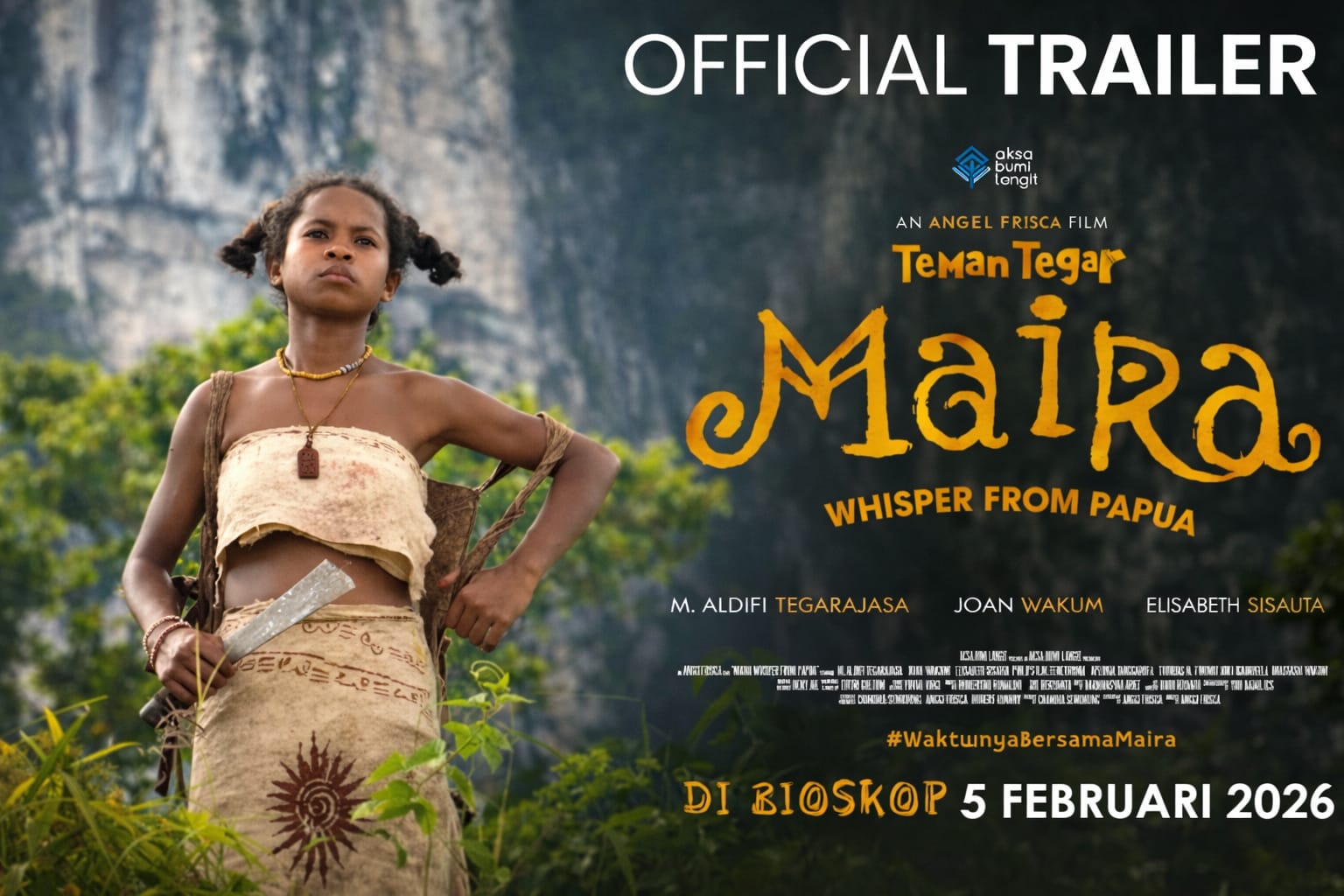
“Teman Tegar: Maira Whisper from Papua” is set to hit Indonesian theaters in 2026, and it’s aiming for more than just box office success. The film encourages viewers to pause, listen, and consider their connection to the world around them and to each other. Premiering on February 5, 2026, this family adventure film is built on the foundations of friendship, exploration, and a profound respect for nature.
While the film initially appears to be an exhilarating trek through Papua’s stunning scenery, there’s a more significant message at play. The story aligns with a burgeoning trend in Indonesian cinema, one that strives to amplify local narratives, honor cultural variety, and promote environmental awareness. Set against a backdrop of lush forests, meandering rivers, and ancestral territories, the film chronicles the emotional and physical odyssey of young protagonists, their lives intricately intertwined with the environment they call home.
In this world, nature isn’t just a backdrop; it’s a mentor, a repository of memories, and a fundamental part of who we are.
A Story from Papua’s Heart
At the film’s core is Maira, a young girl whose existence is intertwined with the land she knows. The film opens, drawing viewers into Maira’s life, where the forest shifts from a mere setting to a living, breathing entity. The whispers of the wind, the murmur of water, and the subtle pulse of the natural world are the very things that shape Maira’s understanding of her home.
Maira’s life begins to shift when she encounters Tegar, a boy from outside Papua. He arrives with a thirst for knowledge, a barrage of questions, and an eagerness to understand. What begins as a chance meeting slowly blossoms into a deep friendship, as a series of events draw them further into the forest and into experiences that test their bravery, their faith in each other, and their core beliefs.
Their shared exploration strengthens their connection. The film’s emotional heart is their friendship, which authentically depicts how young individuals from diverse backgrounds can learn from each other through openness and attentiveness. The narrative progresses organically, enabling the audience to observe how shared experiences cultivate understanding and empathy.
The story operates as both a coming of age tale and an environmental exploration. Maira educates Tegar about her community’s traditions, customs, and ecological knowledge. Conversely, Tegar offers a new viewpoint that allows both characters, and the audience, to perceive Papua and its forests differently. The Film Censorship Board notes that the film underscores the harmony between human existence and nature, emphasizing equilibrium rather than subjugation.
Friendship That Transcends Cultural Divides
A significant asset of the film is its depiction of the bond between Maira and Tegar. Their friendship exemplifies how authentic connections can transcend cultural boundaries and cultivate mutual understanding. Maira imparts stories, songs, and local wisdom inherited from her ancestors, whereas Tegar provides companionship and emotional backing, assisting her in navigating unforeseen difficulties.
This representation of cross cultural friendship resonates profoundly within Indonesia, a nation characterized by its diversity. While differences frequently dominate public discussions, this film subtly underscores the deeper commonality of shared humanity. The film posits that friendship can originate anywhere, molded not by shared traits but by curiosity and compassion.
The dialogues between Maira and Tegar mirror their respective developmental trajectories. They delve into inquiries concerning identity, belonging, and accountability.
The film demonstrates that genuine friendship necessitates equal measures of listening and speaking through its character interactions. Their conversations often circle back to the forest, which is depicted as a sentient entity, observing and directing them throughout their experiences.
Nature as an Active Force
Unlike many cinematic portrayals where nature serves merely as a backdrop, in “Teman Tegar: Maira Whisper from Papua,” the forest is presented as a vital element of the narrative. The filmmakers meticulously and respectfully depict Papua’s landscapes, thereby establishing the settings as integral to the film’s thematic core. Expansive views of the dense forest, meandering rivers, and remote mountains evoke a sense of scale and inherent strength. Furthermore, the light filtering through the forest canopy suggests a shared existence between the forest and the characters.
The auditory elements of avian calls, insect sounds, and the movement of water foster a sensory immersion, transporting viewers to a realm imbued with antiquity, closeness, and vitality.
For Maira, the forest embodies both her domicile and her ancestral lineage. It serves as the locus for her understanding of life’s cadences and the amplification of her voice, along with those of her community. Although the film acknowledges the aesthetic appeal of this setting, it does not shy away from addressing its susceptibility. Visual representations of compromised landscapes and disrupted ecological systems subtly expose the repercussions of disregard and exploitation. The film serves as a reminder that we frequently underestimate the factors that pose the greatest threats to our well being.
A Subtle yet Impactful Environmental Advocacy
The film’s most persistent theme may be its advocacy for the preservation of the natural environment.
The film avoids didacticism, instead posing contemplative inquiries regarding human environment interactions. Maira’s journey is marked by her frequent contemplation of the significance of attuning oneself to the land, a metaphor for heeding nature’s cues.
The forest’s voices, conveyed through the rustling of leaves, the murmur of winds, and the songs of birds, serve as symbols of deeper understanding. Furthermore, Maira’s name suggests a connection to the earth, evoking qualities of gentleness, resonance, and historical roots.
The narrative depicts Maira and Tegar’s experiences with moments that expose the impact of human activities on the environment. These scenes, though subtle, are emotionally impactful, encouraging viewers to reflect on their own relationship with nature. Through the perspective of children, the film underscores the forest’s role not just as a backdrop, but as a vital source of life, culture, and knowledge.
The filmmakers have characterized the film as transcending mere narrative; they intend it as an appeal, particularly to younger audiences, to connect with conservation on a personal and affective level. By anchoring environmental consciousness in direct experience, the film circumvents abstraction, thereby cultivating empathy.
Cultural identity is fundamental to the film’s narrative. Maira immerses herself in her community’s customs, venerating the land as both a living ancestor and a source of knowledge. The story is subtly enhanced by the inclusion of Papuan folklore, traditional songs, and communal practices, without becoming overly complex. This representation provides viewers with an understanding of how Indigenous communities perceive their connection to the natural world.
The movie pushes back against the idea that old ways and new ones are always at odds. It instead shows how ancestral wisdom and modern viewpoints can work together, particularly when the aim is to safeguard the things we hold dear.
Elder characters imparting their knowledge to Maira highlight the connection between past and present. These scenes are understated but impactful, demonstrating reverence for the land that has provided for them and for those who came before.
The film is helmed by Anggi Frisca, a director celebrated for her ability to marry visual splendor with significant themes. Her vision for this film demonstrates a dedication to storytelling that is both emotionally resonant and culturally sensitive. The screenplay weaves together adventure, emotion, and introspection.
The film’s focus on children allows innocence and curiosity to shape the narrative. Viewers see the world through the eyes of characters exploring its wonders and vulnerabilities, making the film’s core ideas relatable and profoundly human.
M. Aldifi Tegarajasa, Elisabeth Sisauta, and Joanita Chatarine’s performances lend the story a sense of authenticity. Their unforced interactions and natural presence give the film emotional weight. The choice to cast young actors who feel real and unaffected enhances the film’s sincerity.
The Film Censorship Board has deemed the movie appropriate for all audiences, underscoring its educational merit and its focus on culture and environmental consciousness.
Filmed on Location in the Heart of Papua
The film’s locations – thick forests, riverbanks, and the heart of the village – are genuine, not just sets. The production team collaborated closely with the locals, using their knowledge to portray the area with care and accuracy.
This was a conscious decision. Shooting on location adds to the film’s visual credibility and allows the community to be part of the filmmaking. Their participation influenced how cultural aspects were shown, keeping the film rooted in reality.
Growing excitement is palpable as the release date nears. Online teasers and promotional images have generated buzz, with many viewers feeling a sense of pride in seeing Papua represented thoughtfully in a major film.
Cultural critics have lauded the film for its emotional resonance and its environmental advocacy. They observe that, in contrast to numerous adventure films that prioritize visual effects, this particular film employs adventure as a means of fostering comprehension. It encourages viewers to contemplate conservation, cultural identity, and the significance of community.
The film’s early February release strategically positions it to attract families and younger audiences who seek cinematic experiences that are both inspiring and entertaining.
Beyond its entertainment value, the film has already begun to shape discussions concerning culture and the environment. Educators, community organizations, and environmental groups have expressed interest in utilizing the film as a catalyst for dialogue.
By depicting Papua not as a remote setting but as a vibrant realm with its own distinct voice and cadence, the film prompts viewers to reconsider their connection to the natural world. Its impact could potentially transcend the confines of the cinematic experience, cultivating curiosity, fostering respect, and inspiring a commitment to safeguarding our shared planet.
Conclusion
“Teman Tegar: Maira Whisper from Papua” serves as a cinematic creation that harmonizes entertainment with a sense of purpose. It narrates a tale of camaraderie and exploration while simultaneously urging audiences to cultivate a more attentive approach to interpersonal relationships, cultural heritage, and the environment.
Whether perceived as a cultural odyssey, an environmental contemplation, or a poignant family narrative, the film resonates with contemporary societal dynamics. It underscores the notion that every forest conceals a whisper, and that attentive listening may represent the initial stride toward nurturing, fostering connections, and nurturing optimism for the future.