In Jayapura, news rarely arrives all at once.
It moves quietly at first. A message forwarded from one phone to another. A short call between colleagues. A conversation that begins with a pause before the words come out.
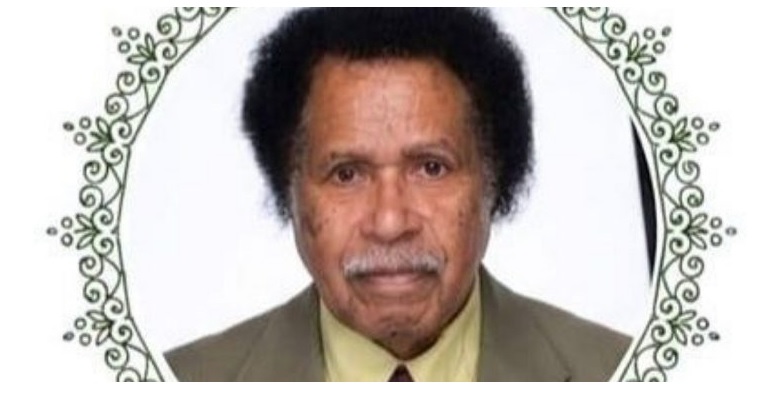
That is how many people first heard about the passing of Don Al Flassy.
There was no need for long explanations. His name alone carried meaning, especially among those who had followed his work, studied his ideas, or simply heard them discussed over the years.
He passed away on March 22, 2026, at a hospital in Jayapura. And with him, Papua lost not just an academic, but a thinker who spent much of his life trying to answer a question that still lingers today.
How do you understand a place as complex as Papua without reducing it to something simpler than it really is?
A Land That Resists Simple Definitions
To understand why Don Al Flassy’s work mattered, it helps to begin with Papua itself.
Papua is difficult to define.
It is not just one culture, one language, or one way of life. It is hundreds of them. Communities are separated by mountains, forests, rivers, and sometimes by days of travel. People who may live within the same province but speak entirely different languages and follow different traditions.
For outsiders, this diversity can be overwhelming.
For those who live there, it is simply reality.
But even within Papua, understanding that diversity fully is not always straightforward, as it involves navigating various cultural, linguistic, and social complexities that can differ significantly from one community to another.
And that is where Don Al Flassy began his work.
The Idea That Stayed
He did not set out to create something grand.
At least, he did not intend to create something grand in the way that people might expect.
He was an anthropologist—someone trained to observe, listen, and document how people live and see themselves.
Over time, through his research and engagement with communities, he began to see patterns.
Not patterns that erased differences, but patterns that helped make sense of them, revealing the unique characteristics and shared experiences of each cultural group within Papua.
From that process came an idea that would later become widely known.
The concept of seven cultural regions of Papua.
- Mamta or Tabi.
- Saereri.
- Mee Pago.
- La Pago.
- Anim Ha.
- Bomberay.
- Domberay.
At first glance, it looks like a simple classification.
But for those who understand Papua, it represents something deeper.
Not Just a Map
These regions were not drawn based on administrative convenience.
They were based on cultural realities.
How communities relate to each other.
The communities shared histories, languages, and ways of life.
In other words, it was not about dividing Papua.
It was about understanding it.
A colleague once described his work in a way that stayed with many who heard it.
“He did not try to fit Papua into a system,” she said. “He tried to build a system that fit Papua.”
From Conversation to Reference Point
For years, the idea of seven cultural regions existed mostly in discussions among academics, students, and community leaders.
It was used to explain.
To teach.
To provide context.
But something intriguing happened over time.
The idea began to move beyond those circles.
It started appearing in conversations about governance.
About development.
About how Papua should be organized in ways that reflect its realities, including considerations for its diverse cultures, local governance structures, and the needs of its communities.
When Ideas Enter Policy
Years later, when the Indonesian government began discussing regional expansion in Papua, the concept of cultural regions resurfaced.
Not as a strict blueprint.
But as a reference.
A way to think about how administrative boundaries could align more closely with cultural ones is to consider the historical and social contexts of the various ethnic groups in the region.
It did not solve every issue.
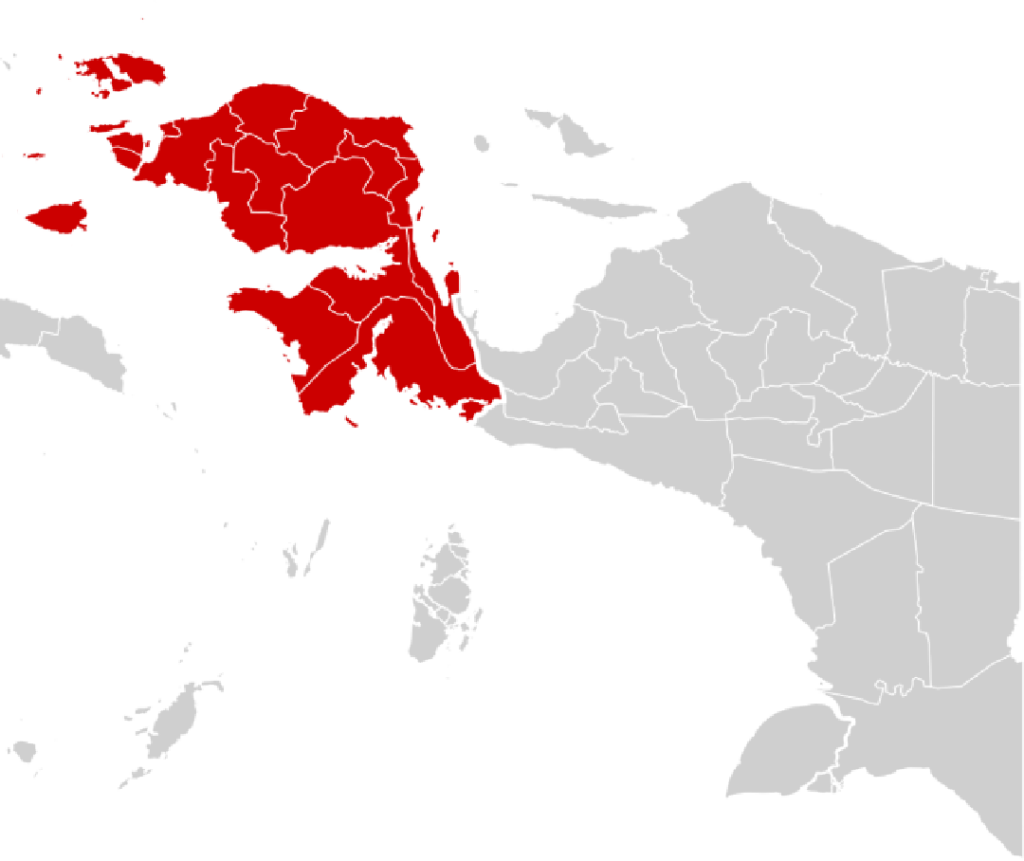
But it provided a starting point for the formation of new autonomous regions in Papua, which currently comprises 6 provinces (Papua, Papua Barat/West Papua, Papua Barat Daya/Southwest Papua, Papua Tengah/Central Papua, Papua Selatan/South Papua, and Papua Pegunungan/Papua Highlands).
This serves as a reminder that governance extends beyond mere geographical boundaries.
It is about people.
A Quiet Influence
What stands out about Don Al Flassy’s contribution is how quietly it spread.
There was no single moment when his idea became widely recognized.
No dramatic turning point.
Instead, it was adopted gradually.
Referenced in discussions.
Used in explanations.
Taught in classrooms.
Over time, it became part of how Papua is understood.
This understanding extends even to people who may not know the original source of the idea.
The Man Behind the Idea
Those who knew him often describe him in simple terms.
Calm.
Thoughtful.
Someone who preferred listening over speaking.
An anthropologist not only by training, but also by habit.
He spent time in communities, not just observing but engaging.
He paid attention to the way individuals portrayed their identities.
How they saw their place in the world.
That approach shaped his work.
It grounded it in reality.
A Student’s Memory
At a university in Papua, a former student recalled attending one of his lectures.
“He did not rush,” she said.
“He would explain something, then pause, as if he wanted us to think about it before continuing.”
She remembered how he emphasized understanding over memorization.
“It is not about remembering names,” he once told his class. “It is about understanding why they matter.”
Why His Work Endures
The reason his work continues to matter is not only because it was influential.
It is because it addressed something fundamental.
The need to understand Papua on its terms.
Not through external assumptions.
Not through simplified narratives.
But through its complexity.
The News That Spread
When news of his passing became more widely known, reactions came from different parts of Papua.
Academics spoke about his contributions.
Community leaders reflected on his ideas.
Students shared memories.
There was no single narrative.
But there was a shared recognition.
That something important had been lost.
A Colleague Reflects
One colleague described him as someone who believed that understanding comes before judgment.
“He always said we need to listen first,” she recalled.
“Only then can we speak with meaning.”
It is a simple idea.
However, practicing this idea is not always easy.
Beyond Titles and Recognition
Don Al Flassy was known as an anthropologist.
But titles rarely capture the full extent of a person’s influence.
His work reached beyond academic institutions.
It entered conversations.
It shaped perspectives.
It influenced how people view Papua.
The Ongoing Challenge
The questions he engaged with are still relevant today.
How to balance diversity and unity.
How to design governance that reflects cultural realities.
How to ensure development respects local identities.
These are not questions with easy answers.
But they are the necessary ones.
A Living Legacy
In many ways, his legacy is not something fixed.
It is something that continues.
Each time someone uses the concept of cultural regions to explain Papua.
Each time it informs a discussion about policy.
Each time it helps someone understand the region more clearly.
His work is present.
Even if his name is not always mentioned, his work is still present.
A Quiet Evening in Jayapura
As evening falls over Jayapura, the city settles into its usual rhythm.
Traffic slows.
Lights come on.
People gather in small groups, talking about their day.
Somewhere in those conversations, his ideas still exist.
Not as formal theory.
But as part of how people understand their world.
Conclusion
Don Al Flassy did not try to make Papua simpler than it is.
He did something more difficult.
He tried to understand it in all its complexity.
And then, he tried to help others do the same.
That is not the kind of work that ends with a single lifetime.
It continues.
In conversations.
In classrooms.
In the way people think.
And perhaps that is the most fitting legacy of all.