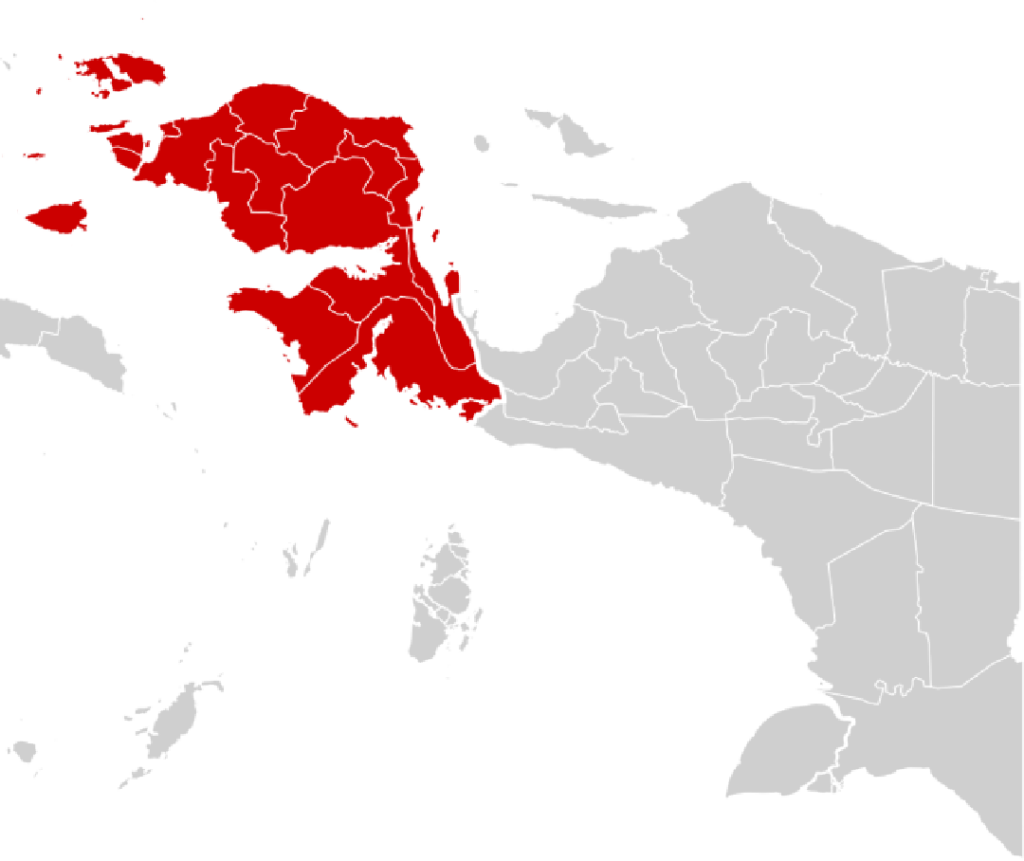
Papua is a place where mountains rise sharply above foggy valleys and coastal towns line turquoise waters. Diversity is not just an idea there. It is a part of everyday life. There are churches close to mosques. Traditional Papuan homes are next to stores owned by Chinese people. In markets, people speak different languages, have different accents, and laugh. In this part of Indonesia that is the farthest east, religious and cultural celebrations often bring people together instead of keeping them apart.
On February 17, 2026, during the Lunar New Year celebration, the spirit of togetherness was clear. It came back again as communities got ready to welcome the holy month of Ramadan on December 18 and 19, 2026. In both cases, Papuans of different religions stood next to each other, showing that tolerance is more than just a slogan.
The Lunar New Year in Papua: More Than Just a Cultural Event
Chinese Indonesian communities all over Papua celebrated the Lunar New Year on February 17, 2026, with traditional prayers, family gatherings, lion dances, and red lantern decorations. Temples in cities like Jayapura, Manokwari, Sorong, and Timika decorated themselves with bright ornaments that stood for hope and wealth.
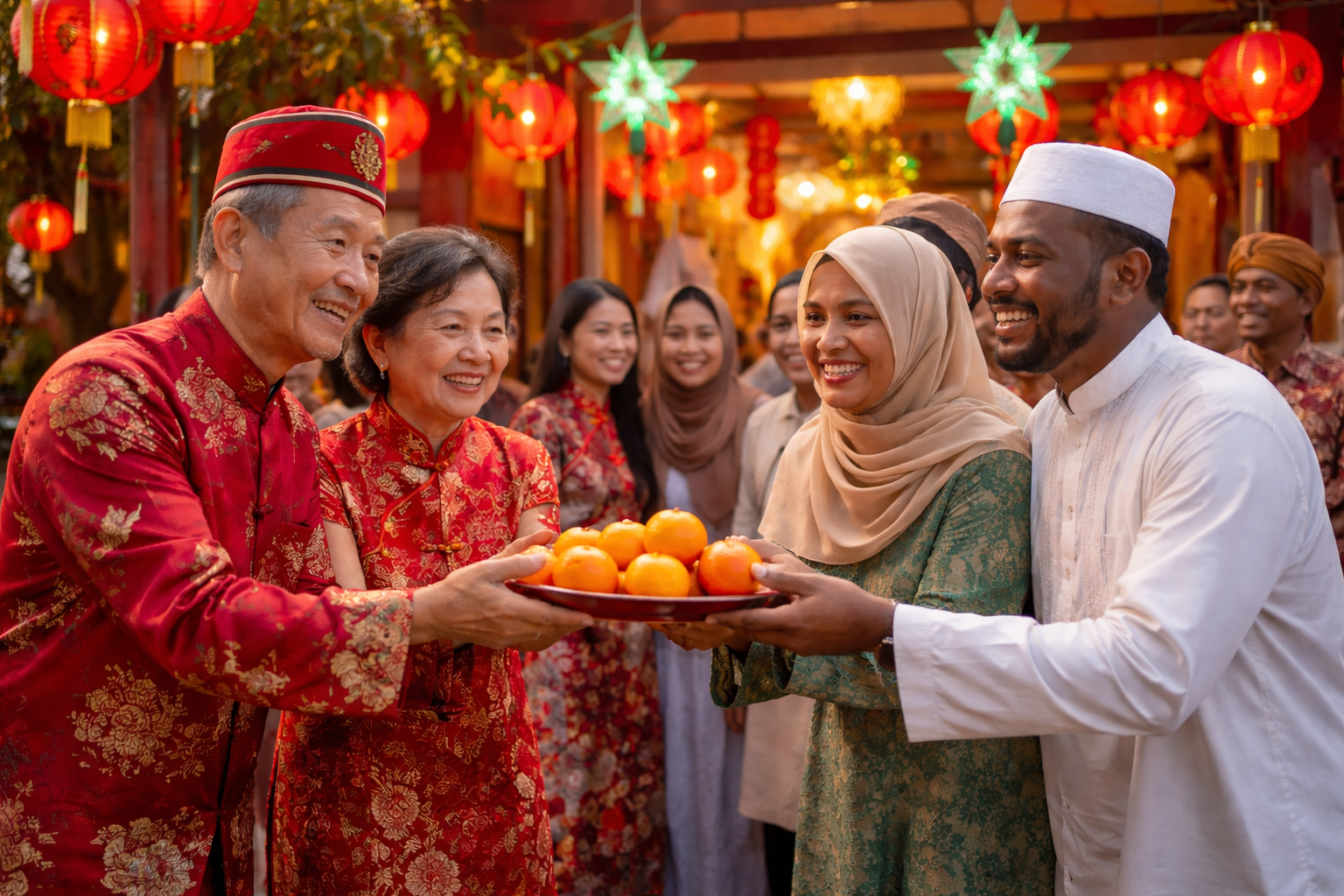
But it wasn’t just the color and the fun that stood out. It was the fact that neighbors from different religions took part. Christian Papuans went to see their Chinese friends to say hello. Muslim store owners wished each other happy holidays and helped decorate their stores. Community leaders took part in open house events where people could share food and stories for free.
At one temple in Jayapura, people of different faiths worked together to keep things running smoothly and manage traffic during prayer times. A group of Christian and Muslim students from the area helped older people get into the building. Their presence quietly said that having different faiths doesn’t stop people from working together.
A Papuan pastor who went to a Lunar New Year gathering said it showed what life is like in Papua. He said that the area has been a place where different cultures have met for a long time, and respecting each other’s traditions is important for keeping the peace.
On the afternoon of Lunar New Year, a Muslim community leader in Sorong went to see a Chinese Indonesian family. He said that these kinds of visits are normal and necessary. He said that sharing happiness during holidays makes relationships stronger that last even when people have different religions.
Shared Meals and Shared Values
In many neighborhoods in Papua, people celebrated the Lunar New Year by having open houses. Families made food that mixed traditional Chinese cooking with the flavors of Papua New Guinea. People who stopped by were given fish, vegetables, rice cakes, and sweets.
A Manokwari store owner said she was grateful that people of different faiths came to celebrate with her family. She told how kids from different backgrounds played together under red lanterns while adults drank tea and talked.
These interactions shape the younger generations. They grow up seeing diversity as a normal part of life, not something that causes problems. Schools often tell students to learn about the customs of other cultures. Teachers talked about the importance of the zodiac calendar and what prosperity means during Lunar New Year.
The mood was both festive and thoughtful. Leaders in the community told people that being tolerant means doing things. It is built through small acts of respect and interest.
Ramadan in Papua: Celebrating the Holy Month Together
As December 2026 drew closer, Papuan Muslims got ready to welcome the holy month of Ramadan on the 18th and 19th of that month. Mosques all over the province started making plans for prayer times, community iftar meals, and charitable events.
Once again, the larger community helped out. In areas where Christians made up most of the population, local churches sent greetings to Muslim groups. Youth groups said they would help set up tables for dinner. Some neighborhoods set up interfaith talks to talk about the spiritual meaning of fasting.
A Christian youth leader in Timika said that helping with Ramadan preparations is a way to honor your neighbors. He said that even though he doesn’t fast, he respects those who do and admires the discipline and reflection that come with the month.
Markets all over Papua changed during the evenings of Ramadan. Stalls selling dates, sweet drinks, and fried snacks drew families from all over. People who weren’t Muslim often joined friends for iftar, which is when they ate and talked after sunset prayers.
A Muslim mother in Jayapura said that her Christian neighbor sends her homemade bread every day during Ramadan. She sends cakes back at Christmas. She said that their exchange shows respect for each other, not obligation.
Interfaith Initiatives and Community Engagement
Papua has a long history of different faiths working together. Religious leaders often take part in forums that encourage conversation and stop fights from happening. The Lunar New Year and Ramadan in 2026 were two more chances for people to work together.
Local governments helped both events by making sure they were safe and helping with community activities. Police officers were stationed near temples and mosques not to show that there was tension, but to make people feel safe. Officials told people to celebrate in a responsible and respectful way.
Before Ramadan, interfaith prayer meetings were held in a number of districts. Leaders from Christian, Muslim, Hindu, Buddhist, and Confucianist groups all said they wanted peace and unity.
Schools also had a part to play. During the holidays, schools added lessons about tolerance to their regular classes. Under guided programs, students were encouraged to go to places of worship that were not their own.
Social and Economic Aspects
In Papua, religious holidays also have an economic impact. During Lunar New Year and Ramadan, markets do well. Traders make more money when people want more food, decorations, and gifts.
Chinese-Indonesian business owners who celebrated the Lunar New Year in 2026 often hire people from Papua to work for them. In 2026, during Ramadan, Muslim traders from different ethnic groups brought traditional foods.
This economic interdependence makes people more likely to work together. When communities depend on each other for their livelihoods, respect for each other becomes both moral and practical.
A vendor in a market in Jayapura said that having a lot of different types of people around makes business better. He said that people from different backgrounds like different cultural products, and holidays are times when everyone can make money together.
Challenges and Commitment to Harmony
Even though things seem to be going well, leaders know that tolerance needs to be watched. In any diverse society, misinformation and outside forces can make things unstable.
Elders in the community stress that the conversation must stay open. When there are misunderstandings, they say that talking about them is better than fighting.
In Papua, traditional values called gotong royong, or cooperation, are very important. People of all faiths often work together on community projects.
The fact that people of different faiths always go to each other’s celebrations shows that they believe in these values.
A Message for Indonesia and the World
Papua’s story has lessons for people all over the world. In a world where religious tensions often make the news, examples of people getting along with each other should be looked at.
The Lunar New Year celebration on February 17, 2026, and the preparations for Ramadan in December 2026 show how different cultures and religions can bring people together.
People who live there say that tolerance is not just accepting things, but also getting involved. It means visiting your neighbors, eating with them, and helping each other keep up with your traditions.
These things are normal for a lot of Papuans. They are passed down from generation to generation and reinforced by daily interactions.
Personal Reflections
A college student in Jayapura thought about going to both Lunar New Year and Ramadan iftar events. She said that these events changed how she thought about unity.
She thinks that differences are a strength, not a weakness. Being part of each other’s celebrations builds empathy and familiarity.
An old man in Sorong had the same opinion. He remembered times when communities were having a hard time and how working together across faith lines helped them get through it.
He says that religious tolerance in Papua doesn’t mean getting rid of differences. It is about seeing that we are all human.
Conclusion
Papua has shown that diversity can thrive through respect and participation, from the red lanterns of the Lunar New Year on February 17, 2026, to the evening prayers welcoming Ramadan on December 18 and 19, 2026.
People in communities all over the province still celebrate their own traditions while also respecting those of their neighbors. The shared spirit of tolerance makes society stronger and shows that even the most diverse societies can live in peace.
As Papua moves forward, the people who live there have a history of getting along with each other. You can see it in shared meals, helpful gestures, and honest talks.
Papua shows that religious tolerance is not just a theory through these simple but powerful actions. It is a choice that we all make every day and that we keep making by being kind and understanding.