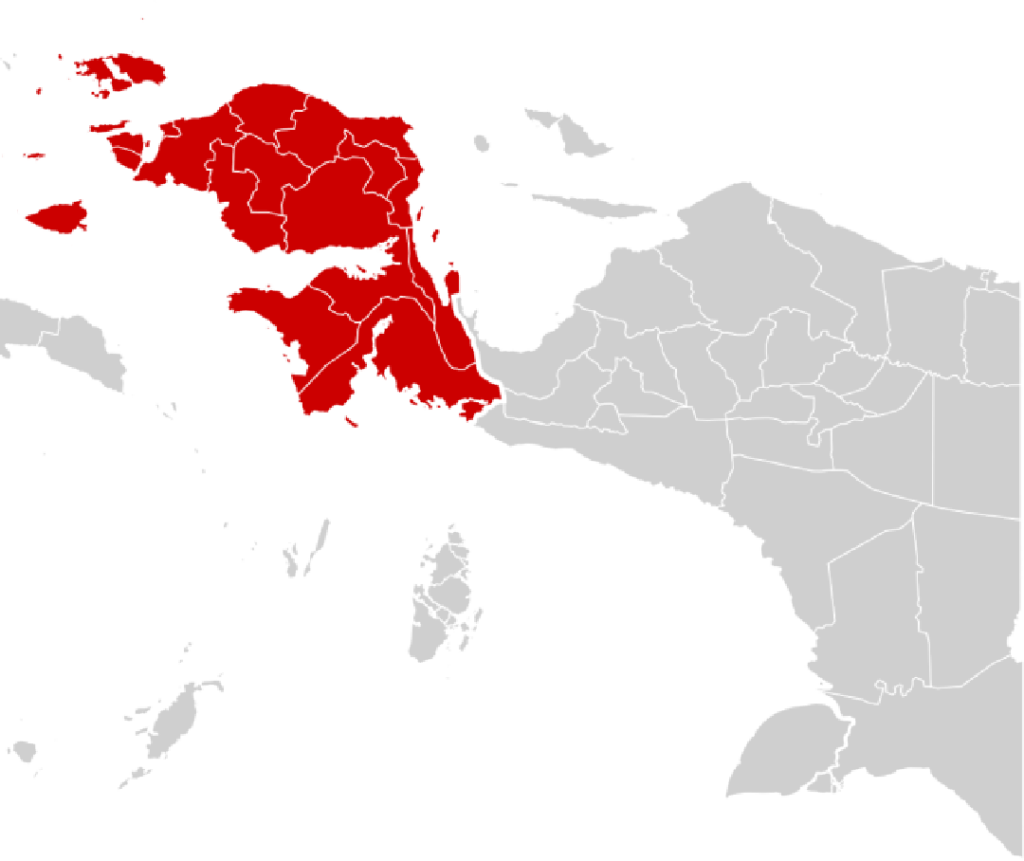
Over the past few years, Papua — long grappling with public health and social development challenges — has found itself facing a worrying resurgence of HIV/AIDS. What once might have seemed like a contained health problem has ballooned into what many local officials now call a public-health crisis.
According to data from the provincial health authorities, by the end of 2024, Papua recorded 21,129 people living with HIV/AIDS across nine districts and cities.
In 2025, more recent figures shared by the provincial government suggest the number may now exceed 26,000 individuals.
Alarmingly, the epidemic is not confined to narrow “at-risk” groups. Rather, the spread is now described as a generalized epidemic — meaning HIV is spreading widely within the general population.
Even more disturbing: the majority of infections are among people in their most productive years, typically between ages 15 and 39.
For instance, data point to nearly 80% of HIV/AIDS cases in Papua belonging to that age group.
Within that, those aged 20–29 are the largest group (879 cases), followed by 30–39 (530 cases), and then 15–19 (189 cases).
The high prevalence among youth and young adults raises grave concerns — not only for current public health, but for the future socio-economic and human capital of Papua.
Key Drivers of Transmission — and the Challenges
What is driving this resurgence? Local health authorities identify heterosexual transmission, especially linked to changing sexual partners (multiple partners), as the primary factor.
That reality signals that HIV in Papua is no longer confined to traditional “high-risk” groups, such as people who inject drugs or commercial sex workers, but has penetrated into broader social networks. A provincial health official summed it up starkly: many Papuans now live with HIV/AIDS as part of “the general population.”
Compounding the problem is late diagnosis and suboptimal treatment uptake. According to February 2025 reporting, out of nearly 19,000 active HIV/AIDS patients in Papua, only about 4,192 are on antiretroviral (ARV) therapy.
Given that ARV treatment — when taken regularly — significantly improves health outcomes and reduces transmission risk, this gap represents both a health and a prevention crisis.
Further complicating efforts: co-infection with other diseases. For example, in 2024, there were 6,644 Tuberculosis (TBC) cases recorded in Papua, of which 896 were people also living with HIV/AIDS.
Such co-infections pose additional burdens on the healthcare system, especially in resource-constrained settings.
Finally, social stigma remains a stubborn barrier, deterring people from getting tested, seeking treatment, or disclosing their status — a challenge that public health experts across Papua acknowledge as one of the biggest obstacles in stemming the epidemic.
Given this confluence of medical, social, and structural challenges, the provincial government and local stakeholders have had to act — and recently, they’ve escalated their efforts considerably.
Government Response: From Recognition to Action
Recognizing the scale and severity of the outbreak, the Papua Provincial Government has moved to elevate HIV/AIDS as a top health priority. Multiple official statements underscore the sense of urgency, and outline a multi-pronged strategy spanning prevention, detection, treatment, and community engagement.
One of the most visible steps: the formal inauguration of Relawan Peduli AIDS Papua (Papua AIDS-Care Volunteers). On 1 December 2025, the province’s governor swore in the first cohort of these volunteers at Sasana Krida, the provincial government’s official hall.
These volunteers are intended to become the front-line defenders in Papua’s HIV/AIDS response — mobilizing communities for testing, providing basic counseling, raising awareness about safe behavior, and reducing stigma. Their very existence signals a shift: from purely top-down public health interventions toward community-based, grassroots mobilization.
At the same time, the government has expanded testing and treatment access. Health services — including testing and free ARV distribution — are reportedly being fortified across the province’s districts and cities.
Moreover, local officials have frequently emphasized the need for behavioral change, advocating monogamy, consistent condom use, and regular HIV screening — especially for young and sexually active populations.
In provincial media briefings, health leaders have cautioned that without massive social mobilization, simply expanding testing and treatment will not be enough. As one official put it: “HIV/AIDS must be prevented and controlled through changes in individual behavior.”
Community Engagement, Education, and Reducing Stigma
One of the biggest hurdles in Papua’s HIV fight remains the social stigma attached to the disease. In many communities, diagnosis can lead to isolation, shame, and discrimination — discouraging people from coming forward for testing or treatment. The provincial government and its partners have repeatedly identified stigma as a primary barrier.
To combat this, the Papua government is promoting not just medical interventions, but social campaigns: public dialogues, community-based education, engagement of religious and traditional leaders, and mobilizing volunteers outside formal health facilities.
By embedding HIV prevention and care within the fabric of daily community life — rather than isolating it as a “disease of outsiders” — officials hope to reshape social attitudes, reduce fear, and encourage early detection.
In addition, the government seeks to normalize regular HIV testing, especially among young people, couples, and pregnant women — and couples testing with HIV services for expectant mothers.
Challenges Ahead: A Marathon, Not a Sprint
Despite the renewed commitment and reallocation of resources, the road ahead remains challenging. There are several structural and contextual factors that make Papua’s HIV response especially difficult:
Geographical and infrastructural constraints. Papua is vast and diverse, with remote villages far from health centers. Ensuring equitable access to testing, treatment, and follow-up care — especially ARV adherence — will demand sustained logistical and financial commitment.
Healthcare capacity and continuity. Scaling up ARV treatment and ensuring long-term adherence requires a robust health workforce, trained counselors, supply chains, and monitoring systems. With only a minority of HIV-positive individuals currently on ARV (per 2025 data), bridging this gap remains urgent.
Socio-cultural resistance and stigma. Despite public campaigns, deep-seated stigma, misconceptions about HIV/AIDS, and taboos around sexual behavior may continue to deter many from getting tested or seeking care. Overcoming such barriers typically requires generational shifts — not quick fixes.
Co-morbidity burden. With significant rates of tuberculosis, malnutrition, and other health problems, people living with HIV in Papua face elevated health risks. Integrating HIV care with broader primary health and social services is essential, but resource-intensive.
Sustainable funding and coordination. To maintain momentum, combat the epidemic effectively, and reach “zero new infections,” the provincial government will need consistent funding, multi-sector cooperation (health, education, religious and community organizations), and careful program management.
Why This Matters — Not Just for Papua, But for Indonesia
The situation in Papua holds broader significance. As HIV spreads from traditional high-risk groups into the general population, it underscores the shifting nature of the epidemic in Indonesia. The traditional image of HIV as affecting only certain “marginalized” or “high-risk” populations is giving way to a more diffuse, harder-to-manage public-health challenge.
Papua — as a province with unique geographic, cultural, and socio-economic characteristics — may thus function as a “canary in the coal mine”: a warning of what could happen in other under-served or marginalized regions if comprehensive, early detection and prevention efforts are not pursued.
Moreover, the fact that a large proportion of people living with HIV are in their productive years has serious implications for the province’s social development, workforce, and long-term human capital. Without effective intervention, the epidemic could undermine economic growth, deepen inequalities, and exacerbate social instability.
Finally, Papua’s experience demonstrates the importance of community-driven responses. Medical interventions alone may not suffice. A multi-stakeholder approach — combining government, civil society, religious/traditional leaders, and grassroots volunteers — is essential for dismantling stigma, promoting healthy behavior, and ensuring people access care and support.
Early Signs of Progress — and What to Watch
There are some encouraging signs. The launch of the Relawan Peduli AIDS Papua marks a turning point, indicating a political and institutional commitment to a more engaged, community-based response.
In some districts, local governments are expanding access to HIV testing, integrating it with other health services, and offering ARV therapy — albeit with challenges in reach and adherence.
Meanwhile, public awareness campaigns and dialogues — involving local religious, educational, and social institutions — are beginning to chip away at stigma, though much remains to be done.
If sustained, these efforts — backed by political will, funding, and community participation — could pave a path toward significantly reducing new infections and improving care for people living with HIV/AIDS in Papua.
Conclusion
The surge of HIV/AIDS in Papua is not merely a health statistic — it reflects deep social, cultural, and systemic challenges. But it also presents an opportunity: a chance to reimagine public health intervention as a shared community responsibility, to reduce stigma, and to safeguard the lives and futures of Papua’s youth and families.
The Papua Provincial Government’s recent moves — elevating HIV/AIDS as a priority, mobilizing volunteers, expanding testing and treatment, engaging communities — are important first steps. Yet success will require more than programs: it will need broad societal commitment, sustained resources, and empathetic, stigma-free care.
In the months and years ahead, the real test will not just be numbers — new infections, treatment uptake, or death rates — but whether Papua can transform its response into a model of inclusive, community-driven, and dignified HIV care. If it can, the lessons learned could resonate far beyond Papua — and shape Indonesia’s overall fight against HIV/AIDS.