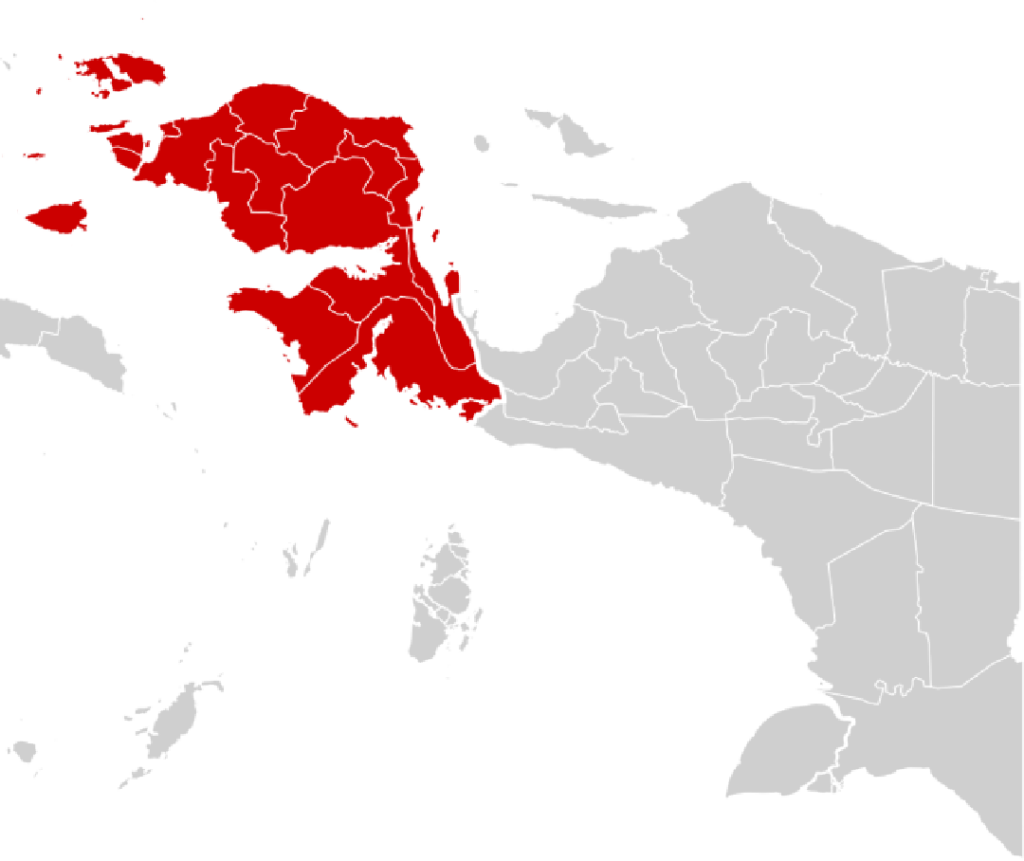
In 2025, Papua took a major step toward ending longstanding energy inequality when PT PLN (Persero) successfully brought continuous electricity to 128 previously unlit villages across the region. This achievement represents much more than wires and poles. It signifies hope for improved education, economic opportunity, health services, and overall quality of life for communities long isolated from Indonesia’s electrical grid. The effort lays the groundwork for an even more ambitious goal: gradually electrifying 4,200 villages in Papua that remain off the grid.
These milestones reflect a focused commitment by the state-owned utility and national government to ensure energy equity for all Indonesians, particularly in areas designated as frontier, outermost, and underserved (3T regions). The electrification drive is a core part of Papua’s broader development priorities, aimed at reducing disparities between remote communities and more urbanized centers.
Lighting the Path to Progress: Achievements in 2025
At the end of 2025, PLN’s Papua and Papua Barat Unit achieved a significant milestone: connecting 128 villages to a 24-hour electricity supply for the very first time. Many of these communities lacked consistent electrification, depending instead on small solar panels, generators, or, in some cases, no power whatsoever. This new, uninterrupted electricity has effectively banished darkness after dusk, allowing for lighting, refrigeration, and communication after sunset.
Government officials hailed the initiative as a prime example of energy justice. It underscores the belief that access to electricity is a basic right, which promotes greater social and economic inclusion. For the people of these remote villages, the advantages of dependable power are immediately tangible.
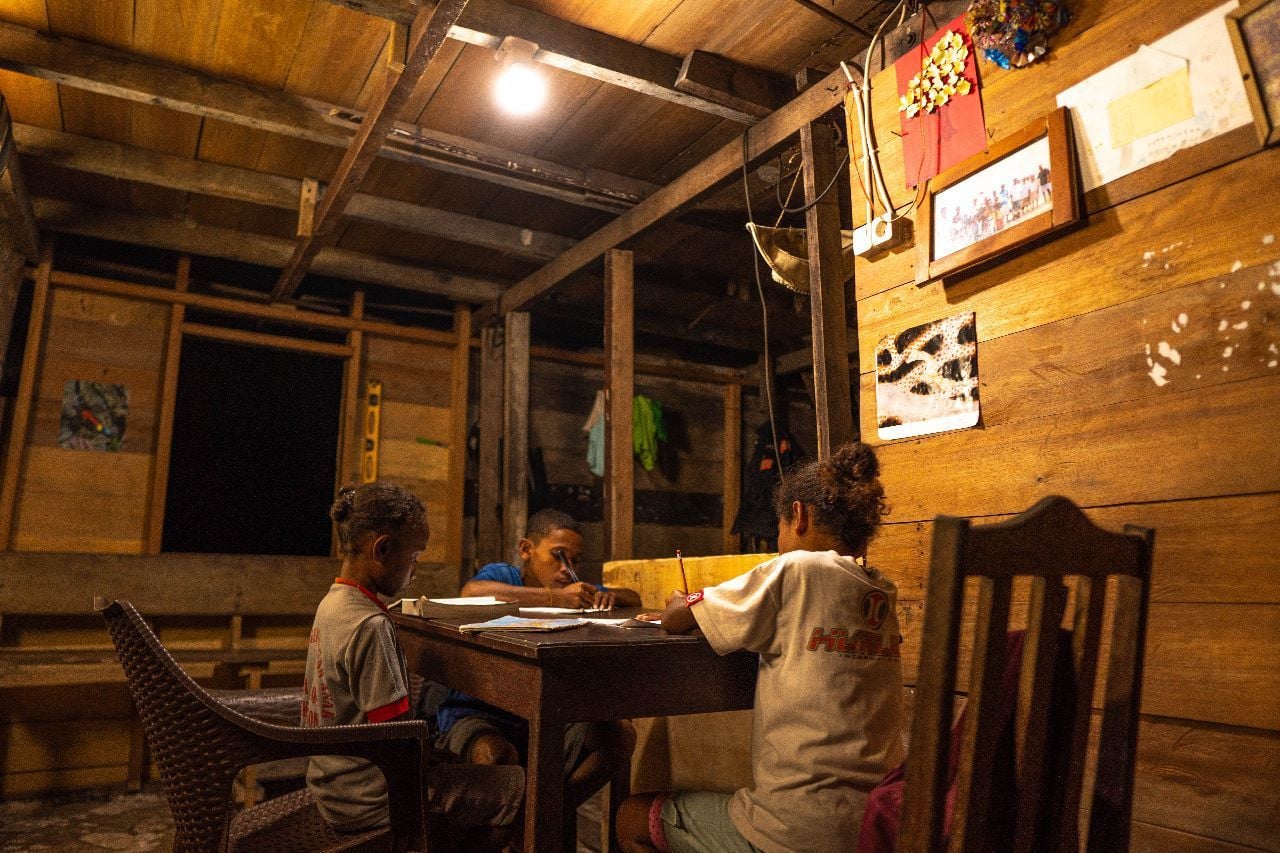
Families can enjoy more evening study time, health clinics can keep vital equipment running, and local businesses can stay open later.
This effort also supports Indonesia’s national electrification plan, which strives for universal access. Although Indonesia has made great strides in electrification, some areas in eastern Indonesia, like Papua, still lag behind the national average, hampered by difficult geography and scattered populations.
Making Goals a Reality: The 4,200-Village Objective
Electrifying 128 villages is a significant achievement, but PLN has bigger plans. The company is pursuing a phased program to bring electricity to a total of 4,200 villages throughout Papua. This goal represents the number of communities that, as of late 2025, still lacked dependable power.
Achieving this goal will require concerted effort over multiple years, significant investment, and coordination with local governments and communities.
General Manager of PLN Papua and Papua Barat, Diksi Erfani Umar, explained that the project has already received initial funding allocations from the Ministry of Energy and Mineral Resources (ESDM). In 2025 more than Rp 500 billion was earmarked for electrification infrastructure to serve 128 locations, with an expanded 2026 target covering around 554 locations requiring roughly Rp 2.5 trillion in budget. These allocations represent part of the national government’s renewed focus on Papua’s electrification needs.
PLN’s electrification roadmap has been designed with careful attention to both geography and community needs. The utility company has developed a staged approach that prioritizes areas near existing grids while also deploying localized solutions for far-flung villages that cannot be easily connected to central infrastructure.
Tailored Technical Solutions for Papua’s Diverse Terrain
Papua’s terrain is a study in extremes, a patchwork of Indonesia’s most diverse landscapes. Think towering mountains, impenetrable rainforests, scattered islands, and isolated highland valleys. These geographical realities make it tough to simply extend the existing power grid. To tackle these hurdles, PLN has blended traditional electrical projects with inventive, localized technologies designed specifically for the region.
In places where water is plentiful, like the Arfak Mountains, the utility either plans or already runs small hydroelectric generators. These microhydro power plants harness the energy of flowing water to generate electricity, providing power to groups of villages without the need for extensive transmission lines.
Where the land is drier, or where rivers are few and far between, PLN is turning to solar power, complete with battery storage systems.
These hybrid systems contribute to supply stability, even under conditions of reduced sunlight. By leveraging locally available renewable resources, the utility not only broadens electricity access but also fosters environmentally sound power generation, thereby diminishing reliance on diesel and other fossil fuels.
The strategic integration of diverse energy sources enables PLN to effectively navigate Papua’s varied topography, while simultaneously establishing the groundwork for decentralized, robust electrification frameworks.
Social and Community Collaboration
The electrification of numerous villages necessitates more than just technical solutions. PLN has adopted a community-focused strategy, engaging local governments throughout the entire planning and implementation phases. This approach entails close collaboration with provincial governors, district heads, and village leaders to facilitate land acquisition, pinpoint priority locations, and ensure community preparedness.
In numerous communities, local figures play a key role in illustrating how investments in electrification can fuel broader development objectives. These benefits encompass economic growth, improved educational outcomes stemming from better lighting, and extended operating hours for small enterprises. Furthermore, access to electricity bolsters the provision of essential public services, including healthcare, telecommunications, and public safety.
Such collaborations have proven instrumental in expediting construction timelines and fostering trust in regions often neglected due to logistical challenges.
Supporting National Development and Long-Term Growth
Papua’s electrification efforts align with Indonesia’s overarching development strategy. National leaders have emphasized the significance of electricity access in enhancing human development metrics and facilitating economic advancement.
At higher forums, government officials have reiterated that expanding power supply to remote regions is essential for national cohesion and socioeconomic inclusion.
President Prabowo Subianto and leaders in the Ministry of Energy and Mineral Resources have repeatedly emphasized a hard target of achieving universal access to electricity across all villages in Indonesia within the next four to five years. Electrification efforts in Papua are thus directly aligned with this ambitious national agenda.
Expanding access to power is expected to stimulate local economic activity, especially among households and rural businesses. Reliable electricity supports value-adding processes such as refrigeration for fish and agricultural products, mechanical workshops, small manufacturing, and information technology adoption. For remote communities, these opportunities can translate into new income streams, higher productivity, and better quality of life.
Education, Health, and Digital Inclusion
Access to electricity facilitates enhancements in crucial social services. Within educational institutions, dependable power provides illumination for evening study sessions, operational computers, and internet connectivity, thereby linking students to a broader array of educational materials. In healthcare facilities, electricity is essential for the functioning of refrigeration units for vaccines and medications, lighting for emergency care, and the secure storage of medical provisions.
Digital connectivity, frequently reliant on electric power, is instrumental in connecting Papua’s rural populations with wider national and international networks. As villages acquire consistent electricity, mobile networks and communication technologies become more accessible and dependable, thereby promoting social inclusion and access to essential information services.
These social advantages highlight the rationale for considering electrification a fundamental investment in human development, rather than merely a technical infrastructure undertaking.
Challenges and the Road Ahead
Though the strides made are commendable, fully electrifying the 4,200 villages earmarked for this project will be a lengthy and intricate undertaking. It demands persistent political commitment, ongoing financial backing, technological advancements, and careful collaboration between various government tiers.
PLN’s phased approach recognizes that a one-size-fits-all solution doesn’t exist. The specific requirements and circumstances of each community vary, and gleaning insights from the initial implementation will be vital for improving subsequent phases.
Long-term success also hinges on fostering local expertise to sustain and oversee the electrical infrastructure.
As electrification initiatives extend into more isolated regions, the significance of training programs for technicians and community operators is poised to increase.
Conclusion
The successful electrification of 128 villages by 2025 exemplifies the potential outcomes achievable through the collaborative efforts of national goals, corporate proficiency, and local alliances. For the inhabitants of these villages, the illumination provided by electric lighting signifies the advent of new opportunities.
Looking ahead, the objective of electrifying 4,200 villages throughout Papua reflects a dedication to inclusive development, energy equity, and enhanced living standards for some of Indonesia’s most geographically isolated populations. This undertaking serves as a compelling illustration of how public utilities can function not only as energy providers but also as agents of broader social and economic change.