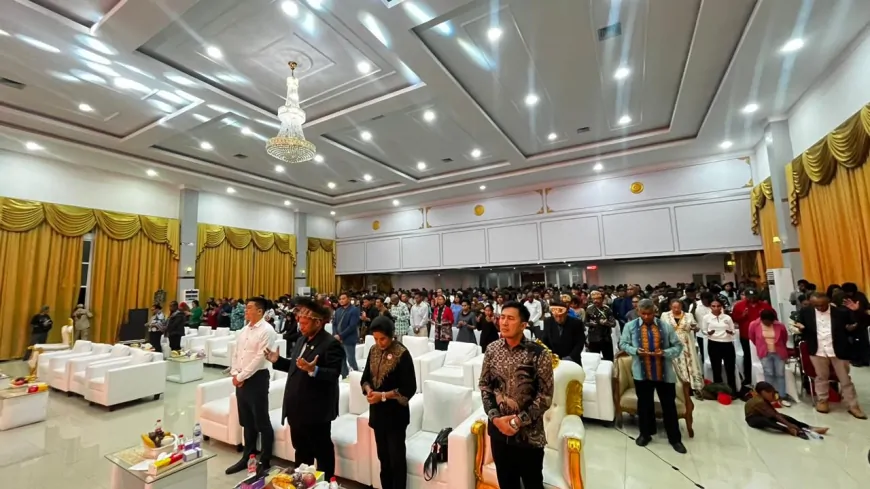
For many Papuan migrants living in Jakarta, Christmas is often a time marked by mixed emotions. Joy and gratitude for life in the capital are frequently accompanied by longing for family, tradition, and the familiar atmosphere of their homeland. In December 2025, those emotions found a shared outlet when around 2,000 Papuan migrants gathered in Jakarta to celebrate Christmas together. The event became a meaningful reminder that even far from Papua, the spirit of togetherness remains strong.
Held in Central Jakarta, the Christmas celebration brought together Papuans from various backgrounds. Students, office workers, laborers, civil servants, community leaders, and families arrived from different corners of Jakarta and the surrounding Jabodetabek (Jakarta, Bogor, Depok, Tangerang and Bekasi) area. Some had lived in the capital for years, while others were still adjusting to life in a large and fast-moving city. Yet on that day, differences in profession, age, or place of origin faded, replaced by a shared sense of belonging.
The gathering was organized by Kerukunan Keluarga Papua, a community organization formed to unite Papuan families living outside their homeland. For the organizers, the event was not simply about holding a Christmas service but about creating a space where Papuans could reconnect with one another, share stories, and strengthen bonds that are often strained by distance and daily responsibilities.
Thousands Gather as One Community
The scale of the celebration reflected the strong enthusiasm of the Papuan diaspora in Jakarta. More than 2,000 people attended, exceeding initial expectations and making it one of the largest Papuan Christmas gatherings in the capital in recent years. The large turnout highlighted how deeply Papuans value community, especially during important religious moments.
From the moment participants entered the venue, the atmosphere felt warm and familiar. Conversations flowed easily, often switching between local Papuan languages and Indonesian. Laughter, greetings, and embraces filled the hall as people met old friends or were introduced to new faces who shared similar backgrounds. For many, the gathering felt like returning home, even if only for a day.
Traditional Papuan elements were subtly present throughout the celebration. Songs, musical rhythms, and cultural expressions blended naturally with Christmas hymns and prayers. These elements served as a reminder that faith and culture are closely intertwined in Papuan life and that both can be preserved even while living in an urban environment far from Papua.
Faith, Family, and Shared Values
The central theme of the Christmas celebration focused on God’s presence in saving and strengthening families. This message resonated deeply with the audience, many of whom live far from their parents, siblings, and extended families. For Papuans, family is not limited to the household but extends to the wider community, and this understanding was clearly reflected in the way participants interacted with one another.
During moments of worship and reflection, many attendees appeared visibly moved. Some quietly prayed, others sang with closed eyes, and many held hands with family members or friends. The celebration became a space for spiritual renewal, offering comfort to those facing challenges in their daily lives and reminding them that they are not alone.
Parents who attended with their children viewed the event as an important opportunity to pass down values of faith, respect, and togetherness. In a city as large and diverse as Jakarta, maintaining a strong cultural and spiritual foundation can be challenging. Celebrating Christmas together helped reinforce those foundations and introduced younger generations to the importance of unity and mutual care.
Voices Calling for Unity and Togetherness
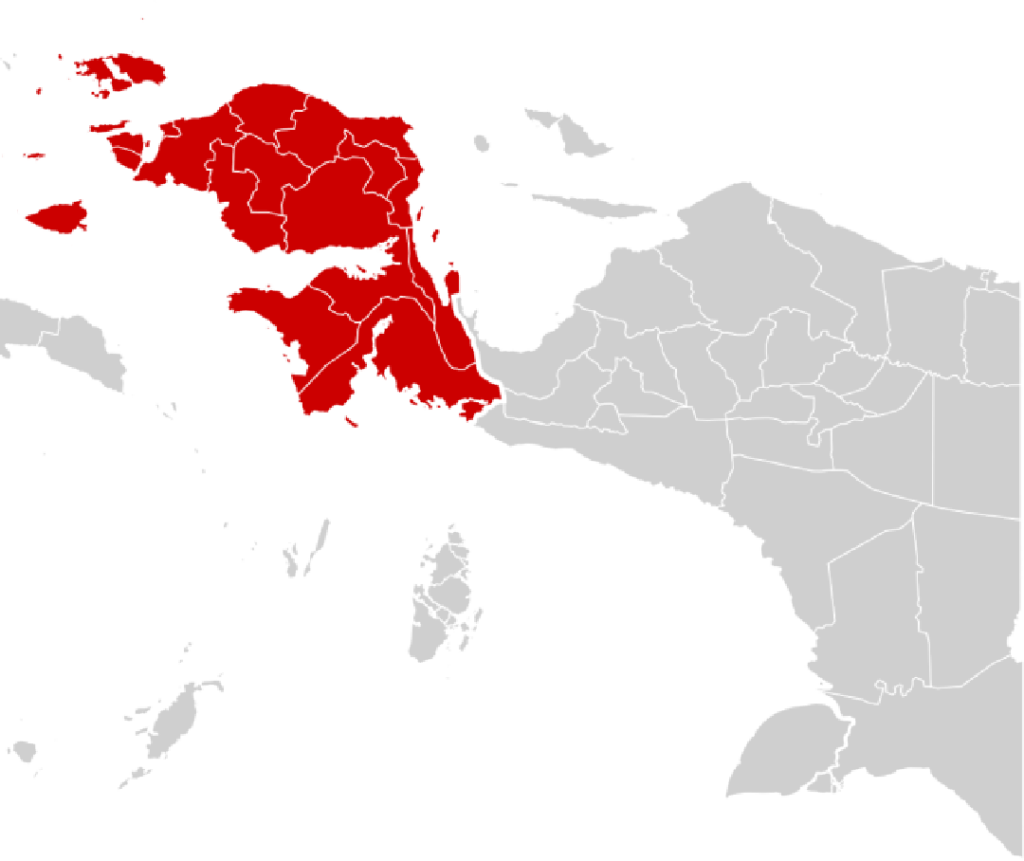
Community leaders and public figures who attended the event used the occasion to deliver messages that extended beyond the Christmas celebration itself. Among them was Robert George Yulius Wanma, a representative from Papua Barat Daya, who spoke about the importance of strengthening brotherhood and solidarity among Papuans living outside their homeland.
In his remarks, Wanma emphasized that unity among Papuans in the diaspora is essential for facing social and economic challenges. Living far from Papua often requires adaptability, resilience, and mutual support. He encouraged Papuan migrants to look after one another, to build networks of cooperation, and to remain connected as one community despite differences in background or region.
He also reminded the audience that being Papuan and being Indonesian are not separate identities. According to him, Papuans have an important role to play in Indonesia’s national life, contributing through education, work, and positive engagement with society. Christmas, he said, should inspire reflection not only on personal faith but also on responsibility toward the nation as a whole.
Other speakers echoed similar messages, highlighting the role of Kerukunan Keluarga Papua in uniting diverse Papuan groups under one shared vision. They expressed hope that gatherings like this would not be limited to annual celebrations but would continue through social, cultural, and educational activities throughout the year.
A Message of National Unity
One of the strongest messages emerging from the Christmas celebration was the call for national unity. While the event centered on Papuan identity and Christian faith, it also emphasized values that resonate across Indonesia’s diverse society. Tolerance, mutual respect, and togetherness were repeatedly highlighted as principles that should guide everyday life.
Speakers reminded attendees that Indonesia is built on diversity and that unity does not require uniformity. As Papuans living in Jakarta, participants were encouraged to engage openly with people from different cultural and religious backgrounds while remaining proud of their own heritage. This balance between cultural identity and national unity was presented as a strength rather than a challenge.
The presence of thousands of Papuan migrants celebrating Christmas peacefully and joyfully in the capital sent a positive message to the wider public. It showed that diversity can be celebrated openly and that religious events can become platforms for strengthening social harmony.
Life as Papuan Migrants in the Capital City
Behind the celebration were countless personal stories of migration, adaptation, and perseverance. Many Papuans come to Jakarta seeking education, employment, or better opportunities for their families. While the city offers many possibilities, it also presents obstacles, including cultural differences, economic pressure, and social adjustment.
For young Papuans, especially students and first-time migrants, the Christmas gathering offered reassurance. Seeing thousands of people who share similar experiences reminded them that they are part of a larger community that understands their struggles and aspirations. This sense of belonging can be crucial in helping migrants stay motivated and confident as they pursue their goals.
Informal discussions during the event touched on topics such as education, job opportunities, and economic empowerment. Community members expressed hope that stronger unity could lead to better cooperation and support systems, enabling Papuan migrants to improve their quality of life while contributing positively to Jakarta’s development.
Conclusion
The Christmas celebration attended by around 2,000 Papuan migrants in Jakarta was more than a religious gathering. It was a powerful expression of faith, cultural identity, and unity. Far from their homeland, Papuans came together to reaffirm who they are, where they come from, and where they are going as part of the Indonesian nation.
Through shared prayers, songs, and conversations, the celebration strengthened bonds among individuals and families who might otherwise feel isolated in a large city. The messages delivered by community leaders reinforced the importance of brotherhood, national unity, and mutual support in facing the challenges of migration and modern life.
Ultimately, the event stood as a symbol of hope. It demonstrated that distance does not weaken identity, that diversity can bring people closer together, and that moments of faith like Christmas can inspire unity that extends beyond the walls of a celebration hall. For Papuan migrants in Jakarta, this Christmas was not only about remembering the birth of Christ but also about renewing their commitment to togetherness, harmony, and a shared future within Indonesia.