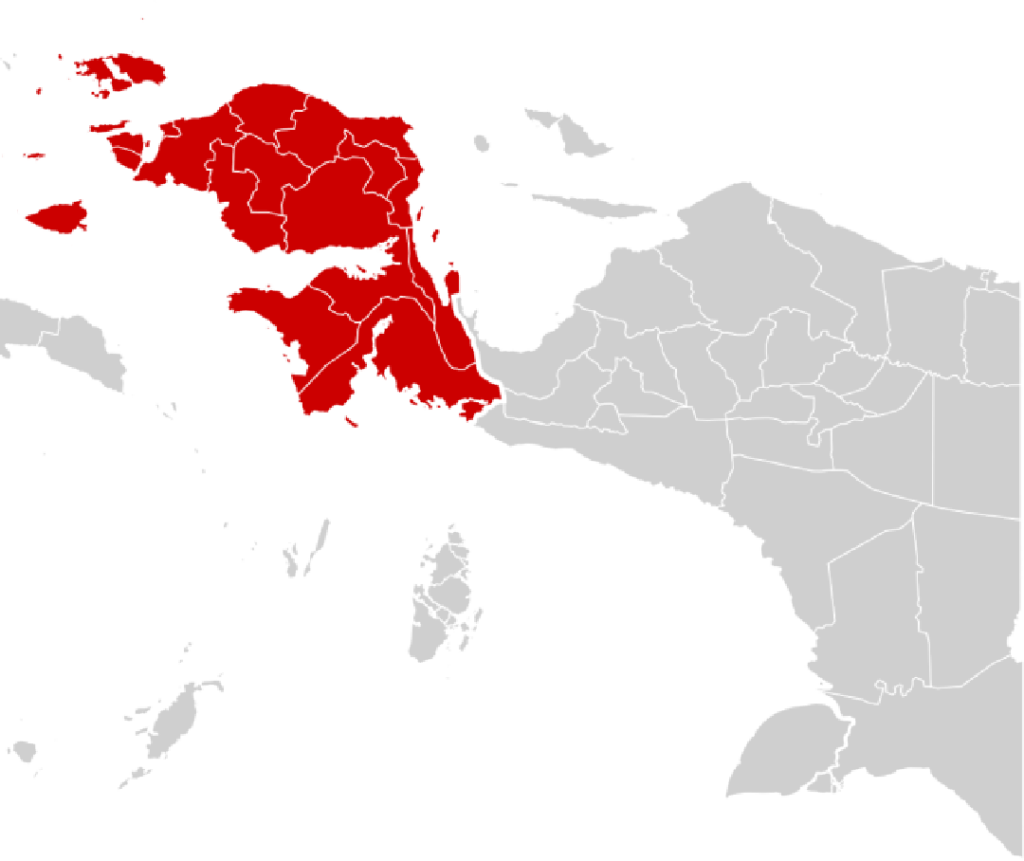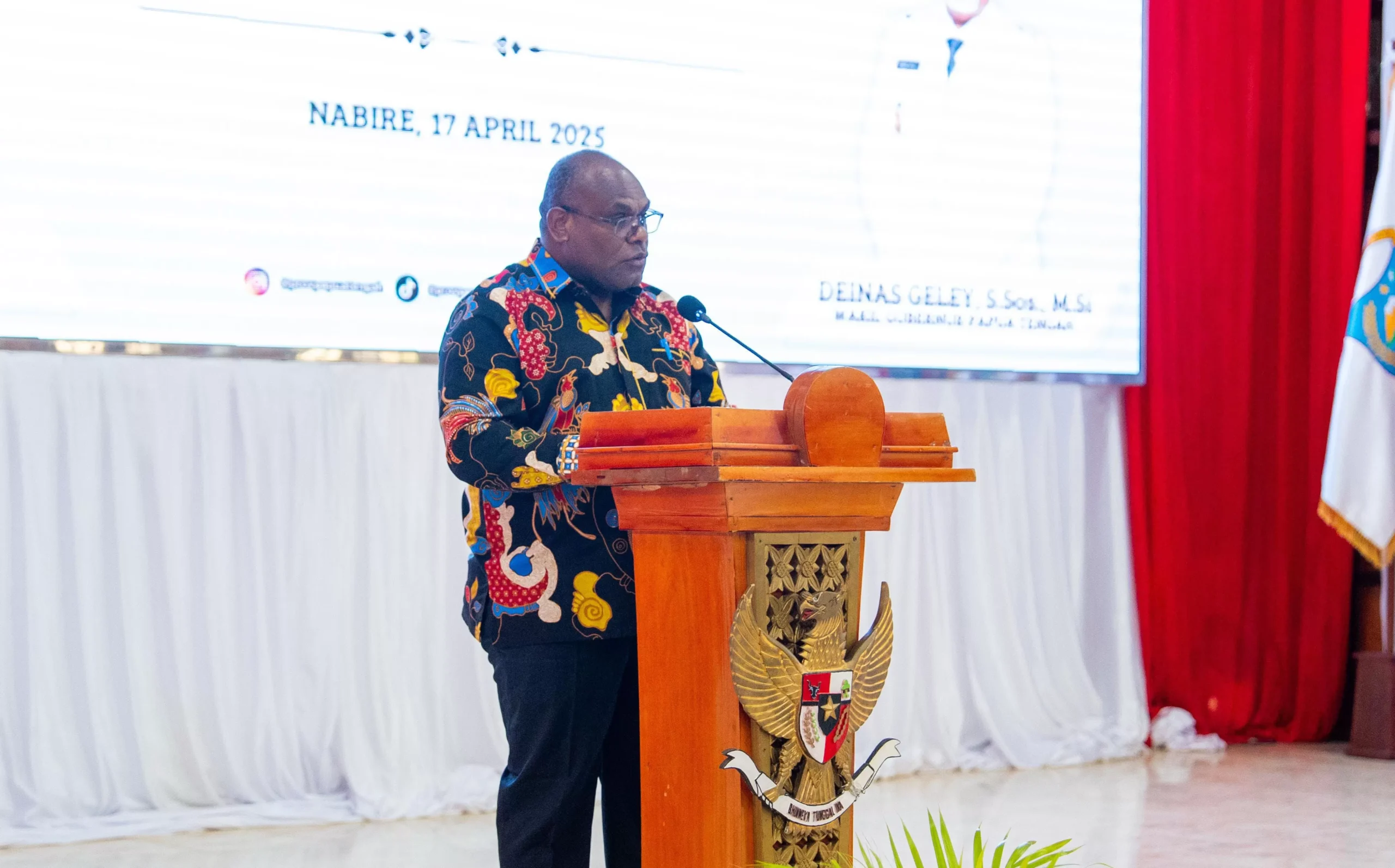
In a region where distance and limited resources have long shaped the educational journey of young people, the Papua Tengah (Central Papua) Provincial Government has taken a decisive step to strengthen access to higher education. Toward the end of 2025, the provincial administration officially disbursed Rp22.9 billion in education assistance to university students across Papua Tengah. The funds were transferred directly into students’ bank accounts, ensuring that the assistance reached its intended recipients efficiently and transparently. For many students and their families, the program represents more than financial support. It signals recognition, hope, and a firm commitment by the local government to invest in the future of its youth.
The education assistance program was implemented as part of the revised 2025 Regional Budget and was timed to coincide with the Christmas and New Year period. Provincial officials described the initiative as both a form of social responsibility and a strategic investment in human development. By prioritizing students who are currently pursuing higher education, the government aims to reduce financial pressure and help ensure that academic dreams are not derailed by economic hardship.
A Direct Investment in Students’ Futures
The Rp22.9 billion allocation was distributed to students enrolled in 25 higher education institutions located in Papua Tengah. The beneficiaries included students in their third, fifth, and seventh semesters, a group considered particularly vulnerable to dropping out due to cumulative tuition fees and living costs. Rather than channeling the funds through institutions alone, the provincial government opted to send the assistance directly to students’ personal bank accounts. This approach was designed to improve accountability while giving students flexibility to prioritize their most urgent academic needs.
For many recipients, the assistance arrived at a critical moment. Tuition payments, book purchases, transportation costs, and daily living expenses often pile up toward the end of the semester. Students from rural districts or low-income households frequently rely on seasonal work or family support that is not always stable. The financial relief offered by the provincial government therefore provided breathing room, allowing students to focus on completing their studies without the constant worry of unpaid fees.
Officials emphasized that the aid was not intended as a one-time gesture but as part of a broader policy framework aimed at strengthening access to education across the province. By easing the immediate financial burden, the government hopes to encourage students to stay enrolled, perform better academically, and graduate on time.
Reaching Campuses Across Papua Tengah
The diversity of institutions included in the program reflects the varied landscape of higher education in Papua Tengah. Beneficiary campuses range from universities and teacher training colleges to nursing academies and vocational institutes. In Nabire, students from institutions such as Universitas Satya Wiyata Mandala, STIKES Nabire, STIE Pelita Harapan, and several technology and health colleges received assistance. In Timika, the program extended to students at Universitas Timika, STKIP Hermon Timika, and other private higher education providers.
This wide coverage highlights the provincial government’s intention to support students across disciplines. Whether studying education, health sciences, economics, information technology, or vocational fields, students were treated equally under the program. The approach recognizes that regional development depends on a broad range of professional skills, not only on graduates from a single academic path.
By including both urban and semi-remote campuses, the government also addressed regional disparities within Papua Tengah itself. Students who study close to home often come from families with limited economic means, and the assistance plays a vital role in keeping local higher education institutions accessible to the surrounding communities.
Education as a Cornerstone of Development
Papua Tengah Governor Meki Fritz Nawipa has repeatedly stated that education is the foundation of long-term regional progress. Since taking office, his administration has emphasized human resource development as a central pillar of governance. The Rp22.9 billion education aid aligns with this broader vision, complementing other initiatives such as free secondary education programs, teacher capacity building, and classroom modernization.
Earlier in December 2025, the provincial government announced a larger education package valued at more than Rp90 billion. That initiative focused on eliminating tuition fees for senior high school and vocational students, improving school facilities, and introducing digital learning tools. The university assistance program fits naturally within this framework, ensuring that support continues beyond secondary education and into higher learning.
From the government’s perspective, investing in students today is a way to prepare future professionals who can contribute to the province’s growth. Graduates are expected to fill roles in education, healthcare, administration, entrepreneurship, and community leadership. By supporting students during their academic journey, the government hopes to build a skilled workforce that understands local challenges and is committed to serving Papua Tengah.
Stories Behind the Numbers
Behind the Rp22.9 billion figure are thousands of individual stories. For students, the assistance often means the difference between continuing their studies and taking a forced break. Several recipients shared that the funds would be used to pay outstanding tuition fees, purchase required textbooks, or cover accommodation and transportation costs. Some students also noted that the aid reduced the burden on their parents, many of whom rely on subsistence farming or informal work.
Parents expressed relief and gratitude, describing the assistance as a sign that the government recognizes the sacrifices families make to educate their children. In many households, sending one child to university requires collective effort, with siblings and extended family members contributing what they can. Government support therefore eases not only financial pressure but also emotional stress.
Lecturers and campus administrators have also welcomed the program. They observed that financial difficulties are among the most common reasons students miss classes or fail to register for the next semester. By addressing this issue directly, the provincial government helps stabilize enrollment and improve academic continuity.
Transparency and Accountability in Public Spending
One of the defining features of the education assistance program is its emphasis on transparency. The provincial government publicly outlined eligibility criteria and coordinated closely with higher education institutions to verify student data. Only active students who met academic and administrative requirements were included, reducing the risk of misallocation.
Direct transfers to student accounts further reinforced accountability. This mechanism minimizes delays and ensures that funds are received in full by the intended beneficiaries. It also reflects a growing commitment by the Papua Tengah administration to strengthen governance standards and public trust.
Officials stressed that education funding must be managed carefully, given its long-term implications. By combining clear regulations with practical delivery mechanisms, the government aims to set a precedent for future assistance programs.
Strengthening Hope and Motivation
Beyond its financial impact, the education assistance program carries symbolic weight. For many students, it serves as validation that their efforts matter and that their government is invested in their success. This sense of recognition can be a powerful motivator, encouraging students to persevere through academic challenges.
Educators note that when students feel supported, they are more likely to engage actively in their studies and campus life. Confidence and motivation often translate into better academic performance and stronger commitment to community service after graduation. In this way, the program’s benefits extend beyond individual recipients to society at large.
The initiative also sends a message to younger students still in secondary school. Seeing university students receive tangible support reinforces the idea that higher education is attainable. It helps shape aspirations and fosters a culture that values learning and achievement.
Looking Toward the Future
As Papua Tengah continues to develop as a relatively new province, education remains a central concern. Geographic challenges, limited infrastructure, and economic disparities require policies that are both inclusive and forward-looking. The Rp22.9 billion education assistance program represents a concrete step in that direction.
Provincial leaders have indicated that similar initiatives may be expanded in the coming years, depending on budget capacity and evaluation results. Continuous assessment will be key to ensuring that assistance reaches those who need it most and delivers meaningful outcomes.
For now, the immediate impact is clear. Thousands of students can continue their studies with greater confidence and reduced financial strain. Families feel supported, and campuses experience improved stability. While challenges remain, the program demonstrates how targeted public investment can create real change.
Conclusion
The distribution of Rp22.9 billion in education assistance is not simply a budgetary decision. It reflects a broader commitment to building a future in which Papua Tengah’s young people are equipped with knowledge, skills, and opportunity. By supporting students at a critical stage of their academic journey, the provincial government affirms that education is not a privilege for a few, but a shared pathway toward progress.
As these students move closer to graduation, their success will stand as a testament to the importance of sustained public investment in human capital. In classrooms across Nabire, Timika, and beyond, the ripple effects of this policy are already being felt. For Papua Tengah, it marks another step toward a more inclusive and hopeful future built on education.