In early December 2025, Indonesia’s Ministry of Agriculture set forth one of its most ambitious agricultural initiatives in the country’s modern history: the development of 100,000 hectares of new rice fields in Papua. This push, led directly by Minister of Agriculture Andi Amran Sulaiman, aims to transform Papua—long regarded as a food-deficit region—into a self-reliant agricultural powerhouse by 2027.
The scale of the plan is staggering. If realized, it would not only close Papua’s long-standing rice deficit but also reconfigure the national food map by shifting production centers further east. More importantly, the initiative reflects a broader national agenda: reducing Indonesia’s dependence on inter-island food shipments and strengthening food security amid rising global uncertainty.
Behind this policy lies a compelling narrative—one that intertwines agriculture, geography, logistics, technological modernization, and the broader vision of equitable development across the archipelago.
The High Cost of Dependence
For decades, Papua has relied heavily on rice shipments from other islands such as Java, Sulawesi, and South Kalimantan. Transporting food across thousands of kilometers of sea routes has always been logistically complex, but in recent years, it has become increasingly expensive due to soaring fuel costs, maritime disruptions, and global supply chain volatility.
According to government estimates, Papua’s annual rice consumption hovers around 660,000 tons, while local production barely reaches 120,000 tons. The gap—more than half a million tons—must be filled by distributors who transport rice from the western and central parts of Indonesia.
Minister Amran has been vocal about how such dependence places a heavy burden on Papuans. Transport costs alone, he argues, inflate retail rice prices, making basic food commodities significantly more expensive compared to other regions.
“Eliminating this dependency is not just about boosting production,” he emphasized on his December visit to Jayapura. “It is about ensuring fairness. It is about ensuring that people in Papua pay reasonable prices for their daily food.”
Thus, the initiative to open 100,000 hectares of new paddies is not merely a technical agricultural plan—it is, at its core, a socioeconomic intervention aimed at leveling disparities.
Why Papua Holds Enormous Agricultural Potential
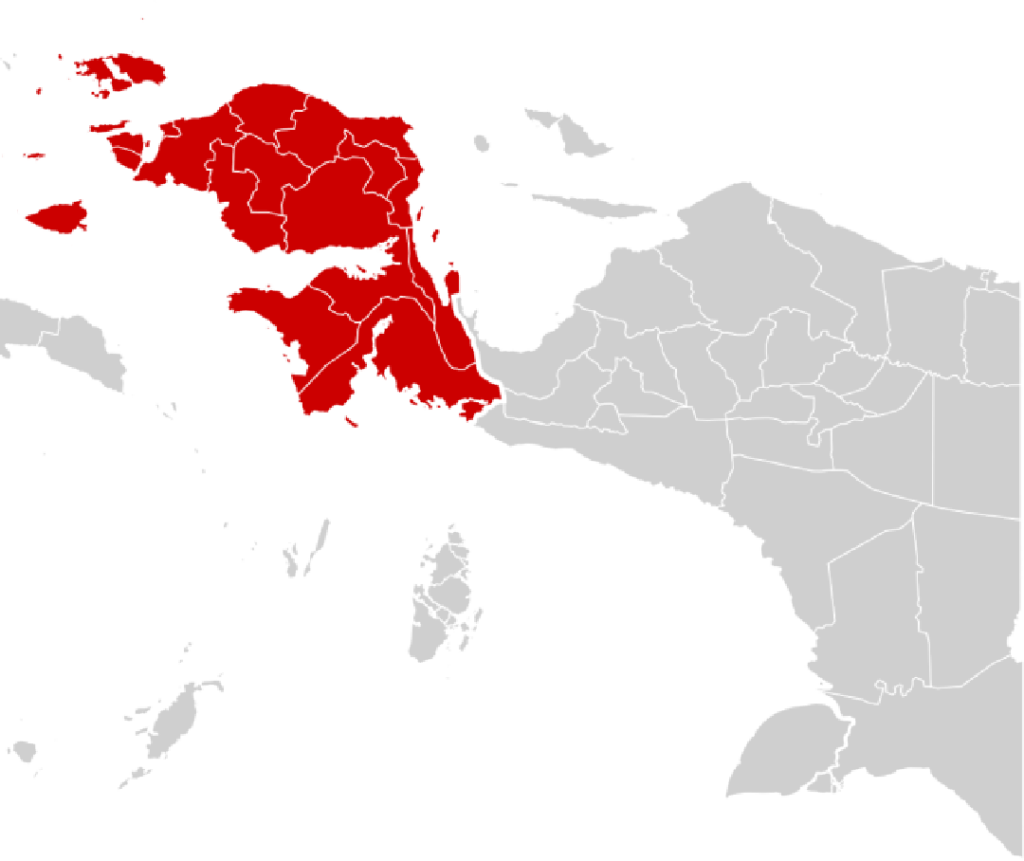
While Papua is known for its rugged terrain and dense forests, it also contains vast stretches of fertile land that remain underutilized. Much of this land, particularly in the southern and southwestern regions, consists of broad lowland plains suitable for rice cultivation once equipped with irrigation.
The ministry has identified several zones for expansion:
- Papua Selatan, with its expansive flatlands,
- Papua Barat and Papua Barat Daya, where local governments have expressed readiness to collaborate, and
- specific high-productivity rural pockets in Papua Tengah and Papua Pegunungan.
Another key advantage is the low population density in many of these areas. Unlike Java, where land expansion is constrained by urbanization and intensive land competition, Papua offers rare spatial flexibility for large-scale agricultural projects.
For years, Papua’s agricultural potential remained largely dormant, hampered by limited infrastructure and insufficient investment. But the new program signals a decisive shift—one that seeks to unlock this potential through technology, centralized support, and strategic planning.
Breaking Down the 100,000-Hectare Plan
The road to 100,000 hectares is designed in phases. The first stage involves the clearing and development of 20,000 hectares, to be followed by gradual expansion toward the full target. Each stage requires coordinated action across multiple fronts:
- Land Clearing and Preparation
Teams will work to open new farming zones, removing vegetation, preparing soil beds, and ensuring that the land meets the conditions for rice cultivation.
- Irrigation Development
The ministry considers irrigation the backbone of the entire program. Building canals, water gates, and reservoirs in remote Papuan terrain poses immense logistical challenges. Yet without it, productivity will never reach the levels needed for self-sufficiency.
- Deployment of Modern Agricultural Machinery
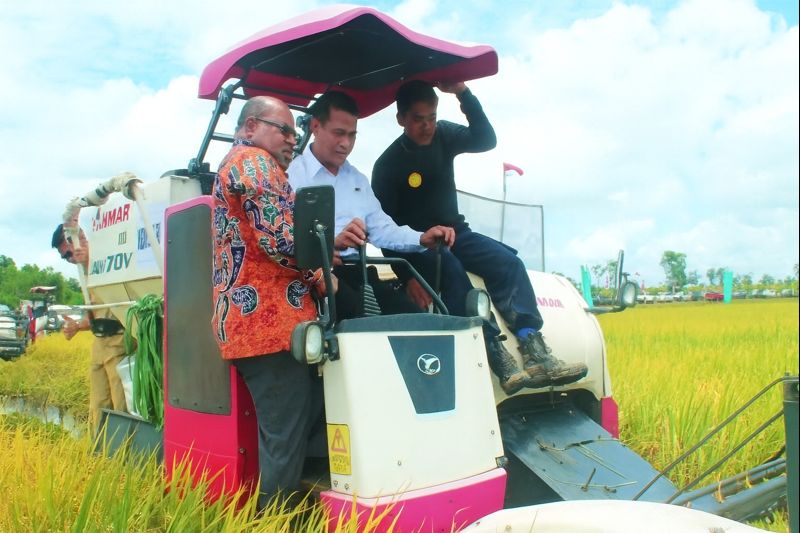
Mechanization is central to the initiative. The government has committed to sending tractors, combine harvesters, transplanters, and drones for field monitoring to reduce labor bottlenecks and improve efficiency.
- Seed Improvement and Training Programs
Farmers will receive high-yield rice varieties along with training in modern agricultural techniques, including precision planting, integrated pest control, and post-harvest management.
- Public-Private and Local Government Partnerships
Local governments across Papua have expressed willingness to collaborate. Their involvement will be crucial for land allocation, community engagement, and sustainable implementation.
This multi-layered approach reflects Papua’s unique environment—one where conventional farming methods are not enough. The emphasis on modern tools and centralized coordination signals a new era in Indonesia’s agricultural policy.
A Vision for Self-Sufficiency by 2027
The Ministry of Agriculture projects that with consistent progress, Papua could achieve rice self-sufficiency by 2027. In fact, early internal projections suggest that significant deficits could be eliminated as early as 2026 if the initial 20,000 hectares reach their expected productivity levels.
Self-sufficiency would mean that Papua no longer depends on shipments from Makassar or Java. It would also mean a more stable supply chain, reduced price volatility, and increased economic resilience.
More broadly, this achievement would align with Indonesia’s long-standing goal of building a food system that can withstand geopolitical shocks—an increasingly urgent challenge in the global post-pandemic era.
Challenges: The Path Forward Is Not Easy
As ambitious as the plan is, it comes with undeniable challenges:
- Geographic Barriers
Papua’s mountains, swamps, and remote villages complicate land access and movement of heavy equipment. Transporting machinery through rugged roads or thick forests often requires additional infrastructure development.
- Logistical and Cost Constraints
Building irrigation and supply routes from scratch requires substantial financing. The government must ensure long-term funding to avoid stalled projects.
- Community Integration and Land Rights
Many Papuan communities have deep cultural and historical ties to their land. Any expansion must involve consultation with indigenous landowners to avoid conflict and ensure mutual benefit.
- Environmental Sensitivity
Rice-field expansion must balance economic development with conservation. Sustainable land conversion will be critical to protect Papua’s ecosystems.
- Agricultural Workforce Readiness
Transitioning local farmers to modern mechanized methods will require intensive training and continuous technical support.
Despite these obstacles, the ministry remains confident that sustained commitment and collaboration with provincial governments can overcome them.
Transformative Impact: Beyond Rice Production
If successful, the 100,000-hectare initiative could transform more than just Papua’s food supply.
- Economic Empowerment
The agriculture sector could become a major source of employment for rural and indigenous communities, stimulating local economies.
- Reduced Regional Inequality
Papua has historically lagged behind other regions. Large-scale agricultural investment could help balance development across Indonesia.
- National Food Security Buffer
With Papua producing more rice, Indonesia gains a stronger nationwide buffer against external shocks and supply chain disruptions.
- Infrastructure Growth
Agricultural projects typically drive expansion of roads, irrigation networks, and logistics facilities—all essential for long-term development.
- New Opportunities for Agribusiness
Seed distribution, machinery sales, fertilizer industries, and food processing could all expand, creating an agricultural ecosystem in eastern Indonesia.
Conclusion
The Indonesian government’s push to develop 100,000 hectares of new rice fields in Papua is more than an agricultural project—it is a national vision. It reflects an aspiration to build a stronger, more equitable, and more resilient Indonesia.
The initiative faces significant challenges, but it also carries transformative potential. With the right balance of investment, community engagement, sustainable practice, and technological innovation, Papua could become a new frontier of Indonesian food sovereignty.
And if the government’s 2027 target is achieved, the easternmost region—once seen as a distant consumer—may soon redefine itself as a pillar of national agricultural strength.