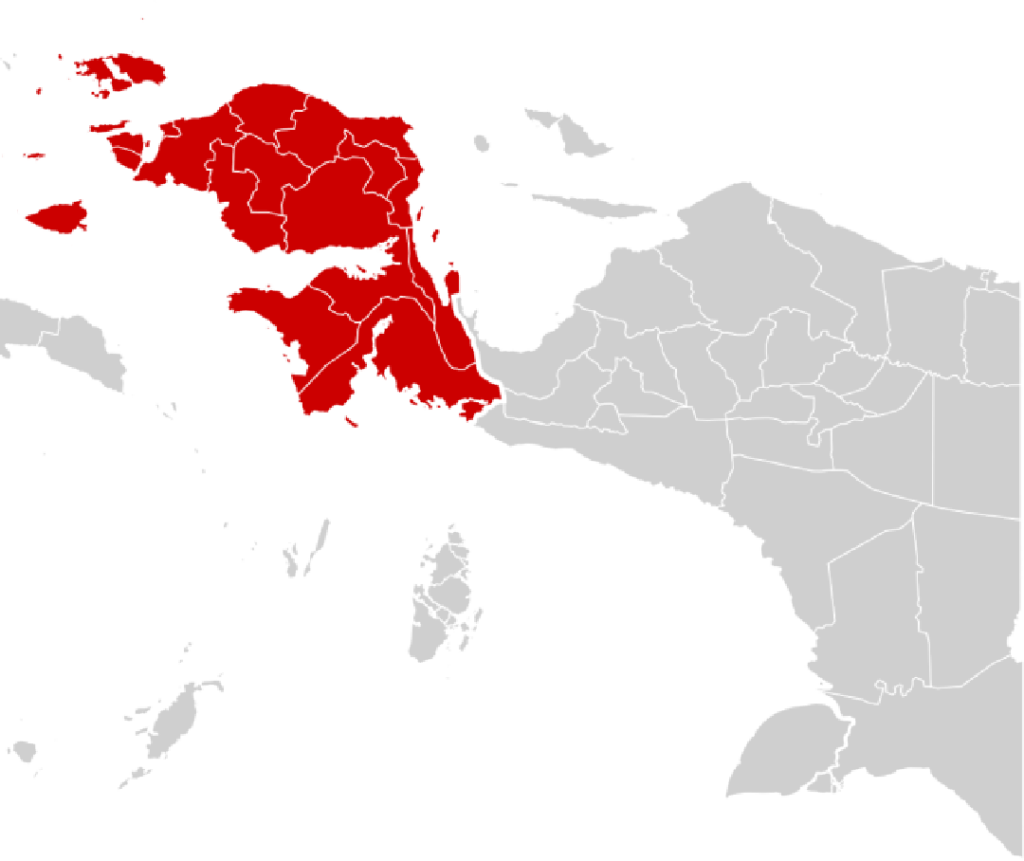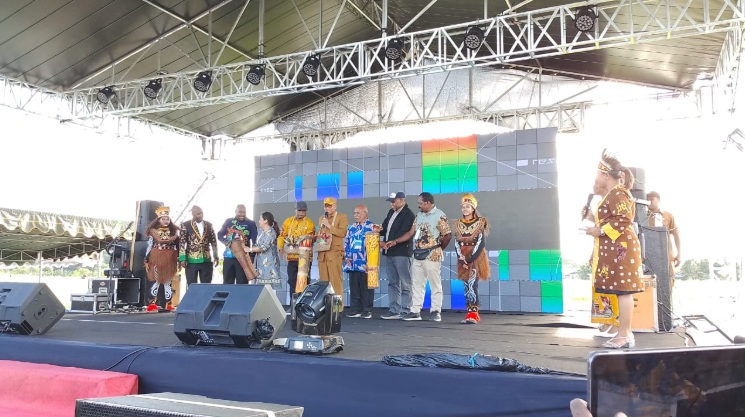
From 13 to 15 January 2026, Nabire became the meeting point for journalists, media workers, students, and civil society representatives from across Tanah Papua. The city hosted the first Festival Media Papua (Papua’s Media Festival) , a landmark event that brought together media practitioners from six Papuan provinces in a shared space for dialogue, reflection, and collaboration. The festival was widely seen as a historic moment for journalism in Papua, marking a collective effort to strengthen press freedom while promoting responsible and ethical reporting.
Held over three days, the festival transformed Nabire into a lively forum of ideas and creativity. Traditional dance performances opened the event, symbolizing unity and cultural pride. These performances were not merely ceremonial but served as a reminder that journalism in Papua is deeply connected to local identity and community life. The atmosphere throughout the festival reflected a sense of optimism, as participants engaged in discussions about the future of media in a region often shaped by complex social and political narratives.
Government Support for a Responsible Press
The Festival Media Papua received clear support from the Government of Papua Tengah (Central Papua), which played an active role in its opening and overall facilitation. Officials emphasized that press freedom is a cornerstone of democracy, but it must be accompanied by responsibility, accuracy, and ethical awareness. In Papua, where information can significantly influence public perception and social stability, responsible journalism is considered especially important.
Government representatives highlighted the role of the media as partners in development. Journalists were encouraged to report critically but constructively, helping communities understand public policies while also holding authorities accountable. This approach positioned the media not as an opposing force, but as a vital contributor to social cohesion and informed public discourse.
The festival’s theme reflected this balance, reinforcing the idea that freedom of expression must go hand in hand with professionalism.For many participants, this message resonated strongly, given the daily challenges faced by journalists working in remote areas with limited resources and high expectations from the public.
Strengthening Solidarity Across Tanah Papua
One of the festival’s main objectives was to strengthen solidarity among journalists from across Papua. Media practitioners from Papua Province, Central Papua (Papua Tengah), Highland Papua (Papua Pegunungan), South Papua (Papua Selatan), West Papua (Papua Barat), and Southwest Papua (Papua Barat Daya) gathered in Nabire, creating a rare opportunity for face to face interaction.
Papuan journalists often work in isolation due to vast distances, difficult terrain, and uneven access to training. The festival provided a platform to share experiences, discuss common challenges, and build networks that can support future collaboration. Conversations ranged from newsroom management and journalist safety to ethical dilemmas and the sustainability of local media outlets.
Senior journalists from Papua were also present, offering mentorship and sharing insights drawn from decades of experience.Their involvement enriched the conversations, serving as a reminder to the younger generation of journalists about the protracted struggle for press freedom in Papua, and the weighty obligations that accompany it.
Journalistic Photography: Papua’s Stories Unfold
A standout feature of the festival was the journalistic photography exhibition, which presented roughly 150 photographs from throughout Papua. These images documented daily life, cultural practices, the natural environment, education, healthcare, and social dynamics. Collectively, they created a compelling visual story that highlighted the variety and strength of Papuan communities.
The exhibition attracted a diverse audience, including students and the general public, offering a perspective on Papua that extended beyond the usual conflict-focused narratives. Many of the photographs emphasized human experiences, capturing moments of happiness, hardship, and optimism that are frequently overlooked in mainstream media.
Organizers highlighted the vital role of visual journalism in shaping perceptions of Papua, both within Indonesia and beyond. Through the presentation of genuine and fair images, journalists have the power to counter prevailing stereotypes and foster a deeper understanding of the area.
Youth Involvement and Media Literacy as Key Components
The festival was intentionally inclusive, drawing not just seasoned journalists but also students and young people. High school and university students turned out in significant numbers, demonstrating a keen interest in photography displays, panel discussions, and interactive forums.
Workshops focused on fundamental journalism skills, media literacy, and ethical reporting were conducted to engage the younger audience. These sessions were designed to promote critical thinking and responsible information consumption, especially in today’s world, where social media and the rapid spread of information are so prevalent.
Organizers believed that involving young people was vital for the future of journalism in Papua. The festival aimed to spark interest in media careers and cultivate a more informed and discerning public by exposing students to the principles and duties of journalism.
Workshops Tackling Media Issues
Over the course of three days, the festival featured a series of workshops and panel discussions that tackled significant challenges confronting journalists in Papua. Subjects covered included press freedom, journalist safety, the digital shift, misinformation, and reporting in conflict situations.
Participants explored the realities of working in areas where social tensions, political sensitivities, and security concerns frequently intersect. Speakers emphasized the need for verification, context, and empathy in reporting, especially when covering sensitive topics that could affect community dynamics.
Media sustainability emerged as a key topic. Numerous local media organizations face financial constraints and dwindling advertising income. Conversations centered on exploring different business models, fostering collaboration among media entities, and leveraging digital platforms to broaden their audience while upholding journalistic standards.
The festival repeatedly highlighted the need to reconcile press freedom with accountability. Presenters stressed that freedom of expression comes with ethical responsibilities, such as truthfulness, impartiality, and respect for human rights.
In Papua, where misinformation can rapidly inflame conflicts, responsible journalism is of paramount importance.
Festival conversations underscored the importance of steering clear of sensationalism, emphasizing the necessity of fact-based reporting. Journalists were urged to think about the societal consequences of their work, putting the public good ahead of fleeting headlines.
Government officials stressed that criticism is a valid aspect of journalism, though it should be constructive and backed by evidence. This viewpoint resonated with many journalists, who recognized the difficulties of maintaining independence while facing political and social pressures.
Nabire as the Host
Nabire’s selection as the host city held both symbolic and practical weight. As the capital of Papua Tengah Province, Nabire is emerging as a significant administrative and cultural hub.
Hosting the festival in Nabire underscored the point: media development shouldn’t be confined to the big cities.
Local officials and residents embraced the festival, seeing it as a chance to highlight Nabire’s cultural wealth and welcoming nature. The event also boosted the local economy, benefiting hotels, eateries, and transport providers.
By selecting Nabire, the organizers underscored the need for decentralization in media, making sure learning and collaboration opportunities reached all corners of Papua.
Public Engagement and Community Connection
The Festival Media Papua was open to all, giving community members a chance to interact directly with journalists. This accessibility helped break down barriers and build trust between media professionals and the people they serve.
Festival-goers valued the opportunity to meet journalists, pose questions, and gain insight into the news-making process. The event, for many, reshaped the image of the media, moving away from the notion of a remote, exclusive entity and instead showcasing journalists as integral parts of the community, sharing in its obligations.
This kind of interaction is especially vital in Papua, where the bond of trust between institutions and the public has sometimes been tenuous. By fostering open dialogue, the festival helped to build bridges of understanding.
Towards a More Robust Media Landscape
The Festival Media Papua also sought to bolster the region’s media landscape as a whole. The organizers hoped to establish the festival as an annual occurrence, ensuring its lasting influence.
Participants explored the potential for future collaborations, including joint training sessions, shared reporting endeavors, and more robust journalist associations. They also considered ways to enhance access to legal aid and safety measures for journalists operating in difficult conditions.
The festival served a dual purpose, functioning as both a celebration and a strategic platform, paving the way for sustained cooperation among Papuan media professionals.
A Significant Moment for Papuan Journalism
The first Festival Media Papua , held in Nabire, represented a significant moment for journalism in Tanah Papua. It showcased a shared dedication to professionalism, unity, and public service, even in the face of persistent obstacles.
By uniting journalists, students, government officials, and the public, the festival underscored the media’s vital role in fostering informed and inclusive societies.
It presented a vision of journalism that draws from local traditions while adhering to global ethical standards.
Conclusion
The Festival Media Papua , held in Nabire from January 13th to 15th, 2026, was more than just a professional event. It was a declaration of shared principles and hopes for the future of journalism in Papua. Through exhibits, conversations, and community involvement, the festival highlighted the richness and strength of Papuan voices.
As Papua grapples with intricate social and political realities, a robust and accountable media will be crucial. The Nabire festival serves as a reminder that journalism, when built on solidarity, ethics, and cultural appreciation, can be a powerful force for promoting understanding and supporting inclusive progress.