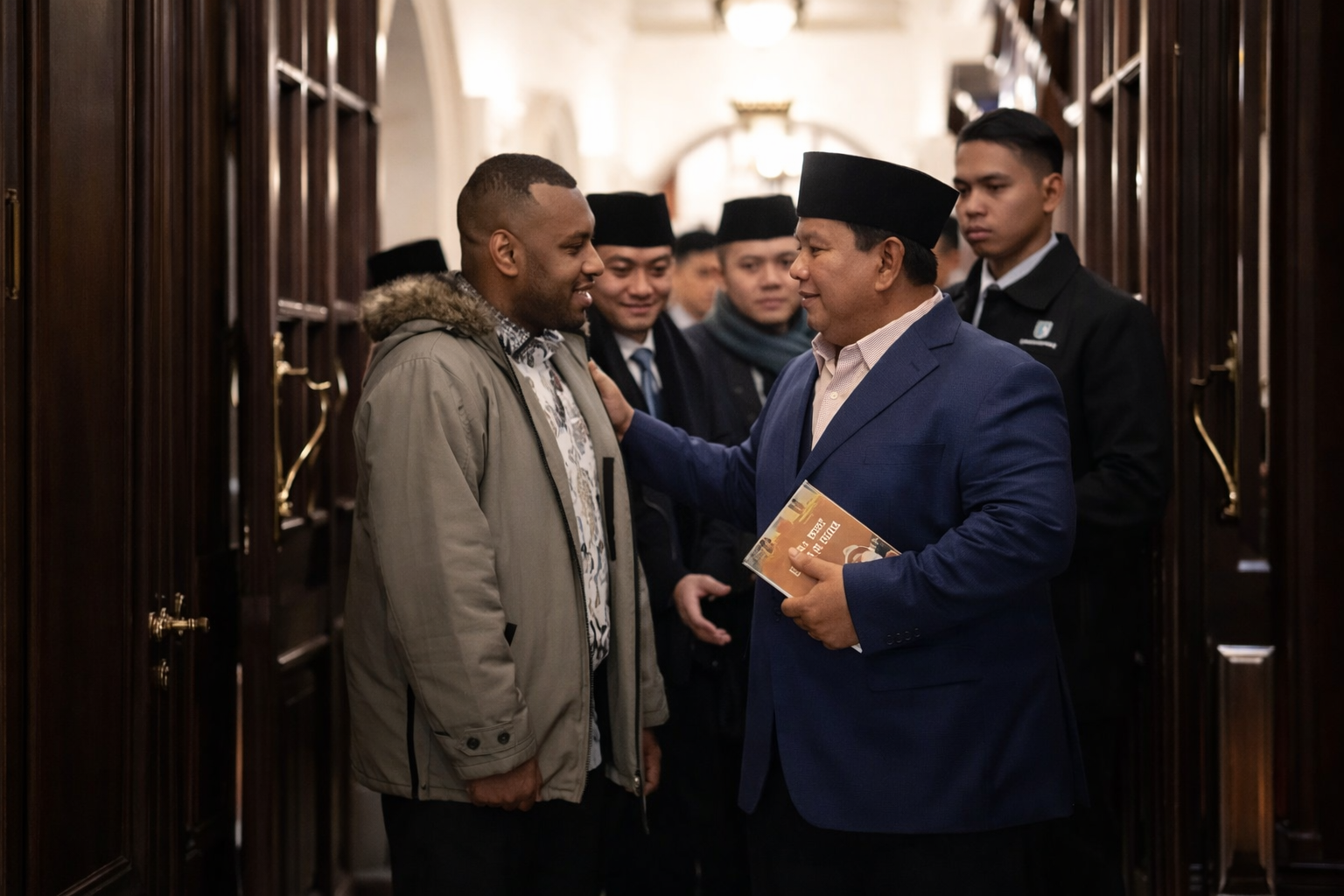
When Prabowo Subianto visited London on 18-19 January 2026, the meeting rooms and official schedules were only part of the story. Beyond diplomatic discussions and formal engagements, one quiet encounter left a deep and lasting impression on a young Papuan scholar studying far from home. For Steve Rick Elson Mara, a doctoral student pursuing his academic journey in the United Kingdom, the moment was not simply about meeting a head of state. It was about receiving a message of peace, responsibility, and moral obligation toward Papua that would shape his personal and intellectual path.
Steve’s encounter with the Indonesian president has since become a powerful narrative about education, national identity, and the role of young Papuans in building a more peaceful future. His reflections, shared through multiple media outlets, highlight how words spoken in a brief meeting can resonate across continents and years, guiding one individual’s commitment to serve his homeland.
From Wamena to London: A Journey of Purpose
Steve Rick Elson Mara comes from Wamena, a town nestled in the highlands of Papua. Steve’s upbringing in a place frequently depicted through stories of strife and developmental hurdles forged a character accustomed to both endurance and introspection. For him, education transcended mere personal aspiration; it was a means to grasp peace, justice, and the intricate forces shaping Papua’s destiny.
His academic pursuits eventually brought him to London, where he embarked on doctoral studies centered on peace and conflict. Immersed in a global academic setting, he encountered a multitude of viewpoints on reconciliation, governance, and societies emerging from conflict. Still, despite the physical separation, Papua remained a constant presence in his mind and research.
It was in London that Steve unexpectedly met President Prabowo. The encounter was not a formal affair but rather a deeply personal exchange that left a lasting impression.
A Meeting That Carried Moral Weight
Reports from Antara News and official presidential channels confirm that Steve had a meeting with President Prabowo during the latter’s London trip. Though the meeting was short, it left an impression. Steve remembered President Prabowo addressing him directly, emphasizing the weight of educational responsibility, particularly for students from places like Papua.
The president’s words were straightforward, yet they carried a lot of weight. “Study hard. Learn everything you can. Then go back and work for peace.” Steve later clarified that these weren’t just political platitudes but a genuine call to action. Education, in this context, wasn’t a way to avoid Papua’s difficulties, but a way to prepare for them, armed with both knowledge and empathy.
Steve considered the message unforgettable. For a Papuan student in international academia, the support he received confirmed that his intellectual pursuits held significance beyond individual achievement.
Peace as a Personal and Collective Calling
Steve’s academic specialization in peace studies directly relates to the message he received. His doctoral research investigates how societies emerging from extended periods of conflict can cultivate reconciliation and enduring peace. Papua, with its complex history and varied populations, remains central to his scholarly interests.
In interviews with national and regional media outlets, Steve underscored that peace transcends the mere absence of violence. It is cultivated through comprehension, conversation, and a commitment to aiding others. President Prabowo’s statements reinforced this conviction.
They emphasized that peace isn’t some distant ideal. It’s something you have to live, day in and day out, particularly for those fortunate enough to have the chance to learn and think deeply.
For Steve, the message hit home. Going back wasn’t just a choice; it was a duty, a direct result of the advantages he’d gained through his education.
The Symbolism of a Book on Peace
A particularly poignant moment during the meeting was Steve’s choice to give President Prabowo a book he’d authored. Titled We All Want to Live in Peace, the book encapsulates his thoughts on global peace, human dignity, and the common hopes that bind us all, regardless of our backgrounds.
Media coverage made it clear that the book was more than just a present; it was a powerful statement of Steve’s dedication to peace as a fundamental principle.
The act of presenting the book symbolized a conversation between generations, specifically between the governing bodies and the younger intellectuals of Papua.
Steve subsequently clarified that the book’s composition was predicated on the conviction that the aspiration for peace is universal. Regardless of their origins or political affiliations, individuals fundamentally desire security, respect, and concord. The London meeting facilitated the dissemination of this message to the upper echelons of national governance.
Education as a Unifying Force, Not a Divisive One
A central tenet in Steve’s observations is the notion that education should not alienate individuals from their communities. Studying abroad can occasionally engender emotional and cultural detachment. Nevertheless, Steve perceives his education as a means of connection, rather than a source of separation.
President Prabowo’s words echoed this sentiment. By urging Steve to come back and serve, the president positioned education as a means of giving back, not just a path to personal gain. This struck a chord with Steve, who has always stressed that Papuan students studying overseas have a duty to make a positive impact when they return.
In his interviews, Steve pointed out that genuine success isn’t about degrees or accolades but about the capacity to help others and foster peace where it’s most needed.
Papua Through the Eyes of a Global Scholar
Living and studying in London exposed Steve to global discussions on conflict resolution and peacebuilding. These experiences deepened his understanding of Papua’s difficulties but also its possibilities. From his viewpoint, Papua isn’t just defined by the conflict stories often told abroad.
Steve, in contrast, portrays Papua as a region characterized by cultural richness, fortitude, and profound understanding. His scholarly pursuits aim to counter reductive representations by presenting complex viewpoints informed by direct experience. The support from President Prabowo reinforced his determination to ensure that Papua’s narrative is conveyed with both respect and impartiality.
Steve posits that young Papuans studying internationally can serve as cultural representatives. They possess the capacity to articulate Papua’s identity to a global audience while simultaneously assimilating international perspectives to share with their homeland.
A Message That Transcends Individual Experience
The importance of Steve’s interaction with President Prabowo transcends his individual circumstances. It encapsulates a wider story concerning the dynamic between national leadership and the youth of Papua.
The message of peace and service, when genuinely expressed, can ignite a spark, not just in a single student, but across a whole generation.
Steve has since passed on the president’s words to his fellow Papuan students, urging them to see their studies as a stepping stone to serving others. He stresses that peace is a collective endeavor, built through small, everyday acts of commitment.
Media reports on the meeting underscored how such exchanges can humanize those in power and foster trust between the government and young Papuan thinkers.
Returning Home With Purpose
Though Steve is still pursuing his doctorate, his long-term goals are firmly in place. He plans to go back to Papua and help build peace through education, open dialogue, and community involvement. His research, he insists, shouldn’t just gather dust in academic publications.
It’s meant to support real-world efforts that foster understanding and healing.
President Prabowo’s message is both a call to action and a gentle nudge. With knowledge comes responsibility. Education demands a moral compass. For Steve, coming home isn’t a political maneuver; it’s a deeply personal choice, born of gratitude and hope.
Conclusion
In a world often consumed by the noise of politics and the quick pace of news, the meeting between Steve Rick Elson Mara and President Prabowo in London was notable for its straightforwardness and genuine intent. It wasn’t about drama or grandstanding, but rather a shared commitment to responsibility and peace.
For Steve, the meeting confirmed something profound: his trek from Wamena to London wasn’t just a fluke. It was a piece of a bigger puzzle, a calling to help his people and work towards a peaceful Papua. For those watching, the tale serves as a reminder that leadership isn’t just about rules and authority; it’s about motivating people to act with intention.
As Steve moves forward in his studies, the words he heard in London still resonate. Study hard. Come back. Serve peace. Within those words is a vision, not just for one Papuan student, but for a generation eager to build Papua’s future with both wisdom and kindness.