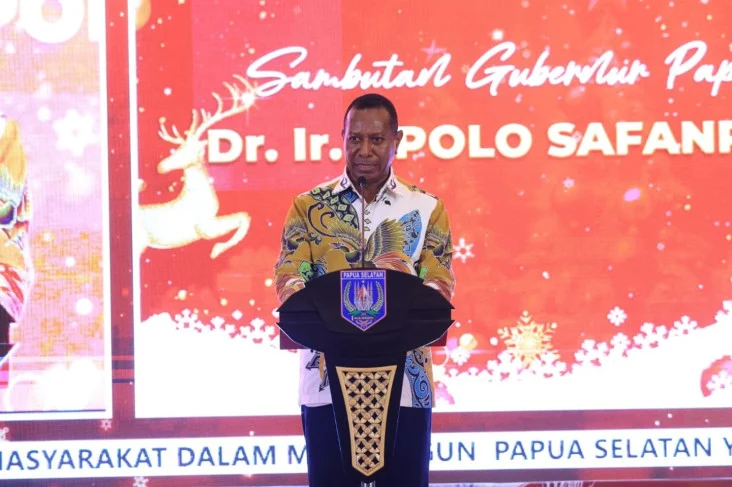
On January 27, 2026, in Jakarta, leaders from Papua gathered to discuss a pressing national issue that could redefine governance and accelerate development in eastern Indonesia. Among those voices was Apolo Safanto, Governor of Papua Selatan (South Papua), who articulated a bold proposition: that Indonesia’s Special Autonomy Law for Papua should be revised to better support economic development and community welfare throughout the region.
The Special Autonomy Law, known locally as Undang-Undang Otonomi Khusus (UU Otsus), has been a cornerstone of Indonesian policy since it was first enacted in 2001. The law was designed to acknowledge Papua’s unique history, cultural diversity, and the need for tailored development policies. However, after more than two decades of implementation, leaders like Safanto say the law has not fully delivered on its promise. Despite the progress, they contend that numerous structural and regulatory barriers still stand in the way of accelerated and more equitable development in Papua.
Origins and Objectives of Special Autonomy
Special Autonomy was created to give Papua more power and resources to help reduce the ongoing development gaps compared to other areas in Indonesia. The law gave local leaders the power to manage their own government, handle administrative tasks, and control certain sources of income, along with significant yearly funding for education, healthcare, infrastructure, and community welfare programs.
Nevertheless, the law’s efficacy has been questioned as the region has progressed. Local policymakers have identified ambiguities within certain provisions that, they argue, constrain the region’s capacity for independent action or generate inconsistencies when intersecting with national legislation. For example, stipulations pertaining to forestry management or civil service administration continue to reference central government statutes, rather than fully empowering local governance structures. Consequently, there have been increasing demands for a more precise delineation of authority, with a focus on prioritizing Papua’s developmental requirements.
Governor Apolo Safanto of Papua Selatan didn’t mince words when addressing national and regional leaders, a group that included the vice minister of home affairs and the head of the executive committee overseeing Papua’s special autonomy development. He acknowledged the autonomy policy’s role in funding significant projects, but he also pointed out its shortcomings. He specifically mentioned regulatory hurdles and unclear lines of authority that have, at times, slowed things down. He maintained that these problems can hinder progress in key areas.
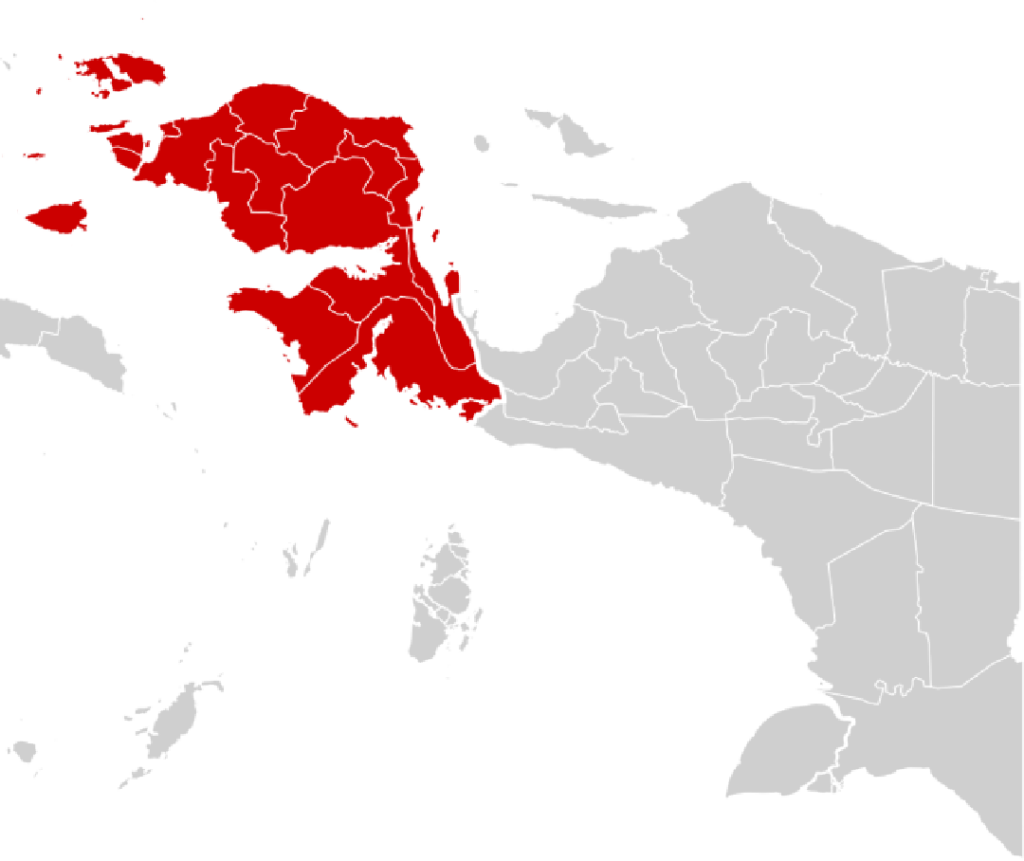
Safanto further emphasized that the decision to divide Papua into six provinces was a conscious one by the state. The aim was to bring public services closer to the people and improve governance. New provinces were established as part of this administrative decentralization, with the intention of giving communities across the region better access to government programs and services.
Even with these precautions, problems remain, particularly when broad regulations run counter to the local governments’ preferred regional management approaches.
Resolving Regulatory Disputes
The governor’s efforts to revise the law largely stemmed from the conflicting rules between Papua’s Special Autonomy Law and national regulations. Safanto, for example, pointed out parts of the autonomy law that seemed to give control over forestry, yet required implementation to align with central government policy. This kind of situation can create uncertainty about who has the final say and make sound decision-making more difficult.
Papua isn’t the only place dealing with these regulatory clashes.
Many federal systems worldwide encounter similar difficulties as local and central governments hash out the limits of their authority.
What makes Papua’s situation particularly urgent, supporters say, is the combination of its geographical isolation, cultural diversity, and the historical lag in infrastructure development compared to other Indonesian regions.
Safanto argued that a revised law could address these inconsistencies by clarifying roles and ensuring that local governments have greater flexibility to respond to the needs of their communities. Importantly, he stressed that this revision would not weaken the integrity of the Indonesian state (NKRI) but would instead strengthen governance in a way that aligns with the spirit of autonomy while enhancing development outcomes.
Four Priority Sectors: Where Change Matters Most
Governor Safanto outlined four sectors as priorities for strengthening the special autonomy law: education, healthcare, infrastructure, and community-based economic developmentThese domains are broadly acknowledged as essential for both human flourishing and economic advancement, thereby resonating with regional ambitions and national developmental objectives.
Education in Papua remains beset by persistent challenges related to disparities in both access and the standard of education. Despite advancements, remote regions continue to face significant obstacles, including a lack of resources for teachers, substandard classroom facilities, and a dearth of teaching materials. A decentralized system of local governance could empower local authorities to take charge of educational planning and resource allocation, thereby enabling the development of tailored strategies that address their unique requirements.
Healthcare in Papua is marked by inconsistency, especially within its remote districts. Expanding local control over healthcare policies could foster the adoption of novel solutions that leverage local knowledge and encourage collaboration with community members.
Infrastructure serves as the foundation for economic integration, encompassing a vast network that includes roads, railways, ports, and digital communication systems.
Safanto suggested that streamlining regulations and expediting decisions could significantly speed up infrastructure projects, bringing essential services and economic opportunities to the most underserved areas.
Concerning economic advancement and community well-being, the governor emphasized the need for policies that directly stimulate local economies. This involves supporting small and medium-sized businesses, improving market access, and creating jobs for the local population.
These four key areas underscore how more agile and efficient governance could promote inclusive growth throughout Papua Selatan and beyond.
Balancing Autonomy and National Unity
The difficulty of reconciling local autonomy with national unity often surfaces in discussions about autonomy reform.
Critics voice apprehension that enhancing regional authority might precipitate fragmentation or inconsistent policy application across provincial boundaries. Jakarta and the wider Indonesian archipelago, distinguished by its multifaceted cultural landscape, are particularly cognizant of these potential hazards, as evidenced by the historical backdrop of Papua’s autonomy discussions.
Conversely, Governor Safanto and his allies contend that their proposed amendments are intended to fortify the Indonesian republic, rather than undermine it. They maintain that by enabling local governance to more effectively cater to the specific needs of its citizenry, the special autonomy framework can achieve its initial goals without jeopardizing national cohesion.
In essence, the governor and his supporters view this revision as a chance to improve the existing legislation, rather than to abolish it. The objective is to establish a more streamlined legal framework, one that is readily adaptable.
This, we hope, will strengthen local governments and foster cooperation across the country.
Drawing Lessons from the Past, Building for the Future
Papua Selatan’s modifications are just one piece of a broader puzzle. Indonesian legislators are striving to harmonize national and regional regulations, aiming for improved services and economic advancement. Considering Papua’s distinct circumstances, its history of exclusion, and its pressing need for economic growth, these reforms carry particular weight.
Worldwide, countries with federal or decentralized structures are wrestling with comparable issues regarding the most effective allocation of authority.
Regional autonomy agreements, found across Europe, the Americas, and the Asia Pacific, are in a state of constant flux, adapting to new realities. Papua’s circumstances offer a valuable lens through which to view these broader dynamics, particularly when contemplating the most effective governance models for the varied populations within a single nation.
The suggested revisions to the Special Autonomy Law also align with Indonesia’s broader developmental goals. Various government entities and planning organizations, including Bappenas, have been formulating national strategies to foster cooperation between regional and central authorities. The aim is to cultivate a fruitful interaction between national policies and local implementation, especially in regions like Papua, which have grappled with enduring underdevelopment.
Voices Within the Region
In Papua Selatan and the surrounding regions, opinions on autonomy reform vary significantly. Academics and others emphasize the need to protect indigenous rights and cultural heritage in all development projects. On the other hand, some people focus on concrete improvements like better roads, schools, and healthcare. The governor’s plan aims to bridge these differing viewpoints, proposing legal changes to foster development while also preserving local identity and giving local people a louder voice.
Local leaders argue that real reform requires widespread involvement: traditional leaders, civil society groups, universities, and the community as a whole. This inclusive approach is seen as essential to ensuring that any legal changes are widely accepted and have lasting impact.
Conclusion
Governor Apolo Safanto’s suggestion to revise Indonesia’s Special Autonomy Law for Papua represents a significant moment in regional policy discussions. It reflects a desire to strengthen governance mechanisms, remove regulatory barriers, and deliver more tangible improvements in education, healthcare, infrastructure, and community welfare. At the heart of this proposal is a belief that legal clarity and administrative empowerment can help Papua’s diverse communities chart a more prosperous and equitable future.
By grounding the call for revision in both local experience and national development priorities, Papua Selatan’s leadership is pushing for a collaborative path forward. Whether this proposal will translate into legislative action remains to be seen, but the conversation it has ignited underscores an important reality: effective autonomy is not merely a legal concept but a means to unlock the full potential of a region and its people.