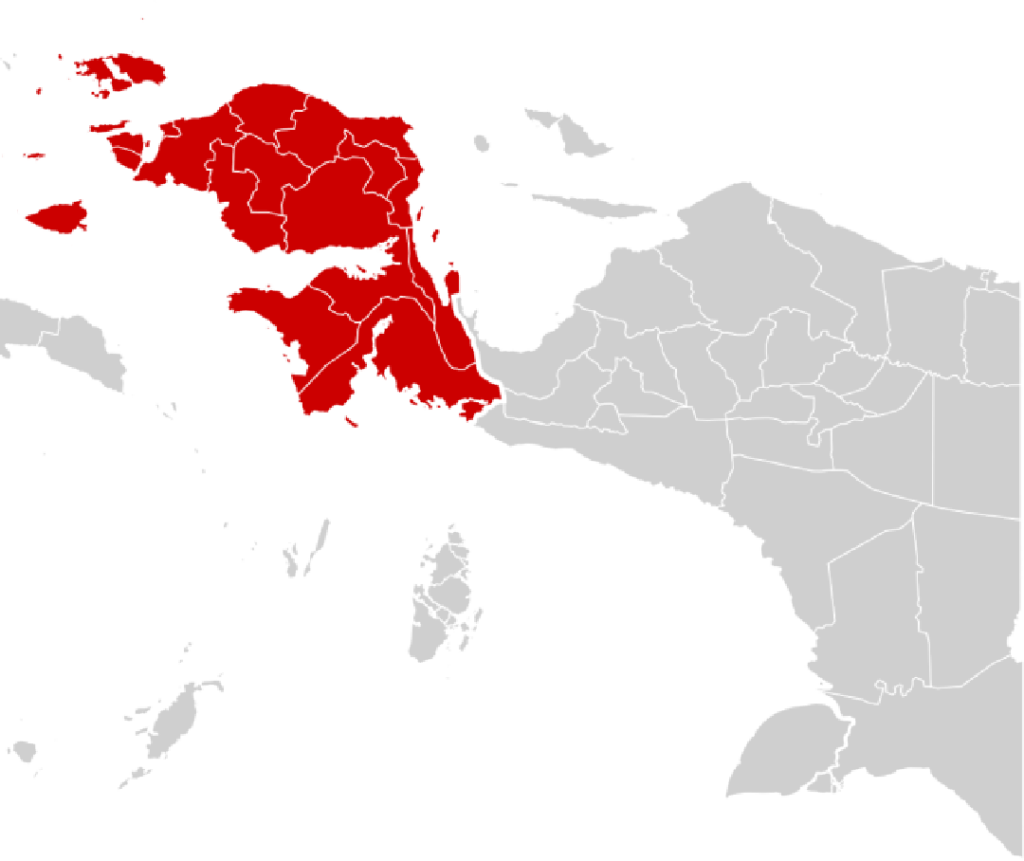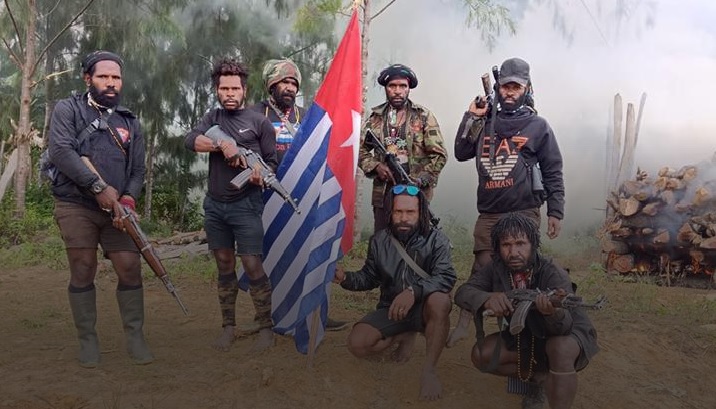
The daily sounds of life in Yahukimo Regency, Papua Pegunungan (Papua Highlands) Province, are full of tension in the rough mountains and thick jungles. Before dawn, villagers get up, farmers tend to corn and sweet potatoes on steep hillsides, and kids make their way to school along narrow paths. But there is a feeling of unease behind the routine. People talk about armed men, strange things they see deep in the woods, and rumors of small insurgent groups all the time.
On February 16, 2026, Indonesian officials confirmed that about 200 members of the TPNPB OPM, also known as KKB (Armed Criminal Group), are active in Yahukimo. This made these fears even more real. Military and police reports say that these fighters are not all in one place. They travel in small groups and blend in with the land where there aren’t many roads and the forest is thick.
Officials say that this widespread presence has led to more violent incidents and made civilians more afraid. At the same time, the government’s special security unit, Task Force (Satgas) Damai Cartenz, has promised to keep villagers safe and bring back stability. For a lot of people in Yahukimo, this isn’t just an idea. It is personal, real, and getting scarier by the minute.
A Region on Edge
Yahukimo is one of the most remote regencies in Papua. You can only get to many villages by foot or small plane, and the roads are often not paved. The rough terrain that keeps communities apart also gives people who want to avoid security forces a place to hide.
Reports from the middle of February 2026 said that there are about 200 armed members of the TPNPB OPM in the regency. The way these people act makes the situation even more scary for the people who live there. Officials say that instead of coming together as one group, they have broken up into small groups of fighters. This makes it harder to find and deal with people.
These armed groups can be very scary for villagers because they are so unpredictable. The threat isn’t always clear, but it affects choices about what roads to take, whether to send kids to school, how to run a business, and how to get ready for the unknown.
The group’s presence in Yahukimo is part of a bigger conflict in Papua. Over the years, there have been incidents in different highland and remote areas that were blamed on armed separatist groups. In the past, tensions have been caused by a mix of political complaints, socio-economic exclusion, and different ideas about what Papua’s future should look like.
Civilians Caught in the Crossfire
There is always a risk when armed groups are present in civilian areas. Even when they aren’t directly fighting with security forces, small groups of fighters moving through forests and villages can cause fear and chaos.
Reports from security agencies say that there have been more incidents in the area that are linked to TPNPB OPM elements. Reports from security have shown that there have been some shootings, threats against locals, and damage to infrastructure projects. Not all incidents have a lot of deaths, but the overall effect on community morale is real.
Gunshots miles away can be scary for a farmer in a small village. A teacher going to a nearby settlement has a heavy heart because they might be being watched by an armed group from a ridge. Parents may feel more anxious than they thought they would when they send their kids to school.
Statistical reports frequently neglect these psychological aspects of insecurity, which significantly influence Yahukimo’s daily existence.
Satgas Damai Cartenz Responds
The Indonesian government sent in Satgas Damai Cartenz, a special task force made to protect Papua’s highland and remote areas, in response to rising fears and the confirmed presence of armed groups.
Not all of the people in Satgas Damai Cartenz are soldiers. They are a mix of police and military officers who have been trained to work in tough environments and interact with communities with the main goal of keeping civilians safe.
The official briefings say that the task force’s job is clear: keep civilians safe, stop armed groups from gaining power, and keep the territory stable. They patrol known travel routes, gather intelligence by talking to village leaders, and carry out strategic operations to keep armed groups from moving around too much.
Security officials stress that their work goes beyond just punishing people. They want to earn the trust of the people who live there because they know that working with them is important for getting things done in a place where outsiders may not be trusted.
A commander in Damai Cartenz said that getting along with the villagers is very important. People are more likely to share information when they feel like their community is being heard and protected. Over time, this exchange makes the security environment as a whole stronger.
Actions on the Ground
After 200 armed TPNPB OPM members were confirmed in Yahukimo, Satgas Damai Cartenz has stepped up its presence. Patrols go along the main footpaths and byways that lead to small villages in the interior. There are checkpoints at important intersections, and the police and other groups are working together.
The task force has also been working to calm people down lately. Officers met with local leaders in a few villages to talk about security measures and how villagers can get help if they feel unsafe.
One elder from the village talked about a meeting where members of the task force listened to people’s worries without judging them. For him and other people, this was a big change. In the past, security forces would show up with heavy weapons and leave without feeling like they were connected to civilians. This time, the focus was on talking and staying safe.
Security sources also said that the armed group is spread out, so strategies need to be flexible. In areas where small units can move through valleys and forest cover, traditional large force deployments don’t work as well.
Instead, operations based on intelligence and partnerships with the community are the most important.
Fear and Resilience
Even though there are armed groups and some recorded events, many civilians in Yahukimo are strong. Even though things are uncertain, they still farm, go to markets, send their kids to school, and stick to their routines.
But being resilient doesn’t mean not being afraid. When their husbands go to work in faraway fields, mothers worry. Business owners are hesitant to grow their businesses. Migrants who trade in other parts of Indonesia are worried about the ongoing unrest.
Elders in the villages tell people to be careful. They tell their neighbors to stay alert but also to go about their daily lives as usual. Many say that giving in to fear only makes it easier for people who want to make the region less stable.
Some people who live there have to work every day to keep this balance between being alert and being normal.
The Heart of the Matter
Why do armed groups work in places like Yahukimo? Security experts say that a complicated mix of things, such as past wrongs, feeling left out, lack of job opportunities, and ideological reasons, are to blame. The land itself, with its remote valleys and thick forests, gives small groups trying to avoid the police a tactical edge.
The fact that there are about 200 armed members spread out over several small units shows that the problem is still going on. It’s not just about the numbers. It is about how these kinds of groups can take advantage of geography, poor infrastructure, and the fact that government institutions are far away from some communities.
For general people, safety and predictability are more important than abstract ideas. In places where farming and local trade are the main parts of daily life, the mere thought of violence can make things unstable.
Safety, Stability, and Development
One of the main ideas that keeps coming up in efforts to make places like Yahukimo more stable is the connection between security and development.
For development projects to move forward, there needs to be security. You can build roads, run schools safely, get healthcare, and businesses can put money into local economies. Development stops when things aren’t stable.
Officials from Satgas Damai Cartenz stress this link in their messages. They stress that keeping the peace is important for both short-term safety and long-term progress.
In meetings with community leaders, task force members often talk about how civic and security institutions can work together to create safe places for families to live and thrive.
Community Engagement
One of the most important things to do when dealing with armed groups is to talk to the people who live in the areas that are affected.
Local leaders and elders know things that people from outside the area don’t. They know how people have moved in the past, how people have solved conflicts in the past, and how people connect with each other. When security forces use this information in a respectful way, it builds trust and makes them more effective at their jobs.
This method has shown good early results in Yahukimo. Community meetings have given security forces information that helps them keep an eye on small groups and guess where fights might break out.
These exchanges are not just one way, which is important. It takes time for security forces to explain their jobs, goals, and limits. People who aren’t in the military say what scares them the most and what they hope for.
This two-way conversation shows a change from just enforcing rules to building stability together.
The Emotional Cost
There are real people with real feelings behind the numbers and operational details.
A mother of three said that she sleeps with one ear tuned to distant noises, always on the lookout for the kinds of gunfire that have become all too familiar through news reports. She worries every time her husband goes to the fields or her kids go to school.
A farmer who was older talked about growing up in Yahukimo when things seemed safer. He said that a lot of the change was because armed groups were moving through valleys that used to be peaceful places for hunting and gathering.
These personal stories show how hard it is to deal with uncertainty. Fear can change lives, even when no one gets hurt.
Looking Forward
Satgas Damai Cartenz has a hard job ahead of them. Having 200 armed members working in small, scattered groups is a strategic problem. But officials say that keeping civilians safe is still the most important thing.
The task force’s goals are to keep building its presence, get more people involved in the community, and improve its intelligence work. At the same time, provincial and national government agencies are looking into ways to help economic growth and infrastructure improvements that make people less isolated and give them options other than instability.
People in Yahukimo hope that life will go back to being normal, where they don’t have to be on guard all the time. Security forces and communities will have to work hard to keep the peace, but everyone agrees that it is worth it.
Conclusion
The fact that about 200 armed TPNPB OPM members are in Yahukimo and the recent rise in incidents have reminded both residents and authorities that safety in Papua’s interior is not guaranteed.
The fear of the unknown affects daily life for civilians. The security forces have to protect people without making them feel like they are being watched. The goal for both is a future where kids can go to school without being afraid, where markets are free to do business, and where families can look beyond just surviving to find opportunities.
Satgas Damai Cartenz is the first line of defense, combining security operations with community cooperation. Their goal is not only to stop violence, but also to build trust, because peace that is shared lasts.