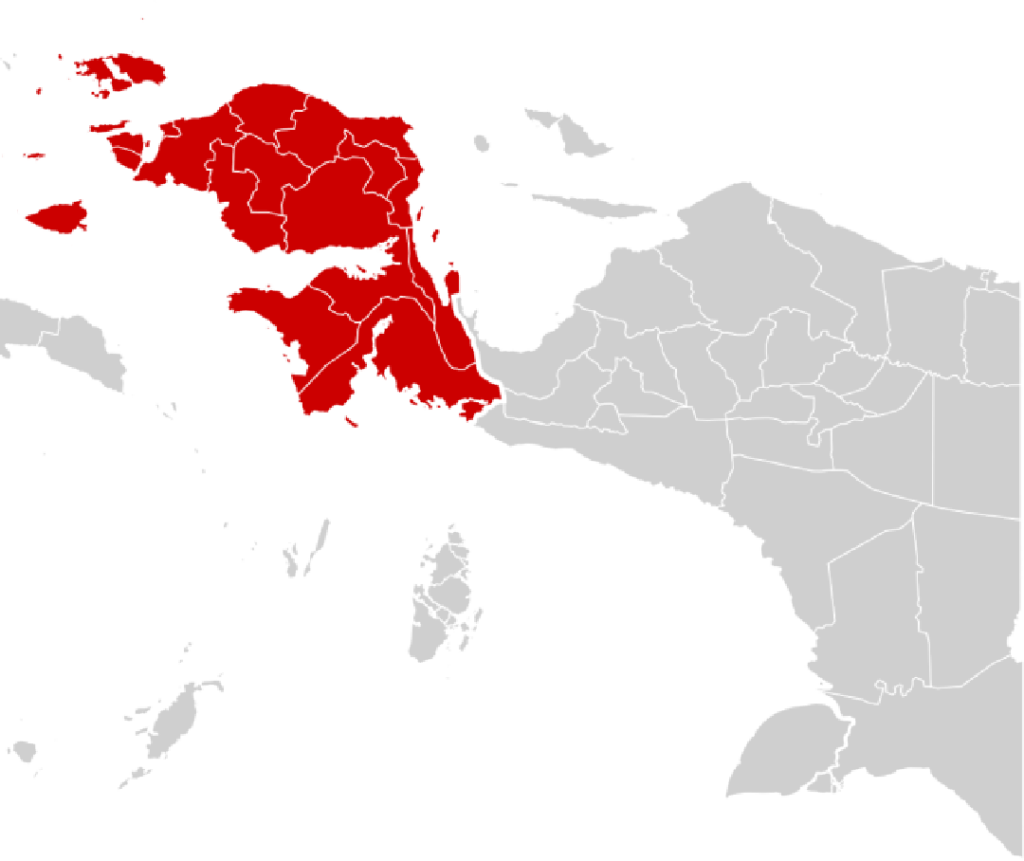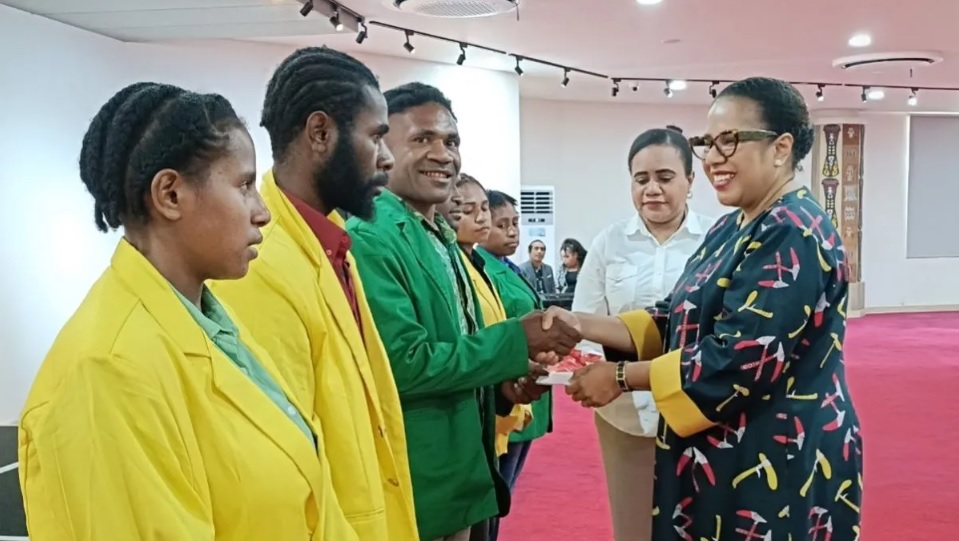
On February 6, 2026, in Jayapura, Papua, a group of young students stood in a hall filled with history. Some wore simple formal clothes, others traditional Papuan patterns subtly woven into their attire. Behind them sat parents and elders whose lives had been shaped by a defining moment in Indonesia’s past. For these families, the gathering was not just about education. It was about memory, recognition, and hope.
In early 2026, the Indonesian government, together with regional authorities and community foundations, formally handed over scholarships to 20 university students from families of PEPERA 1969 fighters. The program was designed as a tribute to the men and women who supported the Penentuan Pendapat Rakyat (PEPERA), or Act of Free Choice, which confirmed Papua’s integration into the Republic of Indonesia more than half a century ago.
For the students receiving the scholarships, the moment marked the beginning of a new chapter. For their families, it was a long-awaited acknowledgment that history had not forgotten them.
A History That Lives in Families
The story of PEPERA 1969 is often discussed in textbooks, political debates, and historical forums. But in Papua, it also lives quietly inside families. It is carried in memories passed down at dinner tables, in stories told by grandparents, and in the values instilled in children who grew up hearing about difficult choices made during uncertain times.
Many of the parents and grandparents of the scholarship recipients were among those who stood on the front lines of social and political change during that period. Some acted as community representatives, others helped organize villages, and many endured social pressure and personal risk. Their role was rarely glamorous. It was rooted in responsibility and belief.
Over the years, as Papua continued to evolve, these families lived ordinary lives. Farmers, civil servants, teachers, church elders, and small traders. Their contribution to history was not always followed by public recognition. For some, the scholarship ceremony in 2026 was the first time they felt the state openly say, “We remember.”
Education as a Form of Respect
The scholarship program was not framed as charity. Officials were clear that it was a form of respect and continuity. Supporting the education of children and grandchildren of PEPERA fighters was seen as a way to honor sacrifice while building capacity for the future.
Each of the 20 students selected for the program is currently enrolled in higher education, both in Papua and outside the province. Their fields of study range from medicine and engineering to law, public administration, education, and social sciences. The scholarships cover tuition and academic costs, easing a financial burden that often weighs heavily on Papuan families.
For many recipients, continuing their studies would have been difficult without this assistance. Some come from remote districts where access to higher education requires leaving home and moving to unfamiliar cities. Others are first-generation university students, carrying not only their own dreams but also the expectations of extended families.
One student, studying public administration, said she felt a sense of responsibility that went beyond herself. She spoke about her grandfather, who was involved in community discussions during the PEPERA era. “He always said education would be our strongest voice,” she recalled. “This scholarship feels like his story continuing through me.”
The Ceremony and Its Meaning
The scholarship handover was held in a modest but dignified setting. Government representatives, regional leaders, and members of the PEPERA Foundation attended alongside families and community figures. Speeches were brief but emotional. There was no grand spectacle. The weight of the moment came from shared understanding.
Officials emphasized that the program was part of a broader effort to ensure that national history is not separated from present-day development. Recognition, they said, must be meaningful. It must create opportunity.
One regional official described the scholarship as “a bridge between generations.” He noted that while the PEPERA fighters helped shape Papua’s political path, today’s youth will shape its social and economic future.
Applause followed, but what lingered were the quiet moments. Parents wiping tears. Students bowing their heads slightly as they accepted certificates. Elders watching with a mix of pride and relief.
Life After Recognition
For families of PEPERA fighters, recognition has often come late. Some parents spoke about years of feeling invisible. Their contributions were acknowledged in national narratives, but daily life remained difficult. Education costs were high, job opportunities limited, and distance from major cities a constant challenge.
The scholarship does not erase those struggles, but it changes the tone of the conversation. It signals that the state sees education as a way of repaying historical commitment. It also places trust in young Papuans to carry forward values of responsibility and service.
Several students expressed their intention to return to Papua after completing their studies. They spoke about becoming doctors in district hospitals, teachers in rural schools, and civil servants who understand local realities. Their ambitions were practical, not abstract.
One medical student said the scholarship strengthened her determination to serve communities where specialist care is scarce. “My family supported integration so Papua could move forward,” she said. “Now it is my turn to move Papua forward through my profession.”
Papua, Education, and Unequal Access
Papua has long faced challenges in access to education. Geographic isolation, limited infrastructure, and economic disparities have affected enrollment and graduation rates. While progress has been made, higher education remains out of reach for many families.
Scholarship programs play a crucial role in closing this gap. They do more than pay fees. They give confidence to students who might otherwise doubt whether they belong in university spaces far from home.
The PEPERA family scholarship fits into a broader national framework that prioritizes education as a development tool, especially in eastern Indonesia. It also aligns with special autonomy policies that aim to address structural inequalities through targeted investment.
Education experts note that programs linked to historical recognition often have a deeper social impact. When students understand that their opportunity is connected to their family’s contribution to the nation, motivation tends to be stronger.
The Role of Foundations and Community Support
The scholarship program is supported not only by government institutions but also by community organizations and foundations linked to PEPERA families. These groups play an important role in identifying candidates, mentoring students, and ensuring that assistance reaches those who need it most.
Community leaders involved in the process stressed that the program is about dignity. They want students to succeed without feeling labeled or separated. The goal is inclusion, not privilege.
One foundation representative explained that the scholarships are designed to empower students to compete on equal footing with peers from across Indonesia. “We are not asking for special treatment,” he said. “We are asking for fairness and opportunity.”
Healing Through Opportunity
Papua’s history is complex. It is marked by moments of hope, tension, and unresolved questions. Programs like this scholarship initiative do not attempt to rewrite history. Instead, they seek to soften its sharp edges by focusing on shared futures.
By investing in education, the government sends a message that unity is not only political. It is social and generational. It is built when young people feel seen, supported, and trusted.
For many PEPERA families, the scholarship represents a form of healing. Not because it erases past difficulties, but because it affirms that their choices mattered and continue to matter.
An elder who attended the ceremony said quietly, “We made decisions for our children’s future. Today, I see that future standing in front of me.”
Students Carrying More Than Books
The 20 scholarship recipients now carry more than textbooks and lecture schedules. They carry expectations, memories, and a sense of responsibility. Their success will not be measured only by grades or diplomas, but by how they contribute to their communities.
Some will face challenges adapting to academic life in large cities. Others will struggle with cultural adjustment or academic pressure. The scholarship program includes mentoring and monitoring to help them navigate these challenges.
What unites them is a shared understanding that their education is part of a larger story. They are not only students. They are heirs to a chapter of national history that still shapes Papua’s place in Indonesia.
Looking Ahead
As these students continue their studies, attention will turn to outcomes. Will they graduate on time? Will they return to Papua? Will their education translate into tangible benefits for local communities?
Officials involved in the program say long-term evaluation is planned. The hope is that this initiative can become a model for combining historical recognition with human development.
There are also discussions about expanding the program in the future, both in the number of recipients and fields of study. Healthcare, education, and public administration are seen as priority sectors where Papuan graduates can make an immediate impact.
A Quiet but Powerful Statement
The scholarship program for families of PEPERA 1969 fighters may not dominate national headlines. It is not dramatic or controversial. But in its quiet way, it makes a powerful statement.
It says that history is not only remembered through monuments or speeches but also through opportunity. It says that honoring the past means preparing the future. And it says that young Papuans deserve to be part of Indonesia’s story not only as symbols, but as educated, empowered citizens.
For the 20 students who received scholarships, the journey ahead will not be easy. But it will be lighter. And for their families, watching them walk forward with support feels like a promise finally being kept.
In Papua, where history often feels heavy, that promise matters.