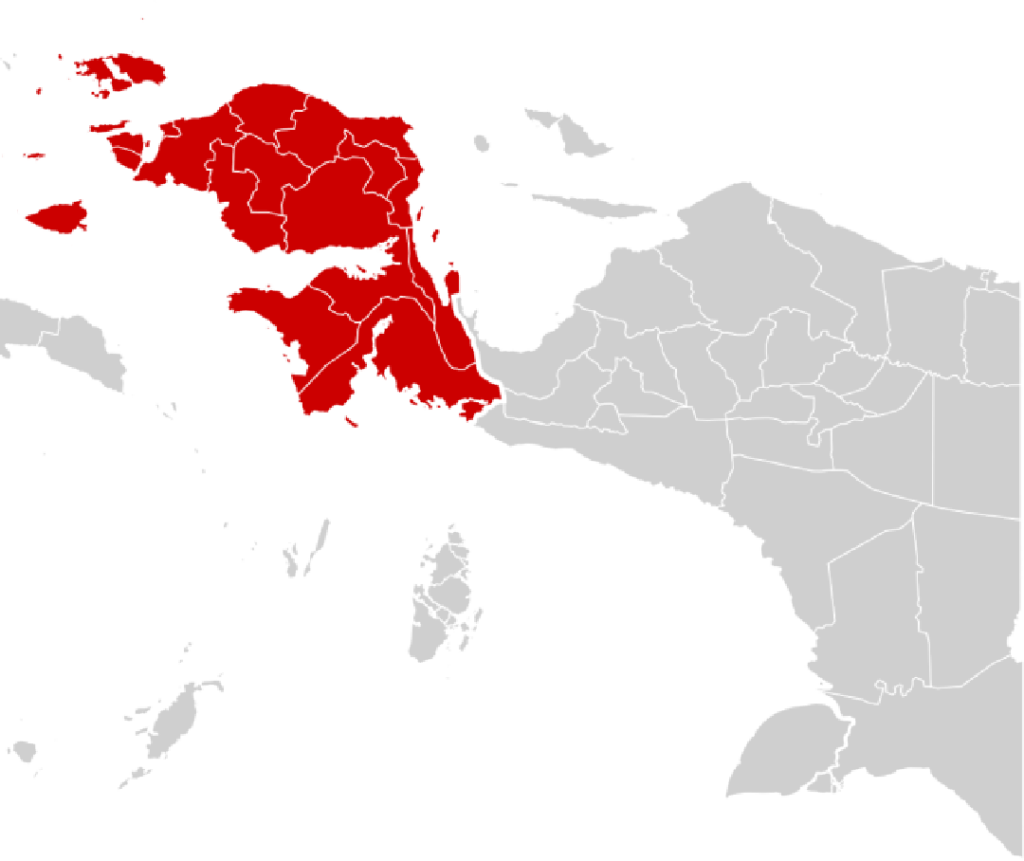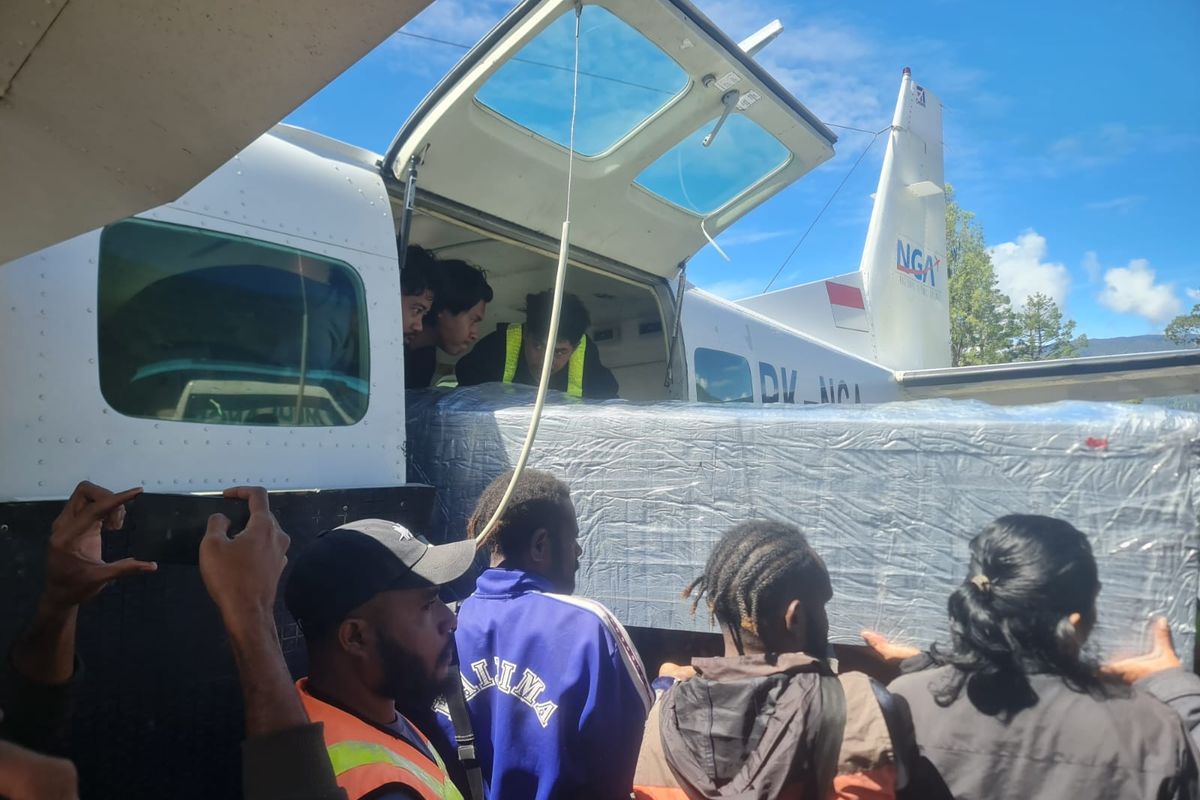
Gunfire broke the peaceful mood of Mobigi Village in the Ilu District of Puncak Jaya Regency, Papua Tengah (Central Papua) Province, on the afternoon of February 12, 2026. Within minutes, gunfire killed Ahmad Gunawan, a 41-year-old local kiosk owner and migrant entrepreneur from Maros, South Sulawesi.
The killing, which officials say was done by armed members of TPNPB OPM, has made people even more worried about the safety of civilians in Papua’s highland areas. Ahmad Gunawan was not a politician; he was a civilian. He owned a small business and made a living in one of Papua’s most difficult areas.
His death has once again shown how dangerous it is for civilians to be caught in the crossfire of long-running armed conflicts in Papua.
A Deadly Afternoon in Mobigi Village
Police and local news reports from February 13 and 14, 2026, say that the incident happened near a kiosk and the Ilu Airport intersection, which is a small but strategically important area in Puncak Jaya.
Witnesses said that the shooter came up to Ahmad Gunawan and shot him from close range. The bullet hit him in the neck. People rushed to help, but the injury was too serious.
Authorities confirmed that Ahmad Gunawan died at the scene before he could get more advanced medical care.
The attack was sudden and scary for people who lived in Mobigi Village. Gunfire in a small town where most people know each other by name caused panic right away. Stores closed. Families rushed inside. People led kids away from the open streets.
Police and security forces secured the area and started an investigation within hours.
What was Ahmad Gunawan?
People in the area knew Ahmad Gunawan as a small business owner who ran a kiosk that sold everyday items. He had come to Papua from Maros, South Sulawesi, looking for work, just like many other migrants who help Papua’s economy.
People who lived nearby said he was quiet and worked hard. He had made business connections with both native Papuans and other migrants. His store was a part of daily life for many people in Ilu District.
People in the community have called his death pointless. He was unarmed and doing something normal for a civilian when the attack happened.
The news spread quickly and painfully to his family in South Sulawesi. They had given him the job of looking for business opportunities in Papua. They are now mourning his death instead.
Police Response and Chase
On February 13, 2026, the Papua Tengah regional police said they would keep looking for the people who did it. Authorities said they had found suspects who are thought to be connected to armed separatist groups.
Security forces started a coordinated search in and around the Ilu District. Officials stressed that those who target civilians would not go unpunished.
A representative from the local police called the act an attack on both a person and the stability of the community.
Police looked at witness statements, ballistic evidence, and intelligence tracking to find and catch the attackers.
Increasing Risk for Civilians in Papua
Ahmad Gunawan’s death is part of a larger pattern of violence in Papua.
Puncak Jaya, like a few other places in Papua Tengah, has had armed conflicts from time to time over the years. More and more, civilian business owners, taxi drivers, teachers, and construction workers are at risk.
Attacking civilians makes people more afraid and hurts the economy. Small businesses are afraid to open. Targeting messes up supply chains. Confidence in investments drops.
Local leaders have said many times that keeping civilians safe is their top priority.
Effects on the Economy and Social Fabric of the Area
In the Ilu District, kiosks and small stores are important places to get food, gas, and other everyday items. Migrant entrepreneurs often work well with the economic networks of native Papuans.
When these people are hurt, the effects spread to others.
Residents are worried that more attacks could make traders less likely to do business in remote highland areas. Less business could lead to higher prices and make it harder to get basic needs.
Leaders in the community have asked for peace and unity. They say that violence only makes things worse for regular people.
Voices from the People
People who lived in Mobigi Village talked about how the event affected them emotionally.
One neighbor talked about how quickly things changed. Before the shooting, the area was calm. After that, the streets were quiet and shocked.
Another person who lives there said that fear still exists. Parents are worried about letting their kids walk alone. Traders think about whether or not to close earlier every day.
For many, the worst part is that the victim wasn’t involved in any political conflict. He traded every day, which helped the local economy a lot.
The Government’s Promise to Keep People Safe
Regional leaders in Papua Tengah reaffirmed their promise to keep the peace and protect civilians.
After the shooting on February 12, 2026, security operations got more intense. There were more patrols around Ilu District and important infrastructure.
Officials have also stressed the need for police and military units to work together to make the area safer.
Statements from police make it clear that armed violence against civilians will not be tolerated.
The Bigger Security Problem
The land in Papua makes it hard for police to do their jobs. Dense forests, mountains, and few roads make it hard to respond quickly.
Authorities say that security will continue to get better in high-risk areas, even though these problems exist.
Analysts say that both enforcement and community involvement are needed to make sure that stability lasts for a long time.
The Human Cost of War
Ahmad Gunawan’s death is not just a number. It shows that a life has been cut short.
His story is similar to those of other civilians who have tried to make a living in Papua’s changing economy.
His death has brought back calls for better protections for small business owners and traders who work in dangerous areas.
Leaders in Puncak Jaya have asked people to stay calm and work with the police to stop things from getting worse.
A Community in Mourning
People prayed for Ahmad Gunawan as news of his death spread.
Friends and neighbors came together to offer their condolences. His kiosk was closed, which was a clear sign that he was gone.
Life must go on for the people of Mobigi Village. But I still remember that afternoon in February very clearly.
Moving Forward
The police are still looking for the people who killed him. There are still investigations going on.
The bigger problem is still making sure that people in Papua can live and work without being afraid.
To stop more tragedy from happening, we need to use security measures, reach out to the community, and run programs that help the economy stay strong.
The events of February 12, 2026, are a painful reminder that violence against civilians hurts development and social harmony.
Now, justice and accountability are the most important things for Ahmad Gunawan’s family.
Papua’s top priorities are still protecting every civilian life, peace, and stability.