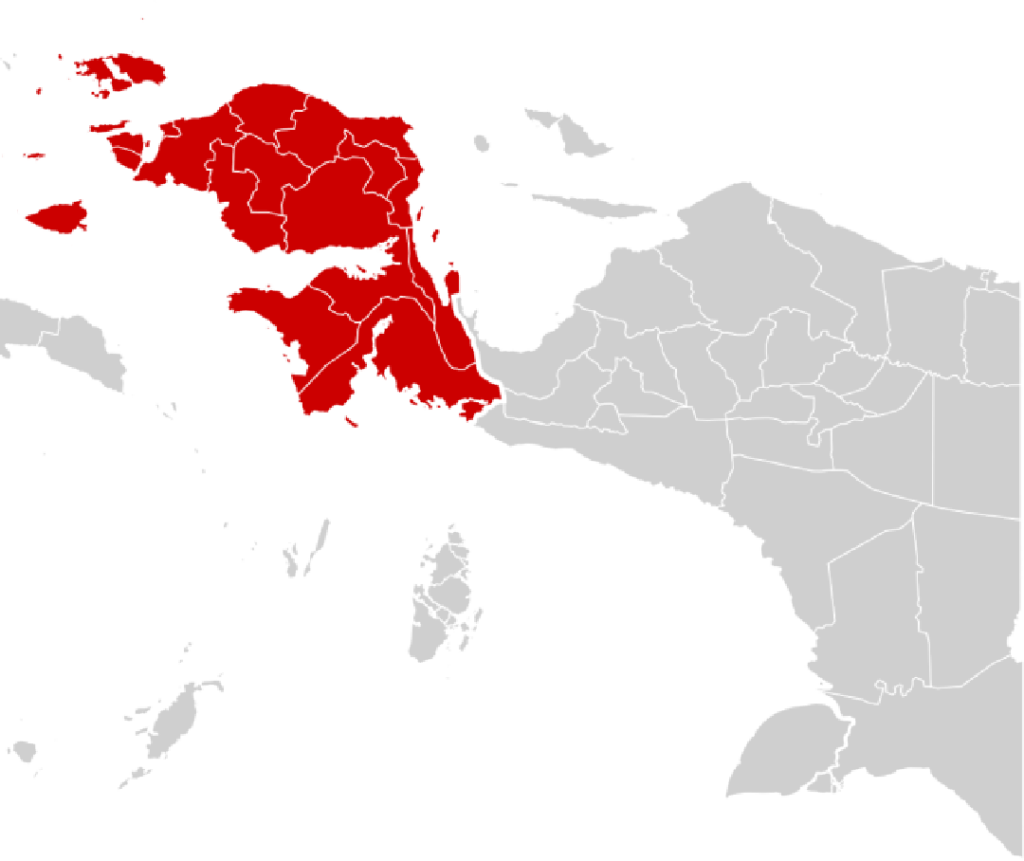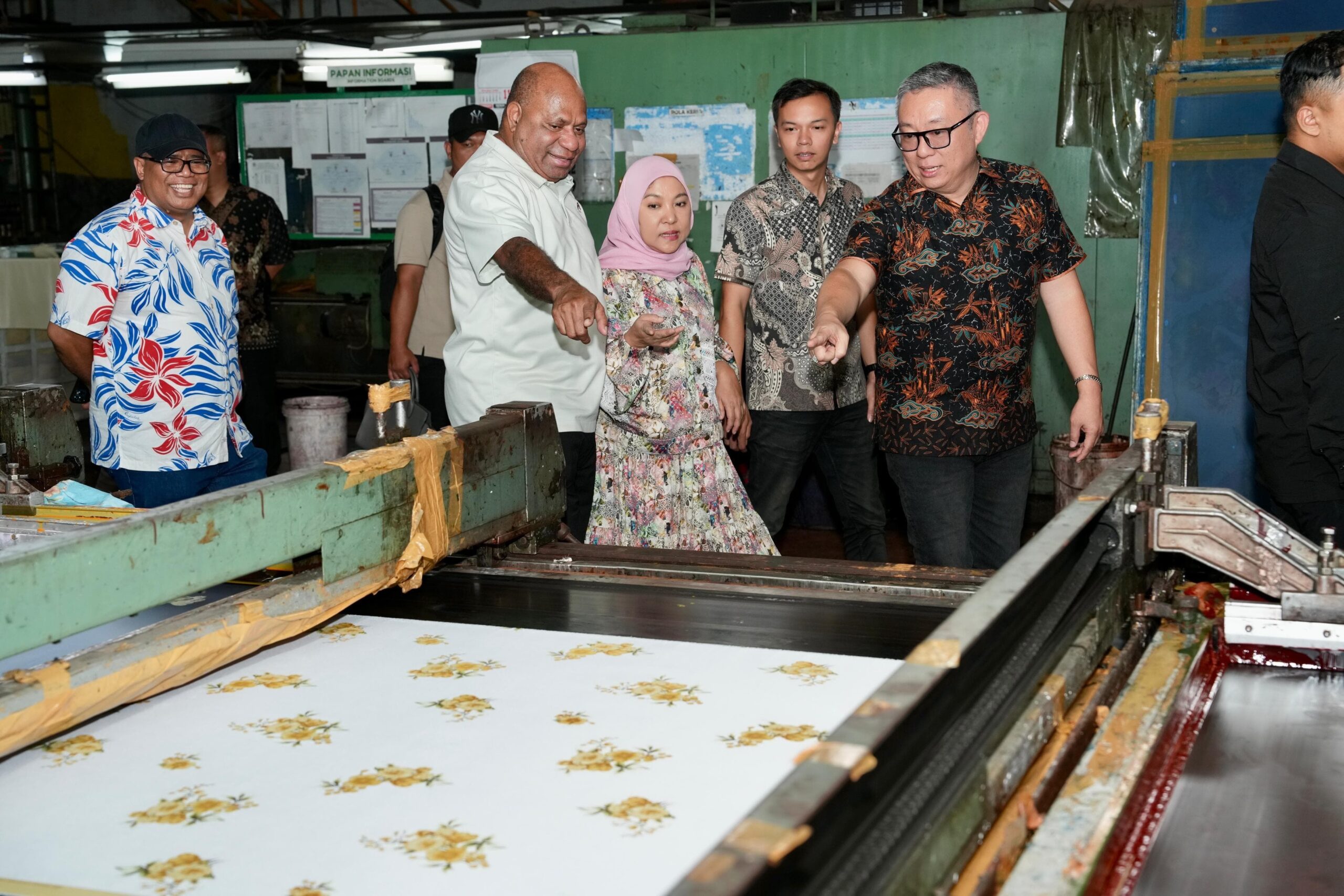
November 15, 2025, Papua entered a new phase of economic transformation—one shaped not by large-scale infrastructure or extractive industries, but by the power of creativity, local expertise, and community-driven enterprise. Under the leadership of Governor Muhammad Fakhiri, the provincial government formally opened strategic discussions with Gajah Group, one of Indonesia’s most established and vertically integrated textile manufacturers. The aim is clear: to strengthen and professionalize Papua’s micro, small, and medium enterprises (MSMEs), enabling local producers to capture greater value from creative industries that are already deeply rooted in Papuan cultural identity.
This shift reflects a broader evolution in Papua’s development priorities. After decades of depending heavily on commodity exports, government expenditure, and external investment, the province is now working to build a more diversified and resilient economic foundation. MSMEs—long regarded as the backbone of Indonesia’s national economy—are increasingly seen as the key to unlocking inclusive growth in the easternmost region. The discussions with Gajah Group represent not only a search for technical expertise but also a commitment to transforming local creativity into products that can compete confidently in national and global markets.
Why Textiles Matter: The Cultural and Economic Potential of Papuan Creativity
Textiles occupy a unique position in Papua’s cultural and economic landscape. Across Jayapura, Nabire, Mimika, and the Central Highlands, indigenous artisans have for generations produced traditional woven fabrics, distinctive motifs, and handcrafted goods that reflect the rich cultural diversity of the region. These products carry symbolic meaning, social value, and artistic identity. Yet, despite their cultural significance, textile-based MSMEs have long faced major constraints—including limited market access, inconsistent product quality, shortages of raw materials, and limited exposure to modern production techniques.
The involvement of Gajah Group offers a potential bridge between Papua’s cultural heritage and the industrial capabilities needed to bring these unique products to wider markets. As one of Indonesia’s major textile producers, Gajah Group has extensive supply chains, nationwide distribution, modern production technology, and decades of experience in scaling textile-based industries. For Papua, textiles are not merely commercial goods—they represent a pathway for uplifting women-led cooperatives, youth entrepreneurs, and rural artisans whose livelihoods depend on creative work. Governor Fakhiri has repeatedly emphasized through various media channels, including Merdeka, Antara, RRI, and regional outlets, that the vision is not to replace authenticity with mass production. Rather, the goal is to elevate Papuan craftsmanship to professional standards while preserving its cultural soul.
A Strategic Dialogue: Aligning Government Priorities and Industrial Expertise
During discussions with Gajah Group, Governor Fakhiri identified three strategic priorities for cooperation: strengthening supply chain resilience, improving the overall quality of Papuan products, and enhancing the competitiveness of local MSMEs. These priorities will be integrated into the province’s existing MSME empowerment programs, which include business incubation centers, cooperative development initiatives, digital commerce training, and access to capital through revolving funds and microfinance schemes.
Gajah Group responded positively to Papua’s interest, viewing the partnership as part of its commitment to supporting national development goals. The company expressed readiness to explore investments in local production facilities, distribution hubs, and specialized training programs aimed at helping Papuan MSMEs scale. Media outlets such as Papua Terkini and Reportase Papua noted that the company has already deployed technical teams to assess local capacities, map the strengths of existing cooperatives, and evaluate market potential. Their findings will shape a long-term collaboration roadmap that aligns industrial capability with grassroots needs.
Strengthening MSME Competitiveness: Building Skills, Product Quality, and Production Capacity
For many Papuan MSMEs, challenges such as inconsistent product quality, difficulty accessing raw materials, and limited exposure to national retail networks remain major barriers to growth. Home-based production, inadequate equipment, and minimal training also limit the ability of entrepreneurs—especially those in remote areas—to scale their businesses or meet national industry standards.
The proposed partnership seeks to address these gaps comprehensively. Under the emerging framework, Gajah Group could deliver a wide range of support programs, including:
- Technical training and certification for artisans, designers, and young entrepreneurs
- Access to high-quality materials such as fabrics, dyes, threads, and machinery at competitive prices
- Modern design assistance to help integrate Papuan motifs into standardized, market-ready products
- Production method guidance aligned with national and international benchmarks
- Direct market linkages to retail chains, e-commerce platforms, fashion distributors, and potential export channels
In return, the provincial government expects MSMEs to transition toward more professional management practices, explore new business models, and actively participate in value-chain networks. The objective is not merely to increase revenue but to build local industries that are sustainable, export-oriented, and resilient to economic fluctuations.
Driving Rural Transformation Through Community-Based Enterprises
Beyond economics, the textile partnership carries deep social significance. Many MSMEs in Papua operate within closely knit community structures, especially women-led cooperatives and village-based weaving groups. These artisans are not just producers—they are cultural bearers and community anchors whose work supports household income, cultural continuity, and local identity.
By connecting these traditional groups with industrial support, the partnership has the potential to:
- Increase household income and financial independence
- Strengthen the role of women in local economic leadership
- Preserve cultural heritage through advanced documentation and design standardization
- Create new employment opportunities for youth in rural areas
- Build a more resilient community-based economic ecosystem
For remote districts where employment opportunities are limited, improved access to training, markets, and modern production knowledge could dramatically reduce regional disparities and inspire the rise of rural textile hubs capable of operating independently from major cities.
Policy Momentum: Aligning Local Initiatives With National Development Goals
Papua’s initiative aligns closely with Indonesia’s broader national priorities—particularly in MSME development, creative economy expansion, and inclusive regional growth. The central government has emphasized the need to build strong local value chains to reduce inequality across the archipelago, and Papua is positioning itself as a key contributor to this agenda.
Governor Fakhiri’s focus on partnerships with reputable national companies reinforces transparency, accountability, and long-term investment security. At the same time, Papua’s emphasis on creative industries complements national programs run by the Ministry of Cooperatives and SMEs, which promote digitalization, financial literacy, and capacity-building for entrepreneurs.
Industry Prospects: Toward a New Economic Narrative for Papua
If implemented effectively, the collaboration between the Papua Provincial Government and Gajah Group could redefine the region’s economic trajectory. The ripple effects could extend far beyond textile production, influencing tourism, digital fashion, creative content, and interprovincial trade. Papuan motifs and woven fabrics—already gaining national attention in fashion shows, exhibitions, and social media—could be transformed into full product lines ranging from apparel and accessories to home décor and export-ready collections.
A stronger textile ecosystem may also stimulate complementary industries such as logistics, branding, packaging, digital marketing, and vocational training. As entrepreneurial capacity rises, Papua could evolve into a thriving hub for creativity-driven industries that combine local identity with modern market strategies.
Challenges Ahead: Ensuring Sustainable, Community-Oriented Implementation
Despite strong momentum, several challenges must be addressed to ensure the success of this partnership. Papua’s geographic isolation, high logistics costs, infrastructure limitations, and digital literacy gaps pose real constraints. Effective coordination between government, private sector, and community actors will be essential to ensure that MSMEs experience tangible improvements rather than symbolic participation.
Another important concern is cultural preservation. While modernization is necessary for scaling, it must not dilute the authenticity of Papuan craftsmanship. The provincial government has pledged to uphold strong protections for cultural intellectual property, ensuring that traditional motifs remain community-owned assets and are not commercially exploited without consent.
A Vision for the Future: Building an Inclusive, Creative, and Resilient Papua
Ultimately, Papua’s exploration of textile industry partnerships represents more than an economic initiative—it is a vision for community empowerment, cultural preservation, and inclusive prosperity. By creating spaces for dialogue between local artisans and national industry leaders, Governor Fakhiri is laying the groundwork for a more self-reliant economy that honors tradition while embracing innovation.
If the partnership advances as envisioned, Papua could soon see the development of textile academies, MSME innovation hubs, regional design studios, and integrated supply-chain facilities. These will open new pathways for young Papuans to participate in creative industries, build thriving businesses, and shape an economic landscape that reflects their cultural heritage and aspirations.
The conversations with Gajah Group have opened a promising window of opportunity. As Papua steps into this new chapter, it does so with the potential to redefine how local industries develop, how cultural heritage is preserved, and how communities take charge of their economic destiny.
Conclusion
The emerging partnership between the Papua Provincial Government and Gajah Group marks a significant turning point in Papua’s economic development. By focusing on textiles—an industry rooted in culture yet rich with commercial potential—Papua is moving toward a more inclusive, diversified, and community-driven economy. The collaboration promises to equip local MSMEs with the technical skills, market access, and production standards needed to compete nationally, while ensuring that Papuan cultural identity remains at the heart of every product.
If successfully implemented, this initiative could stimulate rural economies, empower women-led cooperatives, attract investment, and open new pathways for youth entrepreneurship. More importantly, it could reshape Papua’s development narrative—from one dependent on commodities to one built on creativity, innovation, and sustainable local empowerment.