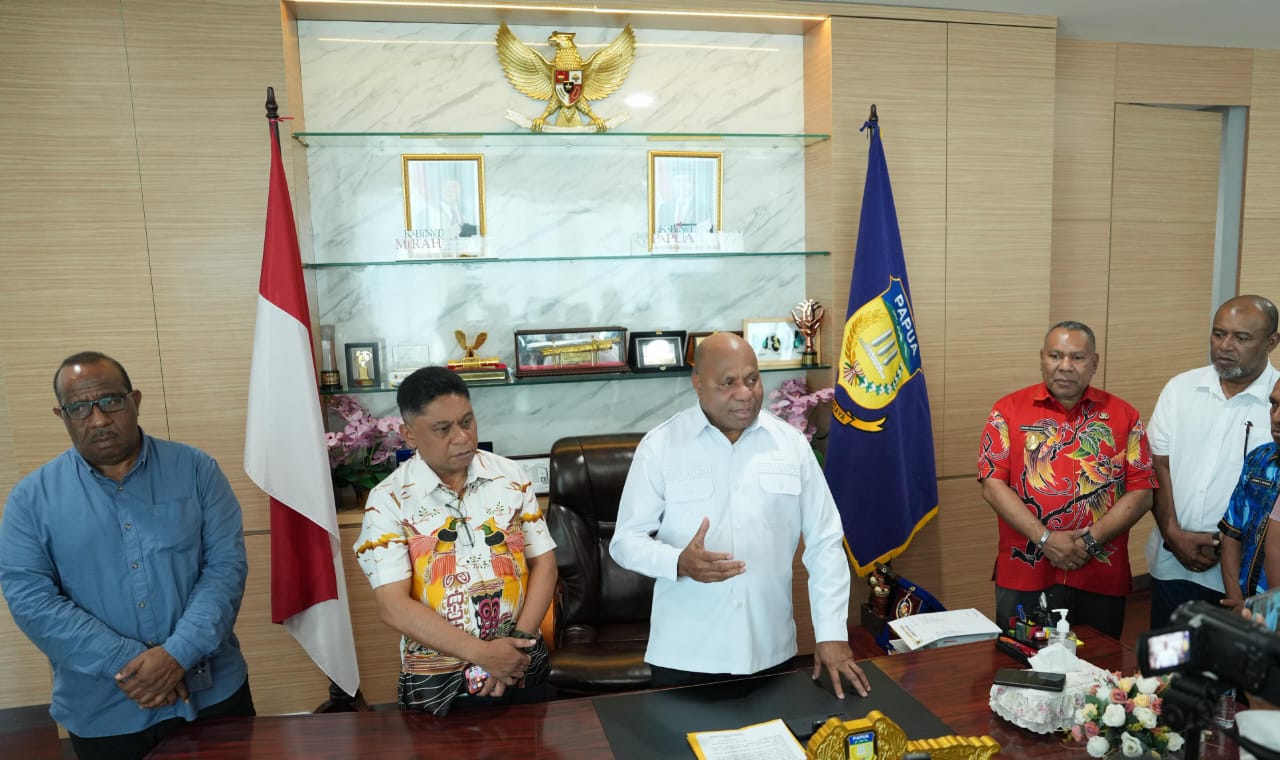
As 2025 drew to a close, the Provincial Government of Papua made a policy decision that directly affects the daily lives of thousands of workers across the region. On December 24, the governor officially announced that Papua’s Provincial Minimum Wage for 2026 would increase by 3.51 percent, setting the new wage level at Rp4,436,283 per month. The adjustment will take effect on January 1, 2026, and applies to all companies and employers operating within the province.
The announcement came at a time when many Papuan families were already feeling the pressure of rising living costs, particularly in food, transportation, and housing. For workers earning minimum wage, even a modest increase can make a tangible difference in meeting everyday needs. The provincial government framed the policy not only as an administrative obligation but also as a deliberate effort to strengthen people’s purchasing power and protect workers from the economic strain caused by inflation.
By raising the minimum wage, the Papua administration signaled its intention to ensure that economic growth, however gradual, translates into real benefits for working households. The decision also reflects the broader national direction on wage policy, which emphasizes the importance of maintaining decent living standards while balancing economic stability.
Understanding the 2026 Wage Increase
The 3.51 percent increase means the Provincial Minimum Wage has risen from Rp4,285,850 in 2025 to Rp4,436,283 in 2026. In nominal terms, workers will receive an additional Rp150,433 per month. While the figure may appear limited on paper, the impact becomes clearer when viewed through the lens of daily life in Papua, where prices of basic goods are often higher due to transportation challenges and geographical conditions.
Governor Matius Fakhiri explained that the increase was calculated based on national wage adjustment formulas, which take into account inflation and economic growth. These formulas are designed to ensure that wages do not stagnate and that workers are not left behind as prices rise. In Papua’s case, the government opted for a balanced approach, providing an increase that supports workers without placing excessive pressure on employers.
In addition to the general provincial minimum wage, the government also set a Provincial Sectoral Minimum Wage for 2026 at Rp4,476,209. This sectoral wage applies to specific industries that require additional compensation due to the nature of the work, skills involved, or working conditions. Together, these wage levels form the foundation of labor protection policy in Papua for the coming year.
Why Purchasing Power Matters in Papua
Purchasing power is not an abstract economic concept for workers in Papua. It directly determines whether a family can afford nutritious food, send children to school, cover transportation costs, and access basic healthcare. In many parts of the province, especially outside major urban centers, the cost of goods can be significantly higher than the national average.
Transportation remains one of the main factors driving prices upward. Goods often need to be shipped by sea or air to reach remote areas, adding to distribution costs that are ultimately passed on to consumers. As a result, wage levels that may seem sufficient in other regions can quickly fall short in Papua.
By raising the minimum wage, the provincial government aims to partially offset these realities. The policy is intended to ensure that workers retain enough purchasing power to meet basic needs and maintain a reasonable standard of living. Officials believe that when workers are financially more secure, they are better able to participate in the local economy, which in turn supports small businesses and community growth.
The Human Stories Behind the Numbers
Behind every minimum wage figure are individuals and families whose lives are shaped by monthly income. For a worker in Jayapura who relies on public transportation, the additional income can help cover rising fuel and fare costs. For a parent supporting school-aged children, it may mean being able to buy uniforms, books, or internet data for online learning.
In many households, minimum wage earnings are pooled to support extended family members. Papua’s strong communal culture means that income is often shared, particularly in times of need. A small increase can therefore ripple outward, benefiting not just one worker but an entire family network.
Workers in service sectors such as retail, hospitality, and cleaning services are among those most affected by minimum wage policies. These jobs often offer limited job security and few additional benefits. For them, the provincial wage floor represents a critical line of protection against exploitation and income instability.
Labor advocates in Papua have welcomed the increase, noting that while it does not solve all economic challenges, it provides a degree of certainty at a time when many workers remain vulnerable to market fluctuations.
Legal Obligations for Employers
Alongside the wage announcement, the provincial government issued a clear message to employers. All companies, both private and state-owned, are legally required to comply with the new minimum wage starting January 1, 2026. The governor emphasized that the policy is mandatory and that failure to implement it would constitute a violation of labor regulations.
Labor inspectors are expected to monitor compliance across the province, particularly in sectors known for employing large numbers of minimum wage workers. The government has stated that enforcement is essential to ensure that the policy delivers real benefits rather than remaining a symbolic gesture.
For businesses, especially small and medium enterprises, the wage increase requires careful planning. Some employers have expressed concerns about rising operational costs, particularly in labor-intensive industries. However, provincial officials argue that fair wages are an investment in workforce stability and productivity. Workers who feel valued and adequately compensated are more likely to remain committed and perform better.
Balancing Economic Growth and Worker Protection
Minimum wage policies often generate debate, and Papua is no exception. Critics worry that wage increases could lead to higher prices if businesses pass costs on to consumers. Others fear that companies may reduce hiring or limit expansion to manage expenses.
Supporters of the policy counter that maintaining low wages in the face of rising living costs carries its own risks. When workers struggle to meet basic needs, economic inequality widens, and social tensions can increase. From this perspective, a reasonable wage increase is seen as a preventive measure that supports long-term stability.
The provincial government has positioned the 2026 wage increase as a compromise that considers both sides. By keeping the increase moderate and aligned with national guidelines, officials hope to protect workers while maintaining a business-friendly environment.
Papua’s Position in the National Context
Compared to other provinces in Indonesia, Papua continues to rank among regions with higher minimum wage levels. This reflects the province’s unique cost structure and logistical challenges rather than excessive wage policy. While metropolitan areas such as Jakarta may still offer higher nominal wages, Papua’s minimum wage remains competitive when adjusted for regional conditions.
The variation in minimum wages across Indonesia highlights the decentralized nature of labor policy. Each province is given the authority to set wages that reflect local realities, provided they adhere to national regulations. Papua’s decision for 2026 underscores its commitment to tailoring policy to the needs of its people.
Conclusion
As the new wage takes effect, attention will turn to its implementation and real-world impact. Workers will assess whether the increase meaningfully improves their financial situation, while employers will adjust to new cost structures. The provincial government, meanwhile, will be tasked with monitoring compliance and responding to challenges that arise.
The minimum wage increase is not a final solution to all economic issues in Papua. However, it represents an important step in a broader effort to promote social justice and inclusive development. By acknowledging the realities faced by workers and acting within its authority, the provincial government has taken a position that prioritizes human welfare alongside economic considerations.
As Papua enters 2026, the wage policy stands as a reminder that economic decisions are ultimately about people. Behind every percentage point is a household budgeting for the month ahead, a worker planning for their family’s future, and a community striving for greater stability and dignity.