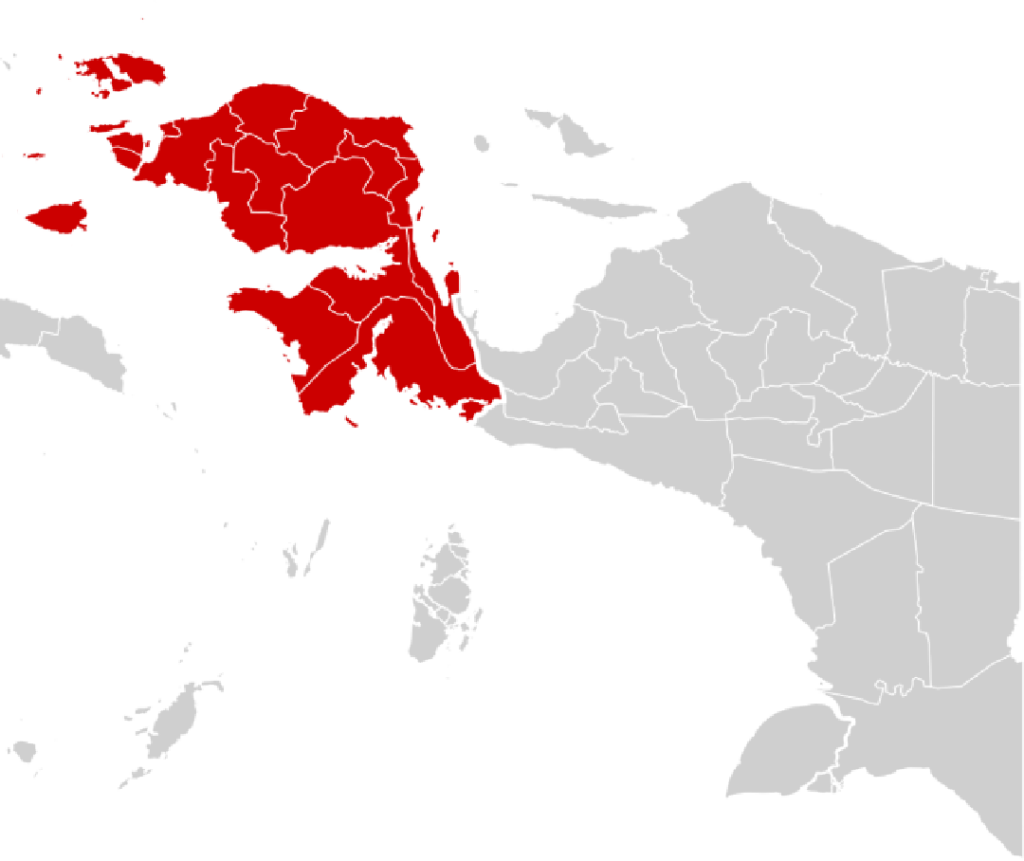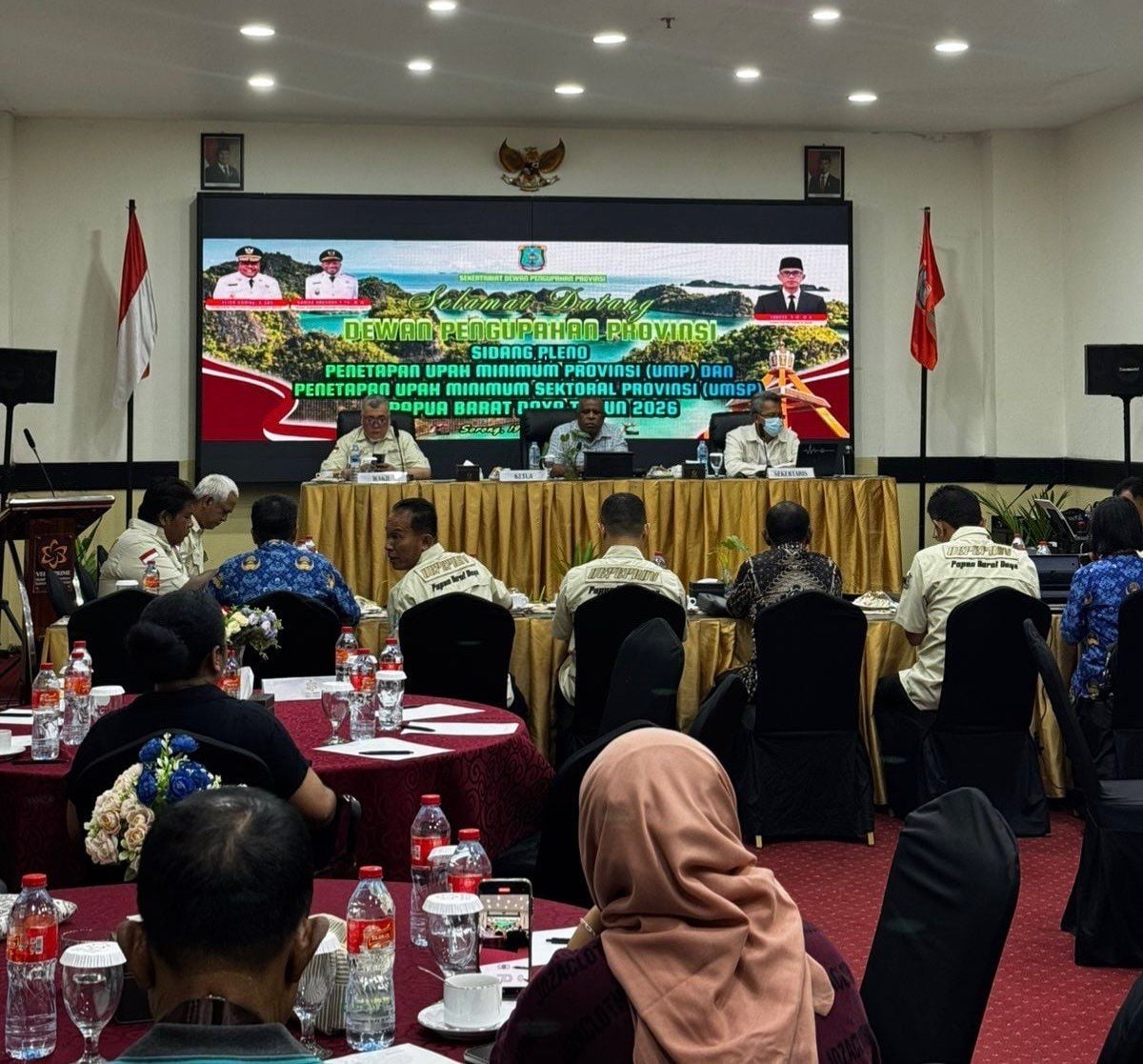
Entering 2026, the Provincial Government of Papua Barat Daya (Southwest Papua) formally enacted an increase in the Provincial Minimum Wage as part of its commitment to improving workers’ welfare and strengthening household purchasing power. The new wage, set at Rp3,766,000 per month, reflects a rise of approximately 4.2 percent from the previous year and will take effect starting January 1, 2026. Alongside the increase in the general minimum wage, the government also approved adjustments to the Provincial Sectoral Minimum Wage, ensuring that specific industries receive wage standards aligned with their operational demands.
For a province still navigating the challenges of regional development and economic consolidation, the decision represents more than a routine annual adjustment. It is a policy shaped by the daily realities faced by workers who contend with high living costs, limited infrastructure, and price disparities across districts. Provincial leaders emphasized that the wage increase was formulated after considering inflation trends, economic growth projections, and social conditions affecting workers and employers alike.
The Meaning Behind the Numbers
The increase from Rp3,614,000 in 2025 to Rp3,766,000 in 2026 may appear modest when viewed solely in numerical terms. However, for thousands of workers in Papua Barat Daya, particularly those in service, trade, transportation, and informal sectors, the adjustment carries real significance. An additional Rp152,000 per month can help families better manage essential expenses such as food, transportation, electricity, and school supplies.
Officials explained that the wage determination process followed national labor regulations while also incorporating local economic data. The province’s Wage Council conducted consultations involving representatives from labor unions, business associations, academics, and government agencies. This approach aimed to ensure that the final figure reflected a balance between protecting workers’ livelihoods and maintaining business sustainability.
The provincial government stressed that the new wage is mandatory for all employers operating within Papua Barat Daya. Companies that fail to comply may face administrative sanctions in accordance with labor laws. This firm stance signals that the policy is intended to deliver tangible benefits rather than symbolic reassurance.
Rising Living Costs and Economic Pressure
One of the primary motivations behind the wage increase lies in the persistent challenge of rising living costs across Papua Barat Daya. Due to its geographic location and logistical constraints, the province experiences higher prices for basic goods compared to many other regions in Indonesia. Transportation costs remain a major factor, especially in areas where goods must be shipped by sea or air, driving up prices at local markets.
For workers earning minimum wage, these conditions often leave little room for savings. Daily necessities such as rice, cooking oil, fuel, and fresh produce consume a large portion of monthly income. Housing costs in urban centers like Sorong have also increased as population growth places pressure on available accommodation. Against this backdrop, stagnant wages would risk eroding purchasing power and widening economic vulnerability.
By raising the minimum wage, the provincial government seeks to provide a buffer against these pressures. While the increase does not eliminate structural challenges, it offers workers greater capacity to cope with price fluctuations and maintain basic living standards.
Voices from Workers and Families
Behind the policy announcement are the lived experiences of workers whose daily lives will be shaped by the new wage standard. For many, the increase brings cautious optimism rather than immediate relief. A retail worker in Sorong explained that her income is carefully divided between food expenses, transportation, and supporting family members. She noted that while the increase will not drastically change her lifestyle, it will reduce the need to borrow money at the end of each month.
Another worker in the transportation sector shared a similar sentiment. Rising fuel prices and maintenance costs have steadily reduced his disposable income. The wage adjustment, he said, provides a sense of recognition for workers who often feel overlooked in broader economic discussions. For him, the additional income offers greater stability and less financial anxiety.
Parents expressed particular relief at the prospect of improved purchasing power. School-related expenses often surge at certain times of the year, placing strain on household budgets. The wage increase, they said, may help them better support their children’s education without sacrificing basic needs.
Employers Respond to the New Wage Standard
From the perspective of employers, especially small and medium-sized enterprises, the wage increase presents both responsibility and challenge. Business owners acknowledge the importance of fair compensation but also emphasize the need for careful adjustment to operational costs. For companies operating with limited margins, payroll increases require financial planning and efficiency improvements.
Some employers voiced concerns that higher labor costs could lead to increased prices for goods and services, potentially affecting consumer demand. Others highlighted the need for complementary policies such as improved infrastructure, reduced logistics costs, and access to affordable financing to help businesses adapt.
The provincial government has responded by encouraging dialogue between employers and workers. Officials emphasized that wage policy should be supported by broader economic initiatives, including investment promotion, workforce training, and infrastructure development. By strengthening the overall business environment, authorities hope to ensure that wage increases contribute to sustainable growth rather than economic strain.
Minimum Wage as an Economic Stimulus
Beyond its immediate impact on workers’ incomes, the minimum wage increase is also viewed as a tool to stimulate local economic activity. When workers have more disposable income, they are more likely to spend it within their communities. This spending supports local markets, transportation services, and small businesses, creating a circulation of money that benefits the wider economy.
In Papua Barat Daya, where economic diversification is still developing, this effect is particularly important. Strengthening household purchasing power can help stabilize demand for local goods and services, reducing vulnerability to external economic shocks. Over time, this dynamic may encourage entrepreneurship and create new employment opportunities.
However, economists caution that wage increases must be accompanied by effective monitoring and price controls to prevent inflation from eroding gains. Without careful management, higher wages could be offset by rising prices, limiting their real impact on purchasing power.
Enforcement and Labor Protection
Ensuring that the new wage policy is implemented fairly remains a priority for provincial authorities. Labor inspectors are tasked with monitoring compliance across sectors, particularly in industries where informal employment practices are common. Workers are encouraged to report violations, and officials have pledged to respond promptly to complaints.
Labor unions welcomed the wage increase while calling for stronger enforcement mechanisms. They emphasized that minimum wage policy should be part of a broader framework of worker protection, including job security, workplace safety, and access to social security programs. Effective enforcement, they argue, is essential to maintaining trust in government policy and preventing exploitation.
A Broader Vision for Development
The 2026 minimum wage increase in Papua Barat Daya forms part of a broader vision for inclusive development. Provincial leaders have repeatedly emphasized that economic growth must translate into tangible benefits for ordinary citizens. Wage policy, in this context, is not an isolated measure but one component of a wider effort to reduce inequality and promote social stability.
Investments in education, healthcare, and infrastructure remain critical to achieving these goals. By improving human capital and connectivity, the province aims to create conditions where higher wages are supported by productivity gains and sustainable economic expansion.
Looking Toward the Future
As 2026 begins, the effectiveness of the new minimum wage will be measured not only in official statistics but also in everyday experiences. Workers will assess whether their incomes stretch further. Employers will adapt their operations. Policymakers will monitor economic indicators and social feedback.
The wage increase does not solve all challenges facing Papua Barat Daya, but it represents a meaningful step toward protecting workers’ dignity and economic security. It acknowledges that development must be felt at the household level and that fair compensation is central to social cohesion.
A Human-Centered Economic Decision
At its core, the story of Papua Barat Daya’s 2026 minimum wage increase is about people. It is about workers striving to support their families, businesses seeking stability, and a government attempting to balance competing needs in a complex economic landscape. By adjusting the minimum wage, the province has signaled its intention to place human welfare at the center of economic policy.
While challenges remain, the new wage standard offers hope that economic progress, however gradual, can be shared more equitably. In markets, workplaces, and homes across Papua Barat Daya, the policy is already shaping conversations about fairness, opportunity, and the future.