
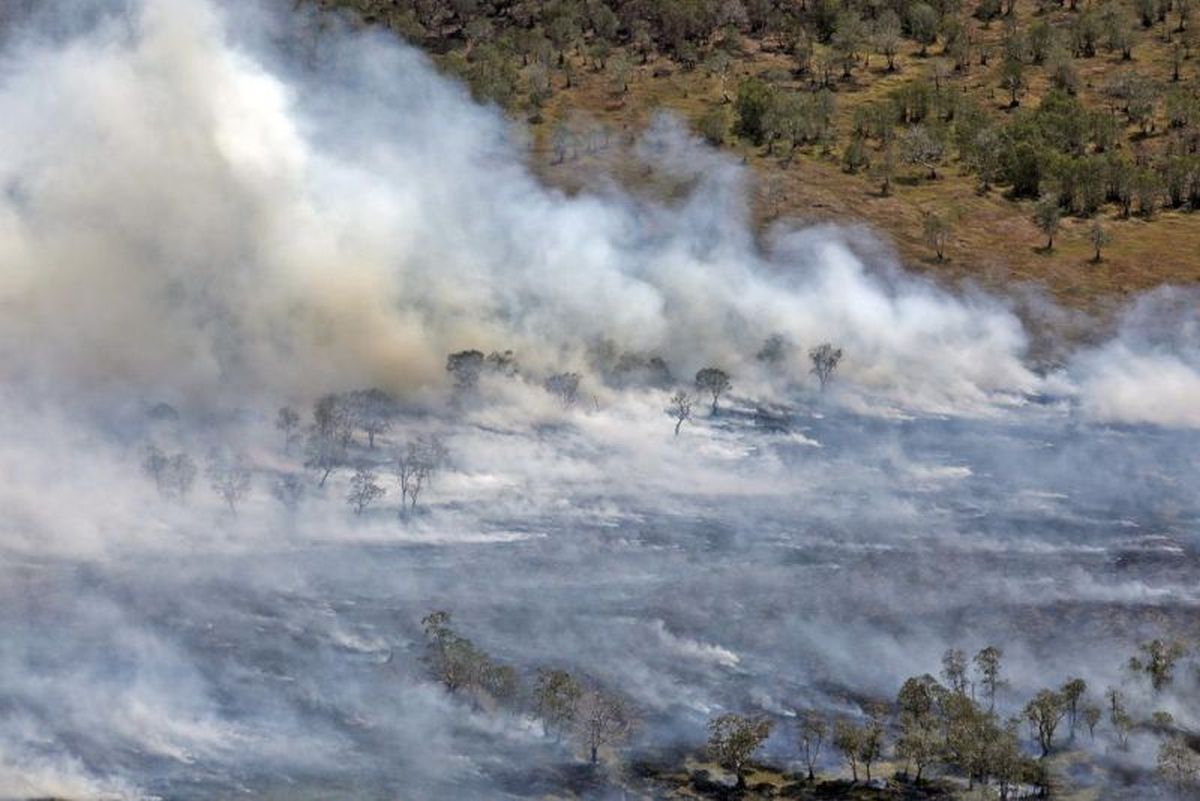
Indonesia’s coordinated response to forest and land fires in Papua Selatan (South Papua) has delivered a significant improvement, with detected hotspots falling by 78 per cent following intensified disaster management operations led by the National Disaster Management Agency (BNPB) and supported by regional authorities and other institutions.
The reduction, from 295 detected hotspots on October 27 to 65 on October 28, 2026, coincided with the government’s Weather Modification Operation (Operasi Modifikasi Cuaca, or OMC). The operation involved 10 flights that dispersed a total of 10,000 kilograms of sodium chloride, commonly known as salt, to encourage rainfall over fire-affected areas.
The development offers encouraging evidence that coordinated emergency measures can help contain the spread of fires in one of Indonesia’s environmentally important regions. Yet authorities have cautioned against interpreting the decline as the end of the crisis. Around 161.5 hectares of land were still reported affected by fires, while some areas had not received the rainfall needed to improve ground conditions.
Berton SP Panjaitan, Acting Head of BNPB’s Data, Information and Disaster Communication Centre, said the government would continue its efforts until the remaining fires were brought under control.
The response has involved more than weather modification alone. BNPB has been coordinating with regional administrations, the Indonesian National Armed Forces (TNI), the National Police (Polri), and relevant agencies to monitor fire activity, support suppression efforts, and reduce the risk of new outbreaks.
A significant decline in detected hotspots
The latest figures indicate a marked improvement in the fire situation across Papua Selatan.
According to Berton, satellite monitoring recorded a sequence of declining hotspot numbers during the period under review. The count fell from 1,169 to 875, then to 295, before reaching 65.
The figure of 78 percent refers specifically to the decline from 295 hotspots on October 27 to 65 on October 28. Suara.com reported the longer monitoring sequence, while BNPB’s figures cited by IDXChannel and Okezone confirmed the 295-to-65 comparison.
The distinction matters because the two figures describe different periods of the response. The longer sequence represents an overall decline of approximately 94.4 per cent from the initial 1,169 count, while the 78 per cent figure measures the more recent reduction from 295 to 65.
Berton described the latest development as a substantial improvement in the government’s efforts to manage the fires.
The figures were reported as part of BNPB’s update on October 29 and 30, when authorities were assessing the impact of weather modification and other emergency measures.
However, hotspot counts are indicators of detected thermal activity, not a direct measurement of the total area burned. The remaining 65 hotspots and the reported 161.5 hectares of affected land show why monitoring and suppression operations remain necessary.
Weather modification becomes a key part of the response
The Weather Modification Operation has been one of the central measures used by the government to support fire management in Papua Selatan.
The program seeks to encourage rainfall by dispersing cloud-seeding materials into suitable cloud formations. In this operation, aircraft released sodium chloride, or NaCl, to support the development of rain-producing clouds.
BNPB reported that, by the seventh day of the operation, 10 flights had been conducted, with a combined flight duration of 25 hours and 33 minutes. A total of 10,000 kilograms of salt had been dispersed.
The operation was designed to support several areas affected by fires, particularly locations where rainfall could help improve ground moisture and reduce conditions favorable to further burning.
On Wednesday, October 28, one weather modification flight covered areas in Merauke, Boven Digoel, and Mappi. The sortie used 1,000 kilograms of NaCl.
Rain subsequently fell in northern and central Merauke, southern parts of Boven Digoel, and southern Mappi. These areas were among the locations where authorities had been seeking improved rainfall conditions.
The rainfall also brought practical benefits beyond the reduction in detected hotspots. According to Berton, visibility in affected areas improved from around one to five kilometers to approximately seven to eight kilometers.
Improved visibility can support transportation and field operations, particularly when smoke from forest and land fires reduces the ability of people to move safely and makes it more difficult for emergency personnel to conduct activities.
Nevertheless, rainfall distribution remained uneven. Asmat Regency had not yet recorded rainfall during the reported period, prompting authorities to maintain their attention on the area.
Four regencies remain under close monitoring
BNPB has focused its fire response on four regencies in Papua Selatan: Merauke, Boven Digoel, Mappi, and Asmat.
Together, these areas represent a significant geographical challenge for emergency management. The region includes extensive natural landscapes and areas where access can be difficult, particularly when dry weather and smoke affect transportation and field operations.
The reported 161.5 hectares of burned land underline the importance of maintaining a presence across all four regencies, even as satellite monitoring shows fewer hotspots.
Merauke has been among the areas receiving weather modification support, with rainfall reported in its northern and central parts. Southern Boven Digoel and Southern Mappi also received rain following the operation.
Asmat, by contrast, remained a priority because rainfall had not yet been observed there. The absence of rain means that vegetation and land conditions may remain vulnerable, especially if dry weather continues.
For this reason, BNPB has said that weather modification activities will be optimized according to changing conditions and the potential for rain-producing clouds.
Berton said the government would continue its efforts to extinguish the remaining fires and work towards making Papua Selatan free from active fire outbreaks.
The statement reflects an operational priority: the decline in hotspots must be followed by sustained suppression and prevention measures rather than treated as the conclusion of the emergency.
National and regional institutions work together
The response also demonstrates the importance of cooperation between national disaster management authorities and regional administrations.
BNPB has provided coordination and technical support, including the implementation of weather modification operations. Regional governments, meanwhile, play an essential role in local emergency management, monitoring affected communities and coordinating activities on the ground.
The TNI and Polri have also been identified among the institutions involved in monitoring and mitigation efforts.
Such cooperation is particularly important in a region where the scale of the landscape requires multiple institutions to work across administrative boundaries and operational responsibilities.
Forest and land fires are not confined to a single location. Smoke can spread beyond the immediate area of ignition, while changing weather conditions can allow fires to develop in places that were previously less affected.
An effective response therefore requires continuous information sharing, clear operational coordination, and the ability to direct resources towards areas where the risk is highest.
The reduction in detected hotspots provides an encouraging indication of progress. However, maintaining that progress will depend on whether the institutions involved can sustain their work as weather conditions change.
The response also has implications for the wider Indonesian disaster management system. Weather modification, satellite monitoring, and coordination between national and local authorities are increasingly important tools for addressing large-scale environmental emergencies.
El Niño and cross-border smoke remain serious concerns
Despite the decline in hotspots, BNPB has warned that Papua Selatan remains vulnerable to further fires.
One of the main concerns is the strong El Niño phenomenon, which can contribute to hotter and drier conditions in parts of Indonesia. Combined with dry winds and reduced rainfall, such conditions can increase the risk of vegetation and land fires.
Berton warned that Papua Selatan remained particularly susceptible to burning and that smoke from Papua New Guinea was also reaching the Indonesian region.
The cross-border dimension highlights the fact that smoke pollution does not necessarily remain within the territory where a fire originates. Environmental conditions and air quality in border areas can be affected by events across national boundaries.
This makes monitoring and regional communication important elements of disaster management. Indonesia’s efforts to control fires in Papua Selatan must account for local fire activity as well as wider environmental conditions that may influence smoke movement.
The risk is especially relevant for communities living in areas exposed to smoke, where reduced air quality can affect daily activities and public health.
BNPB also reported that the potential for rain-producing clouds in southern Merauke was expected to increase between October 31 and November 1. This forecast offered some grounds for optimism, although the agency did not present it as a guarantee that all affected areas would receive sufficient rainfall.
Emergency status extended as authorities remain alert
The continuing threat has also influenced local emergency arrangements.
Suara.com reported that the emergency status for forest and land fires at the Papua Selatan provincial level and in Merauke Regency had been extended.
The extension reflects the authorities’ assessment that the situation still requires emergency attention despite the decline in detected hotspots.
Maintaining an emergency status allows relevant institutions to continue coordinating response activities and preparing for possible developments. It also recognizes that the remaining fires and dry conditions could lead to renewed outbreaks if monitoring and suppression are reduced too early.
The government must therefore balance the encouraging results of the weather modification operation with the need to remain prepared for further deterioration.
A decline in satellite-detected hotspots is a useful indicator, but it does not automatically mean that all fires have been extinguished. Fires can persist in vegetation or underground organic material, including peat, and may become active again when dry conditions return.
Berton said the government hoped rainfall would help address both fires on the surface and those burning beneath the ground, including in peat areas.
That concern reinforces the need for field verification and continuous monitoring alongside satellite-based information.
Fire management has wider environmental and economic importance
The fires in Papua Selatan have consequences that extend beyond the immediate loss of vegetation.
Forests, wetlands, and other natural landscapes provide important ecological functions. They support biodiversity, help regulate water systems, and contribute to the livelihoods of communities that depend on surrounding natural resources.
Smoke can also disrupt transportation, education, economic activities, and access to public services. For residents in affected areas, the consequences of fires may be felt through reduced visibility, poorer air quality, and uncertainty about the safety of their surroundings.
The response is therefore closely connected to broader development priorities in Papua. Environmental protection, public health, and economic resilience are linked, particularly in areas where communities depend on natural resources and where infrastructure access can be limited.
The government faces the challenge of responding to immediate fires while also strengthening long-term prevention. This includes improving early warning systems, identifying high-risk areas, supporting local monitoring, and ensuring that land management practices reduce the likelihood of repeated outbreaks.
The weather modification operation is an important emergency intervention, but it cannot replace those longer-term measures.
Sustaining progress beyond the initial decline
The fall in hotspots from 295 to 65 marks a meaningful improvement in the government’s response to forest and land fires in Papua Selatan. It demonstrates the value of combining weather modification with coordinated action by BNPB, regional governments, the TNI, Polri, and other relevant institutions.
Still, the remaining 65 hotspots, the reported 161.5 hectares of affected land, and the absence of rainfall in Asmat show that the emergency is not over.
The next phase will require authorities to maintain weather monitoring, direct suppression resources towards remaining fire locations, and verify that areas showing fewer satellite detections are no longer actively burning. Communities in vulnerable locations will also need timely information and continued support.
For Indonesia, the response offers an important lesson in disaster management: measurable progress must be followed by consistent prevention and preparedness. The government’s achievement should not be judged solely by a temporary decline in hotspot numbers but by its ability to prevent new fires, protect communities, and restore affected landscapes.
If coordination continues and rainfall improves conditions across the region, Papua Selatan may be able to move towards a more stable situation. Until then, the priority remains clear: contain the remaining fires, prevent new outbreaks, and ensure that the progress recorded in October becomes a lasting improvement in environmental protection.
Conclusion
The 78 percent reduction in forest fire hotspots in Papua Selatan demonstrates the positive impact of coordinated efforts by BNPB, regional governments, and other relevant institutions, particularly through weather modification operations. However, with 65 hotspots and 161.5 hectares of affected land still reported, the situation requires continued attention. Sustained monitoring, effective fire suppression, improved early warning systems, and stronger community participation will be essential to prevent further outbreaks. Ultimately, the success of Indonesia’s response will depend not only on reducing hotspots but also on protecting communities, restoring affected ecosystems, and ensuring long-term environmental resilience in Papua.
Read Also
Papua Fire Hotspots Fall 82% Amid El Niño
Forrest and Land Fires Haze in Papua Triggers Urgent Regional Response

