
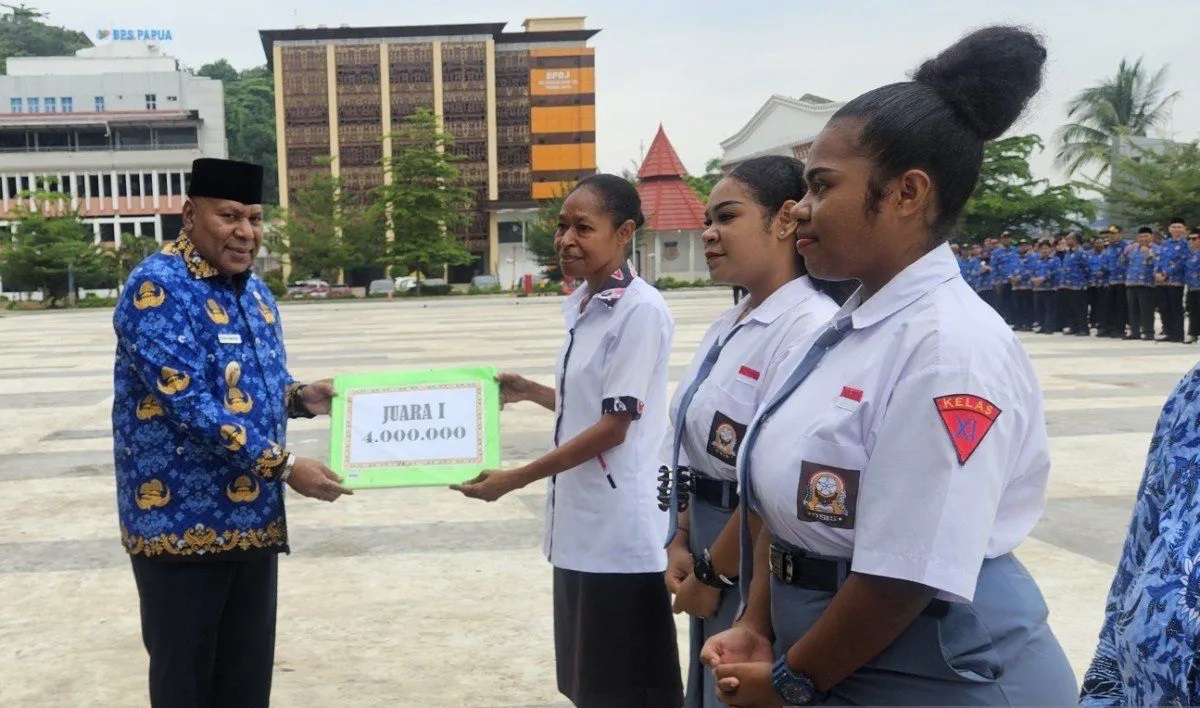
The selection of two young Papuan women for international youth exchange programs is offering a timely example of how talent from Indonesia’s easternmost region can compete for opportunities beyond its borders while bringing new perspectives and connections back to their communities.
Ellaboge Mulyani Uaga has been selected for the Australia Indonesia Youth Exchange Program (AIYEP), while Yesika Wambrauw will join the Ship for Southeast Asian and Japanese Youth Program (SSEAYP). Their selection was announced by Papua’s provincial government on October 28, 2026, during celebrations marking Indonesia’s 98th Youth Pledge Day in Jayapura.
The two programs will take the young women to Australia and Japan, respectively, giving them opportunities to engage with international peers, learn about different societies, and develop skills that could contribute to Papua’s future.
Papua Deputy Governor Aryoko Rumaropen described the exchanges as part of a broader effort to strengthen the capacity, outlook, and competitiveness of the region’s younger generation. He said the experience should help participants gain international exposure and make a practical contribution to regional development.
The announcement carries significance beyond the achievements of two individuals. It demonstrates how young people from Papua can enter national and international development pathways, while underscoring the value of public programs that connect local talent with wider opportunities.
For a region where improving human resources is an important development priority, the next challenge will be ensuring that international exposure translates into lasting benefits for local communities.
Two Young Papuan Women, Two International Opportunities
Ellaboge Mulyani Uaga prepares for Australia
According to Papua’s Youth and Sports Office, Ellaboge Mulyani Uaga has been selected to participate in AIYEP, a long-running exchange initiative connecting young Australians and Indonesians.
She was scheduled to depart for Australia on November 3, 2026, according to the provincial announcement reported by ANTARA on October 28.
Established in 1982, AIYEP is designed to strengthen understanding between Australia and Indonesia through social, professional, and cultural exchange. The program provides opportunities for participants to develop intercultural skills, expand their professional networks, and gain experience working with people from different backgrounds.
The Australian Government’s Department of Foreign Affairs and Trade describes the initiative as a means of building mutual understanding and improving cultural awareness and capability. Activities include professional placements, language learning, workshops, and cultural programs.
For a participant from Papua, such an experience can provide a window into different approaches to education, workplace culture, community engagement, and problem-solving. It can also create opportunities to explain Papua’s cultural diversity and local development priorities to people who may have limited direct experience of the region.
These benefits are not automatic. Much depends on how participants engage with the program, the relationships they develop, and their ability to apply what they learn after returning home.
However, the structure of AIYEP offers a practical setting in which young people can strengthen their communication skills, learn to work across cultural differences, and develop a broader understanding of regional cooperation.
The exchange also takes place within the longstanding relationship between Indonesia and Australia. People-to-people programs complement formal diplomacy by allowing younger generations to build personal connections that can endure beyond official meetings and government initiatives.
Yesika Wambrauw prepares for Japan
Yesika Wambrauw has been selected for SSEAYP, the Ship for Southeast Asian and Japanese Youth Program, an international initiative involving young people from Southeast Asia and Japan.
Papua’s Youth and Sports Office said Wambrauw was scheduled to depart for Japan on January 1, 2027. The program is expected to begin in early January, with the Indonesian Ministry of Youth and Sports identifying January 3 to February 5 as the scheduled period for the 2027 edition.
SSEAYP was launched in 1974 as a joint initiative involving Japan and Southeast Asian countries. Its purpose is to foster friendship, mutual understanding, and international cooperation among young people.
Participants take part in discussions, cultural activities, visits, and exchanges with local communities. The program is intended to broaden their international outlook while developing leadership and practical skills for cooperation across national boundaries.
For Wambrauw, the opportunity offers a chance to learn alongside young people whose experiences and perspectives may differ considerably from her own. It also creates a platform to introduce Papua’s cultural heritage, social diversity, and aspirations to a wider international audience.
Such exchanges can help participants understand that regional challenges often have counterparts elsewhere. Education, environmental sustainability, youth employment, cultural preservation, and community development questions extend beyond a single province or country.
By discussing these issues with peers from other societies, participants can discover new approaches and consider how ideas might be adapted to their own circumstances.
The experience could also help Wambrauw build networks that extend beyond the program itself, providing contacts and perspectives that may prove valuable in future academic, professional, or community work.
How Papua’s Youth Opportunities Are Developed
The announcement of the two selections came during a public event in Jayapura on October 28, when provincial officials marked Indonesia’s 98th Youth Pledge Day.
The Youth Pledge commemorates the declaration made by Indonesian youth representatives on October 28, 1928, affirming one homeland, one nation, and one language of unity. The anniversary serves as a platform to inspire young people to foster solidarity and actively contribute to society.
At the 2026 commemoration, Rumaropen linked the historical message of unity to the practical task of developing young people’s abilities.
He said the provincial government, through its Youth and Sports Office, continued to encourage young Papuans to participate in empowerment and development programs at both national and international levels.
“Young people must be able to make a real contribution to development through their ideas, energy, and various talents,” Rumaropen said, according to ANTARA’s report. He also stressed the importance of continued cooperation between young people and government institutions at every level.
His remarks placed the international exchanges within a broader policy objective: young people should be prepared not only to pursue individual success but also to contribute to the communities in which they live.
The approach recognizes that development depends on more than physical infrastructure. Roads, public facilities, and investment can improve economic conditions, but a region also needs people with the knowledge, confidence, and skills to use those opportunities effectively.
International exchange programs represent one route towards that goal. They do not replace formal education, vocational training, or local employment initiatives but can complement them by giving participants additional experience and perspectives.
A National Selection Process, Not Just a Local Achievement
The selection of Uaga and Wambrauw also places Papua within Indonesia’s wider effort to develop globally competitive young people.
AIYEP is part of the country’s international youth exchange framework. The Indonesian Ministry of Youth and Sports announced in September 2026 that 21 young Indonesians had been selected as national delegates for the program following a staged selection process.
According to the ministry, the AIYEP selection began at the provincial level from September 3 to 17, followed by national selection on September 21 and 22. The final group was announced on September 24. The program aims to develop leadership, interpersonal skills, and international competitiveness while promoting Indonesia’s social, economic, and cultural identity abroad.
The national process matters because it places young people from different provinces within a common framework of opportunity. Participants are selected to represent Indonesia internationally, rather than solely to represent their hometowns or regions.
For Papua, the presence of selected participants demonstrates that young people from the province can become part of these wider national initiatives. It also highlights the importance of ensuring that information about programs, application requirements, preparation, and selection processes reaches eligible candidates across the region.
The achievement should therefore be seen as both an individual milestone and an opportunity to encourage further participation.
When young people see peers from their own communities gaining access to international programs, those examples can help make similar opportunities feel more attainable. The impact will be greater if successful participants share their experiences with schools, universities, youth organizations, and prospective applicants.
Human Resources: Turning Exposure into Local Progress
Papua’s provincial government has also pointed to other initiatives intended to develop young people’s leadership and practical abilities.
Laurens Wantik, head of the Papua Youth and Sports Office, said Papuan youth had participated in the 2026 Wirasena Youth Camp, an intensive leadership program organized by Indonesia’s Ministry of Youth and Sports for selected young people from the country’s 38 provinces.
The provincial office also reported that 30 promising athletes were receiving development support through the Regional Centre for Talented Athletes, known as SPOBDA, based at Lukas Enembe Stadium in Kampung Harapan.
Wantik said the government hoped these programs would create more opportunities for young people to develop their potential, improve their achievements, and take a role in regional development.
The initiatives cover different aspects of youth development. International exchanges encourage intercultural learning and global awareness. Leadership camps focus on decision-making, teamwork, and civic responsibility. Sports programs can help develop discipline, resilience, and the ability to work towards shared goals.
Together, they illustrate how youth development can extend beyond classroom learning to include practical experience, personal growth, and participation in wider networks.
Still, the number of participants in any single program is only one measure of progress. A more comprehensive assessment would examine whether opportunities reach young people from different districts and socioeconomic backgrounds, whether participants gain useful skills, and whether those skills lead to further education, employment, or community initiatives.
Expanding access will require sustained attention to information, mentoring, preparation, and follow-up. Young people who have not yet participated in an international program also need routes to develop their abilities through local education, digital learning, vocational training, and community projects.
These considerations are particularly important in a geographically diverse province, where access to opportunities may differ between urban centers and more remote communities.
Papua’s Place in International People-to-People Relations
The participation of young Papuans in exchanges with Australia and Japan also has a wider international dimension.
Australia is an important neighbor of Indonesia, while Japan has long-standing economic, cultural, and diplomatic links with Southeast Asia. Programs such as AIYEP and SSEAYP provide opportunities for young people to build relationships that complement the work of governments, educational institutions, and businesses.
For Papua, international engagement can help broaden the public understanding of the region beyond the headlines often associated with security or political issues. Participants can introduce their communities through everyday experiences, cultural knowledge, local aspirations, and discussions about development.
This does not mean that an exchange participant must serve as an official spokesperson for every issue affecting Papua. Rather, the value lies in enabling personal encounters and informed conversations that allow people to learn from one another.
The experience can also encourage young participants to consider how local challenges connect with wider regional questions, including sustainable development, environmental protection, education, and the future of work.
International exposure is most useful when it creates a two-way exchange. Participants learn from their hosts, while their peers gain a better understanding of Indonesia’s diversity and the experiences of young people from Papua.
The Work Begins After the Exchange
The selection of Uaga and Wambrauw is an encouraging development, but the long-term value of their participation will depend on what happens after the programs end.
Returning participants can share lessons through school visits, youth forums, community projects, and mentoring for future applicants. They may also use their new networks to explore partnerships in education, cultural activities, or youth-led initiatives.
Provincial and national institutions can strengthen these outcomes by maintaining contact with alumni, providing opportunities for participants to present what they have learned, and connecting them with relevant development programs.
For the wider community, the achievement can serve as a reminder that investing in young people is a long-term process. International programs create valuable opportunities, but they work best alongside accessible education, quality training, local leadership development, and realistic pathways into employment.
The two selections also offer a reason to continue widening opportunities for young women. Their participation demonstrates that young Papuan women can enter international programs and contribute to exchanges that cross cultural and national boundaries.
We should acknowledge that achievement without placing the entire burden of regional progress on individual participants. Governments, educational institutions, communities, and employers all have a role in creating conditions where young people can develop their abilities and put them to productive use.
Conclusion
The selection of Ellaboge Mulyani Uaga for AIYEP and Yesika Wambrauw for SSEAYP is a concrete example of Papuan youth gaining access to international opportunities.
Announced during the 2026 Youth Pledge Day commemoration, their selection reflects the provincial government’s stated commitment to improving youth capacity, strengthening competitiveness, and encouraging young people to contribute to development.
Their upcoming experiences in Australia and Japan will offer opportunities for cultural learning, leadership development, and international networking. The broader test will be whether those experiences help create lasting benefits for the participants and the communities they represent.
Papua’s development will require investment in infrastructure and services, but it will also depend on the capabilities of its people. Giving young people opportunities to learn, compete, and collaborate internationally is one way to strengthen that human resource base.
For Uaga and Wambrauw, the journeys ahead represent a personal milestone. For Papua, they offer a wider message: talent from the region can participate in national and international programs, contribute to cross-cultural understanding, and help shape the next chapter of Indonesia’s development.
The opportunity now is to build on their achievement so that more young Papuans can follow similar pathways, bringing knowledge, confidence, and new connections back to their communities.
Read Also
Indonesia Targets 214 Schools Revitalisation in Papua
Indonesia Awards Scholarships to 76 Pacific Students

