
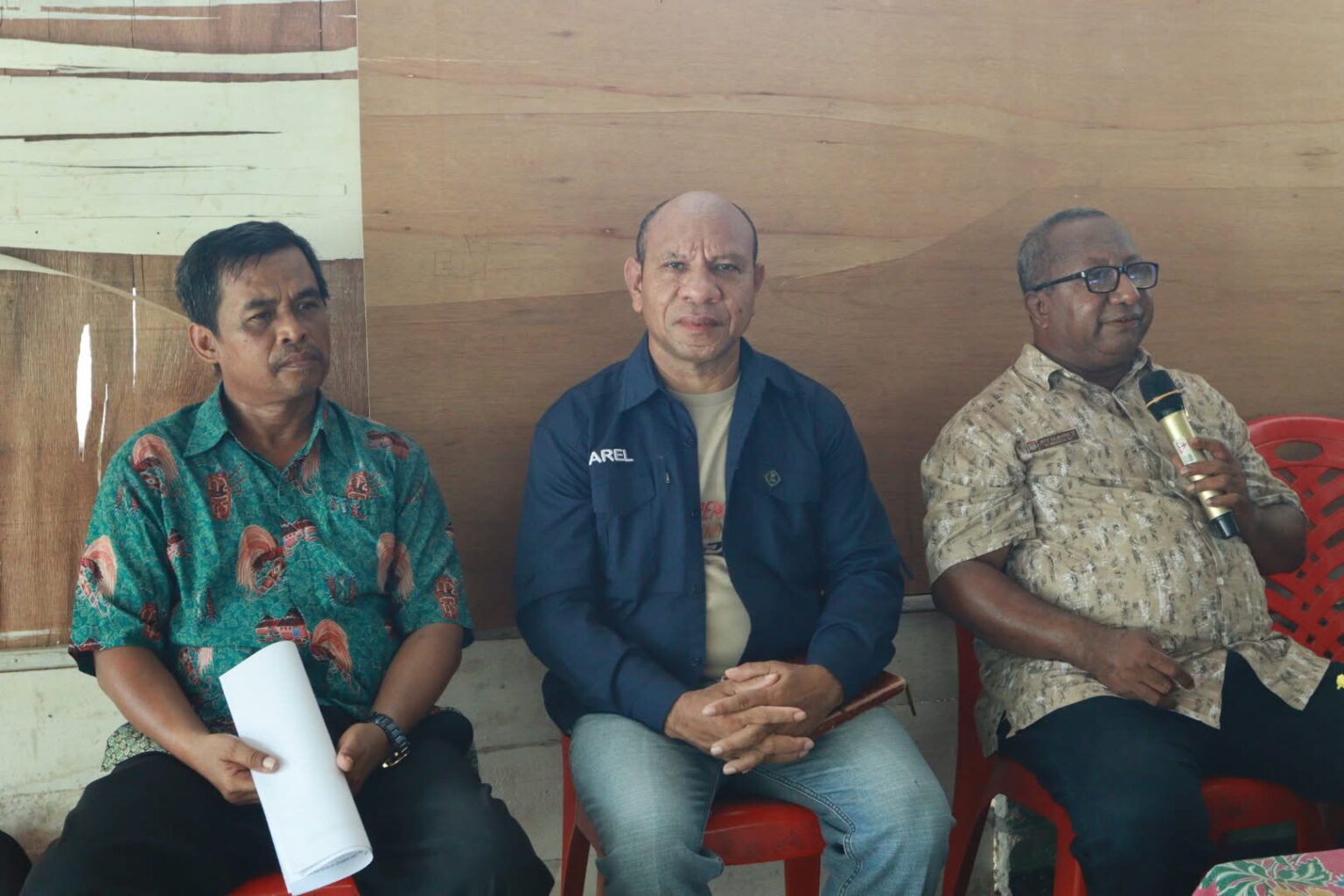
For cocoa farmers in Indonesia’s Papua region, growing a good crop is only one part of the challenge. The value they receive also depends on how beans are handled after harvest, whether buyers are available, and how easily their products can reach larger markets. In Aitiri, the handover of cocoa processing equipment by agricultural authorities from Yapen and Papua Province represents a practical step toward addressing those challenges and strengthening the local cocoa economy.
The initiative brings together the Yapen Regency Agriculture Office and the Papua Provincial Agriculture Office, reflecting a shared effort to support farmers beyond cultivation alone. Processing equipment can help communities improve the handling of their harvest and prepare for a more organized supply chain. Its actual impact, however, will depend on how effectively farmers can access the equipment, maintain it, develop their processing skills, and connect with reliable buyers.
The handover in Aitiri comes amid broader efforts to revive cocoa as an important source of household income in the Yapen Islands. Recently, provincial leaders and the Yapen Regency Government have discussed farm assistance, improved planting material, training, investor interest, and the possibility of developing local processing capacity. Together, these efforts point to a development strategy that seeks to turn a traditional agricultural product into a stronger foundation for the local economy.
A New Step for Cocoa Farmers in Aitiri
From Agricultural Support to Postharvest Processing
The handover of cocoa processing equipment is significant because agricultural development does not end when farmers harvest their crops. Post-harvest handling can influence the quality, consistency, and marketability of cocoa beans, while processing can create opportunities to retain more economic value within producing communities.
For farmers, access to suitable equipment may reduce some of the practical difficulties involved in preparing their harvest. Depending on the equipment provided and how it is operated, better processing can support more consistent product handling and help farmers meet buyer requirements.
The specific equipment supplied in Aitiri should be understood within that broader objective. The available reports establish that processing equipment was handed over through collaboration between the Yapen and provincial agricultural authorities. The precise contribution of each machine to production capacity, product quality, or farmer income will require follow-up evidence from the program.
The institutional partnership itself is important. Agricultural development often involves responsibilities shared across levels of government. Local authorities are closer to farmers and their day-to-day challenges, while provincial institutions can help coordinate wider programs and provide additional technical or material support.
By working together, the two agriculture offices can help connect equipment assistance with other requirements, including cultivation guidance, maintenance, post-harvest practices, and market development. This coordination will be crucial if the handover is to produce benefits that continue after the initial event.
Why Postharvest Quality Matters
Cocoa is a crop with a value chain extending well beyond the farm. Buyers assess not only the availability of beans but also their quality, consistency, and suitability for processing. Harvesting practices, fermentation, drying, storage, and transportation can all affect the final product.
Equipment alone cannot guarantee higher prices. Farmers also need practical training, clear quality standards, and access to buyers willing to pay for the quality delivered. If these elements work together, better processing can help farmers reduce avoidable losses and strengthen their position when negotiating sales.
This is particularly relevant in island communities such as Yapen, where transportation and market access can add complexity to agricultural trade. A stronger local processing system could help farmers organize their production more effectively and create a basis for future investment.
The opportunity, therefore, is not simply to distribute machinery. It is to build a more reliable system linking farmers, agricultural advisers, local institutions, cooperatives, and commercial buyers.
Government Support Builds Momentum Across Yapen
A Provincial Push to Strengthen Cocoa Cultivation
The Aitiri equipment handover forms part of a wider period of government attention to cocoa farming in the Yapen Islands.
On May 19, 2026, Papua Governor Matius D. Fakhiri visited a community cocoa plantation in Menawi Village, Angkaisera District, in Yapen Regency. During the visit, the provincial government provided support for cocoa development, including assistance for two nursery units to produce seedlings, nursery management training for five farmers, and integrated pest management field training attended by 25 farmers.
The visit highlighted the importance of strengthening the foundations of production. Good planting material, proper nursery management, and the ability to manage pests are essential to maintaining productive plantations. These measures complement post-harvest assistance by addressing different stages of the agricultural process.
Fakhiri encouraged residents with productive land to consider cocoa as a local priority crop. He also called for reliable data to support the planning and expansion of the sector.
“We want people who have productive land to use it for cocoa cultivation,” Fakhiri said during the visit, according to RRI. He also stressed the need for accurate information so that cocoa development in Yapen could progress more effectively.
The governor said Yapen cocoa had potential for wider promotion and that the provincial government would help provide seedlings according to farmers’ needs. He also expressed interest in attracting investors or partners capable of establishing a cocoa processing plant in the regency.
Such a facility, if developed, could create opportunities to process more of the crop locally rather than relying exclusively on the sale of raw agricultural products. It could also generate additional commercial activity, although its feasibility would depend on production volumes, logistics, investment costs, electricity and water supply, technical capacity, and access to buyers.
Preparing the Sector for Investment
Government attention has also extended to the commercial side of cocoa production.
On January 20, 2026, the Yapen Regency Government held an online meeting with investors and representatives of the Executive Committee for the Acceleration of Special Autonomy Development in Papua to discuss potential cocoa investment. The meeting included Deputy Regent Roi Palunga, representatives of the Agriculture Office, the regional development planning agency, agricultural extension workers, and cocoa farmers.
Investor representative Fitrian Ardiansyah expressed interest in the potential of Yapen cocoa, particularly its prospects as a sustainable commodity. The meeting report noted that international buyers, especially in Europe, the United States, Australia, and New Zealand, pay attention to sustainability, forest protection, and agroforestry practices.
Investors requested more detailed information about plantation areas, cocoa varieties, productivity, post-harvest systems, and farmer organizations. They also encouraged the submission of cocoa samples for quality assessment and comparison with potential buyers’ requirements.
These requests illustrate the distance that can exist between agricultural potential and a completed commercial partnership. Buyers need evidence that producers can supply sufficient quantities at a consistent standard. Farmers, in turn, need confidence that demand and purchasing arrangements will be reliable enough to justify investing time and resources in their plantations.
Palunga welcomed the interest and said the local government was prepared to support planning, budgeting, and facilitation for farmers and investors.
“Cocoa is the future of the village economy. We want to ensure that markets and prices are clear so farmers regain the motivation to care for their cocoa gardens,” he said, as reported by the Yapen Regency Government.
The statement reflects a key issue for the sector. Farmers are more likely to maintain and rehabilitate plantations when they can see a credible commercial return. Processing equipment may help improve product handling, but market certainty remains essential if farmers are to invest in long-term production.
The Economic Potential of Yapen Cocoa
A Sector with Room to Recover
Data cited by the Yapen Regency Agriculture Office during the January meeting indicated a total cocoa area of approximately 690 hectares. Of this, around 129 hectares consisted of immature plants established in 2023, while 79 hectares were in active production. Approximately 482 hectares were classified as damaged plantations, although more than 100 hectares of that area were considered potentially recoverable through pruning and intensive maintenance.
The figures suggest that expanding cocoa production will require more than planting new trees. Rehabilitating existing plantations could also be important, provided farmers receive appropriate technical support and have incentives to invest in maintenance.
Amirudin, a representative of the regency agriculture office responsible for plantation affairs, explained that some cocoa gardens were not being harvested because of a lack of buyers and fluctuating prices rather than pest damage. In some cases, cocoa pods were left to dry on the trees. He argued that the crop remained promising if farmers could obtain more reliable market access and investor support.
The same report estimated that Yapen had approximately 2,065 cocoa farmers. This means that a stronger cocoa economy could potentially affect thousands of residents, including members of farming households and businesses connected to production and distribution.
The figures should be treated as indicators of potential rather than proof of current output or income. Actual economic gains will depend on how much land is productive, the quality and quantity of harvested beans, farm-gate prices, and the costs of transport and processing.
Connecting Village Production to Wider Markets
An earlier report by Indonesia’s ANTARA news agency highlighted the wider potential of cocoa farming in the Yapen Islands. It reported that Konti Unai Village had around 200 hectares of cocoa managed by approximately 150 Indigenous Papuan farmers. Across several villages, the estimated cocoa area was around 900 hectares.
The report also described efforts to collect three kilograms of cocoa samples from Konti Unai for submission to three prospective European buyers. The samples were to undergo further assessment before potential purchasing cooperation could be finalized with the Yapen Regency Government.
That process illustrates how local agricultural production can begin connecting with international markets. However, sending samples or receiving expressions of interest is merely the initial step. Commercial agreements require quality assessments, clear pricing, reliable supply, appropriate logistics, and mutually acceptable contractual terms.
For farmers in Yapen, the priority is to ensure that any expansion into external markets creates tangible benefits at the farm level. Stronger sales channels should translate into more predictable demand and fairer returns, rather than simply increasing the volume of production without addressing the difficulties farmers face.
From Equipment Distribution to Sustainable Rural Development
What Farmers Will Need Next
The handover in Aitiri offers an opportunity to strengthen the links between cultivation, processing, and marketing. To take advantage of this opportunity, practical arrangements for utilizing the equipment must be established.
Farmers will benefit from clear information about who can access the equipment, how operating expenses will be managed, who is responsible for maintenance, and what training is available. A shared-use arrangement, if appropriate to the equipment and local conditions, could allow more smallholders to benefit without each household having to purchase its machinery.
Technical support will also matter. Processing equipment must be operated safely and maintained properly. Training should explain how its use fits into the wider post-harvest process, including the handling, fermentation, drying, and storage practices required to maintain bean quality.
Equally important is the commercial connection. Local government and agricultural agencies can help farmers strengthen their organizations, compile production data, and communicate with prospective buyers. Cooperatives or other farmer groups may help aggregate supply, coordinate quality standards, and improve negotiating capacity, provided they are managed transparently and respond to farmers’ needs.
The next stage should also include monitoring. Useful indicators would include how frequently the equipment is used, how many farmers benefit, whether post-harvest losses change, whether buyers accept the resulting product, and whether farmers receive better returns after accounting for costs. These measures would help determine whether the program is delivering the intended benefits and where additional assistance is required.
Keeping Development Rooted in Local Communities
Cocoa development can support rural livelihoods when it is built around the needs of the people who grow the crop. That means treating farmers as partners in planning, rather than simply recipients of equipment or seedlings.
The province’s stated interest in improving cocoa production, alongside the regency’s efforts to engage investors, provides a foundation for this approach. The challenge is to maintain coordination over time and ensure that agricultural assistance leads to improvements that farmers can see in their daily lives.
Sustainability should also remain part of the discussion. Prospective international buyers have raised questions about forest protection and agroforestry, according to the Yapen government’s report on investor discussions. Production growth should therefore be planned with attention to land use, soil health, and the long-term condition of existing plantations.
This does not mean every farm must follow an identical model. Rather, local authorities and technical advisers can help farmers identify methods that suit their land, improve productivity, and meet appropriate environmental and market standards.
Conclusion
The delivery of cocoa processing equipment to farmers in Aitiri marks a practical step in the wider effort by the Yapen Regency and Papua Provincial Agriculture Offices to strengthen local agriculture. It comes amid provincial assistance for seedlings and farmer training, government efforts to rehabilitate plantations, and discussions with potential investors and buyers.
The opportunity is significant, but the results will depend on implementation. Equipment must be accessible and maintained, farmers need the skills to improve post-harvest quality, and commercial arrangements must provide reliable markets and reasonable returns. Without those connections, the benefits of assistance may remain limited.
If government agencies, farmers, technical advisers, and private-sector partners work together over time, cocoa could become a more reliable source of income for people living on the Yapen Islands. Local processing may eventually help retain more value within the regency, while better organization and quality control could strengthen the sector’s prospects in domestic and international markets.
For Papua’s broader development agenda, the experience in Aitiri highlights an important principle: agricultural assistance is most effective when it forms part of a complete economic pathway, from the farm to the buyer. The next measure of success will not simply be the equipment delivered but whether farmers can use it to produce better-quality cocoa, secure dependable buyers, and build more resilient livelihoods.
Read Also
Indonesia Targets Papua for Cocoa Industrial Growth
UK and Papua Join Forces to Grow Sustainable Cocoa

