
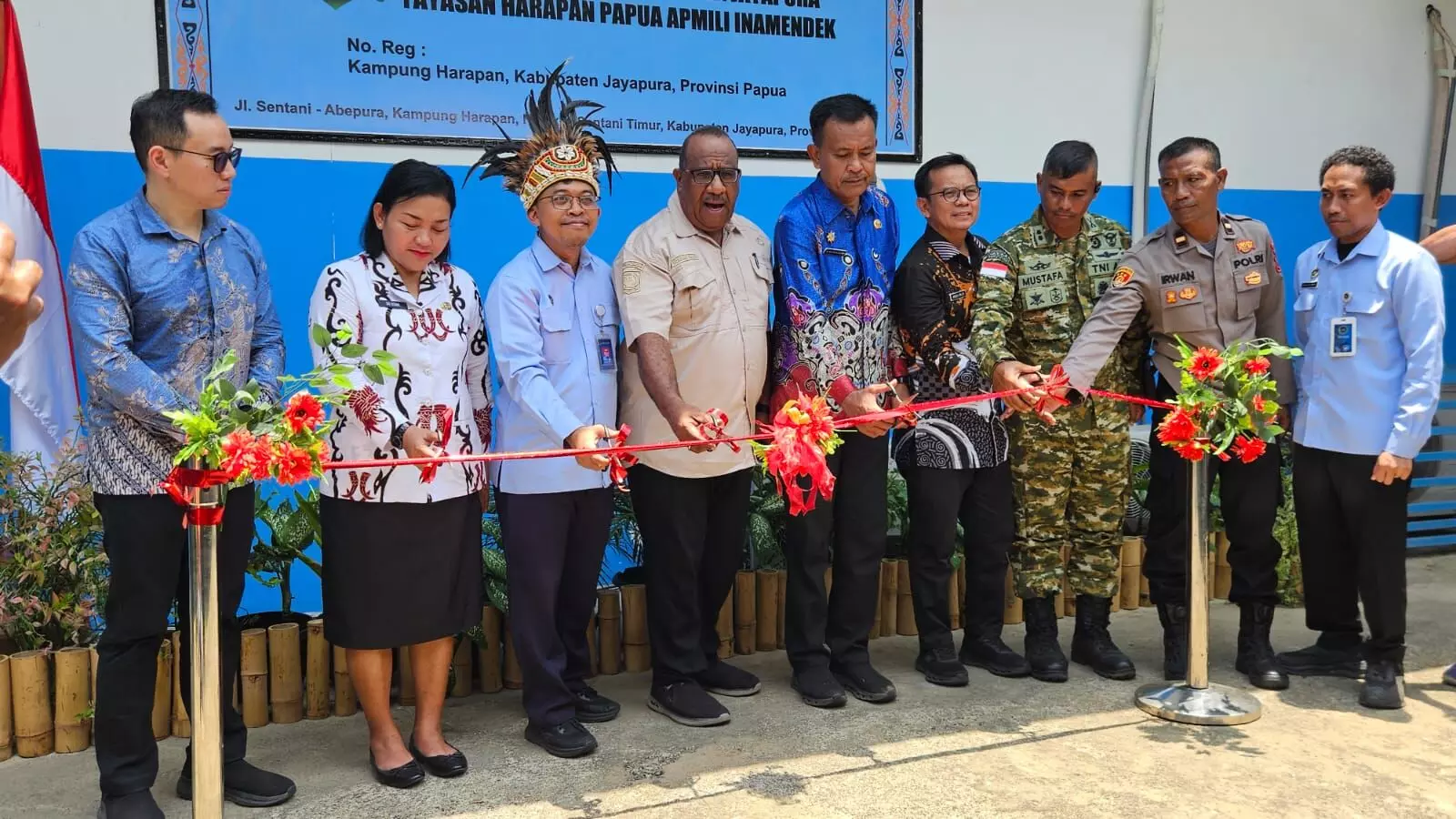
The expansion of SPPG services in Papua has entered a new phase after the National Nutrition Agency, or Badan Gizi Nasional (BGN), inaugurated 13 of the Nutrition Provision Service Units, or Satuan Pelayanan Pemenuhan Gizi (SPPG), across the province on Friday, October 2, 2026. Ten of the newly inaugurated facilities are located in areas classified as disadvantaged, frontier and outermost, or 3T, while three are in non-3T areas.
The move places Papua among the regions receiving additional nutrition infrastructure under Indonesia’s nationwide Free Nutritious Meals programme, known as Makan Bergizi Gratis (MBG). At the national level, BGN simultaneously activated 480 SPPG facilities across 16 provinces identified as 3T areas or regions with high stunting prevalence. BGN stated that the activation aimed to bring the programme closer to communities in need of nutritional services.
In Papua, the policy has a particular significance. The province covers vast distances and includes communities with very different levels of access to public services. Bringing nutrition services closer to children and families therefore requires more than a national policy announcement. It requires kitchens, personnel, food supplies, and monitoring and coordination on the ground.
The inauguration in Jayapura marked another step in that process.
From National Programme to Local Service
Papua Receives 13 SPPG Facilities
One of the facilities formally inaugurated was SPPG Kampung Harapan, also known as Jayapura Nolokla 2, in Sentani Timur District, Jayapura Regency.
The facility is managed by Yayasan Harapan Papua Ampili Inamendek and has become the focal point for the Papua component of the wider activation of SPPG facilities in eastern Indonesia. Reports from the event said the province received 13 SPPG units, with 10 designated for 3T areas and three located in agglomeration areas.
The inauguration was marked by a ribbon cutting led by Yohanes Walilo, Assistant I for Government and Public Welfare at the Papua Provincial Secretariat, together with officials and other stakeholders.
For Papua, the ceremony represented the transition from planning and construction to actual service delivery.
Nurjaeni, Director of Provision and Distribution for BGN Region II, said the agency appreciated the support provided by the provincial government, Jayapura Regency Government and Jayapura City Government in establishing SPPG facilities.
“We appreciate the local governments that have supported the development of SPPG facilities in this area,” Nurjaeni said.
That cooperation is important because the SPPG model depends on coordination between the national agency and local administrations.
Why the 3T Focus Matters in Papua
Reaching Communities with Greater Access Challenges
The decision to place 10 of Papua’s 13 new SPPG facilities in 3T areas reflects the government’s stated effort to extend MBG beyond locations with relatively easier access.
The 3T designation refers to disadvantaged, frontier and outermost regions. In Papua, geography can make public service delivery particularly complex. Long distances, difficult terrain, and limited transport links can separate communities.
For a nutrition programme, these factors affect everything from the construction of kitchens to the procurement and transportation of ingredients.
The expansion of SPPG facilities therefore has a practical dimension. A kitchen located closer to beneficiaries can potentially reduce the logistical distance between food preparation and distribution.
The policy is also consistent with BGN’s national decision to prioritise areas where MBG services are considered most needed.
BGN Chief Sudaryono said the agency had found that a significant number of SPPG kitchens were ready to operate in areas where the programme needed to begin or expand more quickly. He described the October 2 activation of 480 facilities as an initial step towards addressing that gap.
At the national level, BGN reported that 27,022 SPPG kitchens were already operating across Indonesia at the time of the October 2 activation.
Papua’s 13 facilities form only a small part of that national network, but their concentration in 3T areas gives them particular importance for the province.
The Papua Raya Network
Thirty-Six SPPG Facilities Ready to Support MBG
The development is not limited to the administrative boundaries of Papua province.
BGN reported that 36 SPPG facilities across the wider Papua Raya region were ready to support MBG implementation.
The wider regional network is significant because Papua is now divided into several provinces, each with different geographical and administrative circumstances.
A coordinated nutrition programme therefore requires communication between national agencies, provincial administrations, regency and city governments, as well as the organisations managing individual SPPG facilities.
Nurjaeni stated that SPPG facilities meeting the necessary requirements would progressively operate. Some facilities had experienced delays because of various obstacles, including legal issues.
A separate report said BGN expected operations across Papua Raya to proceed after operational budgets were disbursed.
The gradual approach indicates that the government is attempting to balance expansion with operational readiness rather than treating inauguration as the end of the process.
Quality Control Becomes a Central Issue
BGN Says Facilities Must Meet Standards
The expansion of MBG services also comes with a stronger emphasis on oversight.
Nurjaeni said BGN would tighten inspections of SPPG facilities to ensure that food services meet required standards. She stated that audits could lead to the permanent closure of facilities deemed unsuitable.
BGN’s account reveals that audits deemed four SPPG facilities in Papua unsuitable for operation, leading to their permanent closure.
The decision is important in the context of a programme that serves food directly to children and other beneficiaries.
Expansion alone does not determine the success of a nutrition programme. Food safety, hygiene, preparation standards, distribution procedures and oversight are equally important.
The BGN position reflects that principle. Facilities not only exist but also must be capable of delivering meals under appropriate standards.
The national agency has also publicly emphasised the role of local governments in monitoring MBG kitchens. On October 2, it urged regional leaders to take a more active role in overseeing SPPG operations.
For Papua, local oversight can be particularly important because conditions differ significantly from one district to another.
Yohanes Walilo Calls for Meaningful Benefits
Nutrition Must Reach Schoolchildren
At the Kampung Harapan event, Yohanes Walilo said the presence of SPPG facilities should strengthen the implementation of MBG in Papua, particularly in Jayapura Regency.
He called for cooperation between BGN and provincial, regency and city governments so that the national programme could operate effectively.
Walilo also stressed that the establishment of SPPG facilities should produce tangible benefits for the community, particularly by supporting the nutritional needs of schoolchildren.
“The quality of the MBG food served must be a concern for all SPPGs and everyone involved,” he said.
The statement captures an important distinction between infrastructure and outcomes.
An SPPG is ultimately a service facility. Its value will be measured by whether meals are safely prepared, nutritionally appropriate and delivered consistently to intended beneficiaries.
For Papua’s children, that means the success of the programme will be experienced not through the inauguration ceremony but through the meals that arrive at schools and communities afterwards.
The Economic Dimension of Nutrition Services
Local Supply Chains Can Become Part of the Programme
The expansion of SPPG facilities also creates potential connections with local food producers.
The immediate purpose of the kitchens is nutritional service, but their operation requires a continuing supply of food ingredients. This creates opportunities for farmers, fishers, food processors, traders, and other local suppliers, provided that procurement systems and quality requirements are met.
This dimension is especially relevant in Papua, where strengthening local food production and improving community livelihoods are often linked to broader development objectives.
A successful local supply chain can potentially reduce logistical pressure while giving producers a stable institutional market.
However, this opportunity depends on quality, availability, price, storage and transportation. The sources used for this article do not provide a detailed breakdown of the proportion of SPPG ingredients that must come from local suppliers, so the economic impact should be understood as a potential rather than an established outcome.
What is clear is that the operation of 13 additional facilities creates a recurring demand for food, labour, logistics and supporting services.
A Phased Approach to Implementation
Infrastructure Is Only the Beginning
The October 2 inauguration should therefore be viewed as one stage in a longer process.
First came the establishment and preparation of SPPG facilities. The next stage involves operational activation, staffing, procurement and food preparation. After that comes continuous monitoring of service quality and compliance.
BGN has stated that they will progressively operate facilities that meet the requirements.
That phased approach matters in remote areas.
A kitchen may be physically complete but still require trained workers, reliable water and electricity, food supplies, transport arrangements and administrative support before it can consistently serve beneficiaries.
The Papua experience demonstrates why coordination between national and regional authorities remains important.
The provincial government can help facilitate local coordination. Regency and city governments understand local conditions. BGN provides the national programme framework and operational standards. Community organisations and SPPG managers are responsible for translating those requirements into daily services.
The effectiveness of the programme depends on how well those roles connect.
Papua’s Place in Indonesia’s Nutrition Agenda
The October 2 activation was part of a much larger national effort.
BGN said 480 SPPG facilities were activated simultaneously in 16 provinces in eastern Indonesia, particularly in 3T regions and areas with high stunting prevalence.
Sudaryono characterised the activation as the first step in delivering MBG to communities in need of the service.
The policy embodies a broader principle in Indonesia’s national development agenda: basic services should extend beyond major urban centres.
For Papua, that principle has a particular practical meaning.
Jayapura may function as an important administrative and economic centre, but many communities remain geographically distant from provincial facilities and major urban infrastructure.
A decentralised SPPG network can therefore make service delivery more closely aligned with where people live.
The long-term objective is not simply to increase the number of kitchens. It is to establish a functioning nutrition service network that can operate reliably across different geographical conditions.
Food Safety Remains Essential
The emphasis on quality control is also a reminder that expansion carries responsibilities.
BGN’s decision to permanently close four SPPG facilities in Papua after audits found them unsuitable demonstrates that operational standards are intended to apply even as the programme expands.
This creates a clear policy balance.
The government is seeking to expand access, particularly in underserved areas, while simultaneously requiring facilities to meet standards.
For communities, the second part is just as important as the first.
Children receiving meals through MBG need food that is not only available but also safe and properly prepared.
This is why Walilo’s call for attention to food quality complements BGN’s emphasis on audits and operational requirements.
Together, they point to a model in which access and quality must develop simultaneously.
A Service Network with Wider Implications
The expansion of SPPG services can also contribute to a broader understanding of development in Papua.
Nutrition is closely connected to education, child development and human capital. A school meal programme cannot by itself resolve every nutritional or socioeconomic challenge, but reliable access to nutritious food can become one component of a wider public service system.
In remote communities, the presence of a functioning SPPG may also create local employment and stimulate demand for logistics and food-related services.
The wider effect will depend on how the facilities are managed and integrated into local economies.
The sources currently available do not provide enough evidence to quantify these secondary economic effects. They do, however, establish that the government views SPPG development as part of a national programme whose implementation requires local government support and continuous oversight.
Conclusion
The inauguration of 13 SPPG facilities in Papua, including 10 in 3T areas, marks an important stage in the expansion of Indonesia’s Free Nutritious Meals programme into communities facing greater geographical and service delivery challenges.
The significance of the programme will ultimately be measured beyond the number of facilities inaugurated.
For BGN, the next task is to ensure that the kitchens operate progressively, meet safety and quality requirements and maintain reliable services. For the Papua provincial, regency and city governments, the priority is to support coordination and ensure that local conditions are taken into account.
For communities, the expected outcome is more direct: children and other intended beneficiaries should receive nutritious meals safely and consistently.
The 13 facilities in Papua form part of a much wider national expansion, with 480 SPPG facilities activated across 16 eastern Indonesian provinces and 36 SPPG facilities identified as ready to support MBG across Papua Raya.
The road ahead will not be without logistical and operational challenges. Papua’s geography makes service delivery demanding, and the experience of delayed operations and audited facilities shows why careful implementation matters.
But the direction is clear. By placing a significant share of new nutrition facilities in 3T areas, Indonesia is attempting to bring a national food and nutrition programme closer to communities that are farther away from conventional service centres.
If the new SPPGs can maintain the standards demanded by BGN while working effectively with local governments and communities, the initiative could become a practical part of improving access to nutrition services in Papua.
The inauguration is therefore not the conclusion of the programme. It is the beginning of the more important phase: making sure that every functioning kitchen translates public policy into a meal that reaches the child it was intended to serve.
Read Also
Papua Pegunungan Urges Free Education and Free Nutritious Meals
Papua Prioritizes Local Eggs for Free Nutritious Meals
Free Nutritious Meal Program Boosts Jobs and Local Economy in Nabire
Free Nutritious Meal Program Gains Wider Support in Papua

