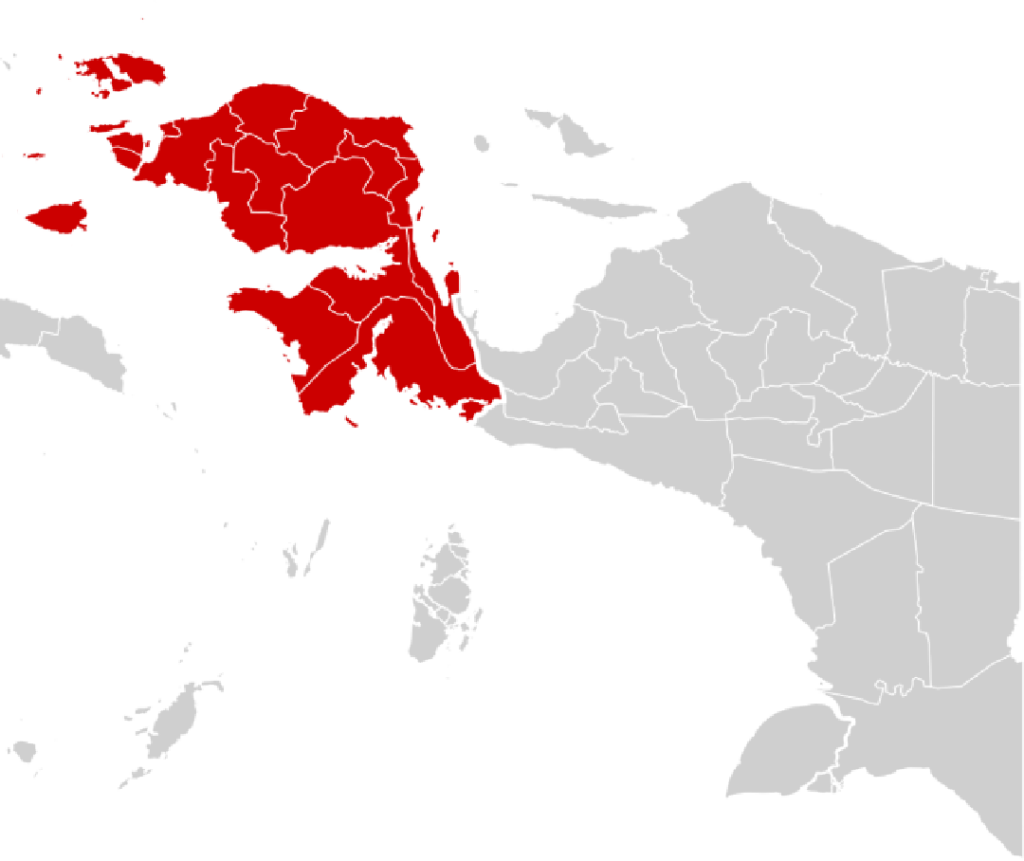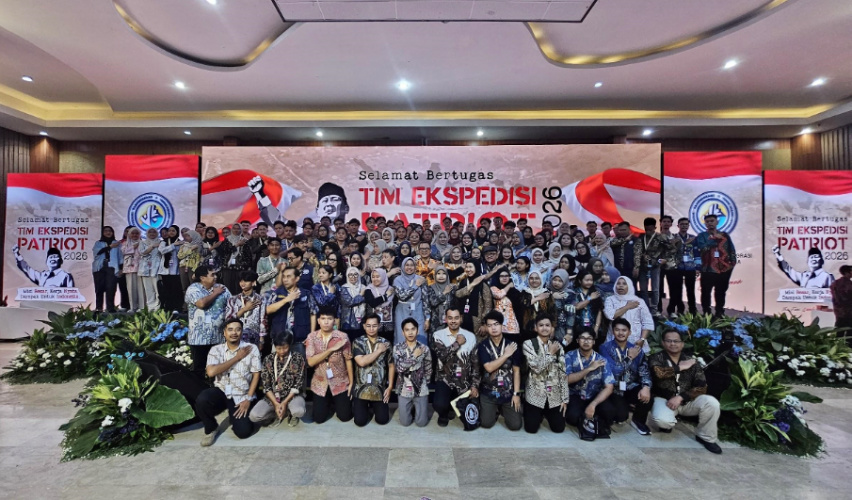
Indonesia is strengthening its long term vision for Papua border development through an innovative partnership between higher education institutions, local communities, and government agencies. As part of the Expedition Patriot 2026 program, Diponegoro University (Undip) has deployed 20 multidisciplinary teams to Keerom Regency, Papua, where they will spend four months working alongside residents to help accelerate the transformation of transmigration areas along the Indonesia and Papua New Guinea border.
The initiative reflects a growing recognition that sustainable regional development depends not only on infrastructure investment but also on knowledge transfer, community participation, and locally adapted innovation. Rather than conducting short academic visits, the participating students and lecturers will live and work with local communities, identifying practical challenges while developing solutions tailored to the unique social, economic, and environmental conditions of Papua’s border region.
For Keerom, one of Indonesia’s strategic frontier regencies, the program represents an opportunity to strengthen local capacity while encouraging collaboration between universities, government institutions, and community organizations. Officials believe such partnerships can help improve public services, stimulate local economic activity, and strengthen human resource development in areas that play an important role in Indonesia’s eastern development agenda.
Diponegoro University Brings Knowledge Closer to Border Communities
The deployment of the Expedition Patriot teams illustrates how Indonesian universities are increasingly extending their role beyond classrooms and research laboratories.
Instead of limiting academic activities to campuses, the program encourages lecturers and students to work directly with communities, applying scientific knowledge to real development challenges. The four month assignment allows participants to gain a deeper understanding of local conditions while ensuring that recommendations are grounded in practical experience rather than theoretical assumptions.
According to Diponegoro University, the Expedition Patriot initiative focuses on supporting the government’s efforts to accelerate the transformation of transmigration areas through multidisciplinary collaboration. Participants come from various academic backgrounds, enabling them to contribute expertise in fields such as agriculture, public health, education, engineering, environmental management, economics, digital technology, and community empowerment.
Officials explained that this multidisciplinary approach is particularly important in Papua, where development challenges are interconnected. Improving agricultural productivity, for example, often depends on transportation, access to markets, education, water management, and institutional capacity. Addressing these issues therefore requires cooperation across multiple disciplines rather than isolated interventions.
For the participating students, the mission also provides valuable field experience. Living among local residents encourages future professionals to appreciate the complexity of regional development while strengthening their understanding of Indonesia’s cultural and geographical diversity.
Expedition Patriot Supports the Transformation of Papua’s Border Areas
Keerom occupies a strategic position along Indonesia’s 760 kilometer land border with Papua New Guinea, making the regency an important gateway for economic activity, cross border interaction, and regional development. Strengthening communities in frontier areas has therefore become one of the government’s long term priorities, with transmigration settlements expected to evolve into more self sufficient, productive, and competitive growth centers.
The Expedition Patriot program aligns with this objective by focusing on community based development rather than infrastructure alone.
Instead of introducing predetermined solutions, the university teams are expected to work closely with residents to identify local priorities and formulate practical recommendations that reflect community aspirations.
This participatory approach recognizes that sustainable development is most effective when local people remain active partners throughout the planning and implementation process.
Officials involved in the program emphasized that border development extends beyond physical construction. Strengthening education, improving healthcare access, expanding economic opportunities, supporting environmental sustainability, and enhancing local governance all contribute to the long term resilience of frontier communities.
By bringing academic expertise directly into villages, the initiative seeks to bridge scientific knowledge with local experience. Researchers can introduce innovation while community members contribute valuable understanding of local culture, geography, and daily realities.
The result is expected to be a more balanced model of development in which academic institutions serve as facilitators of community empowerment rather than external observers.
Four Months of Living, Learning, and Collaborating
Unlike short term service programs, the four month duration of Expedition Patriot allows university teams to establish stronger relationships with the communities they serve.
Extended field assignments provide sufficient time to conduct assessments, implement pilot activities, evaluate initial outcomes, and refine recommendations based on continuous interaction with local residents.
This longer engagement also helps build trust, an important factor in community based development. Residents are generally more willing to participate actively when they see researchers living alongside them, listening to local perspectives, and adapting activities according to community needs.
Officials noted that meaningful development requires dialogue rather than one way knowledge transfer.
The teams are therefore expected not only to introduce ideas but also to learn from indigenous knowledge, local agricultural practices, traditional resource management, and community leadership structures that have supported livelihoods in Papua for generations.
This exchange of knowledge benefits both sides. Communities gain access to technical expertise and innovation, while students and lecturers develop a richer understanding of how development policies operate in diverse local contexts.
Such experiences also contribute to producing future professionals who possess stronger practical skills, greater cultural sensitivity, and a deeper appreciation of inclusive development principles.
Universities as Partners in National Development
Indonesia has increasingly encouraged universities to play a more active role in addressing national development priorities.
Programs such as Expedition Patriot demonstrate how higher education institutions can contribute beyond teaching and research by supporting community empowerment and evidence based policymaking.
Rather than acting solely as centers of academic excellence, universities are becoming development partners capable of helping local governments identify challenges, design innovative solutions, and evaluate public programs.
In Papua, where geographical conditions and regional diversity require flexible approaches, this partnership model is particularly valuable.
Government representatives believe collaboration between universities and local communities can strengthen the effectiveness of development initiatives while ensuring that policies are informed by reliable field observations.
For border regions such as Keerom, combining academic knowledge with local participation supports broader efforts to improve human capital, stimulate economic activity, and strengthen social resilience.
The Expedition Patriot mission therefore represents more than a university outreach program. It reflects a broader commitment to integrating education, research, and community engagement as complementary pillars of sustainable development across Papua’s frontier regions.
Community Innovation Drives Sustainable Border Growth
One of the defining characteristics of the Expedition Patriot 2026 program is its emphasis on community driven development. Rather than introducing standardized solutions, the 20 teams from Diponegoro University are expected to begin by understanding local conditions, listening to community aspirations, and identifying development priorities together with residents.
This participatory approach reflects an important principle in modern regional development: sustainable progress is more likely when local communities become active partners rather than passive recipients of external assistance.
During their four month assignment, the university teams will conduct field observations, community discussions, technical assessments, and collaborative planning sessions covering various aspects of daily life in Keerom’s transmigration areas. The objective is not simply to complete academic research but to generate practical recommendations that communities and local governments can continue implementing after the program concludes.
Officials from Diponegoro University explained that each multidisciplinary team carries expertise from different academic fields, allowing them to examine development challenges from multiple perspectives. Agriculture, education, environmental management, public health, entrepreneurship, engineering, information technology, and social sciences all contribute to building comprehensive solutions tailored to local needs.
This integrated methodology recognizes that development challenges rarely exist in isolation. Improving farmers’ productivity, for example, may require better irrigation, stronger business management, digital marketing, transportation access, financial literacy, and environmental sustainability simultaneously.
By encouraging collaboration between academic disciplines, Expedition Patriot seeks to produce recommendations that are realistic, measurable, and responsive to the complex realities of Papua’s frontier communities.
Transforming Transmigration Areas into New Growth Centers
The Expedition Patriot program also supports Indonesia’s broader strategy to transform transmigration areas into sustainable centers of economic growth.
Historically, transmigration settlements have played an important role in regional development by expanding agricultural production, increasing connectivity, and encouraging balanced population distribution. Today, however, the government’s vision extends beyond agricultural settlement alone.
Authorities increasingly view transmigration areas as integrated development zones capable of supporting education, entrepreneurship, food security, public services, and local investment.
Keerom Regency represents an important location for this transformation because of its strategic position along Indonesia’s international border with Papua New Guinea.
Improving economic opportunities in frontier communities contributes not only to local prosperity but also to stronger regional resilience and national development.
University researchers participating in Expedition Patriot are therefore expected to identify opportunities that strengthen local economies while respecting environmental sustainability and community priorities.
Potential recommendations may include improving agricultural productivity, strengthening village enterprises, expanding value added processing of local products, promoting digital entrepreneurship, improving water management, supporting ecotourism, or strengthening community cooperatives.
Officials emphasized that every recommendation should be grounded in local potential rather than imported development models that may not fit Papua’s unique geographical and cultural conditions.
Universities Become Partners in Community Empowerment
The deployment of Expedition Patriot demonstrates how Indonesian universities are increasingly embracing their role as partners in national development.
Rather than limiting academic contributions to scientific publications, institutions of higher education are becoming more directly involved in solving practical challenges faced by communities throughout Indonesia.
This approach reflects the university’s commitment to combining education, research, and community service into a single integrated mission.
Students participating in Expedition Patriot gain opportunities to apply classroom knowledge within real development settings while simultaneously learning from local experience.
For lecturers and researchers, the field assignment also provides valuable opportunities to develop applied research based on direct observation rather than theoretical assumptions.
Community members, meanwhile, benefit from access to scientific expertise while maintaining active participation in shaping development priorities.
Officials noted that such collaboration produces mutual benefits.
Communities gain practical assistance and technical recommendations.
Students develop professional competence.
Researchers improve the relevance of academic work.
Local governments receive evidence based policy recommendations.
This partnership model illustrates how higher education can contribute directly to improving community welfare while strengthening Indonesia’s long term human capital development.
Human Capital Becomes the Foundation of Border Development
Beyond infrastructure and economic programs, Expedition Patriot places strong emphasis on human capital development.
Officials consistently highlight that sustainable progress depends on educated, skilled, and empowered communities capable of driving development independently.
For this reason, many activities undertaken during the four month assignment will focus on strengthening local capacity rather than delivering short term assistance.
Training programs, educational outreach, technical mentoring, digital literacy initiatives, entrepreneurship development, and community participation all contribute toward this objective.
Government representatives believe that empowering local people to solve development challenges themselves creates more sustainable outcomes than relying exclusively on external intervention.
For younger residents of Keerom, collaboration with university students also provides valuable inspiration.
Interactions with undergraduate and postgraduate students expose local youth to higher education opportunities while encouraging greater educational aspirations.
Many observers believe these exchanges create lasting social benefits that continue well after the formal program concludes.
The presence of university teams in frontier communities therefore represents more than academic outreach.
It reflects Indonesia’s broader commitment to ensuring that knowledge, innovation, and educational opportunity become accessible throughout the country, including remote border regions.
Supporting Indonesia’s Eastern Development Agenda
The Expedition Patriot mission aligns closely with Indonesia’s continuing efforts to accelerate development in eastern provinces through stronger institutional cooperation.
Over recent years, government policies have increasingly combined infrastructure investment with improvements in education, healthcare, agriculture, digital connectivity, and community empowerment.
Border regions occupy an especially important position within this strategy because they represent both gateways for international interaction and symbols of national connectivity.
Strengthening these areas requires long term collaboration among government institutions, universities, local communities, and the private sector.
Officials view Expedition Patriot as an example of this collaborative model in practice.
Rather than working independently, academic institutions complement government development programs by contributing research, innovation, and technical expertise.
For Papua, such partnerships are expected to strengthen evidence based policymaking while encouraging locally driven development that respects community aspirations.
The four month mission in Keerom therefore illustrates how universities can help bridge national policy objectives with practical implementation at the village level.
As Indonesia continues promoting inclusive regional development, initiatives that combine academic knowledge with community participation are expected to play an increasingly important role in supporting sustainable progress across Papua’s border areas.
Strengthening Human Capital Along the Indonesia PNG Border
While physical infrastructure remains an important component of regional development, policymakers increasingly recognize that long term progress depends equally on the quality of human resources. Expedition Patriot reflects this broader philosophy by placing education, innovation, and community empowerment at the center of border development.
Officials from Diponegoro University explained that the mission is designed not only to solve immediate challenges but also to strengthen local capacity so communities can continue advancing independently after the university teams complete their assignment.
This emphasis on human capital is particularly relevant for Papua’s frontier regions, where improving educational opportunities, technical skills, entrepreneurship, and institutional capacity can generate long lasting economic and social benefits.
The interaction between university students and local residents also creates valuable opportunities for knowledge exchange. Community members contribute practical understanding of local conditions, indigenous knowledge, agricultural traditions, and environmental management, while students introduce scientific approaches, technological innovation, and multidisciplinary problem solving.
Rather than replacing local knowledge, the program seeks to combine both perspectives into practical solutions that are realistic, culturally appropriate, and sustainable.
Officials believe this collaborative learning process strengthens community ownership of development initiatives while encouraging future cooperation between universities and local governments.
Academic Collaboration Supports Sustainable Development in Papua
The deployment of Expedition Patriot illustrates a broader trend in Indonesia’s development strategy, where universities increasingly function as active partners in national progress.
Higher education institutions are no longer viewed solely as centers of teaching and research. They are becoming important contributors to evidence based policymaking, technological innovation, and community development.
In Keerom, this role is particularly significant because the border region continues experiencing rapid transformation.
Improving agricultural productivity, expanding village economies, strengthening education, promoting environmental sustainability, enhancing public services, and encouraging digital innovation all require reliable research supported by direct community engagement.
Officials noted that universities possess an important comparative advantage in this process.
Their multidisciplinary expertise allows them to analyze complex challenges from multiple perspectives while proposing integrated solutions supported by scientific evidence.
The involvement of students also contributes to leadership development by exposing future professionals to real world development issues before entering their careers.
Many participants will return from Papua with a deeper understanding of Indonesia’s regional diversity, the importance of inclusive development, and the practical challenges faced by frontier communities.
This experience ultimately benefits not only Papua but also Indonesia’s future workforce by producing graduates with stronger social awareness and practical problem solving abilities.
Looking Ahead
The four month Expedition Patriot mission represents the beginning of a longer process rather than a stand alone academic program.
Local governments, universities, and community organizations are expected to continue building upon the relationships established during the field assignment.
Officials hope that recommendations produced by the university teams will support future policymaking while helping communities identify practical pathways for economic growth, improved public services, and stronger institutional capacity.
The program may also provide a model for similar collaborations in other frontier and remote regions across Indonesia.
As regional development becomes increasingly knowledge driven, partnerships between universities and local governments are expected to play a growing role in generating innovative, evidence based solutions tailored to local conditions.
For Papua, strengthening collaboration between higher education institutions and local communities offers opportunities not only to improve livelihoods but also to encourage greater participation in national development while respecting local culture and community priorities.
Conclusion
The deployment of 20 Expedition Patriot teams from Diponegoro University to Keerom Regency demonstrates Indonesia’s growing commitment to integrating higher education into regional development. By combining academic expertise with community participation, the initiative supports the government’s efforts to accelerate the transformation of transmigration areas along the Indonesia and Papua New Guinea border.
Over the course of four months, students and lecturers will work directly with local communities to identify development priorities, strengthen local capacity, and formulate practical solutions that address the unique characteristics of Papua’s frontier region.
Beyond the immediate activities, Expedition Patriot reflects a broader understanding that sustainable development depends on both physical infrastructure and human capital. Education, innovation, research, and community empowerment remain essential foundations for long term prosperity.
The program also illustrates how collaboration between universities, government institutions, and local communities can strengthen evidence based policymaking while ensuring development remains inclusive and responsive to local needs.
As Papua continues advancing through investments in infrastructure, education, healthcare, agriculture, and economic empowerment, initiatives such as Expedition Patriot demonstrate the important contribution that academic institutions can make in supporting resilient, inclusive, and sustainable regional development.