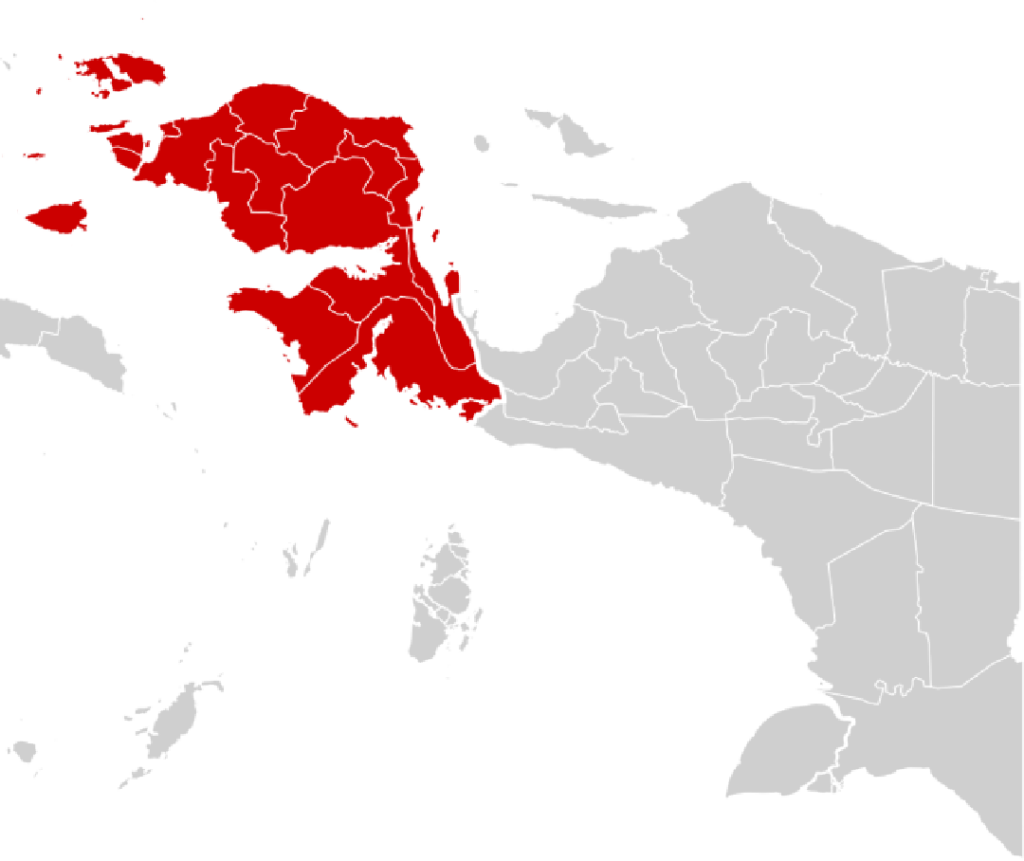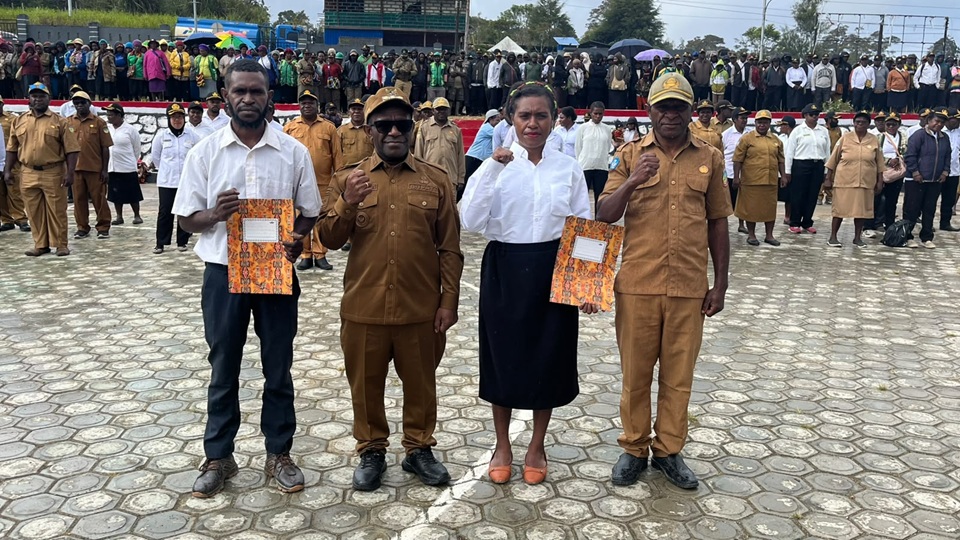
Education remains one of the most important foundations for Papua’s long-term development, and the Papua Tengah (Central Papua) Provincial Government has taken another concrete step toward strengthening that foundation by deploying 53 contract teachers to Deiyai Regency. The assignment reflects a broader commitment to improving educational access, enhancing teaching quality, and accelerating human capital development for Indigenous Papuans (Orang Asli Papua, OAP), particularly in remote highland districts where shortages of qualified educators have long presented significant challenges.
The teachers officially began their assignments after completing the provincial recruitment process and administrative preparations. Their arrival is expected to reinforce classroom instruction across multiple schools while helping local education authorities improve learning outcomes for children throughout Deiyai.
Provincial officials emphasized that strengthening education requires sustained investment in teachers because they remain the primary drivers of student achievement, character development, and community empowerment. By increasing the number of educators serving remote communities, the government hopes to provide more consistent learning opportunities while narrowing educational disparities between urban centers and isolated regions.
For many families living in Papua’s mountainous interior, the presence of qualified teachers represents more than an improvement in public services. It symbolizes new opportunities for children to acquire the knowledge and skills necessary to participate in the province’s future social and economic development.
Expanding Educational Opportunities in Deiyai
Deiyai Regency is one of several highland areas where geographical conditions continue to influence the delivery of public services.
Mountainous terrain, dispersed settlements, and transportation challenges can make it difficult to distribute educational resources evenly across communities. As a result, schools in remote districts often experience shortages of teaching personnel compared with institutions located in larger urban areas.
The deployment of 53 contract teachers seeks to address part of that challenge.
According to provincial education authorities, the additional educators will help strengthen teaching capacity while supporting schools that require more instructional personnel across different grade levels.
Officials explained that increasing the availability of teachers contributes directly to improving classroom learning, reducing teacher workloads, and creating more effective educational environments.
Students benefit not only from additional instructional time but also from greater opportunities to receive individual guidance and participate in a wider range of learning activities.
Education specialists frequently observe that teacher availability is among the strongest determinants of educational quality, particularly in remote regions where schools often operate with limited human resources.
By assigning additional teachers to Deiyai, the provincial government aims to improve educational equity while ensuring that children in highland communities receive learning opportunities comparable to those available elsewhere.
Investing in Indigenous Papuan Human Capital
The teacher deployment also reflects Papua Tengah’s broader strategy of strengthening Indigenous Papuan human capital through education.
Government officials have repeatedly emphasized that improving educational outcomes remains essential for preparing future generations to participate in regional development, public administration, entrepreneurship, healthcare, education, technology, and other professional sectors.
Human capital development extends beyond academic achievement.
Schools also play an important role in developing leadership, discipline, creativity, problem-solving abilities, social responsibility, and civic values that contribute to stronger communities.
For Indigenous Papuan students, quality education creates opportunities to pursue higher education, vocational training, professional careers, and community leadership while maintaining respect for local cultural traditions.
Development economists consistently identify education as one of the most effective long-term investments available to governments.
Improved educational attainment contributes to higher productivity, better health outcomes, greater economic participation, reduced poverty, and stronger institutional capacity.
The deployment of additional teachers therefore represents not only an investment in schools but also an investment in Papua’s future workforce and long-term regional competitiveness.
Teachers as Agents of Community Development
While teachers are primarily responsible for delivering classroom instruction, their contribution often extends far beyond academic education.
In many remote Papuan communities, teachers become respected community figures who support literacy initiatives, youth activities, parental engagement, and broader social development.
Their daily interaction with students allows them to encourage positive values, critical thinking, environmental awareness, and healthy lifestyles while helping children build confidence in pursuing future educational opportunities.
Provincial education officials have emphasized that teachers serving remote districts demonstrate an important commitment to public service by working in areas where educational needs remain significant.
Their presence contributes not only to educational improvement but also to strengthening relationships between schools, families, and local communities.
International education experts frequently note that successful education systems depend upon motivated teachers who receive institutional support, continuous professional development, and adequate resources.
The Papua Tengah Government therefore views teacher recruitment and deployment as one component of broader efforts to improve educational quality throughout the province.
Supporting Equal Access to Education
Improving access to education has become an important priority across Papua as governments continue working to reduce regional disparities.
Expanding the number of qualified teachers complements ongoing investments in school infrastructure, learning materials, digital connectivity, scholarship programs, and educational management.
Officials explained that ensuring equal educational opportunities requires addressing both physical infrastructure and human resources simultaneously.
Schools require not only classrooms and equipment but also competent educators capable of delivering meaningful learning experiences.
The deployment of contract teachers demonstrates how provincial governments can respond directly to local educational needs through targeted human resource policies.
Education observers note that such initiatives become particularly valuable when combined with continuous teacher training, professional mentoring, curriculum development, and community participation.
Together, these measures create stronger educational ecosystems capable of supporting sustainable improvements in learning outcomes.
Education as the Foundation for Papua’s Future
The Papua Tengah Provincial Government continues to view education as one of the principal drivers of long-term regional transformation.
Investments in education complement broader development programs focusing on healthcare, transportation infrastructure, digital connectivity, food security, public services, and economic empowerment.
Officials believe that strengthening educational quality today will help prepare future generations of Indigenous Papuans to contribute more actively to regional governance, business development, scientific innovation, environmental management, and community leadership.
As Papua continues experiencing institutional and economic transformation, the demand for skilled human resources is expected to increase.
Preparing young people through quality education therefore becomes an essential prerequisite for ensuring that development benefits local communities while expanding opportunities for future generations.
The arrival of 53 contract teachers in Deiyai represents one practical contribution toward achieving that long-term vision.
Building Stronger Schools Through Teacher Support
The deployment of 53 contract teachers is expected to strengthen not only classroom instruction but also the overall quality of educational institutions throughout Deiyai Regency.
Education officials note that schools perform more effectively when they have an adequate number of qualified teachers who can share responsibilities, collaborate on lesson planning, and provide students with more personalized attention. Additional teaching staff also allows schools to organize extracurricular activities, strengthen literacy initiatives, and improve classroom management.
Professional support for newly assigned teachers will remain equally important.
The Papua Tengah Provincial Government has emphasized that teacher deployment should be accompanied by continuous professional development, mentoring, curriculum implementation support, and regular performance evaluations. Such measures help ensure that educators remain motivated while continuously improving their instructional skills.
Education specialists frequently observe that successful learning outcomes depend not only on teacher availability but also on the quality of teaching methods, student engagement, and cooperation between schools and parents.
By investing in both teacher recruitment and professional development, Papua Tengah seeks to establish a stronger educational foundation capable of delivering sustainable improvements across remote districts.
Education as a Driver of Sustainable Development
The assignment of additional teachers also reflects a broader understanding that education is central to sustainable regional development.
International development institutions consistently identify education as one of the most effective long-term investments because it contributes to stronger economic growth, healthier communities, improved governance, and greater social mobility.
For Papua, expanding educational opportunities carries additional strategic importance.
As infrastructure, healthcare services, digital connectivity, agriculture, tourism, and local industries continue to develop, the province will increasingly require qualified professionals, skilled workers, entrepreneurs, researchers, healthcare personnel, and public administrators drawn from local communities.
Providing quality education today therefore helps prepare Indigenous Papuan youth to participate more actively in the province’s future development.
Government officials have repeatedly emphasized that strengthening human resources remains one of the primary objectives of regional development policies, ensuring that economic progress is accompanied by greater local participation and inclusive opportunities.
The deployment of teachers to Deiyai aligns with this long-term vision by strengthening one of the most important pillars of human capital development.
Empowering Indigenous Papuan Communities Through Education
Education has long been recognized as an important pathway for empowering Indigenous Papuan communities while preserving their cultural identity.
Schools provide children with academic knowledge, practical skills, and opportunities to pursue higher education, but they also serve as spaces where local values, traditions, and community identity can be respected alongside national educational standards.
Teachers working in remote Papuan communities frequently adapt learning approaches to local conditions while encouraging students to appreciate both their cultural heritage and broader educational opportunities.
Community leaders often describe schools as important centers for building future leadership, encouraging civic participation, and strengthening social cohesion.
Parents likewise play a critical role in supporting children’s educational progress through active engagement with schools and teachers.
Education experts emphasize that lasting improvements in learning outcomes depend upon cooperation among governments, educators, families, customary institutions, and local communities.
By placing additional teachers in Deiyai, the provincial government seeks to strengthen this collaborative educational environment while ensuring that more children receive consistent access to quality learning.
Supporting Equal Educational Opportunities Across Papua
Reducing educational disparities between urban centers and remote highland districts remains one of the continuing priorities of Papua’s regional development agenda.
Geographical conditions have historically affected the distribution of educational services, making targeted government interventions particularly important.
Programs such as teacher deployment complement ongoing investments in school facilities, scholarships, digital learning initiatives, and educational infrastructure designed to improve access for students living in isolated areas.
Education planners increasingly recognize that expanding access alone is not sufficient.
Students must also receive high-quality instruction delivered by motivated and well-prepared educators who understand the unique needs of local communities.
The assignment of 53 contract teachers therefore represents part of a broader effort to create a more equitable education system where every child has an opportunity to develop his or her potential regardless of geographic location.
Such initiatives contribute directly to Indonesia’s wider objective of ensuring inclusive and quality education throughout the country.
Looking Ahead
The Papua Tengah Provincial Government is expected to continue evaluating teacher distribution while expanding programs that strengthen educational quality across remote districts. Future initiatives are likely to focus on continuous professional development, improved educational infrastructure, enhanced learning resources, and closer collaboration between provincial and district education authorities. As Papua continues investing in human capital development, strengthening schools through qualified educators will remain an essential component of long-term regional progress and inclusive development for Indigenous Papuan communities.
Conclusion
The deployment of 53 contract teachers to Deiyai Regency demonstrates Papua Tengah’s continuing commitment to improving educational access and strengthening human capital development for Indigenous Papuans. By expanding the availability of qualified educators in remote communities, the provincial government seeks to improve learning quality, reduce educational disparities, and prepare younger generations for greater participation in Papua’s future social and economic development. Beyond addressing immediate teacher shortages, the initiative reflects a broader recognition that education remains one of the most effective long-term investments for building resilient communities, creating opportunities for local youth, and supporting sustainable regional development throughout Papua Tengah.