Indonesia’s commitment to protecting its citizens overseas was once again demonstrated after the Consulate of the Republic of Indonesia (KRI) in Vanimo provided consular assistance to a group of fishermen from Merauke, Papua Selatan (South Papua), who became victims of a maritime incident in the waters of Western Papua New Guinea (PNG). Through close coordination with local authorities, the consulate facilitated the repatriation of five survivors while continuing to monitor efforts to locate two fishermen who remain missing.
The incident occurred after a fishing vessel carrying seven Indonesian crew members encountered difficulties in waters near the Indonesia–Papua New Guinea maritime boundary. According to official information released by Indonesian authorities, five fishermen survived, while two others were reported missing. The incident immediately prompted a humanitarian response involving Indonesian diplomatic representatives in Vanimo, local authorities in Papua New Guinea, and relevant agencies in Indonesia.
The case illustrates not only the risks faced by traditional fishermen operating in border waters but also the important role played by Indonesia’s overseas diplomatic missions in delivering immediate protection and assistance to citizens facing emergencies abroad.
Swift Consular Assistance for Indonesian Fishermen
Following reports of the maritime accident, the Indonesian Consulate in Vanimo immediately established communication with authorities in Papua New Guinea to verify the identities and conditions of the survivors.
According to official statements, consular officials coordinated documentation procedures, monitored the fishermen’s welfare, facilitated communication with their families, and arranged their safe return to Indonesia.
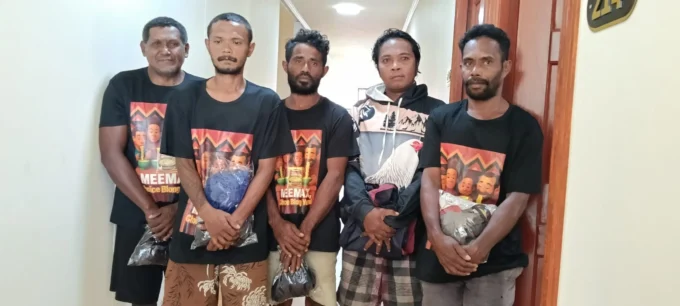
The five survivors identified by Indonesian authorities are:
Yakobus Tovi (38), Lamber Talutu (40), Fadli Basri (44), Arsad Kelutur (28), and Hasan Basri Definubun (29).
Meanwhile, search efforts have continued for two other crew members who were reported missing after the vessel sank.
Officials emphasized that providing humanitarian assistance during emergencies remains one of the core responsibilities of Indonesian diplomatic and consular missions overseas.
Consular protection extends beyond administrative services. During emergency situations, Indonesian representatives are responsible for coordinating with local authorities, facilitating medical treatment when necessary, assisting with immigration and travel documentation, communicating with families, and ensuring that affected citizens receive appropriate protection in accordance with international diplomatic practice.
Indonesia Reaffirms Commitment to Protecting Citizens Overseas
The incident has once again highlighted Indonesia’s longstanding commitment to protecting its citizens wherever they may be.
The Ministry of Foreign Affairs, together with Indonesian embassies and consulates around the world, routinely provides assistance to Indonesians facing legal issues, maritime accidents, natural disasters, labor disputes, medical emergencies, and other humanitarian situations overseas.
For communities living in Papua’s southern coastal regions, such protection carries particular importance because traditional fishermen frequently operate near international maritime boundaries separating Indonesia from Papua New Guinea.
Although fishing activities support local livelihoods, unpredictable weather, navigation challenges, and accidental crossings into neighboring waters can create situations requiring diplomatic coordination between both countries.
Indonesia’s diplomatic missions therefore serve as an important bridge connecting affected citizens with local authorities while ensuring that humanitarian concerns receive immediate attention.
Officials have reiterated that the safety and welfare of Indonesian nationals remain a priority regardless of where emergencies occur.
Maritime Communities Share Longstanding Cross Border Connections
The waters separating Papua Selatan from Western Papua New Guinea have historically connected coastal communities through geography, traditional navigation, and cultural interaction.
For generations, fishermen from both sides of the border have relied upon surrounding marine resources for their livelihoods.
Modern international boundaries, however, require fishing activities to comply with maritime regulations established by both governments.
Because weather conditions in the Arafura Sea and surrounding waters can change rapidly, small fishing vessels occasionally encounter emergencies ranging from mechanical failures and rough seas to navigation difficulties.
Such incidents reinforce the importance of close communication between Indonesian and Papua New Guinea authorities.
Maritime safety experts note that effective cooperation between neighboring countries significantly improves emergency response capabilities by enabling faster information sharing, search coordination, and humanitarian assistance.
The latest incident therefore demonstrates the practical value of bilateral cooperation beyond traditional diplomatic relations.
Indonesia and Papua New Guinea Strengthen Humanitarian Cooperation
The successful handling of the incident also reflects the constructive relationship that continues to develop between Indonesia and Papua New Guinea.
As neighboring countries sharing both land and maritime borders, Indonesia and Papua New Guinea have steadily expanded cooperation in areas including border management, transportation, fisheries, disaster response, healthcare, education, and humanitarian assistance.
When emergencies occur involving citizens from either country, close institutional communication allows authorities to coordinate more effectively while prioritizing humanitarian considerations.
International relations specialists often observe that cooperation during humanitarian emergencies strengthens mutual trust because it demonstrates both governments’ willingness to place human safety above political differences.
The response coordinated through the Indonesian Consulate in Vanimo illustrates how diplomatic institutions contribute directly to protecting citizens while reinforcing positive bilateral relations.
Such practical cooperation also complements broader efforts by both governments to strengthen partnership through regular diplomatic dialogue, including the planned Indonesia–Papua New Guinea Joint Ministerial Commission, which aims to deepen collaboration across multiple sectors.
The Human Dimension Behind Maritime Safety
Beyond diplomatic coordination, the incident is ultimately a reminder of the human realities faced by fishing communities.
For many families in Merauke and other coastal districts of Papua Selatan, fishing remains an essential source of income passed down across generations.
Small scale fishermen often operate under challenging conditions, relying upon weather forecasts, navigation experience, and limited onboard equipment while spending extended periods at sea.
When accidents occur, the impact extends well beyond the fishermen themselves.
Families experience uncertainty while awaiting news, communities organize support efforts, and government agencies mobilize resources to assist those affected.
The successful rescue of five crew members therefore represents more than an operational achievement.
It also reflects the importance of timely humanitarian response, effective diplomatic coordination, and international cooperation in reducing the human consequences of maritime emergencies.
Strengthening Maritime Safety Along the Indonesia–PNG Border
The incident has also renewed attention to the importance of maritime safety in the waters separating Papua Selatan and Western Papua New Guinea, where traditional fishing activities have supported coastal communities for generations.
The maritime boundary between Indonesia and Papua New Guinea is characterized by dynamic weather conditions, strong ocean currents, and vast fishing grounds that can present significant operational challenges, particularly for small-scale fishing vessels. Sudden changes in sea conditions, navigation difficulties, and limited communication infrastructure may increase the risks faced by fishermen operating near the international boundary.
Maritime experts emphasize that improving safety requires a comprehensive approach that combines better navigation equipment, reliable weather forecasting, emergency communication systems, safety training, and close coordination among maritime authorities in both countries.
Indonesia has continued strengthening maritime governance through improved coast guard coordination, search and rescue capabilities, and enhanced communication between local governments and national institutions. Cooperation with neighboring Papua New Guinea is equally important because maritime emergencies often require rapid cross-border coordination to save lives.
The successful rescue and repatriation of the five fishermen demonstrate how effective bilateral communication can significantly improve humanitarian outcomes during emergencies at sea.
Consular Protection as a Pillar of Indonesian Diplomacy
The response by the Indonesian Consulate in Vanimo illustrates the increasingly important role played by Indonesian diplomatic missions in providing direct assistance to citizens overseas.
Under Indonesia’s diplomatic and consular responsibilities, overseas missions are tasked with protecting Indonesian nationals facing emergencies abroad, whether resulting from maritime accidents, natural disasters, legal issues, labor disputes, or humanitarian crises.
Consular protection extends beyond administrative assistance.
During emergency situations, Indonesian representatives coordinate with local authorities, verify the identities and conditions of affected citizens, facilitate communication with families, assist with travel documentation, arrange transportation, and help ensure that Indonesian nationals receive appropriate humanitarian support.
Foreign policy specialists note that effective consular services have become an essential component of modern diplomacy.
As international mobility continues to increase, governments are expected to respond rapidly whenever their citizens encounter emergencies abroad.
The swift coordination carried out by the Indonesian Consulate in Vanimo reflects Indonesia’s continuing commitment to ensuring that its citizens receive timely protection regardless of where incidents occur.
For communities living in Papua’s border regions, such diplomatic support provides an important layer of reassurance given the unique geographical realities of cross-border maritime activities.
Humanitarian Cooperation Strengthens Bilateral Relations
The handling of the maritime incident also demonstrates the value of humanitarian cooperation between Indonesia and Papua New Guinea.
Although maritime boundaries define national jurisdictions, emergencies at sea often require practical collaboration that transcends administrative borders. Search and rescue operations, medical assistance, information sharing, and the safe return of affected individuals depend upon constructive communication between neighboring countries.
Indonesia and Papua New Guinea have steadily expanded cooperation across multiple sectors, including border management, fisheries, transportation, disaster response, education, health, and security.
Humanitarian cooperation has become an important dimension of this broader relationship because it directly affects the safety and well-being of communities living along the shared frontier.
International relations experts frequently observe that cooperation during humanitarian emergencies helps strengthen mutual trust between neighboring states.
Successful coordination in cases involving fishermen, natural disasters, or cross-border accidents demonstrates the practical value of diplomacy in addressing real challenges faced by ordinary citizens.
The assistance provided by the Indonesian Consulate in Vanimo therefore represents not only an effective consular response but also a positive example of bilateral cooperation serving humanitarian objectives.
Supporting Coastal Communities in Papua
The incident also highlights the importance of strengthening long-term support for fishing communities in Papua Selatan, particularly in Merauke, where many families depend on coastal fisheries as their primary source of income.
Fishing remains one of the region’s most important traditional economic activities, supporting household incomes, food security, and local markets.
Improving access to maritime safety training, modern navigation equipment, emergency communication devices, weather information, and vessel safety standards can help reduce the risks faced by fishermen operating in remote waters.
Government agencies have increasingly emphasized that protecting coastal communities requires cooperation among fisheries authorities, local governments, maritime agencies, search and rescue institutions, and diplomatic missions.
Combining preventive safety measures with effective emergency response strengthens community resilience while supporting sustainable economic activities throughout Papua’s coastal regions.
Looking Ahead
Indonesian authorities are expected to continue coordinating with Papua New Guinea officials regarding ongoing efforts to locate the two missing fishermen while providing assistance to the survivors and their families. The incident is also likely to encourage continued cooperation in maritime safety, search and rescue coordination, and humanitarian response between the two neighboring countries. As Indonesia strengthens its engagement with Pacific partners, protecting citizens overseas and improving cross-border humanitarian cooperation will remain important priorities within its broader diplomatic strategy.
Conclusion
The successful assistance provided by the Indonesian Consulate in Vanimo following the maritime incident involving fishermen from Merauke demonstrates Indonesia’s continuing commitment to protecting its citizens abroad through responsive and effective consular services. The safe repatriation of Yakobus Tovi, Lamber Talutu, Fadli Basri, Arsad Kelutur, and Hasan Basri Definubun, alongside ongoing efforts to locate the two missing crew members, reflects the importance of close coordination between Indonesian and Papua New Guinea authorities during humanitarian emergencies. Beyond the immediate response, the incident underscores the broader significance of maritime safety, regional cooperation, and diplomatic engagement in safeguarding communities that rely on the shared waters between Indonesia and Papua New Guinea. Continued collaboration in these areas will help strengthen humanitarian protection, enhance border cooperation, and support the welfare of coastal communities across the region.