
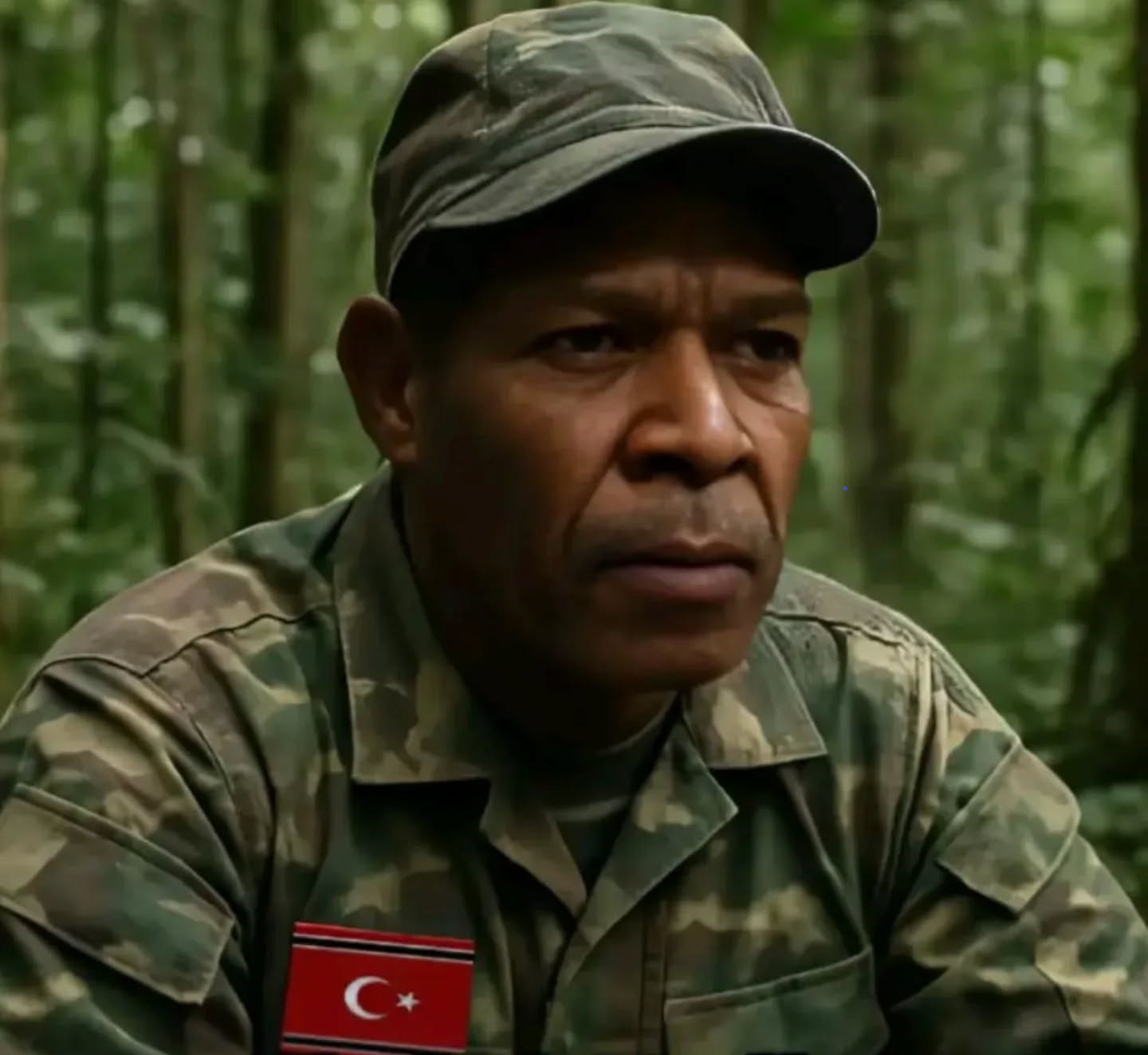
People in Papua who know Abdul Halim tend to pause before explaining who he is.
Some call him “Brother Yan (Bang Yan)”. Others prefer “Ayah Papua (Father of Papua).” The name matters less than the path behind it. The Abdul Halim Papua peace story begins in a family tied to the Free Papua Movement (OPM), runs through years of fighting in Aceh with the Free Aceh Movement (GAM), and circles back to Papua with a message that sounds almost out of place: stop the violence and try talking.
He did not start there.
He was born into a cause rather than choosing it.
A Childhood Close to OPM
Halim was born in Manokwari, Papua Barat (West Papua) on July 21, 1950. Halim, son of Pieter Bonsapia, is one of the founders of the OPM. Halim grew up around people who spoke about independence as if it were a daily concern.
In his family, the OPM was not an abstract idea. It was present in conversations, in decisions, in how people positioned themselves in a tense environment. His father spent much of his time fighting for Papuan independence from Vanuatu since 1974.
For a child, that kind of atmosphere does not feel political. It feels normal.
Looking back, he has said it shaped how he understood loyalty and struggle long before he had the words for either.
When Belief Turns Into Action
That early exposure did not stay theoretical.
As he grew older, the line between belief and action narrowed. The idea that change might come through confrontation became something he was willing to follow, even if it meant leaving home.
A Different Conflict, Same Questions
Moving From Papua to Aceh
After graduating from high school in Sorong, Papua Barat, Halim continued his education at the Surabaya Maritime Academy and the Government Science Institute (IIP) in Jakarta, each of which lasted only two years. He then continued his education at the Semarang Maritime Polytechnic, earning a bachelor’s degree. With this background, he continued his studies in well control at the University of Austin, Texas, USA.
In 1979, Halim moved to South Tapanuli, Sumatera Utara (North Sumatera) to work for Continental Oil Company (Conoco) as an offshore oil drilling technician and married an Acehnese woman, Rosdiana Juned.
In 1980, the oil drilling company Medco, part of Mobil Oil, contracted Halim and assigned him to the East Aceh region. From there, Halim began to interact with Free Aceh Movement (GAM) activists and became interested in the separatist movement in Aceh. He then officially joined GAM in 1986 as a communications officer (radio), although he remained an active Medco employee.
In 1989, Halim had to flee to Malaysia due to the establishment of a Military Operations Area (DOM) in Aceh. After the DOM status was lifted, he resumed active military operations under the command of Analfiah Julok.
Since then, he has experienced various heroic stories. As a Papuan fighter, he rarely saw his family, choosing to fight alongside the Free Aceh Movement (GAM) in the jungles of Aceh and Sumatra, including Kerinci Mount in Jambi. The situation of Aceh became even more desperate when the Indonesian government reimposed a military operations emergency status in 2003. Two of his seven children were also active members of GAM.
Life in the Field
There is no easy way to describe that period.
Days were uncertain. Movement was cautious. The forest was not just a place; it was a way of living. What he experienced there was not the idea of conflict but its reality.
And reality, over time, tends to reshape belief.
The Moment Things Began to Shift
The Tsunami and the End of War in Aceh
Halim was among the first to suffer when the tsunami struck Aceh on December 26, 2004, claiming the lives of over 200,000 people. Despite his status as a fugitive from security forces, Halim worked tirelessly to recover bodies scattered around Banda Aceh and Aceh Besar.
The shared interest of the Indonesian government and the Free Aceh Movement (GAM) in restoring and rebuilding Aceh after the tsunami opened peace negotiations between the two parties, resulting in the Helsinki Agreement, signed in Helsinki, Finland, on August 16, 2005.
Through the Helsinki Peace Agreement, years of conflict came to an end, and Aceh has got special autonomy status, like Papua. It did not happen overnight, but the shift was clear.
Weapons were no longer the center of daily life.
People began to return to ordinary routines.

Seeing Peace Up Close
For Halim, the peace was not something he read about.
He saw it.
Markets reopened. Travel became easier. Conversations changed tone. The tension that had defined everyday life started to ease, even if slowly.
He has described this period not as perfect, but as different enough to matter.
That difference stayed with him.
Returning With a Changed View
A Message That Comes From Experience
When Halim speaks about dialogue now, it does not sound theoretical.
It comes from comparison.
He has seen what conflict looks like over time, and he has seen what happens when it ends. That contrast shapes his argument.
He often points to Aceh, not as a template, but as proof that change is possible.
Speaking to Those Still in Conflict
His message is directed, in part, toward groups connected to OPM.
He encourages them to consider a path that moves away from armed struggle. Not because the issues disappear, but because the method changes to one that emphasizes dialogue and peaceful resolution rather than violence, which can lead to more sustainable and constructive outcomes for all parties involved.
It is not always a message that is welcomed.
But it is one he continues to repeat.
Between Two Realities
Halim’s life connects two regions that have lived through conflict in different ways.
Papua and Aceh are not identical.
Their histories are not the same.
But both have faced questions about identity, governance, and belonging.
His experience sits somewhere between those realities.
Papua Today, Still Searching for Balance
Papua remains complex.
There are areas where security concerns continue.
There are also places where development is moving forward, sometimes quietly. Roads are built. Services expand. Economic programs begin to take shape.
The picture is not uniform.
It rarely is.
Why Stories Like This Keep Circulating
Not a Solution, But a Reference
Halim’s story is not presented as a final answer.
It is a reference point.
Halim’s story serves as a reminder that trajectories can change, even after years of conflict, highlighting the potential for reconciliation and new beginnings in the aftermath of turmoil.
Dialogue as an Ongoing Conversation
The idea of dialogue has been raised before in Papua.
Sometimes formally, sometimes informally.
What makes Halim’s perspective different is that it comes from someone who has lived through both sides.
That does not resolve the debate.
But it adds weight to it.
Looking Ahead
It is difficult to predict how Papua’s situation will evolve.
Change rarely follows a linear trajectory.
But conversations about alternatives continue.
Some are quiet.
Some are public.
All of them contribute, in small ways, to how the future is shaped.
Conclusion
The Abdul Halim Papua peace story does not offer a simple narrative.
It moves through conflict, across regions, and into something more reflective.
In Papua, where perspectives differ, that kind of story does not settle debates, as it highlights the complexity of the issues at hand and the varying viewpoints of the communities involved.
But it stays with people.
Because it suggests that even in places defined by tension, direction is not fixed.
It can change.
Sometimes slowly.
Sometimes unexpectedly.

