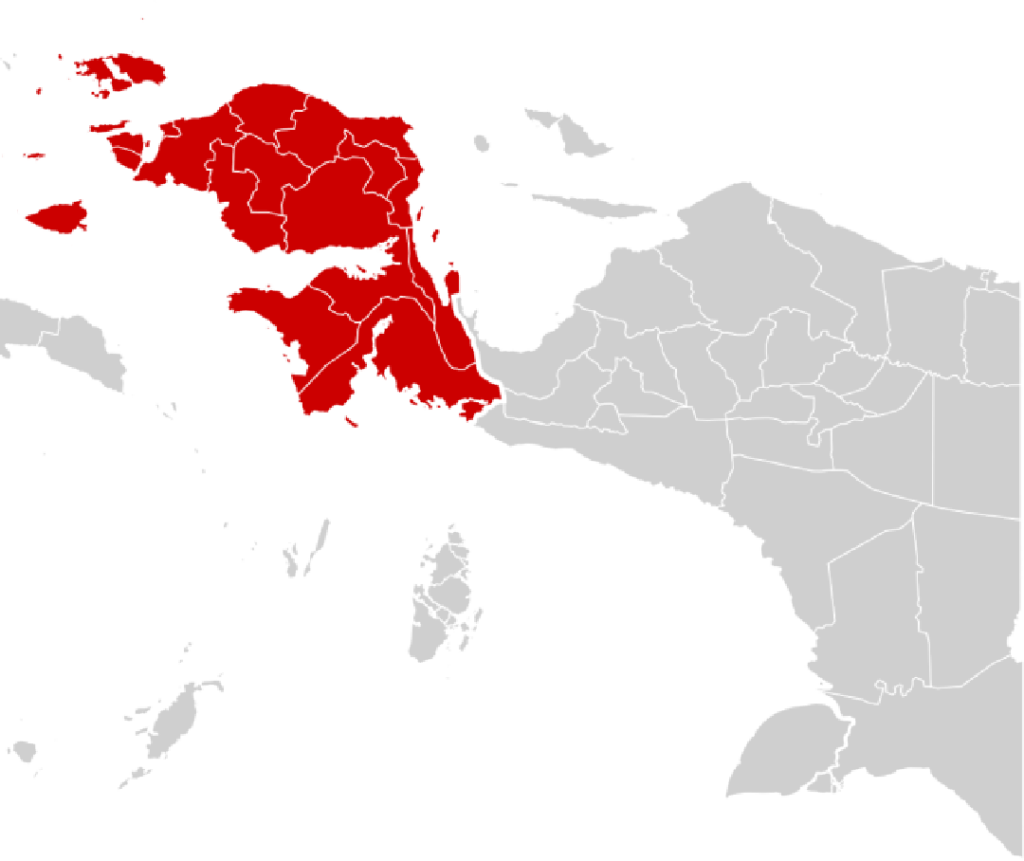
The road to Jokbu Village is narrow and quiet. It goes through thick forest and low hills in Tambrauw Regency. Most of the time, the trip goes without a hitch. Motorcycles go by every now and then, usually carrying villagers, traders, or health workers who are going from one community to another.
People who live in this remote part of Papua Barat Daya (Southwest Papua) Province are often happy to see medical staff arrive. There aren’t many resources in the area, and the clinics are small. But having nurses and hospital staff nearby makes it easier for people in villages that are far from major hospitals to get basic medical care.
Early Monday morning, that sense of routine was broken.
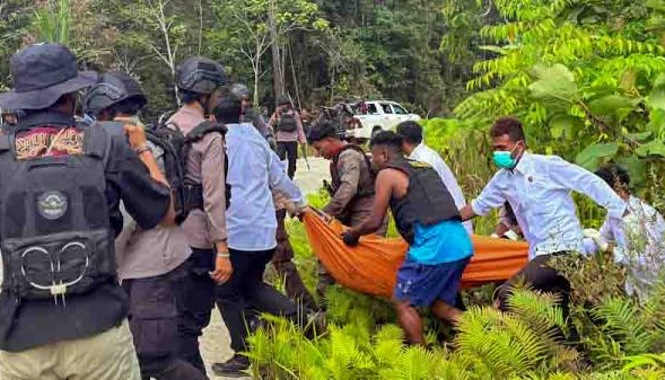
Four health workers were attacked out of the blue by armed men thought to be connected to the TPNPB OPM armed group while they were on their way through Jokbu Village. Two of the medical staff had died by the time the violence stopped. Two other people lived but were hurt.
The attack has made the people in the area sad and worried about the future of healthcare in some of Papua’s most remote areas.
A Journey That Never Reached Its Destination
Early reports from local authorities and witnesses say that the four victims were riding their motorcycles along a rural road near Jokbu Village when they came across a group of armed men.
Health workers often use this road to get from one village to another to help people with their health. These trips are a normal part of work in remote areas like Tambrauw.
But this trip ended badly.
Witnesses said that the group was attacked and confronted on the side of the road. Two of the health workers died on the spot. Two other people were able to live, even though they were hurt.
Officials are still trying to figure out exactly what happened in what order.
Reports say that the victims were workers for a regional hospital who were doing their jobs in the area.
Many people in the area were shocked by the news.
Shock and Grief in the Community
There aren’t a lot of people living in Tambrauw. There are communities in the hills and on the coast that are covered in trees. People in many villages know each other’s names.
Health workers often become well-known because they go to the same places to treat patients, help mothers during childbirth, and give children vaccinations.
As word of the attack spread, people in the area got together to talk about what had happened.
Some villagers couldn’t believe that people who came to help with health care could be attacked.
One person who lived nearby said, “These are people who help the community,” when asked about what happened. “They are not involved in any conflict.”
The loss was personal for families who had relied on the victims for medical help.
The Fragile State of Healthcare in Remote Papua
In many parts of Papua, healthcare services work under conditions that would be hard to do in most places.
There are often long distances between villages. Some places can only be reached by small boats or roads that become muddy and hard to drive on after a lot of rain.
There aren’t many medical facilities, and in many districts, there are only a few trained professionals who can serve large areas.
Because of this, health workers often go from one village to another to give care.
They check on pregnant women, give out medicine, and treat common illnesses like malaria and respiratory infections.
Attacks on these workers can have effects that go beyond the immediate tragedy.
Communities may suddenly find that no one can give them basic medical care.
Growing Fear Among Medical Personnel
The attack has also made healthcare workers in the area less sure of themselves.
A lot of doctors and nurses who work in remote areas already know that living conditions can be hard.
But the threat of violence makes things harder in a different way.
Some healthcare workers say they are worried about traveling through remote areas where security is still not clear.
If those fears get worse, fewer professionals may want to work in remote areas.
Local leaders and officials are worried about that possibility.
In areas where medical services are already hard to come by, losing even a few health workers could have serious effects.
Community Leaders Condemn the Violence
Community leaders all over Papua Barat Daya have strongly condemned the attack.
After the event, the head of the regional interethnic community forum spoke out, asking all sides in the conflict to respect the work of healthcare workers.
He said that violence against medical workers hurts whole communities.
He said, “Health workers help everyone.” When they are attacked, the victims are not the only ones who get hurt. Everyone in the community loses access to care.
Other leaders said the same thing.
They said that if these kinds of things keep happening, rural areas could run out of healthcare services very quickly.
Calls for Protection of Public Service Workers
After the attack, local leaders and groups that keep an eye on things also said they were worried about security in Tambrauw.
Representatives from the regional Ombudsman office stressed that keeping public service workers safe is very important for government services to work properly.
Teachers, health care workers, and other professionals who work in remote areas often have to drive on roads that are not well traveled.
If communities want to keep getting education, healthcare, and other basic services, they need to make sure their safety.
A Pattern of Violence
The violence in Jokbu Village is not the first time that violence has been reported in Papua’s remote areas.
Recently, armed groups in the area have attacked a number of places.
Some of the events have hurt civilians or infrastructure projects. Some have messed up the transportation routes that local people use.
Every incident makes communities that are already geographically isolated and short on resources feel even more uncertain.
Remembering Those Who Served
As the police look into the case, people are starting to think about the victims.
The two health workers who died were more than just workers for the communities they served.
They were caregivers who traveled long distances between villages every day, often in bad weather, to help others.
Colleagues say that the victims were dedicated to their work and to helping communities that depend on medical staff.
Their deaths have left a lasting gap.
The Risk of a Healthcare Crisis
Leaders in Papua’s communities are now worried that repeated attacks could cause a bigger healthcare crisis in some areas.
Clinics could be short-staffed if health workers don’t feel safe going to remote areas.
Pregnant women may have a hard time getting help during labor. Kids might not get their regular shots. If there isn’t a doctor nearby, treatable illnesses could quickly become life-threatening.
These risks are very worrying for communities that already live far from big hospitals.
Searching for a Way Forward
Officials have said they will look into what happened and make the area safer.
But the bigger question still stands for many people who live there.
How can basic services keep going in places where violence sometimes gets in the way of everyday life?
The answer is important for the safety and survival of the people of Tambrauw.
They are sad about the deaths of two health workers who came to help their communities, but they also hope that this tragedy will serve as a lesson.
Medical professionals should never be targets.
They are the ones who bring care, healing, and hope to places where those things are often hard to find.