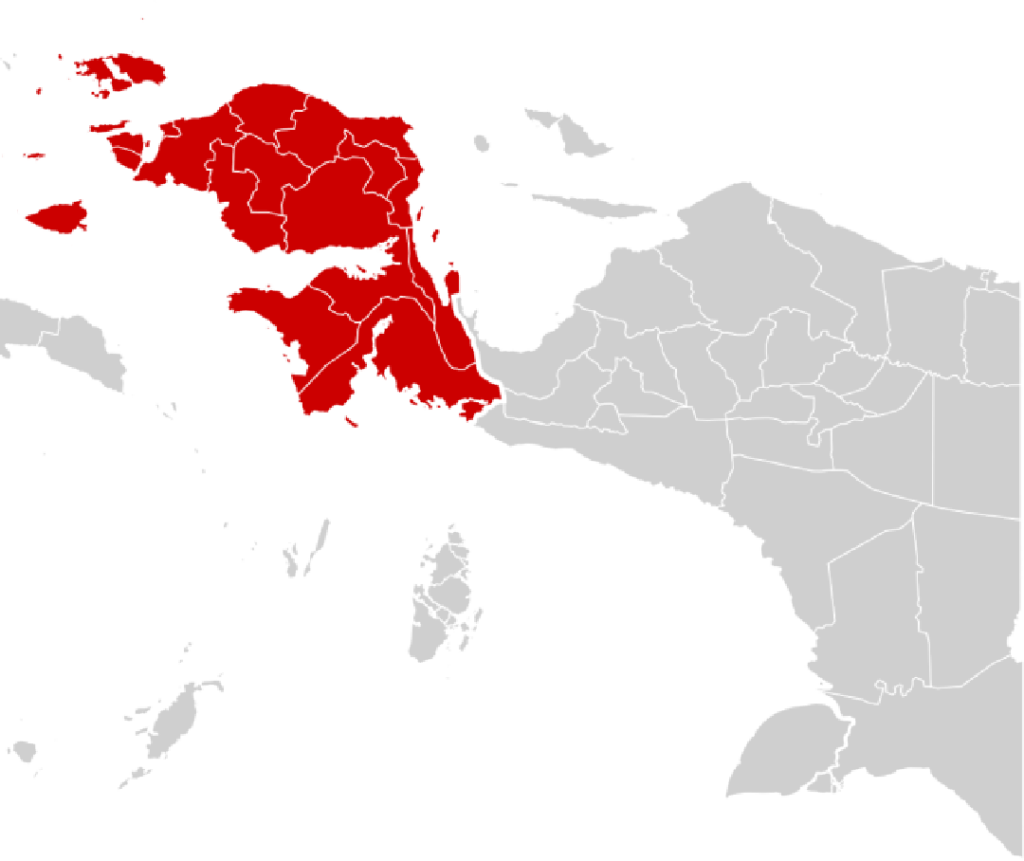
In the faraway river villages of Mappi Regency in Papua Selatan (South Papua), night used to come on suddenly. As the sun set behind the thick forests and wide wetlands that make up this area, homes, schools, and small community centers quickly fell into darkness.
For years, many people used kerosene lamps or small diesel generators that only worked for a few hours. The village went dark and quiet when the generators stopped. Kids hurried to finish their homework before the lights went out. The owners of the stores closed early. Quickly, community events came to an end.
People could not count on electricity.
Today, a new program from the Papua Selatan Provincial Government is slowly bringing about change. Authorities are trying to make it easier for people in remote areas of Mappi Regency to get electricity through a program called Kampung Terang, which means “Bright Village.”
For villagers who have lived with a limited power supply for decades, the program means more than just new infrastructure. It gives people hope for a better life.
A Region Where Darkness Has Long Defined the Night
Papua’s Mappi Regency is in one of the most remote areas of the country. Winding rivers, huge swamp forests, and villages that are often far apart by long boat rides shape the area.
Navigating through the area can be challenging on its own. Only small boats, cutting through dense jungle, can reach many communities. There aren’t many roads, and the distance between villages can be big.
These conditions make it difficult to build infrastructure.
In places like Mappi, it is not simple to build electricity networks that are common in cities. Many villages relied on diesel generators from local governments or community groups for years. Because fuel was expensive and difficult to move, these generators usually only worked for a few hours each night.
The village went back to being dark as soon as the generator stopped.
Lack of electricity impacted almost every part of life. Refrigerators couldn’t store food or medicine properly without power. Schools were unable to use computers or other digital learning tools. After dark, small businesses didn’t have many chances to stay open.
People in the area had gotten used to these limits, but they often talked about how they wanted things to change, expressing a desire for better access to technology and more opportunities for local businesses.
When Residents Spoke Out
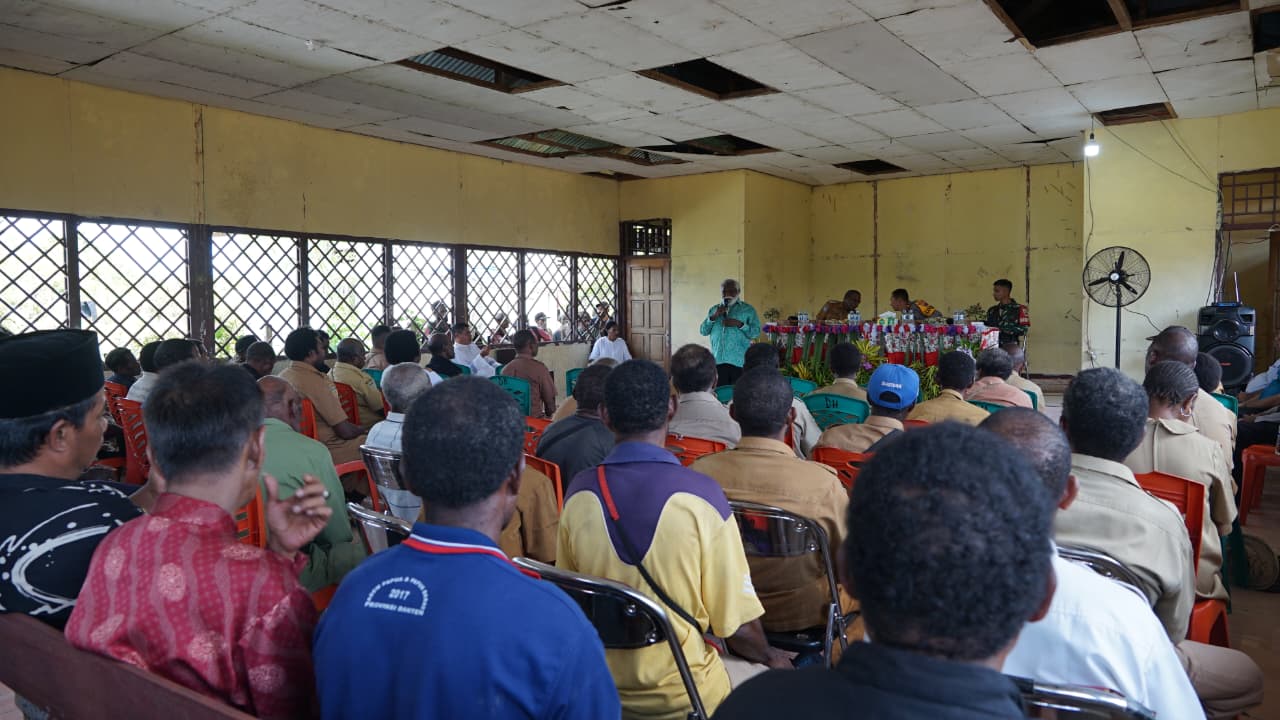
When Papua Selatan Deputy Governor Paskalis Imadawa visited villages in Mappi, the people there freely talked about their worries about life in the area.
People from the village of Haju got together to talk to the deputy governor in person. Their stories illustrated the challenges of living in a remote area with limited basic infrastructure.
A lot of people talked about how hard it was to go to school and get around. But one problem kept coming up in the conversation: electricity.
People in the village said that having reliable power would change the way they live. Kids would be able to stay up later to study. With the right lighting, families might feel safer. Small businesses could stay open after dark.
The message was clear for local leaders. Obtaining electricity was a crucial task in many rural areas.
That talk made it even more clear how important it is to grow the Kampung Terang program.
The Bright Village Program’s Purpose
The Papua Selatan Provincial Government came up with the Bright Village program to meet one of the most basic but important needs in rural development, electricity.
The program doesn’t just focus on big infrastructure projects; it also works to make it easier for people in villages that used to have very little power to get electricity, such as by providing affordable solar panels or improving local energy distribution systems.
In real life, the goal of the project is to make sure that people can use electricity for longer periods of time every night.
The goal may seem simple, but it can have a big effect.
Electricity is important for learning, health care, communication, and making money. It also makes things safer, such as improving lighting in public spaces and reducing crime, and makes life better in the community by enabling access to essential services and technologies.
Expanding access to electricity is an important step for Papua Selatan policymakers to take to close the development gaps between rural and urban areas.
Early Changes in Villages Across Mappi
Some villages in Mappi Regency are already feeling the effects of the Bright Village program.
People say that electricity is now available for longer periods of time than it was in the past. In some places, lights stay on late into the night instead of turning off early.
You can see the difference right away.
As families get together in the evenings, houses stay lit up. Kids study at little tables with brighter lights. Stores stay open longer to serve neighbors who come by after dark.
These changes are big for villagers who have lived with short electricity schedules for years.
Light at night also makes people feel safe. People coming home after dark now feel more at home on streets and paths that used to be dark.
A New Opportunity for Education
One of the most obvious effects of better access to electricity is on education.
Students in many parts of rural Papua have many problems when it comes to learning. It can be challenging to get an education when there aren’t enough facilities, teaching materials, or people nearby.
Electricity can’t fix all of these problems, but it does help get rid of one big one.
Kids can study more after school if their homes have adequate lighting. Teachers can use electronic devices to plan their lessons. Schools can start using digital learning tools that need power, such as tablets and interactive whiteboards, to enhance the learning experience for students.
Parents often talk about how important education is for their kids’ future.
With electricity available for longer periods, the way becomes a little clearer for schools to effectively implement digital learning tools and enhance educational opportunities for students.
Supporting Local Businesses
Electricity also makes it possible for new types of economic activity to happen in the area.
Businesses in villages with limited power often have trouble running smoothly. Food vendors can’t keep ingredients without a fridge. After dark, small stores can’t stay open. It is not simple for fishermen to keep their catch.
These limits are effecting both household incomes and economic growth.
Many small business owners see chances to grow their businesses now that they have more access to electricity.
Food stalls can stay open longer. It is now possible to make ice for storing fish. In some places, charging mobile phones can be a way to make money, especially in rural areas where access to electricity is limited and people are willing to pay for this service.
These changes may not seem like much at first, but they can slowly make local economies stronger by providing essential services and opportunities that enhance livelihoods and promote sustainable development.
Even small increases in income can make a big difference in the quality of life for families in rural Papua.
Electricity and Health Services
Healthcare services also need reliable electricity.
Village health clinics need electricity to run medical equipment and keep vaccines and medicines cold.
Health workers have to find other ways to get power in places where it isn’t always available, and these are usually less reliable, such as using generators or solar panels, which may not provide consistent energy supply.
Better access to electricity makes clinics work better. Medical staff can safely use equipment and store important medicines correctly.
This improvement can ensure the availability of basic healthcare services during critical times in remote communities.
A Long Way to Go
The Bright Village program has already shown promising results, but making electricity available to more people in Papua is still a difficult task.
The geography of the area still makes things hard. Some villages are far away from existing infrastructure and need new ways to get energy, such as innovative microgrid systems or off-grid renewable energy solutions that can be implemented locally.
Along with traditional generators, policymakers are looking into the possibility of using renewable energy systems like solar power to help communities that are cut off from the rest of the world.
Sustainable energy solutions could help lower the cost of moving fuel while making sure that the electricity supply is always available.
The program will only work if government agencies, local communities, and energy providers keep working together to develop and implement effective renewable energy solutions that meet the specific needs of these isolated communities.
Lighting the Way Ahead
As night falls again over Mappi’s rivers and forests, the glow of electric lights spreads through several villages that used to be quiet in the dark.
Families come together under brighter lights. The ticking clock of a generator didn’t bother the kids as they read their schoolbooks. Businesses still serve customers long after the sun goes down.
These everyday scenes show how quietly infrastructure development can change communities that need it the most.
The Bright Village project is more than just a technical one for the Papua Selatan Provincial Government. It shows a promise to make sure that development reaches even the most remote parts of the province.
In Papua, where geography has long affected the pace of daily life, getting electricity is becoming a sign of connection to a bigger future.
And in Mappi’s villages, just having light is starting to show new possibilities, such as enabling children to study after dark and allowing local businesses to operate longer hours.