
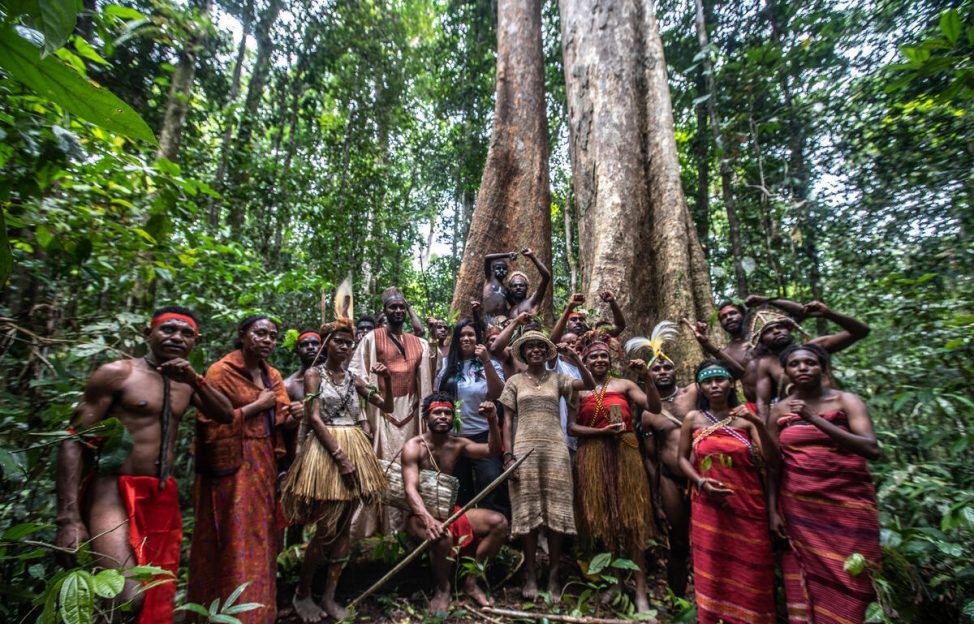
In the early morning hours, mist slowly rises from the tops of the trees in the forests of Papua Barat (West Papua). Birds sing from tall merbau trees, and narrow footpaths follow paths that have been used for generations. For the native people of Papua, these forests are not just empty spaces. They are where they live, where they come from, and where they work.
These forests have also become the focus of a growing political and environmental effort in recent years. The Papua Barat Provincial Government, along with indigenous communities and civil society groups, is doing real things to protect customary forests, which are called hutan adat in the area. People are starting to realize that forest conservation in Papua won’t work without the leadership and agreement of the people who have lived on and managed these lands for hundreds of years.
Papua Barat’s approach is becoming a model for putting indigenous rights at the center of environmental protection as many countries deal with climate change, loss of biodiversity, and land use conflicts.
Forests That Make Us Who We Are
Papua’s forests are some of the biggest tropical forests that are still in good shape in the Asia Pacific region. They hold a lot of carbon, control the climate in their area, and are home to some of the most diverse plants and animals in the world. But for the native Papuans, the forest is worth more than just its ecological value.
Traditional law governs customary forests. They are separated by clan borders, holy places, hunting grounds, and places set aside for future generations. People learn when to harvest, where to hunt, and which areas must stay untouched by talking about it and doing it every day.
The government is now aware of this connection between people and the forest. The Ministry of Forestry in Indonesia announced on October 24, 2025, that more than 345,000 hectares of customary forest would be set aside for 164 indigenous communities across the country. This choice was one of the most important legal acknowledgments of indigenous land rights in Indonesia’s history.
Papua Barat is an important part of this larger movement.
Leadership in Papua Barat’s Provinces
The Papua Barat Provincial Government has made it clear to the public that protecting customary forests is a top priority for development. Officials in the province have made it clear that any release of forest land for industrial or plantation use must be done with the free and informed consent of the indigenous communities.
Leaders from the provinces said again in early January 2026 that they would not allow forest land to be turned into oil palm or other commercial activities unless there was clear agreement from the people who own the land. This position is different from how things used to be done, when decisions were often made without real community input.
The provincial government does not see protecting traditional forests as a barrier to growth. Instead, it is seen as a way to support long-term economic growth that respects cultural identity and the limits of the environment.
Putting Fund Into Customary Forests
Just saying what you want to do isn’t enough. The Papua Barat Forestry Agency has set aside money to help develop and manage customary forests because they know how important they are.
The agency set aside about one billion rupiah in 2026 to improve the management of indigenous forests. The money is meant to help with mapping projects, getting legal recognition, and community-based forest management programs.
These resources help native groups write down their traditional borders, make legal submissions, and come up with management plans that protect the environment while still allowing for sustainable use. For a lot of communities, this kind of help is very important. It can be hard to get through complicated bureaucratic processes without it.
Officials say the money is also meant to help communities become more self-sufficient economically by letting them look into ways to make money, like non-timber forest products, agroforestry, and ecotourism.
Communities are at the Heart of Conservation
Indigenous groups in Papua Barat are not just sitting around and waiting for policy changes. A lot of people have already taken steps to get their customary forests legally recognized.
The Knasaimos community in Sorong Regency is a well-known example. They have officially asked the Ministry of Forestry to recognize their customary forest. With help from civil society groups, the community mapped out its land, wrote down its traditional laws, and showed that they had been taking care of the forest for a long time.
For the leaders of Knasaimos, recognition means more than just land titles. It is about keeping the forest safe from outside forces and making sure that future generations get an ecosystem that is still in good shape.
During a public meeting, one member of the community said, “We have always protected this forest.” “Legal recognition helps make sure that outsiders can’t take it without our permission.”
Young People and the Future of Protecting Forests
A growing group of young people from Papua’s indigenous communities is also helping to protect the forests. Young leaders from different tribes have started to organize and strengthen networks to make the case for protecting forests stronger.
These youth groups use both old and new ways of doing things. They use GPS mapping, social media, and legal training to help people make claims about their traditional forests and raise awareness about threats to the environment. At the same time, they stay true to the values that elders have taught them.
For a lot of young Papuans, protecting their identity and the forest are the same thing. If we lost the forest, we would also lose language, rituals, and social structure.
Youth activists say that their job is to make sure that things keep going. Elders have knowledge that has been passed down through generations, but young people need to learn how to protect that knowledge in a world that is always changing.
Customary Forests and Other Ways to Make Money
One of the main reasons people support protecting customary forests is that it can help people make a living in a way that is good for the environment. People in Papua Barat are looking into economic models that rely on conservation instead of cutting down trees.
One example of this is ecotourism. In some parts of Papua, native groups have started small ecotourism projects that show off the forests, animals, and cultural traditions of the area. These projects make money while also showing how important healthy ecosystems are.
Local people lead visitors through the woods and tell them about medicinal plants, hunting customs, and rules for protecting the environment. The experience gives people a reason to protect the forest instead of using it.
Provincial officials think that ecotourism is a good business that fits with Papua’s identity as a place that protects the environment. It isn’t a solution for everyone, but it is an option for extractive industries that often hurt the environment and cause social problems.
The Question About Palm Oil
Palm oil is still one of the most controversial issues in Papua’s forests. In the past, the growth of plantations has led to deforestation in many parts of Indonesia. Papua has become a more popular place for new development to happen.
The government of Papua Barat has been careful. Officials have said that releasing forest land for palm oil development must get the approval of the people who live there and follow environmental rules.
This policy shows that more and more people are aware that unchecked plantation growth can hurt long-term development by harming ecosystems, disrupting traditional land tenure, and causing social unrest.
Environmental groups like this position, but they warn that it needs to be enforced strongly. All levels of government must be open about their decisions and be held accountable for them, just like they are on paper.
Advocacy for the environment and civil society
Non-governmental organizations are very important for helping to protect forests in the traditional way. Groups like Greenpeace Indonesia have written about how industrial projects threaten indigenous forest claims and have made community voices heard on a national and international level.
These groups offer legal help, technical know-how, and places to speak out. They also help link local issues in Papua to global talks about climate change and the rights of indigenous people.
International attention has made it more important for governments and businesses to respect people’s rights to their land. For Papua, this attention shows how important it is for local leaders to be involved in conservation efforts.
Climate Commitments and Customary Forests
Indonesia has promised to cut down on greenhouse gas emissions and protect biodiversity. Papua’s customary forests are very important for reaching these goals.
Research consistently indicates that forests overseen by indigenous communities frequently exhibit reduced deforestation rates compared to state- or privately managed lands. Recognizing customary forests thus harmonizes environmental goals with social equity.
Papua Barat’s approach shows that protecting the environment doesn’t have to hurt the lives of native people. It can make them stronger instead.
Difficulties Ahead
There are still problems, even though things are getting better. It can take a long time for legal recognition to happen. Overlapping land claims, unclear boundaries, and red tape continue to make implementation more difficult.
There is also the chance that political commitment could weaken because of economic pressures. Prices of goods change, and the need for land can grow.
Community leaders stress the need for caution. The fight isn’t over just because the law recognizes it. It must be followed by consistent enforcement and ongoing support for community management.
A Duty to Share
What is happening in Papua Barat is not just a story for that area. It is part of a bigger global discussion about how to balance development, conservation, and the rights of indigenous people.
Papua Barat is saying that environmental protection works best when it is based on local knowledge and authority by making customary forests the focus of policy.
The partnership between the provincial government and indigenous communities shows that everyone is responsible. The government gives people the tools and rules they need to do things legally. Communities offer stewardship, knowledge, and continuity.
Looking Ahead
The trees’ shadows stand out against the orange sky as the sun sets over Papua’s forests. These forests have lasted for hundreds of years because people who needed them took care of them.
Law, policy, and group action are all helping to keep that protection strong today.
The Papua Barat Provincial Government and indigenous communities’ efforts to protect traditional forests show that conservation can be both moral and useful. It can honor family ties while also dealing with problems in the present.
The story of Papua Barat’s customary forests teaches us a lot about how to solve the environmental crisis. The first step to protecting nature is to respect the rights and wisdom of the people who live there.

