
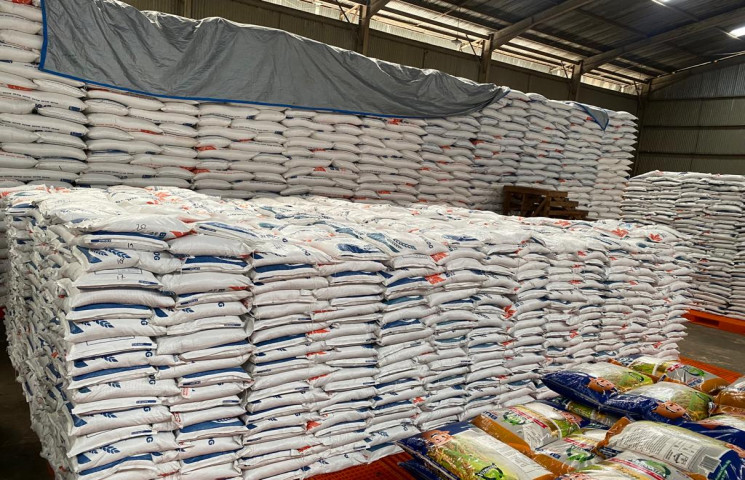
As December 2025 approaches, families across Papua prepare not only for holiday gatherings and festive celebrations but also for one of the most basic necessities: rice. In a vast region defined by remote villages, archipelagic geography, and logistical challenges, ensuring a stable supply of staple food is no small task. For communities from coastal settlements to highland districts, certainty in rice availability can mean the difference between a peaceful holiday and hardship.
At the center of that effort is BULOG—the state-owned logistics agency responsible for national food supply and price stabilization. For Papua, its mission takes on special urgency: to make sure that the year-end holidays—from Christmas through New Year—are not disrupted by scarcity, price spikes, or distribution bottlenecks.
A Record Reserve—24,158 Tons Ready for Papua
According to the regional office of BULOG in Papua, the agency has secured a rice reserve of 24,158 tons across the Tanah Papua area in preparation for Christmas 2025.
Among this stock, allocations are spread across the six provinces of Papua: Papua, Papua Pegunungan (Papuan Highland), Papua Tengah (Center Papua), Papua Selatan (South Papua), Papua Barat (West Papua), and Papua Barat Daya (Southwest Papua).
Specifically, for South Papua alone, the allocation stands at 5,945 tons—a figure meant to support households across regencies in that province.
Meanwhile, an additional 5,135 tons are reported to still be in transit, being unloaded from transport ships before distribution.
Given these numbers, BULOG officials say the supply is sufficient to cover needs through Christmas and into early 2026.
This reserve—particularly at a time when demand often surges ahead of major holidays—offers a strong buffer against shortages or price hikes.
A National Picture—Over 3.8 Million Tons in Reserve
Papua’s reserve sits within a much larger national strategy. As of early November 2025, BULOG declared that national rice stocks had reached more than 3.8 million tons—the highest level since the agency’s establishment.
According to BULOG leadership, this stockpile is more than adequate to meet public demand during the Christmas and New Year period.
The agency says it is ready to release rice from its warehouses whenever needed—particularly under government directives aimed at stabilizing market prices and preventing sharp spikes.
In that sense, Papua’s supply is not a standalone effort but part of a coordinated national logistics and supply-stabilization strategy.
Intensifying Distribution: Premium Rice to Indonesia’s East
Recognizing that Papua and other eastern regions of Indonesia often face greater logistical hurdles—from sea transport delays to limited infrastructure—BULOG is intensifying efforts to deliver premium-grade rice ahead of the 2025 year-end holidays.
On 27 November 2025, BULOG announced the first batch of premium rice shipments destined for eastern regions, including Papua, Maluku, and East Nusa Tenggara.
This step reflects both logistical urgency and a commitment to ensure that rice quality and affordability reach remote areas in time.
The shipments signal that BULOG is treating the holiday supply not as a routine distribution but as a critical mobilization—given the increased demand, potential price pressure, and the risk of supply disruption during the festive season.
The Logistical Challenge: Papua’s Geography and Distribution Complexity
Ensuring that those 24,158 tons become actual rice on dinner tables—especially across remote districts—involves overcoming significant logistical obstacles. Papua’s geography is a patchwork of rugged highlands, coastal zones, dense forest, and scattered islands. Many communities rely on sea or river transport; others depend on long, difficult land routes.
For BULOG, that means distributing rice to multiple warehouses across six provinces—a necessary strategy to reach remote regencies and avoid concentration of supply only in urban centers.
The in-transit shipments, the sea-unloaded cargo, and cross-provincial coordination all point to the complexity behind what might look like a simple “stockpile.”
Timing is critical. Arriving too early may risk poor storage conditions—humidity and pests are persistent challenges in Papua. Arriving too late, especially after weeks of rising demand, could expose communities to shortages or inflated prices. BULOG appears aware: the 5,135 tons still being unloaded from the ships aim for phased delivery, suggesting measured, controlled distribution ahead of the peak holiday period.
In earlier years, inadequate storage infrastructure has caused delays, supply bottlenecks, or deterioration in rice quality. To address that systematically, BULOG is running its distribution under the umbrella of its national program—the Stabilisasi Pasokan dan Harga Pangan (SPHP), which pairs supply stabilization with price control and logistical oversight.
Quality and Price Stability—Not Just Quantity
Having enough rice is only part of the challenge. For many in Papua—especially low-income households—accessibility and affordability matter as much. BULOG’s reserve policy thus serves a dual purpose: ensuring volume and safeguarding price stability.
According to BULOG’s national statements, the 3.8-million-ton reserve is maintained under strict storage protocols. Regular quality checks, rotation of stock, fumigation, humidity control, and traceable warehousing help keep the rice in consumable condition.
Moreover, under SPHP, BULOG ensures rice is channeled through subsidized or regulated-price distribution mechanisms—such as government-supported kiosks or “cheap food” programs—to prevent price gouging during peak demand.
For Papua, where logistical costs are higher and markets often less competitive than in Java or urban centers, this price stability can make a real difference. Without such intervention, remote communities might face shortages—or worse, have to accept poor-quality or overpriced rice.
Human Impact: What Supply Means for Communities
Behind every ton of rice, every cargo ship, every warehouse—there are real people: mothers cooking rice for families, elders preparing holiday meals, traders stocking up local kiosks, and children waiting for festive dinners.
For a region like Papua, where many communities are isolated, even minor disruptions in supply can cause real hardship. In the lead-up to Christmas, when demand tends to spike, a stable supply from BULOG carries weight beyond just food: it brings security, dignity, and reassurance.
For many Papuans, this assurance can foster social stability—reducing anxiety ahead of holiday gatherings, enabling families to plan, and helping local economies avoid sudden inflation or scarcity. It signals that, despite distance from the country’s core islands, remote provinces remain part of the national network of care and support.
Risks and Vulnerabilities: Why Vigilance Remains Necessary
Despite the impressive volume of reserves and the robust distribution plan, the risks remain real. Among them:
- Logistical delays: Rough seas, bad weather, or transport disruptions could slow shipments—which in a region like Papua can lead to serious shortages.
- Storage and quality risks: High humidity, pests, or inadequate warehouse maintenance might compromise rice quality over time, especially if stocks linger too long before being distributed.
- Uneven distribution: With dozens of regencies and varied terrain, there is a risk that supply might concentrate in more accessible areas, leaving remote villages underserved.
- Price inflation or hoarding: During holiday demand surges, unscrupulous traders might try to hoard rice to drive up prices—undermining affordability for vulnerable households.
BULOG seems aware of these challenges, as its policies emphasize phased delivery, warehouse oversight, distribution via regulated channels, and cooperation with local governments to ensure supply reaches even remote areas.
However, effective outcomes will require continued monitoring, accountability, and collaboration with local stakeholders—including community leaders, local government, and civil society.
What This Means for Indonesia—Food Security, Unity, and State Responsibility
In a nation as geographically vast and diverse as Indonesia, ensuring food security—especially during critical periods like major holidays—is more than logistics. It is a test of state capacity, governance, social equity, and national solidarity.
With a 3.8-million-ton national reserve and region-specific allocations like Papua’s 24,158-ton buffer, BULOG demonstrates that it is possible to manage supply at scale, even across remote provinces.
The intensification of premium rice shipments to eastern Indonesia—including Papua—suggests a deliberate policy choice to prioritize remote and often marginalized regions, not just population centers. That matters for national unity: it signals that all Indonesians, regardless of region, deserve access to basic necessities.
Furthermore, by combining stockpiling with quality control, regulated distribution, and price stabilization, BULOG’s approach reflects a holistic understanding of food security—one that goes beyond procurement to include distribution equity, market stability, and social welfare.
For Papua, this effort may influence more than just holiday meals. It may shape trust in national institutions, confidence in government support during crises, and the sense of being part of a broader national community.
Looking Ahead: What Needs to Happen After the Holidays
The period ahead—the moments immediately after Christmas and New Year—will be crucial. Once the festive demand subsides, the real test will be whether systems remain active: whether distribution continues, quality is maintained, and remote areas remain supplied.
For sustainability, several steps are important:
- Continued logistics monitoring—ensuring stock rotation, quality control, and timely restocking in warehouses.
- Maintaining transparency and accountability in distribution—local governments, civil society, and communities should be involved in oversight to reduce the risk of uneven distribution or hoarding.
- Engagement with local markets—beyond BULOG-controlled channels, working with local vendors to ensure rice remains accessible and affordable even after holiday stock injections.
- Infrastructure investment—expanding storage facilities, improving transport networks, and building capacity in remote areas to better connect them to the national food supply chain.
Such measures could help ensure that the holiday reserve does not become a one-off surge but part of a durable food security strategy for Papua and other remote regions.
Conclusion
As the festive season approaches, BULOG’s efforts to secure and distribute rice in Papua reflect more than a logistical operation—they represent a commitment to social stability, equity, and national solidarity. With 24,158 tons allocated for Papua and a national stockpile of over 3.8 million tons, the foundation appears strong.
But supply is only the first step. The real work lies in turning those statistics into actual rice on family tables—through careful distribution, price stabilization, quality control, and inclusive access for remote, often marginalized communities.
For many Papuan families, especially those in remote villages, that may mean the difference between a festive season marked by hope and togetherness—or anxiety over scarcity. If BULOG succeeds, this year’s Christmas may bring not just celebration but security—a reminder that in a diverse, sprawling archipelago, no one should be left behind.

