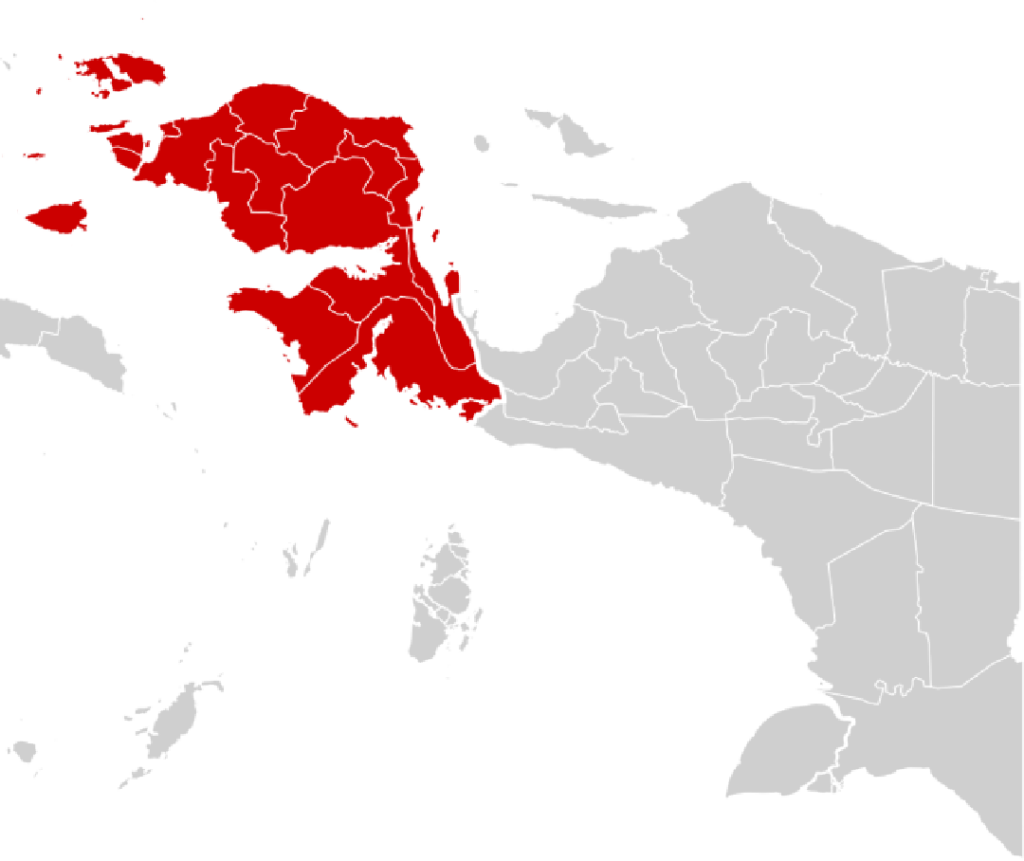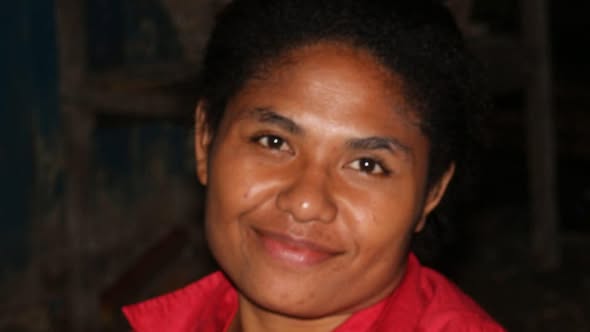
In the early hours of 17 November 2025, a deeply distressing tragedy unfolded in Jayapura, Papua. Irene Sokoy, a 33-year-old pregnant mother from Kampung Hobong, went into labor. Her family rushed her by speedboat and land transport to RSUD Yowari, hoping for a safe delivery. But instead of timely care, they found friction, delay, and heartbreak. Witnesses say Irene labored for hours, her condition deteriorating, with little to no intervention: according to her relatives, there was no obstetrician present, and despite worsening signs, she was referred to another hospital only after prolonged waiting.
Her ordeal did not end there. Referred to RS Dian Harapan, she was allegedly denied admission because wards were full; at RSUD Abepura, family members claim there was chaos, a shortage of doctors, and bureaucratic inaction; at RS Bhayangkara, they were told that only a VIP bed remained and that it required a deposit of Rp 4 million—money they could not afford.
Desperate, they arranged yet another referral to RSUD Dok II, but Irene and her baby tragically passed away during transport, her life ending without delivering the care she so desperately needed.
The narrative of Irene’s death shattered public complacency. What began as a medical emergency turned into a national scandal—not simply because she died, but because her death appeared not to be the result of a biological complication alone, but of a system that failed her at every level.
Political Outcry and Institutional Pressure
News of Irene’s death ignited a wave of political condemnation. Puan Maharani, Speaker of the House of Representatives (DPR), voiced deep sorrow and demanded a thorough evaluation of healthcare services across Indonesia’s 3T (frontier, outermost, and disadvantaged) regions—especially in Papua. “We must not allow such negligence to recur,” she declared, calling on the Ministry of Health and local hospitals to conduct immediate assessments.
President Prabowo Subianto, recognizing the gravity of the crisis, did not stay on the sidelines. Within a day of receiving reports, he instructed Minister of Home Affairs Tito Karnavian to lead a sweeping audit of hospitals in Papua. This audit would not only examine hospitals that allegedly refused Irene but also extend to all public and private health facilities, as well as relevant regulatory bodies at the provincial and district levels.
Tito later revealed that the audit order covers hospital management, the health bureaucracy, and even local legislation. “We will scrutinize what failed—whether capacity, rules, or leadership,” he said.
Meanwhile, Minister of Health Budi Gunadi Sadikin dispatched a specialized technical team—including clinicians and regulatory experts—to Jayapura to investigate on the ground.
The message from the top was unmistakable: this was not just a tragic case but a systemic fault line that demanded concrete action.
Legal Exposure: Potential Criminal Liabilities
From a legal perspective, the case raises extremely serious questions. According to Kemenkes (Ministry of Health) spokesperson Widyawati, if investigations confirm that hospitals denied treatment without medical justification, those institutions may be liable under Indonesia’s Health Law, potentially even facing criminal charges.
This is not just administrative reform; this is accountability for life-and-death negligence.
Parallel to that, Polda Papua (Papua Regional Police) has formed a special investigative team under Kapolda Irjen Patrige Renwarin, led by Irwasda Kombes Jeremias Rontini, to examine the roles and procedures of the hospitals involved—especially standard operating procedures (SOPs), medical decision-making, and whether refusal of service was procedurally justified.
The police have affirmed that their process will be open and transparent and that they intend not merely to assign blame but to understand systemically where service breakdown occurred.
Local Government’s Mea Culpa: Papuan Authorities Under Pressure
Among the most powerful and unsettling responses came from Governor Mathius D. Fakhiri of Papua. In public remarks, he offered a heartfelt apology to Irene’s family, calling the incident “a staggering example of broken health service in our province” and acknowledging a failure of leadership from the top down.
Fakhiri’s contrition came with promises of concrete change: he pledged to evaluate all hospital directors in Papua—especially those whose institutions are under provincial management—and to replace anyone found neglectful or negligent.
He acknowledged that many facilities suffer from broken medical equipment and lack of maintenance, signaling that fatal lapses often stem from resource neglect as well as bureaucratic weakness.
He vowed systemic reform: better coordination between hospitals and health offices, stronger referral mechanisms, and more transparent crisis management. His apology, he said, was not symbolic: it was the beginning of a long and difficult process of rebuilding trust.
Civil Society’s Verdict: Systemic Discrimination and Feminist Critique
Beyond government corridors, civil society and activist groups framed this tragedy in stark moral terms. Many called Irene’s death systemic femicide, pointing to the fact that repeated refusal of medical care—when she was in crisis—could be interpreted as a form of gender-based violence rooted in institutional neglect.
Anindya Restuviani, director of the Jakarta Feminist Program, criticized not just the hospitals but the broader system: “This is a failure not merely of health provision but of how the system views women—and especially marginalized women—in times of desperation.”
The case, she argued, exemplifies how service denial disproportionately affects pregnant women when the health bureaucracy prioritizes bureaucratic or financial concerns over saving lives.
For many in Papua and beyond, Irene’s death has become a clarion call: access to healthcare must be more than a legal right. It must be a lived reality, especially for those in remote or economically disadvantaged regions.
The Audit in Motion: Technical and Regulatory Scrutiny
With both the Ministry of Home Affairs and the Ministry of Health mobilized, a two-pronged audit has begun. First, the regulatory audit: authorities are combing through local laws, health regulations, and standard operating procedures at all levels—from provincial health offices to hospital boards—to identify where policy failures lie. Are hospital referral protocols adequate? Do health facilities have clear guidelines to treat emergency patients regardless of insurance or ability to pay? These are the central questions.
Second, the technical audit: the team sent by the Ministry of Health, reportedly including experts from RSUP Dr. Sardjito, is assessing clinical readiness, staffing levels (especially obstetric specialists), and the functional status of critical medical equipment.
They are verifying whether facilities can meet minimum standards of emergency obstetric care—and whether lives were lost because they did not.
Simultaneously, local health offices in Papua are tasked with compiling detailed information on bed capacity, referral times, ambulance availability, and internal oversight mechanisms. The urgency is clear: this is not merely fact-finding but root-cause analysis. Without systemic reform, officials warn, similar tragedies may happen again.
Challenges to Reform: Deep-Rooted and Structural
Despite the boldness of the response, significant challenges loom. First is capacity. Many hospitals in Papua are chronically understaffed, particularly in specialist areas like obstetrics. Recruiting obstetricians and trained midwives to remote, rural, or underserved regions has long been a challenge. Even if audits demand reforms, scaling up human resources and maintaining them will take time and sustained funding.
Second is accountability. While the governor has promised to replace hospital directors, entrenched institutional cultures and local politics may resist swift change. Hospital performance cannot be fixed overnight—leadership is just one piece of a complex web that must be rewoven.
Third is sustainable infrastructure. Beyond personnel, the audits will likely uncover broken or outdated medical equipment, insufficient beds, and inadequate ambulance networks. Addressing these gaps requires budgetary commitment—not just for a one-off fix, but for long-term maintenance and capacity-building.
Fourth is legal versus practical tension. The legal investigations could bring accountability, but criminalizing healthcare professionals without also investing in training and support risks pushing providers away. Doctors and nurses in Papua already operate under difficult conditions; punitive measures alone will not solve systemic healthcare deficits.
Finally, there’s public trust. For Irene’s family, as for many Papuans, the government’s promises ring hollow unless they translate into real change. If audits drag on or reforms remain superficial, the outrage that exploded around Irene’s death could fade—but the underlying vulnerabilities will remain.
Why This Moment Is Consequential: A Crossroads for Papua’s Health System
Irene’s death is not just a singular tragedy; it has become a national turning point. The government’s forceful response—with presidential orders, multi-institutional audits, and police investigations—underscores that Jakarta recognizes this is more than a local failure. It is a moral crisis, a governance failure, and a test of Indonesia’s commitment to equitable health access.
For Papua, the moment must lead to lasting reform. The path forward will require not just investigation but concrete investment: in people, infrastructure, logistics, and regulatory clarity. Hospital directors must answer for mismanagement, but they must also be supported to rebuild. Health offices must learn from this crisis, but they must also be empowered with resources and accountability mechanisms.
This incident may also reshape how the central government views its role in health in 3T regions. If oversight remains fragmented, tragedies could recur. But if reform is sustained, Irene’s death could become the tragic catalyst that finally forces systemic improvement in Papua’s health system.
Conclusion
The loss of Irene Sokoy and her unborn child is a wound on the national conscience. Her death sparked outrage, grief, and a powerful political response: from Prabowo’s presidential directive to Puan Maharani’s parliamentary pressure to civil society’s demand for justice. But none of these responses will matter if they do not result in durable change.
The audit underway must be more than a symbolic gesture. It must lead to structural reform—more skilled staff, functional infrastructure, reliable referral systems, and a culture of accountability. Authorities must balance punitive measures with systems-level support. Legal accountability is important, but healing the system will need more than courtroom judgments: it will need investment, ongoing oversight, and a sincere commitment to equity in one of Indonesia’s most vulnerable provinces.
In the end, the real test will be whether Irene’s death is remembered as a tragedy that sparked healing—or a tragedy that was simply lamented.