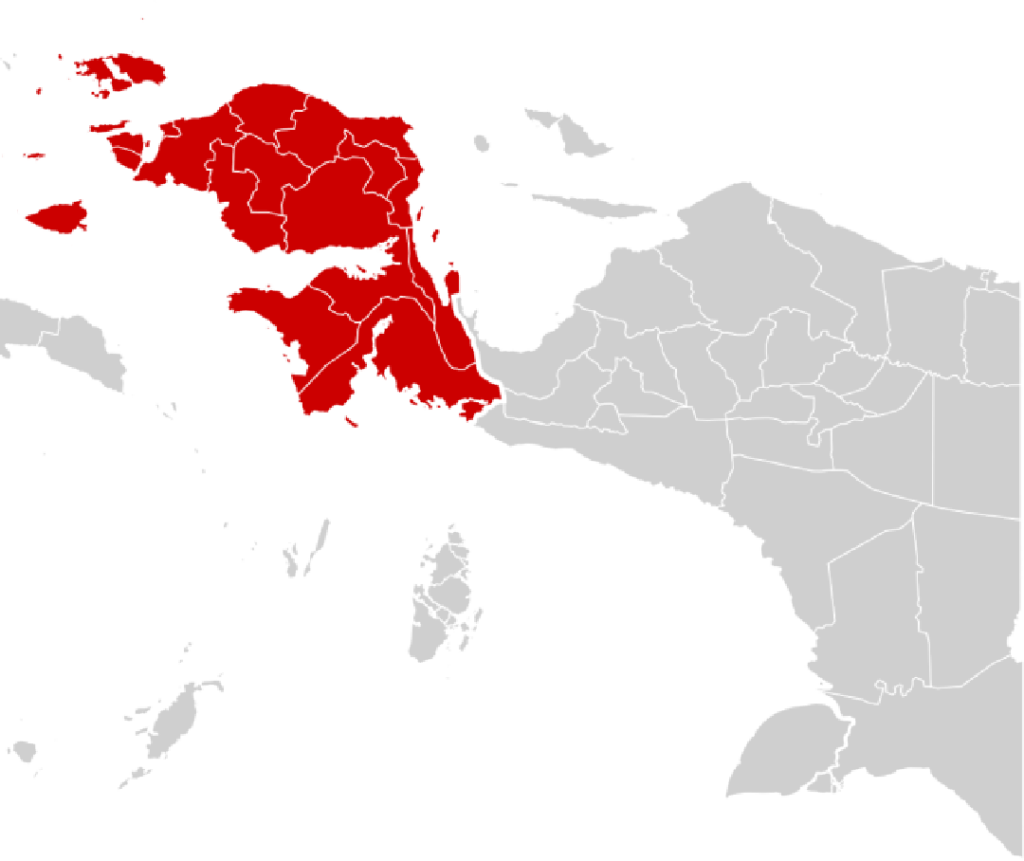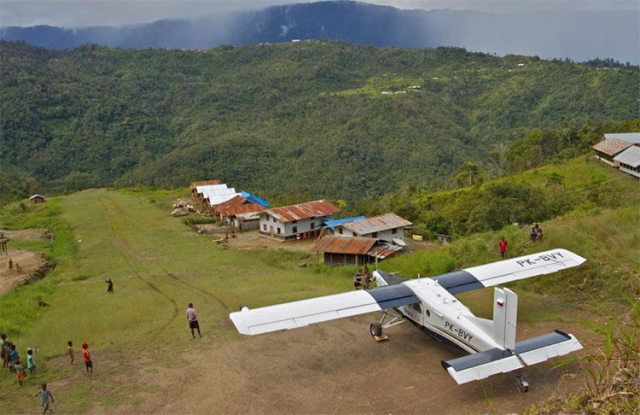
In Papua, aviation is not a luxury—it is forest. The province’s vast mountains, deep valleys, winding rivers, and isolated coastlines create a geography that resists conventional transportation. Roads disappear into cliffs, bridges are washed out by seasonal floods, and entire districts remain unreachable by land. For many communities, the only access to food, medicine, education, and government services comes from the sky. In this landscape, pioneer airports (bandara perintis) function as the arteries that keep remote populations alive. Yet, as Indonesia pushes for equal development, a stark reality emerges: many of these airstrips remain in poor condition, far behind national safety and operational standards.
Recognizing this urgent gap, the Government of Indonesia has launched an extensive initiative to restore, modernize, and expand pioneer airports across Papua. The goal is much larger than improving infrastructure—it is about reshaping mobility, reducing isolation, and building an economy that connects every village, not only those close to major towns. It is a mission to strengthen the state’s presence, build social trust, and create long-term pathways for economic growth in Indonesia’s easternmost region.
The Harsh Reality: Fragile Airstrips Serving as Critical Lifelines
A recent assessment by the Ministry of Transportation reveals that dozens of Papua’s pioneer airports are operationally fragile. According to reporting by Fajar Papua, a number of airstrips are still uncertified, lack proper fencing, and do not meet runway safety standards. Some runways remain made of soil, gravel, or grass—easily damaged by rain and erosion—while others are obstructed by livestock, residents crossing the airfield, or uneven surfaces that pose significant hazards to pilots.
Despite these deficiencies, these airstrips remain the only means of access for many districts. Without them, medical evacuations slow to a crawl, food prices skyrocket due to disrupted supply chains, and children lose the chance to study in regional centers. In places like Yahukimo, Puncak, Mamberamo Raya, and Papua Pegunungan, aviation is the sole thread connecting remote communities to the broader Indonesian social and economic network. The poor condition of pioneer airports thus represents not just an infrastructure problem but a humanitarian challenge that directly affects the safety and welfare of local residents.
Papua’s Unique Aviation Landscape: From Asphalt Runways to Dirt Strips
Papua’s geography has produced one of the world’s most diverse aviation ecosystems. As highlighted by Kumparan, the region contains almost every type of airfield imaginable: large international airports, mid-sized regional terminals, unpaved village runways, and short landing strips carved directly from mountain slopes. Aircraft such as Twin Otters, Pilatus Porters, and Cessna Caravans dominate the Air Papua fleet because they can navigate narrow valleys, unpredictable wind patterns, and extremely short runways.
This aviation diversity reflects Papua’s cultural and environmental complexity. Some airports sit at sea level along the southern marshlands, while others rest more than 2,000 meters above sea level in the highlands. Aircraft serve not only economic purposes but also life-support functions. They deliver vaccines, transport teachers, bring fuel and rice to remote villages, and connect families separated by mountains. In this sense, improving pioneer airports is more than a logistical upgrade—it is a reinforcement of Papua’s social fabric.
Government Commitment: A Large-Scale Plan to Upgrade Pioneer Airports
To address long-standing challenges, the Ministry of Transportation and the Papua provincial government have enacted a comprehensive plan to improve dozens of pioneer airstrips. As reported by Jubi and Tribun Papua, authorities are preparing to upgrade infrastructure in Papua Tengah, Papua Pegunungan, Papua Selatan, and Papua Barat Daya.
The development strategy focuses on several major priorities:
- Modernizing Runway Infrastructure
The government aims to reinforce runway surfaces—converting dirt and gravel into asphalt—while improving drainage systems that prevent erosion and slippery surfaces during heavy rainfall. These upgrades will enhance safety and expand the operational capacity of airstrips to accommodate larger aircraft.
- Implementing Standardized Aviation Safety Systems
Many pioneer airports will be equipped with fencing, wind direction indicators, security personnel, runway lighting, and international-standard markings. Certification processes will be accelerated to ensure airstrips meet proper regulations and reduce operational risks.
- Expanding Access for Regional Aviation
Once runways meet quality standards, the government plans to introduce larger aircraft such as the ATR-42 and ATR-72. These planes carry more passengers and cargo, enabling lower supply costs and improving interregional mobility.
- Strengthening Provincial and Local Coordination
Provincial governments will work closely with regency administrations to develop airport facilities, maintain operational readiness, and ensure long-term sustainability. This cooperation ensures that major upgrades translate into accessible, reliable aviation services.
This integrated approach aims to transform Papuan aviation into a safe, modern, and economically viable transport system capable of supporting long-term regional development.
Local Government Intervention: Subsidies to Keep Remote Routes Alive
Upgrading infrastructure alone cannot ensure stable air connectivity, especially in districts with low population density or limited commercial potential. To guarantee that remote areas remain connected, local governments are allocating large subsidies to sustain pioneer routes. Mimika Regency, for instance, has budgeted Rp 25 billion to maintain flights connecting Timika with Jita, Kokonao, Agimuga, and Tsinga. These subsidies help airlines cover operational costs that ticket sales alone cannot support.
By reducing financial burdens for aviation operators, local governments ensure that crucial routes remain open—even when passenger numbers fluctuate. This intervention represents a practical recognition that air connectivity in Papua must be driven by public service, not commercial profit.
The Economic Ripple Effect: How Better Airports Strengthen Local Economies
Improved pioneer airports will significantly boost regional economic growth. When flights become more reliable, the supply chain stabilizes. Food and fuel prices decrease because cargo transport becomes more efficient. Farmers and the fishing community can send their products to broader markets, enabling them to increase income and participate in interregional trade.
Moreover, improved connectivity encourages micro and small enterprise (MSME) development, tourism growth, job creation for local youth, and greater mobility for education and employment.
Reliable airports also enhance the movement of teachers, healthcare workers, and public officials—helping close the development gap between urban and rural districts. Better-run airports truly serve as engines of inclusive growth.
Strengthening Safety: A Non-Negotiable Priority
The Ministry of Transportation has emphasized that improving safety is the absolute foundation of Papua’s aviation development. The government is introducing stronger oversight mechanisms, more frequent inspections, and mandatory compliance with national aviation standards. Upgrades include runway protection zones, structural reinforcement, emergency response systems, improved airfield lighting, and standardized operational procedures.
These safety measures aim to reduce accident risks, build pilot confidence, and ensure that pioneer flights—often operating in the region’s toughest terrain—remain safe for passengers, crew, and local residents. Safety upgrades also strengthen Indonesia’s broader commitment to international aviation standards.
A Path Toward National Integration and Social Inclusion
Beyond economic and logistical benefits, upgrading Papua’s airports carries profound political and social significance. Reliable air connectivity strengthens national unity and demonstrates the state’s commitment to providing equal access to public services in all regions—including the most remote. Enhanced transportation infrastructure makes it easier for government agencies to deliver health programs, education initiatives, social assistance, and disaster response.
By investing in Papua’s connectivity, Indonesia affirms that development does not stop at coastal cities but extends deep into the mountainous heart of the region. This approach fosters inclusion, reduces inequality, and ensures that remote communities feel seen, heard, and supported.
Challenges That Lie Ahead: Geography, Climate, and Sustainability
Even with strong political commitment, Papua’s unique environment presents numerous challenges. Construction materials must often be flown in, raising costs significantly. Weather patterns—including fog, heavy rainfall, and unpredictable wind currents—frequently disrupt both construction and flight schedules. Maintaining upgraded infrastructure is equally demanding, requiring continuous budget allocation and technical expertise.
These challenges illustrate that Papua’s aviation development must remain adaptable, long-term, and supported by sustained funding. Without consistent maintenance and operational oversight, infrastructure gains could fade quickly.
Conclusion
Indonesia’s effort to modernize Papua’s pioneer airports stands as a historic investment in connectivity, equality, and social transformation. By rebuilding airstrips, enhancing safety, subsidizing routes, and strengthening inter-agency coordination, the government is laying the groundwork for a more integrated and economically vibrant Papua.
These airports are more than concrete and asphalt—they are lifelines. They link villages separated by mountains, carry essential supplies into isolated regions, and open pathways to opportunity for thousands of families. If the current momentum continues, Papua may soon experience a future where no community is too remote, no village too distant, and no horizon unreachable.