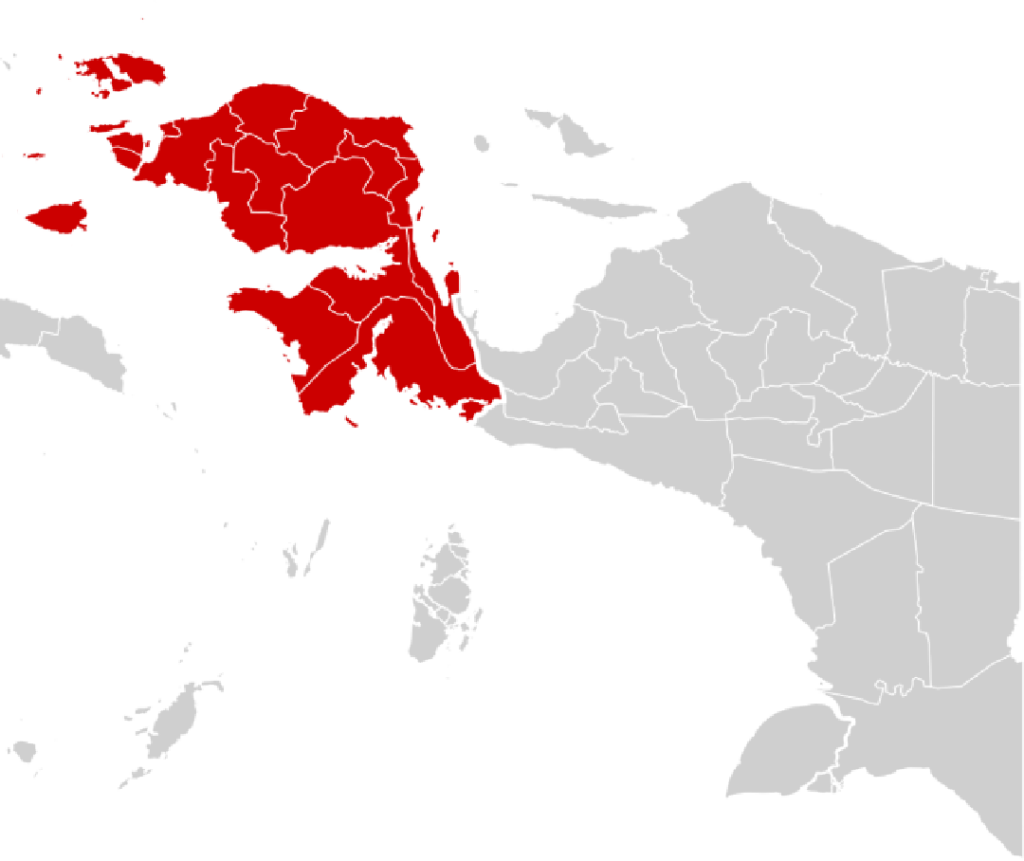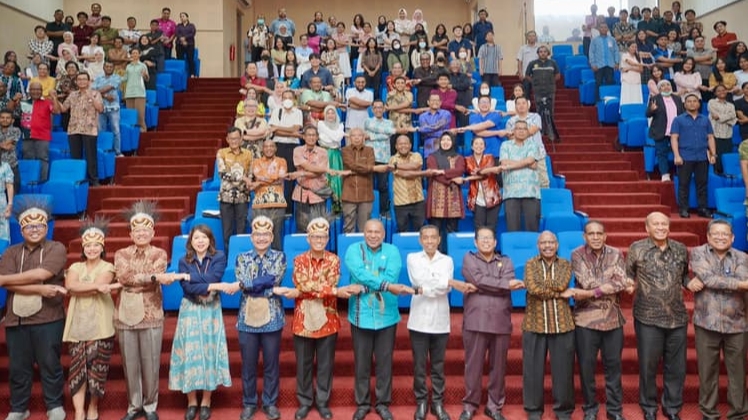
On a warm morning in Jayapura, the campus of Universitas Cenderawasih (Cenderawasih University) felt different.
Students gathered early. Some wore white coats. Others stood quietly beside proud parents who had traveled from distant regencies, some by boat, some by winding mountain roads. There was a sense that something historic was about to happen, though it was not loud or dramatic. It was steady and purposeful.
On February 27, 2026, Universitas Cenderawasih officially launched its first Specialist Medical Education Program in Anesthesiology and Intensive Therapy. For Papua, this was more than an academic milestone. It was a long-awaited answer to a very real problem.
For years, hospitals across Papua have struggled with a shortage of anesthesiologists. Surgeries were postponed. Emergency procedures depended on limited specialist availability. In some cases, patients had to travel outside the province for operations that should have been available locally.
Now, for the first time, young doctors can train as anesthesiology specialists without leaving Papua.
A Silent Crisis in Operating Rooms
Anesthesiologists rarely stand in the spotlight. Yet without them, surgery simply cannot happen.
They manage pain control during operations. They stabilize patients in intensive care units. They handle emergencies where seconds determine outcomes. In childbirth complications, trauma cases, or critical illness, anesthesiologists often work quietly behind the scenes to keep patients alive.
The population needs in Papua have long outstripped the number of anesthesiology specialists. The geography makes it even harder. Papua is vast. Mountainous regions isolate districts. Some hospitals are reachable only by air.
When there are not enough specialists, the consequences are immediate. Operating rooms remain unused. Referrals increase. Families must travel to cities like Makassar or Jakarta, carrying financial and emotional burdens.
Doctors in Jayapura have spoken openly about moments when they had to reschedule surgeries simply because anesthesia support was not available. It is a quiet crisis that rarely makes headlines but affects lives daily.
The launch of the residency program is designed to change that reality.
Building Specialists at Home
According to official information from the Papua Provincial Health Office and the Ministry of Education, Culture, Research, and Technology, the new Program Pendidikan Dokter Spesialis in Anesthesiology and Intensive Therapy was developed through close collaboration between the university, government authorities, and medical experts.
The goal is clear. Train specialists locally. Retain talent locally. Serve communities locally.
For decades, many Papuan students who pursued specialist training had to leave the island. Some returned. Many did not. The reasons were understandable. Larger cities offered more opportunities and infrastructure.
By bringing specialist education to Jayapura, Uncen hopes to create a new cycle. Medical graduates no longer need to leave their families and communities to pursue advanced training. They can build careers in Papua while contributing directly to the health system.
During the launch ceremony, university leaders described the program as a historic breakthrough for health equity in eastern Indonesia. They emphasized that Papua deserves access to the same quality of specialist education available in larger urban centers.
The Human Stories Behind the Program
Among the first cohort of residents is a young doctor who grew up in the highlands. As a child, she watched a family member struggle to access surgical care. The journey to another province was expensive and exhausting. She remembers the anxiety that filled the household.
When she received acceptance into the anesthesiology program, her parents cried.
“I want children in my district to have surgery without leaving home,” she said quietly after the ceremony. Her voice carried conviction rather than emotion.
Another resident described how he once assisted in an emergency case where anesthesia coverage was limited. He realized then that becoming an anesthesiologist was not just a career choice. It was a commitment to improving systems that many people take for granted elsewhere.
These residents are aware that the program carries expectations. They are not simply students. They represent a shift in Papua’s medical landscape.
Hospitals Ready to Welcome Change
Local hospitals in Jayapura and surrounding regencies have expressed support for the program. Residents will undergo clinical rotations in operating theaters and intensive care units, gaining hands-on experience under supervision.
For surgeons, the arrival of more anesthesiology trainees brings relief. One senior surgeon explained that surgery is a team effort. Without anesthesia support, even the most skilled surgical hands cannot proceed.
Hospital administrators also see the program as a catalyst for broader improvements. Training specialists raises standards across departments. Nurses gain exposure to updated protocols. Equipment utilization improves. Patients experience shorter waiting times.
The ripple effects extend beyond the operating room.
Addressing Health Inequality
Papua faces unique health challenges. Remote districts have limited infrastructure. Transportation barriers delay emergency care. Some communities rely on small clinics with minimal equipment.
Strengthening specialist capacity in Jayapura does not instantly solve every problem, but it builds a foundation.
The provincial government has repeatedly emphasized healthcare as a priority sector. Expanding specialist education aligns with national efforts to reduce inequality in healthcare access between western and eastern Indonesia.
By investing in human resources rather than relying solely on infrastructure, Papua is taking a sustainable approach. Buildings alone do not save lives. Skilled professionals do.
Academic Standards and Long-Term Vision
Launching a specialist residency program requires meeting national accreditation standards. Curriculum design, faculty qualifications, clinical case requirements, and research components must align with national medical education frameworks.
Uncen worked closely with national authorities to ensure the program meets these standards. Officials described it as a rigorous process that involved assessments, facility evaluations, and curriculum review.
The residency will span several years. Residents will rotate through various subspecialties within anesthesiology and intensive therapy. They will participate in research and case discussions, strengthening both clinical skills and analytical thinking.
The vision extends beyond the first cohort. Over time, the university hopes to expand specialist offerings in other fields.
Anesthesiology is the beginning.
A Turning Point for Papua’s Healthcare Identity
There was a moment during the ceremony when applause filled the auditorium. It was not loud or theatrical. It felt grounded.
For many in the room, this was about dignity.
Papua is often described in national discussions through the lens of challenges. Limited infrastructure. Geographic isolation. Resource constraints.
The anesthesiology residency program tells a different story. It highlights ambition, capability, and determination.
A senior faculty member reflected on how far the institution has come. “Years ago, we focused on producing general practitioners,” he said. “Today, we are producing specialists.”
He paused, then added, “And tomorrow, we will produce leaders in medicine.”
Looking Ahead
Challenges remain. Recruiting experienced faculty is ongoing work. Ensuring exposure to complex cases requires coordination with referral hospitals. Maintaining funding and institutional support is essential.
Yet there is confidence that the foundation has been laid.
If successful, the program will gradually reduce the anesthesiologist shortage in Papua. More surgeries will be performed locally. More critical patients will receive timely care.
The ultimate beneficiaries are not the university or the government. They are patients.
A mother undergoing emergency surgery. A child requiring fracture repair. An accident victim in need of intensive care.
For them, the difference between delay and readiness can mean everything.
Conclusion
The launch of the anesthesiology and intensive therapy residency program at Universitas Cenderawasih is more than a ceremonial achievement. It is a quiet revolution in Papua’s healthcare journey.
It reflects belief in local capacity. It reflects trust in young doctors. It reflects commitment to narrowing the gap between regions.
In the coming years, as residents complete their training and step into hospitals across Papua, the impact will be visible not in statistics alone, but in lives saved and families reassured.
On that morning in Jayapura, hope did not arrive in grand speeches. It arrived in white coats and steady determination.
And for Papua, that is a powerful beginning.