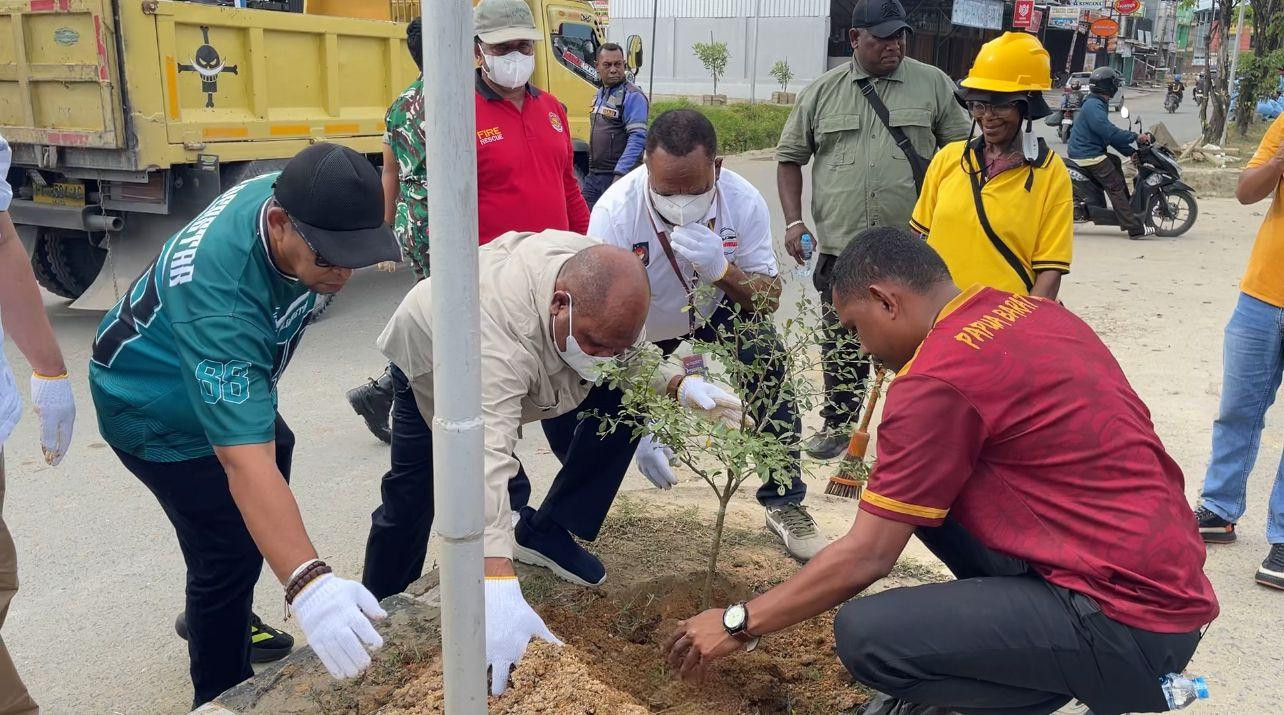
Recently, the people of Sorong have become increasingly aware that environmental change is no longer a distant issue. Hotter temperatures, heavier rainfall, and the gradual loss of green spaces have begun to affect daily life in this fast-growing city in Papua Barat Daya. Against this backdrop, the Sorong City Government, led by Mayor Septinus Lobat, launched a citywide greening initiative by planting 650 trees across strategic urban areas on 9 January 2026.
The program is not simply an aesthetic effort. It is a deliberate response to environmental risks such as flooding, soil erosion, and rising urban temperatures, while also contributing to global efforts to reduce the impacts of climate change. By focusing on tree planting, city leaders aim to restore ecological balance, protect urban infrastructure, and improve the quality of life for residents.
Officials emphasized that the program reflects Sorong’s commitment to sustainable development. Trees, they noted, are among the most effective natural tools for disaster prevention and climate mitigation.Through this effort, Sorong is establishing itself as a city that understands the connection between safeguarding the environment and ensuring public safety.
The Importance of Trees in Cities
Urban growth frequently comes at the expense of natural landscapes. As development spreads, green areas often diminish. In Sorong, this has led to increased surface runoff during heavy rainfall and exacerbated the urban heat island effect during dry spells.
City environmental officials have pointed out that trees are essential in tackling these problems. Tree roots absorb rainwater and anchor soil, which helps to prevent flooding and erosion. Canopies offer shade, thereby lowering surface and air temperatures in areas with a lot of construction. Leaves also filter air pollutants and capture carbon dioxide, which improves air quality and helps combat climate change.
By planting hundreds of trees in a coordinated effort, the city is working to establish what planners call green infrastructure. This strategy views trees as more than just aesthetic additions; they’re seen as vital elements of urban resilience. The initiative, which involves 650 trees, is intended to bolster this natural system, helping Sorong better cope with environmental challenges in the future.
Strategically placed throughout the city, the tree planting program took root in several key areas. A highly visible location is the median strip along Jalan Jenderal Sudirman, a major thoroughfare. Hundreds of saplings were planted along this central road to provide shade, mitigate heat from the asphalt, and enhance the city’s overall look. Planting trees along major roads also serves a practical function, as these traffic corridors are significant sources of heat and pollution.
Trees play a vital role in soaking up emissions, cutting down on glare, and generally making things more pleasant for everyone, whether they’re walking or driving.
Beyond the main thoroughfares, trees found homes in residential areas, public parks, and spots where water tends to pool. Environmental planners carefully chose tree species that would do well in the local environment, focusing on those with robust root systems and the ability to flourish in an urban landscape. This thoughtful approach is designed to help the trees thrive and provide lasting advantages.
Disaster Prevention Through Green Solutions
A key aim of the program is to prevent disasters. Sorong, much like other coastal and tropical cities, is increasingly vulnerable to extreme weather. Heavy rains can easily overwhelm drainage systems, and extended heat waves can put a strain on those most at risk.
Trees offer a buffer against these dangers in multiple ways. When heavy rain falls, the tree canopy acts as a brake, giving water more time to soak into the ground. Their root systems also strengthen the soil, making landslides and erosion less likely, particularly in areas with a slope or where land has been reclaimed. During hot spells, shaded spots can cool the ground considerably, easing heat stress for those living nearby.
City officials pointed out that planting trees is a smart, budget-friendly move for reducing disaster risk. Unlike big infrastructure projects that demand hefty investments and lengthy construction timelines, trees provide both immediate and lasting protection at a relatively low cost. With proper care, they keep delivering benefits for many years.
Community Participation and Public Awareness
Sorong’s greening project stands out for its community engagement. Planting activities saw participation from residents, students, civil servants, and volunteers alike. Schools were prompted to get their students involved, transforming the event into a real-world lesson in environmental stewardship.
Teachers noted that the program gave students a concrete understanding of environmental concerns. Rather than just reading about climate change, students actively participated by planting and nurturing trees. This direct involvement fosters a sense of ownership and responsibility for the environment.
Local residents also voiced their support for the initiative. Many remarked that the newly planted trees made their neighborhoods feel cooler and more inviting.
Some residents have stepped up, taking it upon themselves to water and keep an eye on the young trees planted near their homes. This demonstrates how public involvement can amplify the effects of government initiatives.
Connecting Local Efforts to Global Climate Goals
Even though this program is focused on Sorong, its significance reaches far beyond the city’s borders. Tree planting is widely understood as a tangible way to combat climate change on a global scale. Trees, after all, soak up carbon dioxide, a major greenhouse gas that fuels global warming. Furthermore, greening urban areas helps to lower temperatures, which subsequently reduces the energy needed for cooling, thereby cutting down on emissions.
City officials recognized that while Sorong can’t single-handedly solve global climate change, local actions are a vital piece of the puzzle. By incorporating environmental considerations into urban planning, the city plays its part in achieving national and international climate objectives.
Environmental observers point out that projects like Sorong’s mirror a global shift, pushing cities to the forefront of climate action. Cities are both part of the problem and suffer the consequences of climate change, which makes city-level efforts all the more critical.
Maintenance and Long-Term Commitment
Planting trees is just the beginning. Keeping them alive demands ongoing attention, particularly in their formative years. The Sorong City Government has put together a maintenance plan, working with the relevant agencies and community groups.
The plan includes watering schedules, protection against damage, and regular monitoring. Environmental officers stressed the need for community involvement, recognizing that local residents are ideally situated to watch over and care for the trees in their neighborhoods.
The city is actively seeking collaborations with community groups and businesses to bolster its maintenance programs. This approach distributes the workload and helps guarantee the long-term viability of the greening initiative.
However, hurdles persist. The city faces ongoing pressure from urban development, and green spaces must vie for attention against the need for housing and commercial growth. Protecting trees from vandalism and neglect is another constant worry.
Environmental specialists recommend that tree planting be integrated with comprehensive land-use planning and environmental education. Without supportive policies in place, newly planted trees could be uprooted or harmed as development projects move forward.
City leaders recognized the hurdles ahead, yet they remained optimistic that increased public awareness and involvement would safeguard the city’s natural resources. They stressed the importance of weaving environmental sustainability into the very fabric of urban planning.
A Greener Sorong
The recent planting of 650 trees sends a strong message from Sorong’s officials. It demonstrates that the city is committed to environmental protection, disaster mitigation, and climate action.
Residents are already experiencing the advantages, from cooler streets to more inviting public areas. We anticipate these benefits will grow as the trees mature. Shaded roadways, better air quality, and diminished flood risks will all contribute to a healthier urban environment.
Furthermore, the program cultivates a culture of environmental stewardship. Through direct citizen involvement, the city fosters enduring behavioral shifts that transcend the scope of this particular undertaking.
Conclusion
Sorong’s greening program exemplifies how local governments can proactively address environmental issues. By planting 650 trees throughout the city, Sorong is fortifying its resilience against natural disasters, mitigating the impacts of climate change, and enhancing the quality of urban life.
This initiative underscores that sustainability does not invariably necessitate intricate solutions. Sometimes, it commences with straightforward actions that involve the community and leverage the potential of nature. As these trees establish themselves and flourish, they will serve as living testaments to Sorong’s dedication to a safer, cooler, and more sustainable future.