As Christmas 2025 approached, many communities across Indonesia prepared for a season traditionally marked by joy, family gatherings, and celebration. In Papua, however, the holiday atmosphere carried a deeper sense of reflection. News of devastating natural disasters in Sumatra had spread nationwide, bringing images of destroyed homes, displaced families, and lives disrupted by floods and landslides. In response to this national tragedy, voices from Papua began to rise, calling for empathy, restraint, and solidarity that transcended geography and cultural differences.
At the center of this moral appeal stood Priest (Pendeta) Benny Giay, a senior church leader whose influence extends far beyond ecclesiastical circles. His message was clear and deliberate. Christmas, he said, should not be celebrated with excess when fellow citizens elsewhere are suffering. Instead, he urged Papuans to observe the holiday simply, as an expression of empathy for disaster victims in Sumatra and as a reminder of the true meaning of faith and humanity.
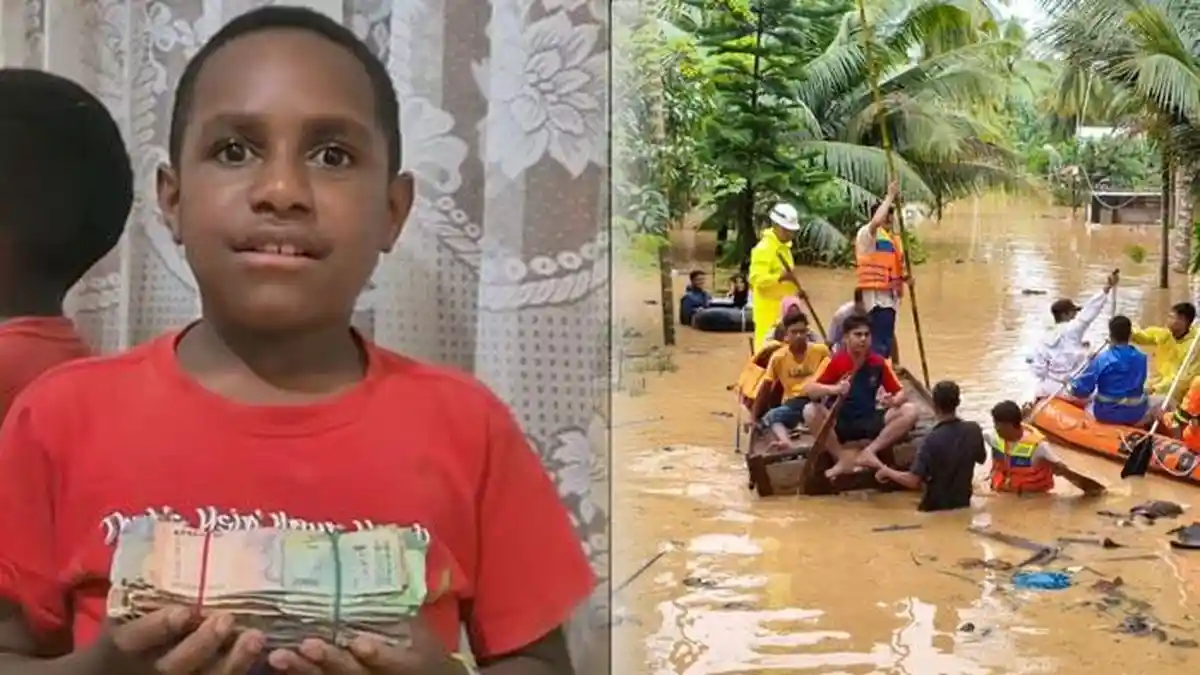
Previously, a quiet yet powerful story emerged from the Papua Highlands (Papua Pegunungan). A young boy named Pison Kogoya, moved by the suffering he saw on television and heard about from adults around him, made a decision that would capture the hearts of Indonesians nationwide. He opened his piggy bank and donated all his savings to help disaster victims in Sumatra. Together, the voice of a respected pastor and the action of a child formed a compelling narrative about compassion, unity, and the moral conscience of a nation.
Priest Benny Giay’s Call for a Meaningful Christmas
Priest Benny Giay is widely known in Papua as a religious leader who consistently connects faith with social responsibility. In early December 2025, he addressed congregations across Papua with a message that was both pastoral and deeply human. He encouraged believers to reflect on the situation in Sumatra, where thousands of families were struggling to recover from floods and landslides that had swept away homes, livelihoods, and, in some cases, loved ones.
Giay emphasized that Christmas is not merely a celebration of tradition, decorations, or abundance. It is, at its core, a celebration of love expressed through humility and sacrifice. He reminded Papuans that celebrating Christmas simply does not diminish its joy. On the contrary, it restores its original meaning. By choosing modest celebrations, communities could redirect attention and resources toward helping those in distress.
His appeal resonated strongly because it was grounded in empathy rather than instruction. Giay did not issue commands. He invited reflection. He spoke of how joy loses its meaning when it is disconnected from compassion and how faith becomes hollow if it ignores the suffering of others. In his view, the pain of disaster victims in Sumatra was not a distant issue but a shared national experience that demanded a collective moral response.
Simplicity as an Act of Solidarity
In Papua, Christmas is traditionally celebrated with enthusiasm. Church services, community feasts, and cultural performances are central to the holiday. Giay’s call did not seek to erase these traditions but to reframe them. He encouraged families and churches to celebrate in ways that honored the season while remaining sensitive to the broader national context.
Simplicity, in his message, was not about deprivation. It was about intention. A simpler Christmas meant fewer material displays and more attention to prayer, reflection, and generosity. It meant recognizing that while some communities were gathering around festive tables, others were sleeping in temporary shelters, uncertain about their future.
This perspective found acceptance among many church leaders and congregants. Discussions emerged within churches about reallocating funds typically used for decorations or celebrations toward disaster relief. Families spoke about teaching children the value of empathy by involving them in donation drives. The message began to take root not as a burden, but as an opportunity to live out the values often preached during the holiday season.
A Child from the Highlands and a Decision That Touched the Nation
While religious leaders were encouraging reflection and restraint, an unexpected example of compassion emerged from the Papuan highlands. Pison Kogoya, still in elementary school, had been saving his money for months. Like many children, his piggy bank represented dreams, small pleasures, and a sense of achievement.
When Pison learned about the floods in Sumatra, his reaction was immediate and sincere. He saw images of children without homes and families struggling to survive. Without prompting or pressure, he decided that his savings could be used for something more important than personal enjoyment. He broke open his piggy bank and offered all the money inside to help the disaster victims.
For Pison, the act was simple. For the nation, it was profound. His gesture carried no political message and sought no recognition. It was an instinctive expression of empathy, shaped by values he had absorbed from his family, school, and community. In a country often challenged by distance and diversity, his action bridged thousands of kilometers with a single act of kindness.
From a Small Village to National Awareness
News of Pison’s donation quickly spread beyond his local community. Media outlets reported his story, social media users shared it widely, and public figures referenced it as a reminder of the moral clarity often found in children. Many Indonesians expressed admiration not only for the boy but also for the values reflected in his choice.
Educators and religious leaders began using Pison’s story as an example in discussions about empathy and national unity. Parents spoke to their children about generosity and the importance of caring for others. His action became a symbol of how compassion does not depend on wealth or status but on the willingness to share what one has.
In many ways, Pison’s story gave tangible form to Priest Benny Giay’s appeal. While Giay spoke of simplicity and solidarity, Pison lived it. His sacrifice illustrated that empathy is not an abstract concept but something that can be practiced by anyone, regardless of age.
The Meaning of Unity in Times of Crisis
Indonesia’s geography often shapes how its people perceive one another. Islands are separated by seas, cultures differ, and languages vary widely. Yet moments of crisis frequently reveal a deeper sense of shared identity. The disasters in Sumatra and the response from Papua highlighted this interconnectedness.
Priest Benny Giay’s call reminded Papuans that the suffering of Sumatrans was also their concern. Pison Kogoya’s action demonstrated that this sense of belonging can be deeply personal. Together, these stories underscored the idea that unity is not declared through slogans but built through empathy and concrete action.
In a time when social divisions can easily dominate public discourse, such narratives offer an alternative vision of Indonesian society. They show that compassion can travel across islands, that moral responsibility is not limited by geography, and that shared humanity remains a powerful force.
Christmas as a Moment of Reflection, Not Excess
As Christmas arrived, many Papuan communities embraced a quieter form of celebration. Church services focused on prayer for disaster victims. Sermons emphasized humility and service. Donation boxes stood alongside nativity scenes, reminding worshippers that the story of Christmas is inseparable from acts of care for others.
For many, the holiday became more meaningful precisely because it was less focused on material display. Families spoke of deeper conversations, shared prayers, and a renewed sense of purpose. The call for simplicity did not dampen joy but redirected it toward something more enduring.
In this context, Pison Kogoya’s sacrifice took on added significance. His simple act became a living illustration of the values being preached and discussed across Papua. He did not merely symbolize generosity. He embodied it.
Conclusion
The stories that emerged from Papua during Christmas 2025 will likely outlast the holiday itself. Priest Benny Giay’s appeal and Pison Kogoya’s donation serve as reminders that faith, empathy, and unity are not seasonal virtues. They are principles that shape how a society responds to suffering and how individuals define their responsibility toward others.
As Indonesia continues to face natural disasters and social challenges, these moments offer guidance. They show that leadership can come from respected voices but also from unexpected places. They remind the nation that compassion does not require abundance, only willingness.
In the end, Christmas in Papua became more than a celebration. It became a statement. A statement that joy and sorrow can coexist, that celebration can be an act of empathy, and that even the smallest hands can carry the weight of national solidarity.