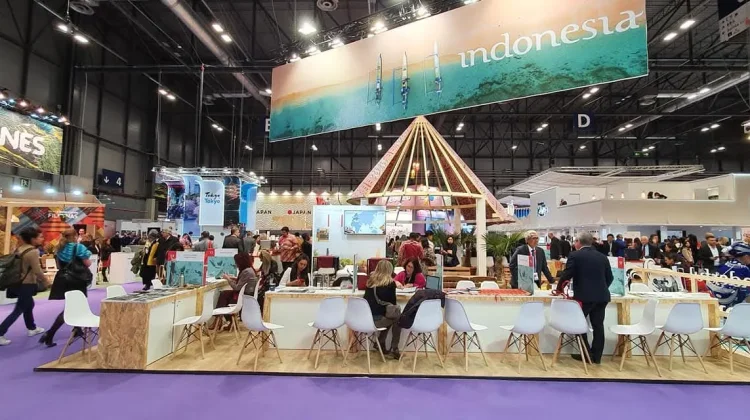
On the morning of 3 March 2026, as the doors of Messe Berlin opened for the first day of Internationale Tourismus Börse (ITB), the world’s largest travel trade fair once again became a crossroads of cultures. Delegations from across Asia, Africa, Europe, and the Americas stood beneath towering exhibition lights, each one hoping their destination would stand out in a sea of global competition.
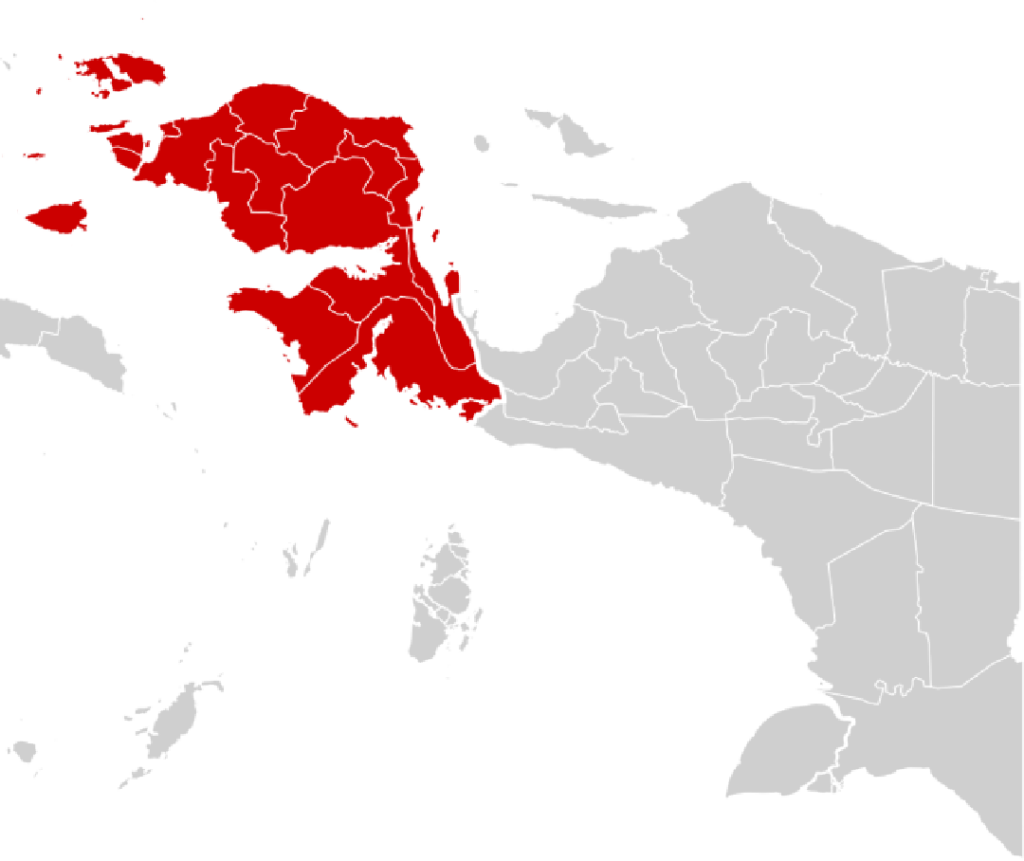
Among them was a team from Indonesia’s easternmost province. Representing Travel Papua, they carried more than brochures and promotional videos. They carried stories from mountain villages, coastal fishing communities, and forests where birds of paradise still glide through ancient canopies.
From 3 to 5 March 2026, Travel Papua participated in ITB Berlin for the third time since 2024. What began two years ago as an introduction to the European travel industry has evolved into a deliberate effort to position Papua as one of Southeast Asia’s most authentic and culturally rich destinations.
For Papua, the trip was not simply an exhibition. It was a statement.
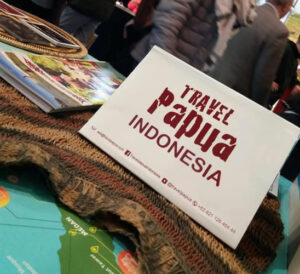
A Journey from the Pacific to the Heart of Europe
Traveling from Jayapura to Berlin is not a simple journey. It requires multiple flights and long hours in transit. Yet the symbolic distance feels even greater. Papua is often described as remote, mysterious, or untouched. Berlin, by contrast, is a global capital of ideas and commerce.
Standing inside Messe Berlin, Travel Papua’s delegation knew they were representing a region that many European travel professionals had heard little about. Bali, Lombok, and Komodo are familiar names in European catalogs. Papua is not.
That is precisely why they came.
According to coverage from RRI Jayapura and Tribun Papua Tengah, Travel Papua aimed to introduce European audiences to a different side of Indonesia. Not beaches lined with resorts, but rainforests alive with biodiversity. The focus was not on crowded nightlife districts, but rather on cultural ceremonies that have been a part of Indonesian culture for generations.
The booth was simple yet powerful. Large photographs showed the Baliem Valley surrounded by mist. Whale sharks swimming in Cenderawasih Bay appeared almost close enough to touch. Images of indigenous dances conveyed pride and identity. Visitors stopped, curious.
One German tour operator asked about community-based tourism in the highlands. A French travel writer inquired about the preservation of local traditions amidst modernization. These were not casual questions. They reflected genuine interest.
Authentic Culture as a Bridge
Travel Papua did not focus solely on landscapes. The message centered on people.
Representatives explained that tourism in Papua is rooted in cultural exchange. Travelers can stay with local families, learn traditional weaving techniques, observe harvest rituals, and participate respectfully in village life. Tourism, they emphasized, must empower communities rather than replace them.
This narrative resonated strongly with European visitors. Post-pandemic travel trends show increasing demand for authentic and sustainable experiences. Many European tourists now seek destinations that prioritize environmental conservation and cultural respect.
Kabarpapua reported that the European market is considered strategic for Papua because it aligns with these values. European travelers often plan longer stays and show interest in ecotourism, heritage exploration, and meaningful cultural immersion.
In one conversation reported during the exhibition, Travel Papua representatives described how tourism revenue can support education and healthcare in rural areas. It was a reminder that tourism is not only about economic numbers. It can strengthen social development.
Third Participation Since 2024
The presence of Travel Papua at ITB Berlin 2026 marked its third consecutive appearance since 2024. Each year has brought new lessons.
The first participation introduced Papua to the global tourism community. The second strengthened relationships and built confidence. By the third appearance in March 2026, Travel Papua arrived with clearer branding and a more refined strategy.
They were no longer simply introducing themselves. They were building partnerships.
Meetings were held with European tour operators interested in niche markets such as birdwatching, diving expeditions, cultural photography tours, and ecotrekking. Discussions also touched on logistics, safety standards, and sustainable management practices.
For a region often perceived as distant, the conversations were practical and forward-looking.

Messe Berlin as a Global Stage
ITB Berlin is not an ordinary trade show. It is a gathering point for global tourism leaders. Thousands of exhibitors represent destinations from every continent. For Papua to stand among them signals readiness to compete on the world stage.
From 3 to 5 March 2026, the Papua booth became a small island of Pacific identity in the heart of Germany. Visitors lingered. Some admitted that they had never considered Papua a travel destination before. Others were surprised to learn of its marine biodiversity and cultural diversity.
The atmosphere inside Messe Berlin was dynamic. Yet amid the noise, Papua’s message was steady. Authenticity matters. Culture matters. Nature matters.
Building Long-Term Partnerships
Travel Papua’s mission in Berlin extended beyond making immediate bookings. The focus was long-term engagement.
Follow-up meetings are planned with several European travel agencies. Discussions are ongoing about developing pilot itineraries tailored to European interests. These may include cultural festivals, ecotourism circuits, and marine exploration packages.
Sustainable growth remains central. Travel Papua representatives emphasized that tourism expansion must align with environmental protection and community consent.
This approach reflects a broader understanding that Papua’s greatest strength lies in its authenticity. Mass tourism would undermine that strength. Responsible tourism preserves it.
Cultural Diplomacy Beyond Business
One of the most meaningful aspects of Papua’s participation was the emotional response from visitors.
A Swedish travel consultant remarked that Papua feels like “one of the last frontiers of cultural authenticity.” An Italian journalist expressed interest in writing a feature about indigenous art and weaving traditions. Conversations extended beyond contracts into storytelling.
Tourism, in this context, becomes cultural diplomacy. It allows people from different parts of the world to connect through shared curiosity and respect.
Travel Papua’s representatives spoke not only as marketers but also as custodians of heritage. Their pride was evident. They understood that every handshake in Berlin carried the weight of expectation back home.
Looking Ahead
As ITB Berlin 2026 concluded on 5 March, the Papua delegation packed their materials with a sense of accomplishment. Business cards exchanged. Emails promised. Interest generated.
The real work begins now.
Building a European market presence requires consistency. It requires follow-through and continuous communication. Yet the foundation has been laid.
For the third time since 2024, Papua stood confidently in Berlin. The message was clear. Papua is open to the world, but on its terms.
It offers culture that is living, not staged. It offers nature that is powerful, not artificial. Experiences that are shared, not consumed.
In a travel industry often dominated by established destinations, Papua’s quiet confidence may be its greatest strength.