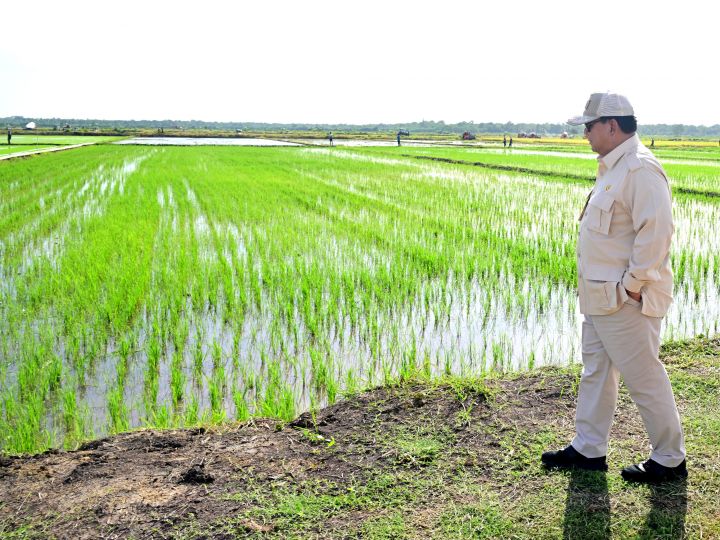
When President Prabowo Subianto announced his administration’s intention to build one million hectares of new agricultural land in Papua Selatan, it marked one of the most ambitious food-security interventions in Indonesia’s modern history. The plan, backed by the Ministry of Agriculture and regional authorities, is more than a blueprint for new rice fields—it is a statement of national resilience, a reimagining of Papua’s economic landscape, and an effort to position Indonesia as a future powerhouse in global food production.
This sweeping project, described by officials as a “New Agricultural Revolution”, aims to transform vast stretches of underutilized land in Papua Selatan into productive, sustainable farmland capable of reducing national food imports, stabilizing domestic supply, and generating new economic opportunities for Indigenous Papuan communities. Yet behind the political declarations lies a complex story of logistical challenge, ecological sensitivity, communal readiness, and the long-term effort needed to convert grand vision into real harvests.
A Vision Rooted in National Food Security
The government’s push to develop a million-hectare agricultural zone in Papua Selatan is driven by a simple but urgent premise: Indonesia must ensure food security for a rapidly growing population. Despite abundant natural resources, Indonesia still relies on large-scale rice imports to stabilize domestic stocks. As global supply chains grow more unpredictable—disrupted by war, climate crises, and geopolitical tensions—Jakarta has doubled down on the need for self-sufficiency.
President Prabowo emphasized this imperative during multiple cabinet meetings, directing the Ministry of Agriculture (Kementan) to accelerate land assessment, irrigation planning, seed supply, and farmer mobilization in Papua Selatan. According to reports, the President wants the agricultural expansion to be implemented “without delay,” with clear targets for land clearing, field preparation, and downstream storage facilities.
The government’s messaging highlights Papua’s natural strengths: wide open plains, high rainfall, fertile wetlands, and year-round growing potential. These characteristics, officials argue, could allow Papua Selatan to become Indonesia’s largest rice production center, potentially transitioning the country from a major importer to a future global exporter.
Why Papua Selatan? A Landscape of Opportunity
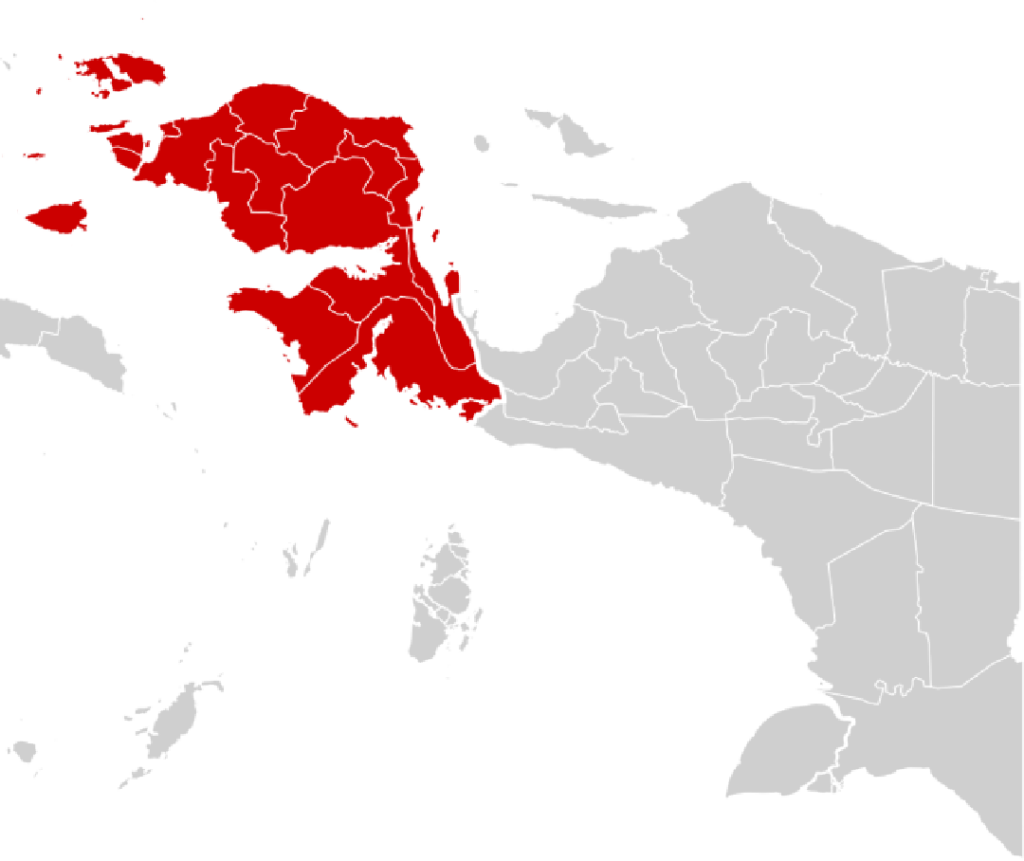
Papua Selatan’s selection is not coincidental. The region offers an expanse rarely found in other provinces—undeveloped land suitable for large-scale cultivation without the intense competition for space seen on Java, Sumatra, or Sulawesi. The plan relies heavily on the natural characteristics of the Merauke and surrounding districts, areas known for their deep peatlands, savannas, and seasonal floodplains.
The government’s vision is rooted in the long-held belief that Papua’s southern lowlands—particularly the Merauke region—have the potential to become one of Southeast Asia’s future breadbaskets. Water availability, warm climate, and flat terrain give the province natural advantages that could support industrial-scale agriculture, provided the infrastructure is built correctly and sustainably.
However, Jakarta’s approach today differs from earlier iterations of agricultural megaprojects in Papua. Lessons from past failures, such as the Merauke Integrated Food and Energy Estate (MIFEE), underscore the need for careful planning, community involvement, environmental protection, and transparent governance. Officials claim this new approach places stronger emphasis on ethical land use, Indigenous participation, and long-term ecological safeguards.
From National Mandate to Local Implementation
Following the President’s directive, the Ministry of Agriculture has begun conducting detailed land checks across Papua Selatan. Minister of Agriculture Andi Akmal has instructed his teams to map out soil conditions, water access, potential irrigation corridors, and environmental vulnerabilities. The assessments are designed to ensure that only appropriate areas—land that is ecologically feasible and free from conflicting Indigenous claims—are prepared for cultivation.
Local leaders in Papua Selatan have shown cautious optimism. Many welcome the economic prospects, such as job creation, food availability, local rice production, and the growth of small and medium agricultural enterprises. Others stress the importance of accountability, fairness, and environmental protection.
The provincial government emphasizes that Indigenous land rights must be respected and that community consent is non-negotiable. The governor’s office has reiterated that while agricultural expansion offers enormous promise, success depends on building trust—ensuring that local families are not displaced but instead integrated as key actors, decision-makers, and beneficiaries.
Infrastructure: The Backbone of the Megaproject
A million hectares of farmland cannot thrive without infrastructure. That means more than clearing land—it requires roads, irrigation networks, storage facilities, seed centers, transportation lanes, and reliable energy sources. The Ministry of Agriculture has already begun drafting a multi-year infrastructure roadmap, including:
- Large-scale irrigation systems connecting major rivers and seasonal flood areas.
- Construction of agricultural roads linking villages to primary market centers.
- Development of rice mills, grain dryers, and modern storage warehouses.
- Mechanization centers providing tractors, harvesters, and maintenance facilities.
- Establishment of agricultural research hubs to support seed innovation.
The government also plans to mobilize military engineering units to accelerate land-opening operations, a strategy seen previously in food estate projects in Kalimantan and Sumatra. However, officials insist that any military support will operate strictly under civilian oversight.
Environmental Safeguards and Indigenous Rights: The Crucial Tests
One of the most sensitive aspects of the Papua Selatan megaproject is ecological protection. Environmental experts warn that improper land conversion—especially in peatland areas—could trigger long-term damage, including carbon emissions, biodiversity loss, and soil degradation. To address this, the Ministry of Agriculture states that no peatlands deeper than a certain threshold will be used and that environmental impact assessments (AMDAL) must be completed before clearing begins.
Furthermore, the plan includes a commitment to protect sacred sites, communal hunting grounds, sago forests, and areas essential to the cultural identity of Indigenous Papuans. The success of this project depends heavily on ensuring that farming expansion does not replicate the mistakes of past top-down programs.
Community groups have urged the government to maintain transparent communication, provide land compensation where appropriate, and guarantee that Papuans become core participants—not passive observers—in the agricultural transformation. For many Indigenous families, land is not only an economic asset but a heritage deeply tied to identity.
Economic Transformation and the Promise of a Regional Breadbasket
If executed successfully, the agricultural expansion could fundamentally reshape Papua’s economy. New jobs in planting, harvesting, logistics, construction, and processing industries could emerge, providing stable income for thousands of local households. The introduction of modern agricultural technology may support new vocational training programs, encourage education in agro-science, and inspire a new generation of Papuan farmers.
The project could also support downstream development, including rice mills, packaging facilities, export terminals, and regional trade networks. Economists argue that a successful agricultural corridor in Papua Selatan could draw investment not only from national companies but also from foreign partners seeking secure and ethical food sources.
But the potential impact extends beyond Papua. A significant increase in national rice output could stabilize food prices across Indonesia, reduce dependence on volatile global markets, and improve national resilience against climate-related crop failures.
Challenges That Could Shape the Project’s Future
Despite the grand vision, significant challenges remain. Opening one million hectares of farmland requires years of work, billions of rupiah in investment, and meticulous coordination across ministries. Logistics—particularly transportation from remote areas—may pose barriers. Environmental concerns must be handled with scientific rigor. And perhaps most importantly, Indigenous trust must be earned through honesty, shared benefits, and full inclusion.
Analysts also warn that rapid expansion without proper governance could create opportunities for land conflict, misuse of permits, or unequal profit distribution. Maintaining transparency and accountability will be essential to ensuring that the project benefits both the Papuan people and the Indonesian nation as a whole.
A Long Road Ahead for Indonesia’s Agricultural Revolution
Indonesia’s plan to transform Papua Selatan into a massive agricultural hub is bold, complex, and filled with both risks and possibilities. Yet if managed responsibly—with sustainable land use, Indigenous inclusion, and strong environmental protections—the initiative could become one of the nation’s most transformative development programs.
For now, the project remains at the early stages of land assessment, planning, and inter-agency coordination. The coming years will reveal whether this vision will evolve into a productive landscape of golden rice fields—or remain an ambitious promise etched into policy documents.
But one thing is clear: the stakes are high, and the world is watching. Indonesia’s food future may well be rooted in the soils of Papua Selatan.
Conclusion
Indonesia’s plan to open one million hectares of new farmland in South Papua marks a bold attempt to secure long-term food resilience and reduce dependence on rice imports. While the initiative offers immense economic potential and the promise of transforming Papua into a major agricultural hub, its success depends on responsible environmental management, strong local participation, and transparent governance. If these foundations are upheld, South Papua could emerge not only as Indonesia’s new rice powerhouse but also as a model of inclusive and sustainable agricultural development for the region.