The sound of the landscape waking up comes when the first light of day spreads across the forests of Papua. Birds call to each other from tree to tree, over rivers, and through valleys in the mountains. Some calls are soft and sound like music. Some are clear and sharp.
For people who live near the forest, this is a normal part of life. For generations, it has meant the start of the day.
Papua is one of the most amazing places on Earth for birds. Scientists think that there are more than 640 kinds of birds that live on the island of New Guinea, which includes Papua. A lot of these species are only found in this part of the world. There are more than 250 species that are only found on the island, and more than 70 species that are only found in Papua, Indonesia.
Papua is a global center of biodiversity because of this amazing variety. But it also means you have to be responsible. If the birds that live in these ecosystems are going to live for a long time, we need to protect them.
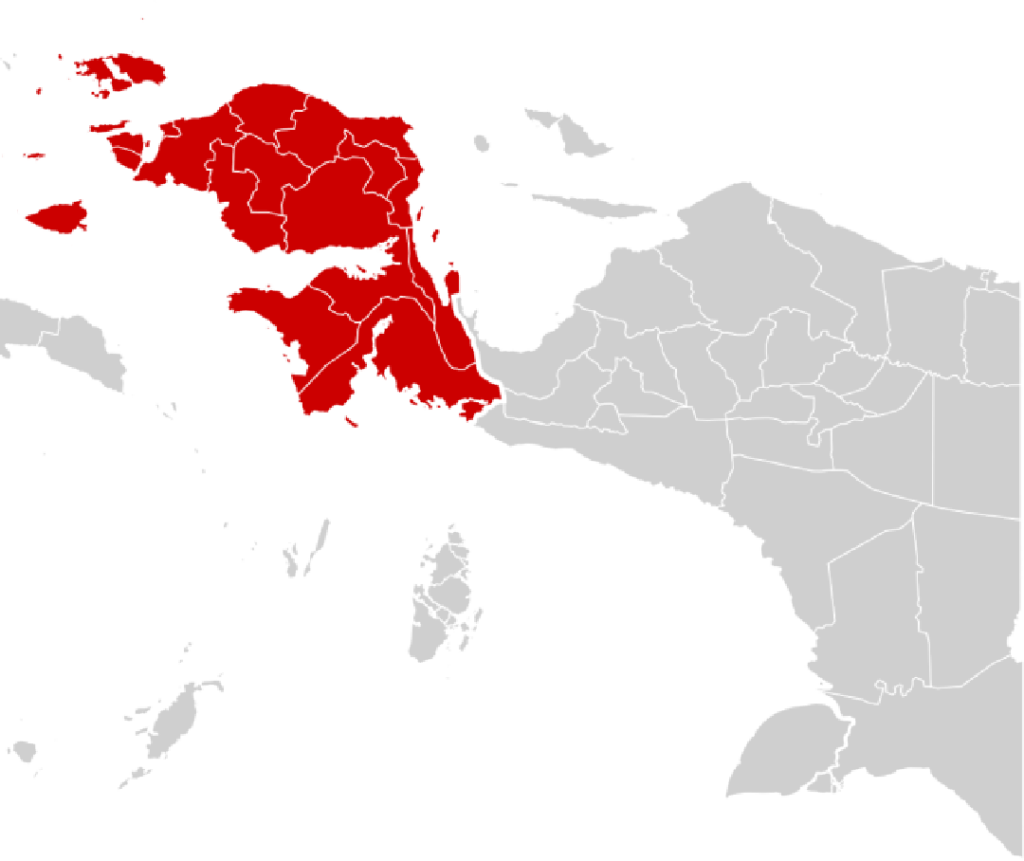
Because of how important this is, conservation groups, scientists, and government agencies have all recently taken a big step. They have found and mapped 59 important areas in Papua that are thought to be important habitats for birds. We are now putting these areas at the top of our list for protection.
Identifying the Most Important Bird Habitats
It didn’t happen overnight that these habitats were mapped. It is the product of years of ecological and field research.
Conservation groups and researchers looked at forest ecosystems, mountain landscapes, coastal areas, and island environments all over Papua. They wanted to find places where there are a lot of birds, where there are few birds, or where birds are in danger.
They found 59 places that are important for birds to live through this research.
These areas cover more than 10 million hectares of land, making up a huge network of ecosystems that help birds live in the area.
There are many different types of environments in these habitats. Some are thick tropical forests in the middle of Papua. Some are on coastlines, islands, or in mountainous areas where unique species have developed over thousands of years.
Some of the important places that are part of the conservation mapping are Waigeo Island, Misool Island, Biak Island, the Cycloop Mountains, and the Wandamen Peninsula.
These places are all very important for keeping bird populations healthy.
For instance, island ecosystems are home to species that can’t be found anywhere else on Earth, and mountain forests are home to birds that need cooler climates to live.
Why Birds Are Important to Forest Ecosystems
People often admire how pretty birds are. But they are important for more than just their bright feathers or beautiful songs.
Birds play important roles in the ecology of tropical ecosystems like those in Papua.
Many kinds of birds help spread seeds by taking them from one part of the forest to another. This natural process helps forests grow back and keep a wide range of plants.
Other animals eat insects, which helps keep populations in check that could otherwise hurt plants and crops.
Some birds even help plants reproduce by pollinating them.
To put it another way, birds help forests stay healthy.
When bird populations go down, it can change the balance of the ecosystem in ways that are hard to predict. For example, plants may grow too much or there may be less food for other animals.
So, protecting birds means protecting the whole ecosystem.
Papua’s Famous Birds
Some of the most famous birds in the world live in Papua’s forests.
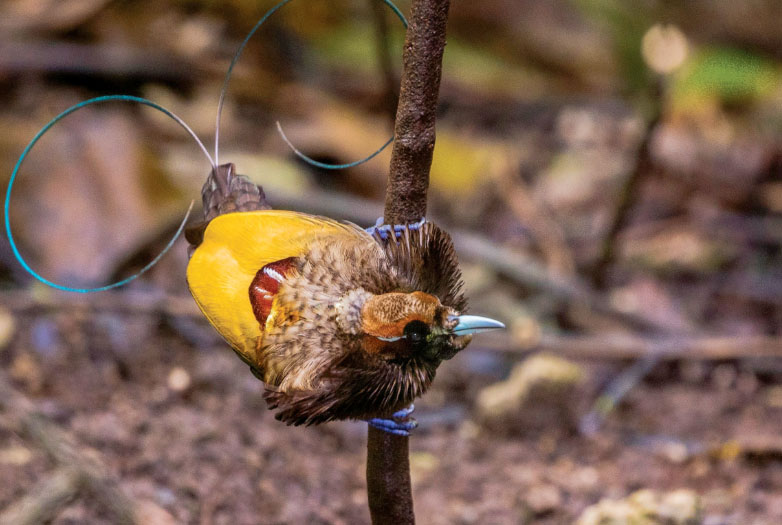
Some of them are the famous birds of paradise, which have bright colors and complicated courtship dances that have fascinated scientists and travelers for hundreds of years.
These birds are a sign of Papua’s amazing biodiversity.
Papua is home to many other species besides birds of paradise. These include parrots, cockatoos, kingfishers, pigeons, and forest birds that are hard to find anywhere else on Earth.
A lot of these animals need healthy forest ecosystems to live.
The birds that depend on those forests may also disappear if they do.
Environmental Stressors on Bird Habitats
Papua still has a lot of natural forest, but environmental problems are starting to show up.
Researchers warn that if we don’t carefully manage a few things, they could put bird habitats at risk.
One worry is that changes in how land is used, like building roads or cutting down trees, can lead to habitat loss.
Another problem is hunting that isn’t sustainable, which can make some bird species’ populations smaller, especially those that are already at risk or endangered. This can make biodiversity even worse.
The risk from climate change is also growing. Birds rely on ecosystems that may be affected by changes in temperature and rainfall patterns, especially those that live in high-altitude mountain forests.
Because of these pressures, conservation experts say that finding and protecting important habitats is very important.
Some bird species in Papua have already been identified as being at risk from global threats. This shows how important it is to act quickly to protect them.
The Science Behind Important Bird Areas
The 59 bird habitats were found using a global conservation framework called Important Bird and Biodiversity Areas, or IBA for short.
This system was made by international conservation groups to find places that birds need to live.
Researchers look at a number of scientific factors to determine if a site is a good candidate.
One standard looks at places that help species that are in danger of extinction around the world.
Another looks at places where bird species have very small geographic ranges.
Other criteria look at habitats that support large groups of certain birds or ecosystems that have groups of species that are not found anywhere else.
An Important Bird Area is a place that meets one or more of these requirements.
This method helps make sure that conservation efforts are focused on areas where they can make the biggest difference.
Working Together: Scientists and Communities
To protect bird habitats in Papua, many different groups need to work together.
Environmental groups work closely with government agencies to make sure that ecological data can help shape policies that affect the environment.
At the same time, local communities play a very important role.
For hundreds of years, many native Papuan communities have lived in these forests and have a lot of knowledge about the natural world.
Respect for nature and using resources in a way that doesn’t harm the environment are often important parts of traditional ecological practices.
Conservation efforts can be more effective if they use both scientific research and local knowledge. For example, they can use traditional ecological practices that stress respect for nature and using resources in a way that doesn’t harm them.
Getting people involved in conservation efforts also makes sure that they respect cultural traditions and help people make a living.
Keeping Papua’s Forests Safe
The mapping of bird habitats shows how important Papua’s forests are.
Papua has some of the biggest tropical forests left in the Asia Pacific region. These forests are home to many different kinds of animals, including birds, mammals, reptiles, insects, and many types of plants.
So, protecting bird habitats helps protect whole ecosystems.
Forests that are in good shape have other benefits as well.
They help keep the climate stable, the water cycles going, and the traditional ways of life for people who live nearby.
In many ways, protecting bird habitats is part of a bigger effort to protect one of the most valuable natural areas on Earth.
A Duty to the Whole World
The forests of Papua are important to more than just Indonesia. They matter to everyone in the world.
Scientists often call New Guinea one of the last great biodiversity frontiers on Earth.
There are still a lot of species in Papua that researchers haven’t fully studied. Researchers keep finding new things every year, which adds to the region’s ecological secrets.
Conservationists want to keep this biodiversity safe by mapping and protecting 59 important bird habitats.
The project gives environmental protection a scientific basis and encourages government agencies, conservation groups, and local communities to work together.
The Sound of the Forest for Future Generations
Birds have always been a part of the natural rhythm of life in Papua’s forests.
Each type of bird in the rainforest adds to the living symphony. For example, the bright colors of birds of paradise and the soft calls of forest songbirds.
The choice to put the protection of 59 important bird habitats first shows a growing commitment to protecting this natural heritage.
It is an effort to make sure that Papua’s forests stay full of birds for many years to come.
People who walk through these woods at dawn and hear the chorus coming from the trees can’t ignore how important it is.
When the birds sing, the forest comes alive.