It was not the kind of meeting that draws headlines.
No raised voices. No dramatic gestures. The room was filled with officials, local representatives, and a few individuals who had spent years contemplating the same question from various perspectives.
What does it really mean to manage land that holds both wealth and memory?
On March 28, 2026, at the front of the room in University of Indonesia Caritas, Manokwari, Sulastiana spoke in a steady tone. She explained it in a calm and unhurried manner. She did not try to simplify the issue into something neat. Instead, she laid out what she described as five principles of mining governance in Papua Barat.
They sounded structured, even technical at first.
But as the conversation unfolded, it became clear that what she was describing was not only about mining.
It was about trust.
A Landscape That Means Different Things to Different People
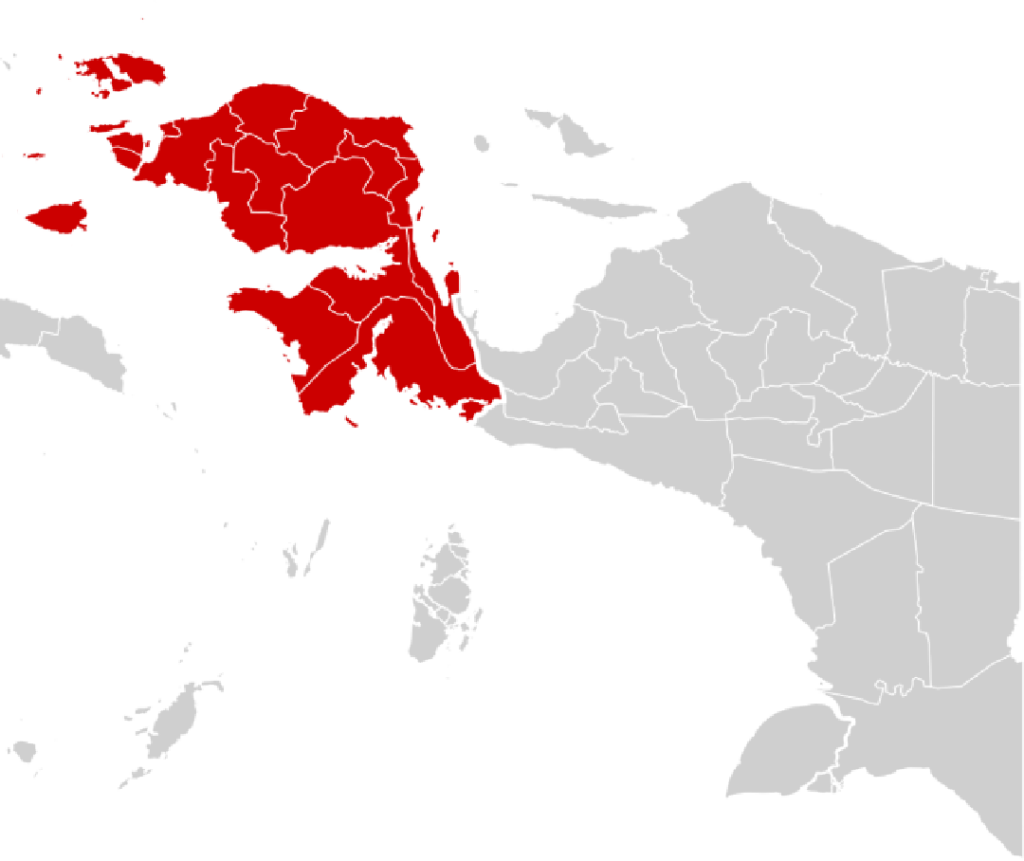
Papua Barat is often introduced through its natural wealth.
People talk about minerals beneath the soil. About economic potential. About investment.
But if you travel through the region and speak to those who live there, the language changes.
A forest is not just timber.
A river is not just water.
And land is never just land.
For many indigenous communities, land is tied to identity. It carries history, stories, and a sense of belonging that cannot be measured in economic terms.
This is where mining becomes complicated.
This complexity arises because mining occurs in the same context where these meanings hold significance.
The First Principle: Legality That People Can Understand
Sulastiana began with legality.
On paper, it sounds straightforward. Mining must obey the law.
But in practice, legality is not always clear, especially in regions where administrative boundaries, customary land claims, and formal permits intersect.
She explained that one of the recurring problems is confusion.
Different permits issued at different times.
Areas that overlap.
Communities that are not always informed.
“When the legal basis is unclear, it creates room for conflict,” she said.
It was not said as a criticism.
This statement was more of an observation drawn from her experience.
Clarity, in this case, is not just for regulators.
It is for everyone involved.
A Village Perspective
After the session, a man from a nearby district spoke quietly with a colleague.
“In our place, sometimes we only hear about permits after things start,” he said.
He did not sound frustrated.
Just tired.
“If we understand from the beginning, maybe it’s different.”
That gap between decision and understanding is where many tensions begin, particularly in discussions about environmental protection, where differing perspectives can lead to misunderstandings and conflict.
The Second Principle: The Environment Is Not a Side Issue
When the discussion moved to environmental protection, the tone in the room shifted slightly.
The issue was not theoretical.
People in Papua Barat have seen what environmental damage looks like.
A river that no longer runs clear.
A forest edge that has moved further back.
Land that does not recover as easily as expected, particularly after mining activities, often suffers from soil degradation and loss of biodiversity.
Sulastiana spoke about the need to place environmental considerations at the center of mining activities.
Not as an afterthought.
It’s not a requirement to be checked off.
But as something that shapes how decisions are made from the beginning, influencing the community’s values and priorities in preserving their environment.
A Memory of a River
In a coastal village, an older resident once described how the river used to look when he was younger.
“You could drink from it,” he said.
Now, he explained, people are more cautious.
The river still flows.
But the relationship with it has changed.
These are the kinds of stories that do not appear in reports.
But they stay in people’s minds.
The Third Principle: Indigenous Communities Are Not Observers
This topic may be the most sensitive part of the conversation.
And the most important.
Sulastiana emphasized that mining governance must respect indigenous communities.
This respect should extend beyond formal recognition.
But in practice.
That means involving them in discussions.
Listening to their concerns.
Recognizing their rights to land.
Often, the issue is not rejection of development.
It is exclusion from it.
A Voice in the Room
During the session, an indigenous leader spoke briefly.
“We are not against mining,” he said.
“But we want to be part of the process.”
He paused, then added, “We do not want to be merely informed after decisions are made.”
There was no applause.
Just silence.
This silence suggests that people are deep in thought.
The Fourth Principle: Thinking About Risk Before It Happens
Mining carries risks.
That is not new.
But what matters is how those risks are managed.
Sulastiana spoke about a risk-based approach.
Identifying potential problems early.
Planning for them.
Reducing their impact.
This approach requires anticipation.
And occasionally, that is where systems struggle.
This is because responding to problems is often easier than preventing them.
A Practical Challenge
A local official later described the difficulty.
“We know what should be done,” he said.
“But doing it consistently is another matter.”
He mentioned limited resources.
Monitoring challenges.
The size of the region.
These are not excuses.
They are realities.
The Fifth Principle: Accountability Must Be Real
The final principle focused on enforcement.
Without it, governance remains theoretical.
Illegal mining operations.
Environmental violations.
Failure to comply with regulations.
These issues require action.
Consistent action.
Because inconsistency creates doubt.
And doubt weakens trust.
Between Policy and Daily Life
One of the challenges in discussions like these is the gap between policy and daily life.
Policies are written in documents.
Discussed in meetings.
But their impact is felt in villages.
In forests.
Along rivers.
Bridging that gap requires more than regulation.
It requires communication.
And presence.
A Student’s Question
At a University of Indonesia Caritas in Manokwari, a student studying environmental management raised a question that lingered.
“How do we make sure these principles are followed in the field?”
It is a simple question.
But not an easy one.
This question is complex because it involves the collaboration of systems, people, and accountability.
The Role of Trust
If there is one theme that runs through all five principles, it is trust.
Trust that regulations are clear.
Trust that the environment is protected.
Trust that communities are respected.
Trust that risks are managed.
Trust that violations are addressed.
Without trust, even well-designed policies can fail.
A Gradual Process
Change in governance does not happen quickly.
It is gradual.
Sometimes uneven.
There are setbacks.
Adjustments.
Moments of progress.
Moments of doubt.
Papua Barat is in the middle of that process.
Looking Beyond the Meeting
As the discussion ended, people did not rush out.
Some stayed behind, continuing conversations in smaller groups.
Others stepped outside, where the air felt different from the meeting room.
The issues discussed in the meeting do not remain confined to that space.
They move with people.
Into their work.
Into their communities.
Conclusion
Mining in Papua Barat is not just about extracting resources.
It is about navigating relationships.
Between government and communities.
Between economic goals and environmental limits.
Between present needs and future consequences.
The five principles outlined by Sulastiana do not solve these tensions.
But they provide a way to approach them.
Carefully.
Deliberately.
Every decision carries weight, and this awareness is crucial.
And in a place like Papua Barat, where land has more than just value, awareness matters.